





Wooden Regulator Clock
A wooden regulator clock brings precision timekeeping into a room through disciplined mechanical design and rich timber cases.
Wooden Regulator Clock
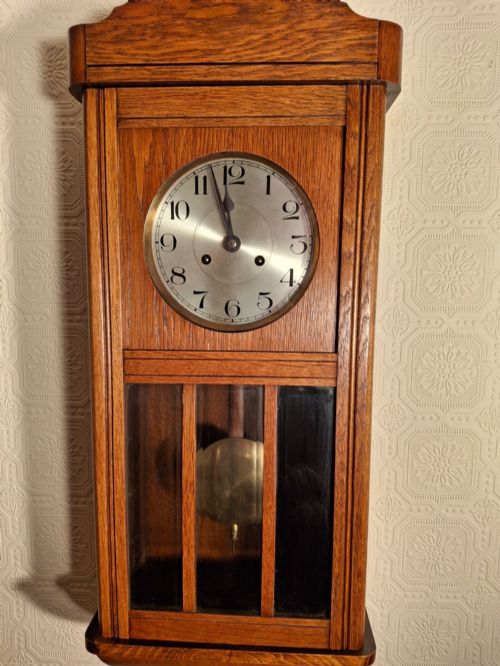
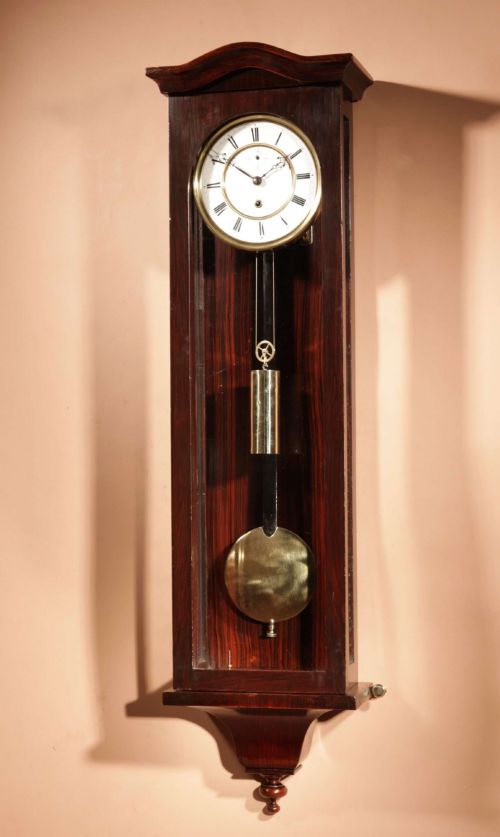
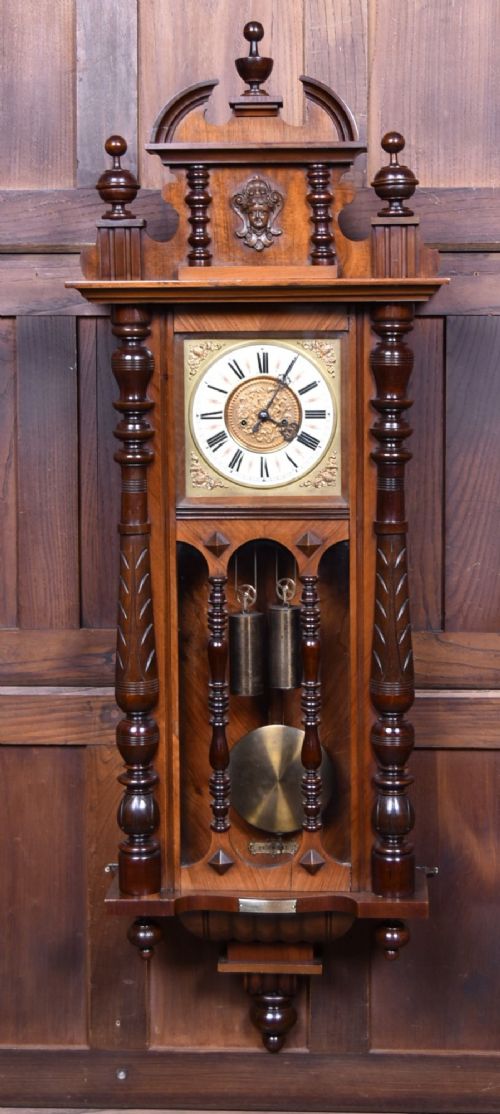
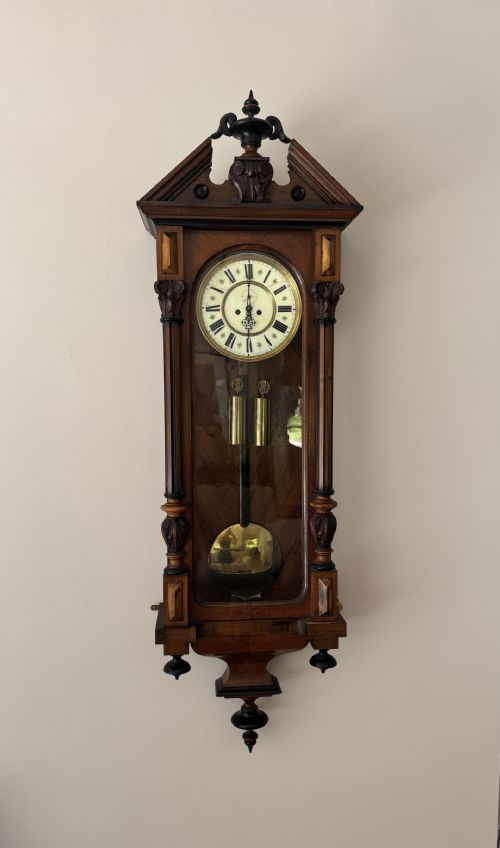
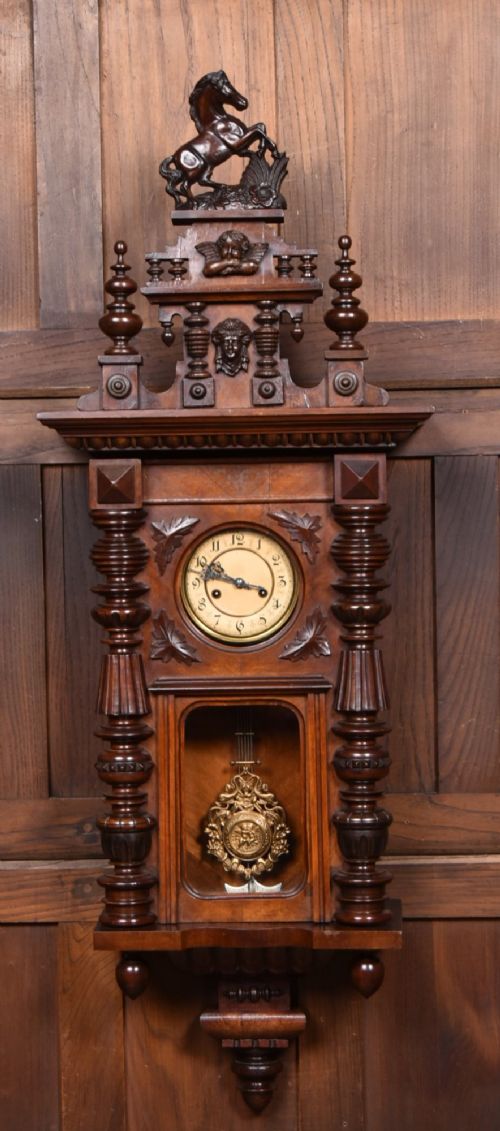
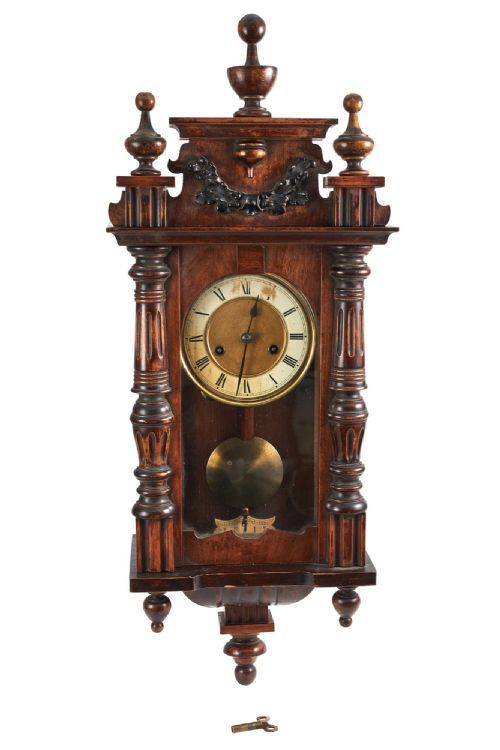
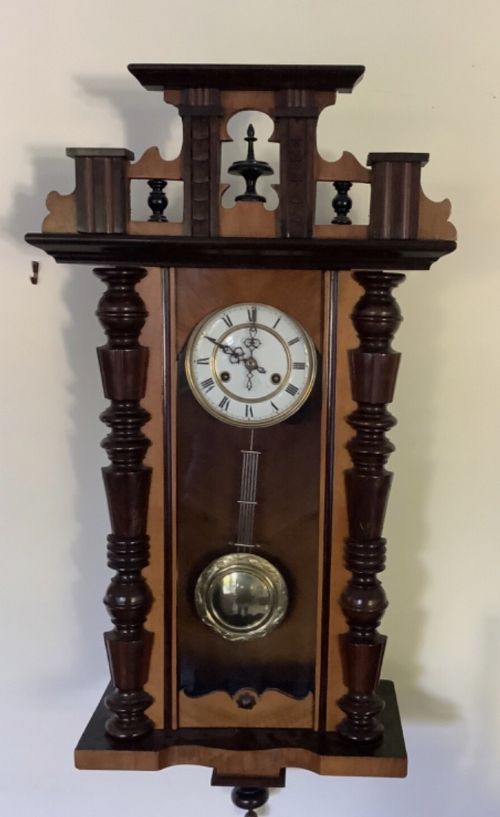
A wooden regulator clock is a precise timekeeper housed in a timber case, most frequently seen here as a wall-mounted Vienna style clock from the Victorian era. These pieces draw attention through visible pendulums and weight-driven movements designed for exactitude rather than casual convenience.
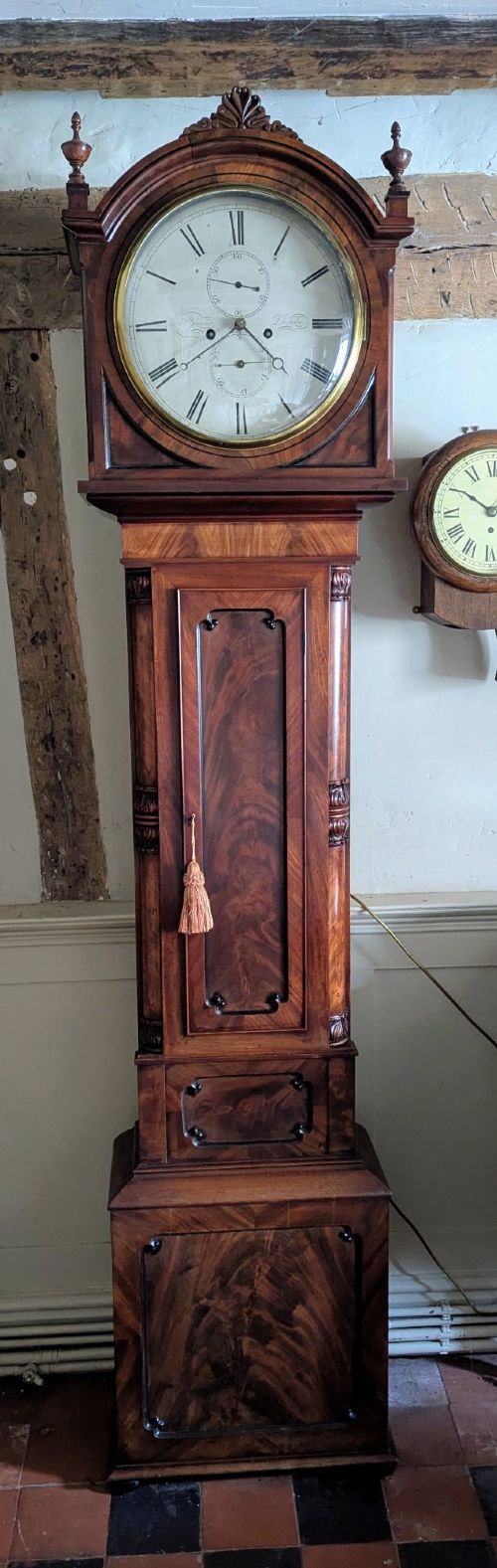
The selection ranges from mid nineteenth century Biedermeier examples to later Art Deco French oak designs, alongside longcase and bracket clocks in mahogany and oak. Walnut dominates the wall-mounted variants, often featuring carved architectural details and glass panels that display the swinging pendulum.
Materials and construction
Cases rely on solid and veneered timbers such as walnut, mahogany, oak, and ebonised wood, shaped into architectural pediments and glazed trunk doors. Metal components including brass movements, dials, and lead or brass weights provide the mechanical heft required for an eight-day or thirty-hour duration.
Dial faces combine white enamel with delicate hands, while internal suspensions utilise steel knife-edge or pendulum springs to maintain steady oscillation. Carved ornamentation and applied mouldings add depth to the timber facades without obscuring the functional geometry of the clock.
Some models feature automation where tiny mechanical figures move in time with the striking hours.
Assessing quality in movements and cases
The distinction between standard examples and the finest pieces rests upon the complexity of the movement and the crispness of the case carving. Double and triple weight systems, grande sonnerie striking capabilities, and fine subsidiary dials elevate a piece far above simple timepieces.
Cabinetwork execution separates ordinary production from superior workshop output, visible in matched wood veneers, well-fitted glass doors, and sound structural joinery. Original components and untampered movements hold greater integrity than heavily restored assemblies.
JOHANN BAPTIST BEHA·GUSTAV BECKER·CHATER & SON
The Wooden Regulator Clock Glossary
- Regulator clock
- A high-precision timekeeper designed originally as a standard for setting other clocks, featuring a clear, prominent minute dial.
- Vienna regulator
- A wall-mounted clock style originating in nineteenth-century Austria, characterised by a long glass door and precision movement.
- Double weight
- A movement driven by two suspended weights, typically powering both the timekeeping train and a striking mechanism.
- Grande sonnerie
- A complex striking train that chimes both the hours and the quarters automatically on every quarter hour.
- Fusee
- A conical pulley used in some clocks to maintain equal force on the gear train as the driving spring unwinds.
Wooden Regulator Clock: Frequently Asked Questions
How do I wind a wooden regulator clock?
Most eight-day models require a winding key inserted into holes on the enamel dial to pull the weights back up or tension the internal springs. Care must be taken not to overwind the movement.
Stopping points on the key indicate full tension, and regular winding at the same time each week preserves timekeeping consistency.
Where should I hang a wall regulator?
Select an interior wall away from direct sunlight, heating vents, and dampness to protect the timber case and delicate wood veneers. Solid masonry or secure stud fixings are essential to bear the weight of the clock and pendulum safely.
Stability prevents vibration from interfering with the beat of the pendulum, ensuring the movement keeps accurate time.
Why does the clock tick unevenly?
An uneven tick usually means the clock is out of beat, meaning the anchor pallet strikes the escape wheel teeth at asymmetric intervals. Adjusting the crutch wire or shifting the case slightly on the wall corrects this rhythm.
Ensuring the cabinet hangs perfectly plumb resolves most minor acoustic discrepancies in the escapement.
What is the difference between a timepiece and a striking clock?
A timepiece simply records the hours and minutes without producing any sound on the hour or quarters. A striking clock includes an additional gear train and hammer system to ring bells or gongs.
Both utilise identical regulator escapements for precision, but striking models require extra weight power or spring strength.