


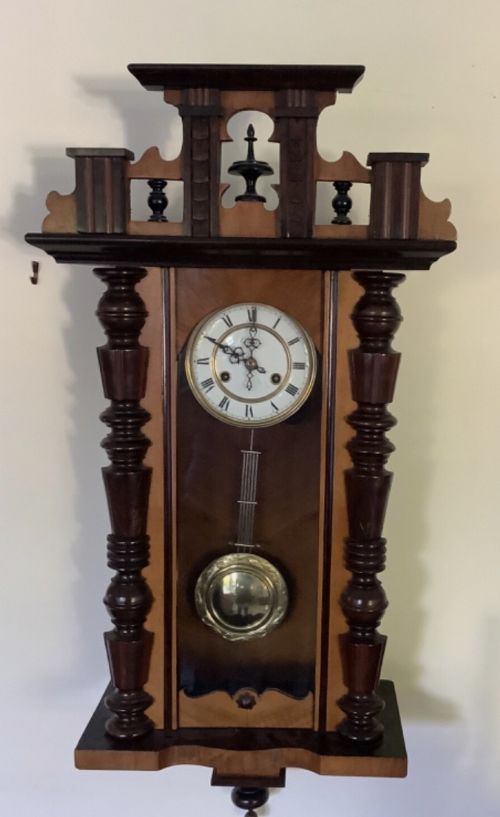
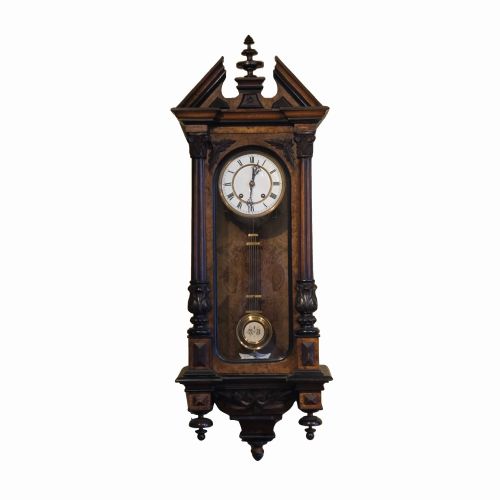


Carved Architectural Clock
These carved architectural clock examples bring solid presence and intricate joinery into a room, offering the structural forms and rich timbers collectors seek.
Carved Architectural Clock
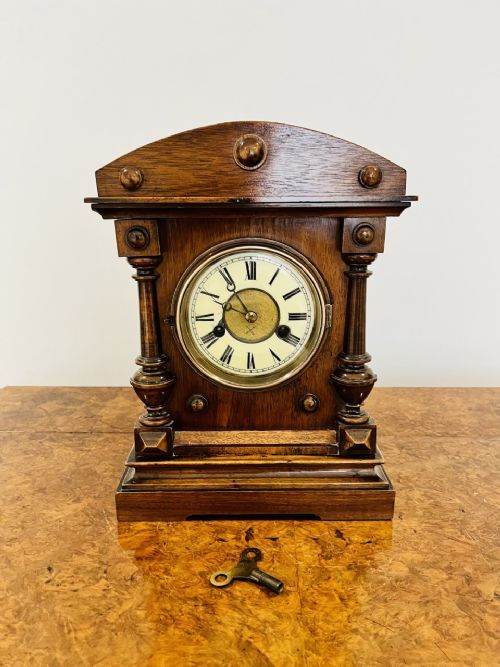
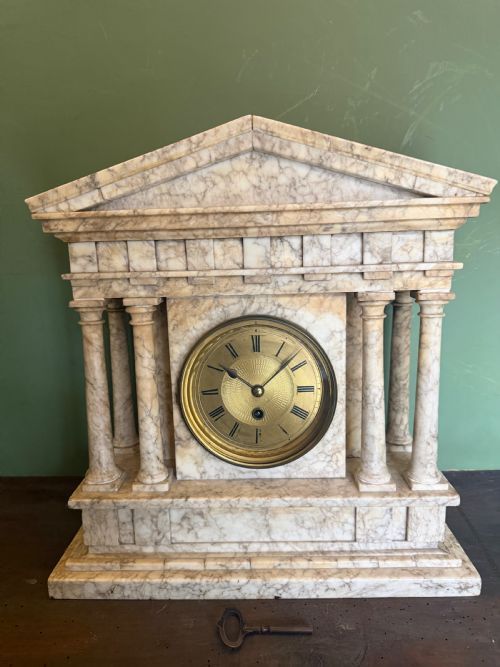
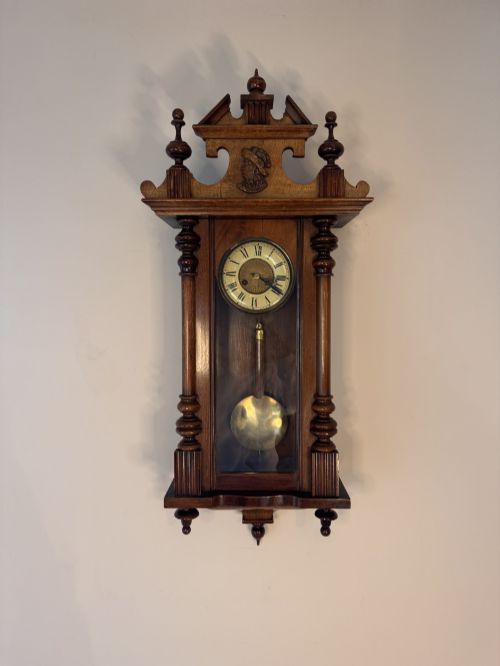
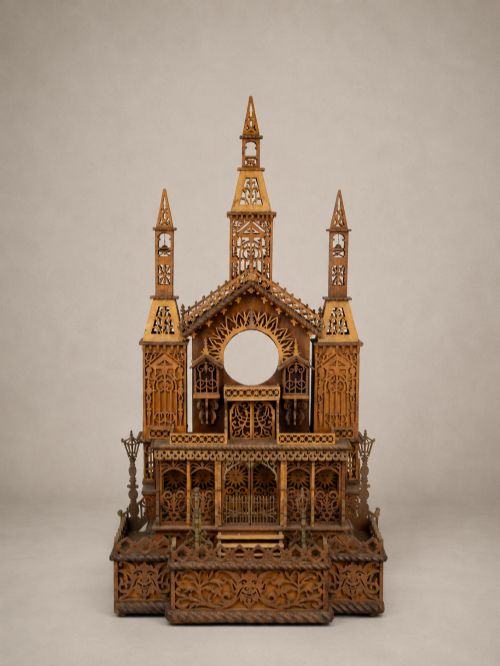
A carved architectural clock borrows the columns, pediments and proportions of full-scale buildings, scaled down for domestic interiors. These heavy timber cases stand on mantelpieces or hang upon walls, bringing structural dignity to a room.
The versions most commonly met here belong to the Victorian era and the years around nineteen hundred. They draw upon Gothic Revival and Aesthetic Movement ideals, utilising walnut, oak and fruitwood alongside brass and glass.
Makers ranged from German workshops like H.A.C. to Vienna wall clock specialists, producing both wall-mounted regulators and substantial desk or mantel variations. Each piece reflects the nineteenth-century taste for building facades rendered in miniature cabinetwork.
How they were made
Cabinetmakers constructed these clock cases from dense hardwoods such as walnut, oak and fruitwood, often selecting veneers or ebonised finishes to heighten the architectural contrast. Intricate fretwork, applied mouldings and turned columns were then fixed to the primary carcass using traditional joinery.
Enamel dials, brass bezels and bevelled glass face covers were fitted to protect the movement and the paper or painted chapter rings. Movements were anchored firmly within the wooden housings, accompanied by brass pendulums and striking trains designed for fourteen-day or shorter runs.
Carved Architectural Clock Retail Price Guide 2026
Typical asking prices for carved architectural clock among the pieces listed under this phrase on Sellingantiques today, from the lower quarter to the upper quarter. They describe what is for sale here now, not the wider market.
One extraordinary piece even carries a unique local history tied directly to the walls of the Holborn Town Hall and Library.
What varies in quality
The distinction between ordinary and exceptional work lies in the depth and crispness of the carving, alongside the architectural coherence of the facade. A finer case displays well-proportioned pediments, tight joinery and subtle fretwork rather than flat, machine-cut decoration.
Materials also dictate the tier of the piece, with solid walnut and ebonised fruitwood commanding attention over simpler pine or composite structures. The integration of original brass fitments, enamelled dials and robust movements completes the higher standard of craftsmanship.
JOHANN BAPTIST BEHA·German H.A.C.
The Carved Architectural Clock Glossary
- Architectural clock
- A timekeeper whose case is consciously designed to resemble a building, featuring elements like columns, pediments and cornices. These pieces translate masonry forms into domestic woodwork.
- Fretwork
- Openwork ornamentation carved or pierced through thin timber to create decorative geometric or floral patterns. It adds layered depth to the front panels of the case.
- Aesthetic Movement
- A late nineteenth-century design style that prioritized visual beauty and Japanese-influenced artistic arrangement over strict historical revival. It often introduced ebonised finishes and stark, elegant proportions.
- Enamel dial
- A faceplate made by fusing powdered glass to a metal base at high heat, providing a smooth and durable white surface for painted numerals. These dials remain crisp and legible over generations.
- Mantel clock
- A portable timekeeper designed to stand upon a fireplace mantel or shelf. These cases rely on flat bases and substantial side profiles to maintain stability.
Carved Architectural Clock: Frequently Asked Questions
Where should I place a carved architectural clock?
These pieces require a stable surface or a secure wall fastening capable of supporting dense hardwoods and brass movements. Mantelpieces, desks and primary wall spaces allow their structural facades to be seen clearly without obstruction.
Keep them away from direct sunlight and damp environments to protect the wood, veneer and delicate interior mechanics over time.
What defines the Gothic Revival style in these clocks?
Gothic Revival elements include pointed arches, cusping, heavy cornices and deep mouldings borrowed from medieval stone architecture. Cabinetmakers translated these structural motifs into walnut and oak to evoke ancient masonry.
This aesthetic dominated nineteenth-century design, giving domestic timepieces the gravitas of cathedrals and castles.
How do I distinguish a wall clock from a mantel clock?
Wall clocks feature hanging brackets, rear suspension loops or flat backs designed to mount securely against vertical surfaces. Mantel clocks rely on weighted bases and balanced side profiles to stand freely on horizontal ledges.
Both forms utilise architectural facades, but their intended mounting dictates the construction of the rear timber case.