
Wooden Music Canterbury
A wooden music canterbury is a low, partitioned stand designed to hold sheet music and folios near the piano.
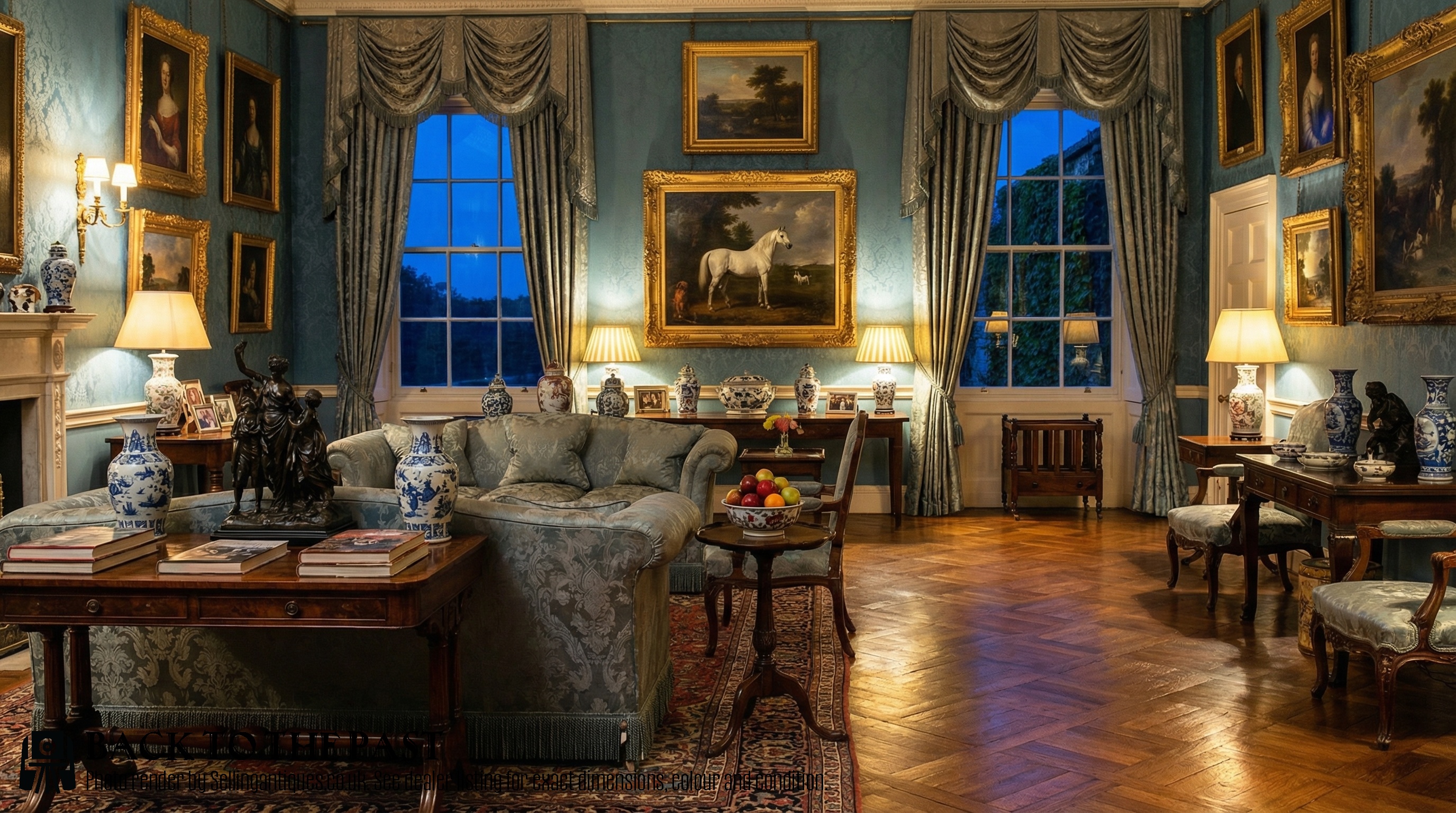
Wooden Music Canterbury
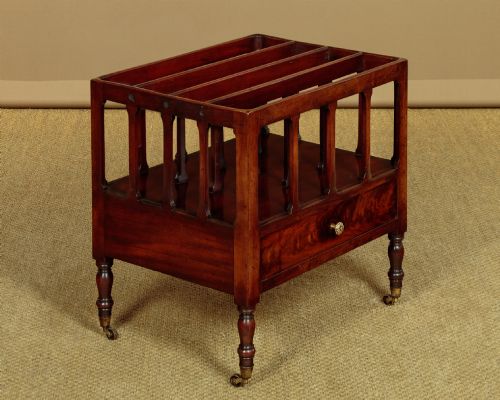
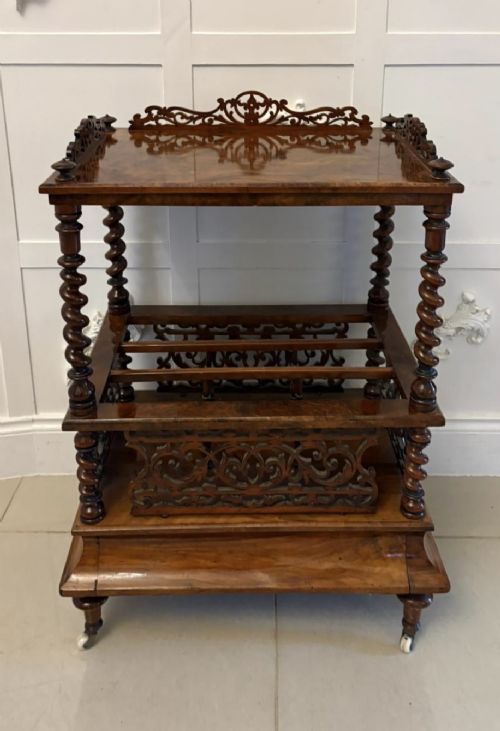
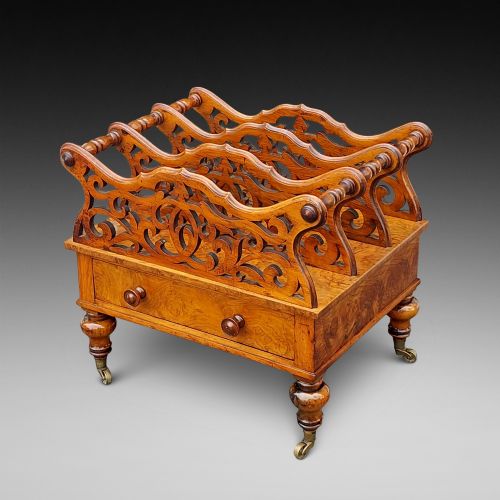
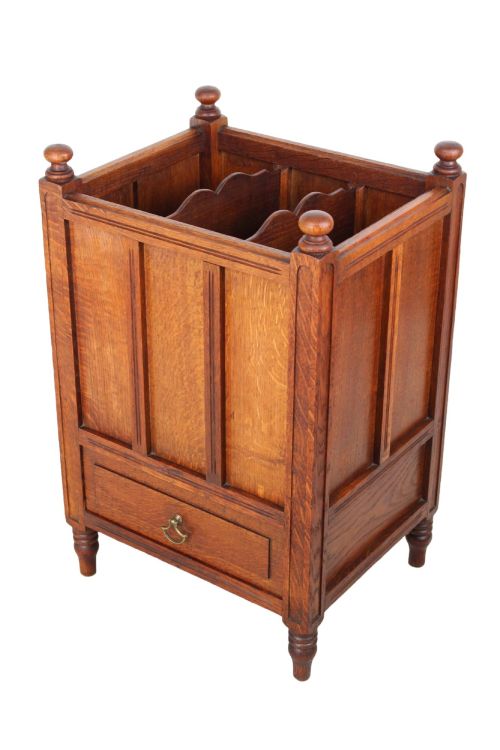
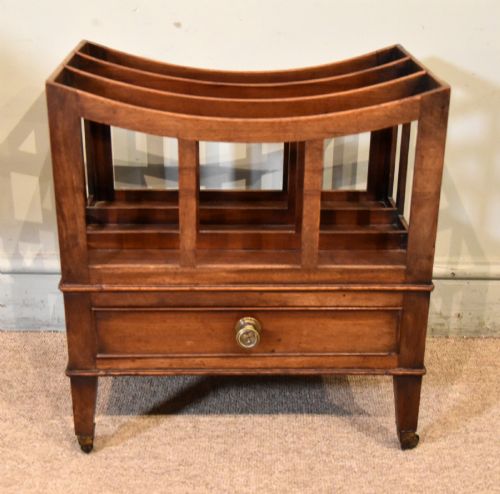
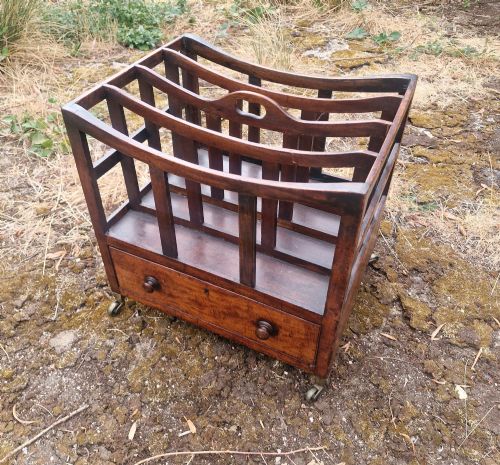
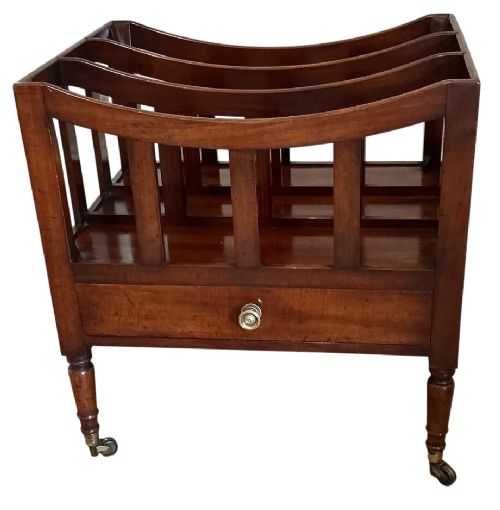
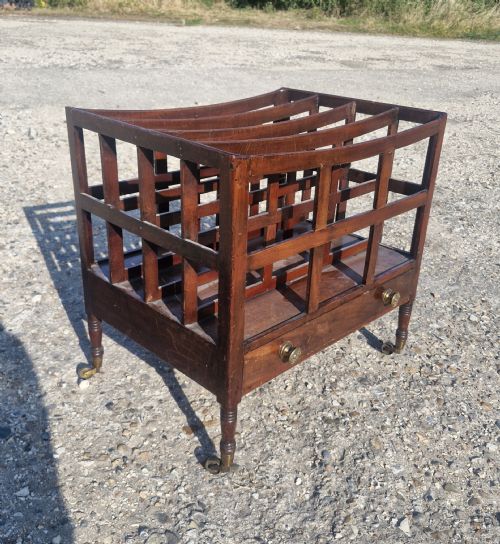
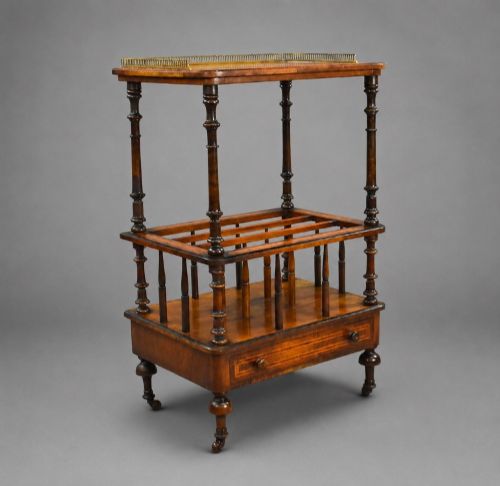
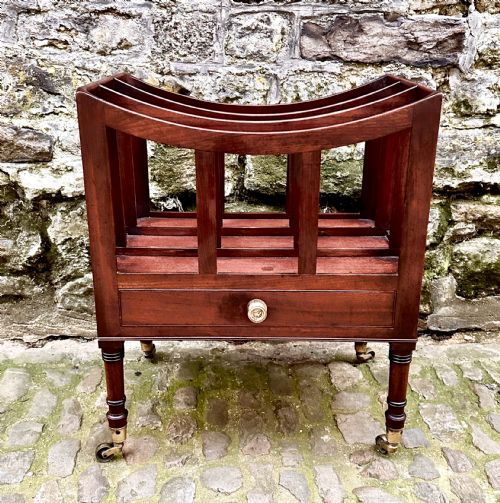
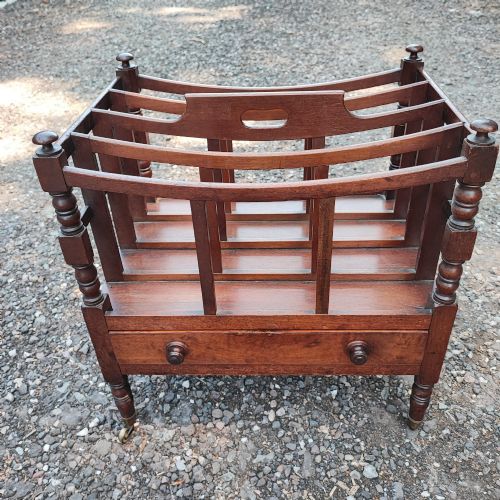
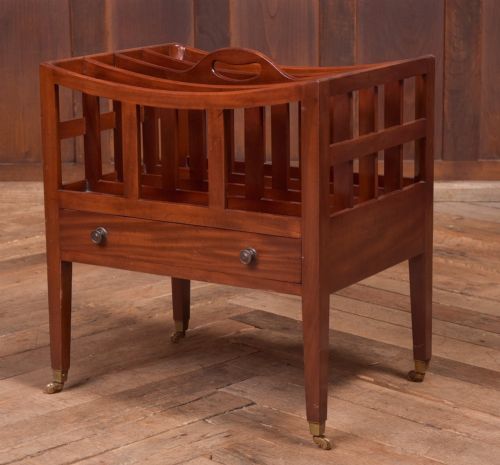
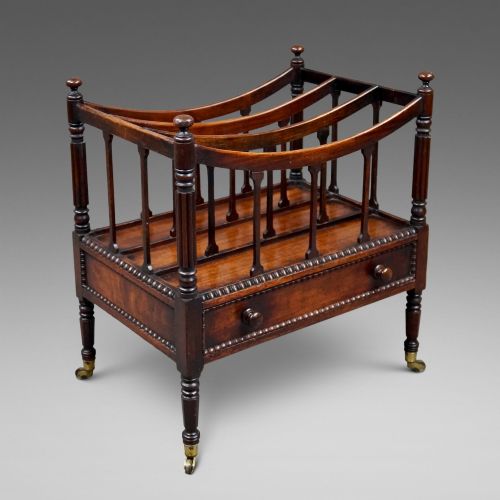
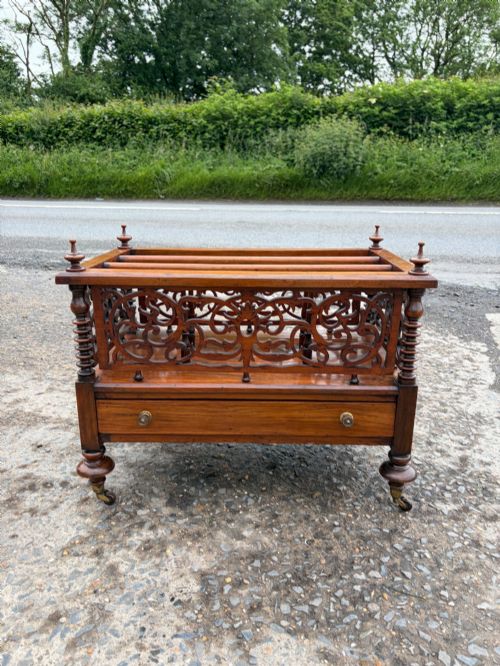
A wooden music canterbury is a specialised piece of furniture created to organise scores, folios, and periodicals within the nineteenth-century drawing room. These items typically feature vertical slatted partitions above a low drawer, mounted on castors for ease of movement across carpets. The selection on this page centres heavily upon nineteenth-century examples spanning the Georgian, Regency, William IV, and Victorian eras.
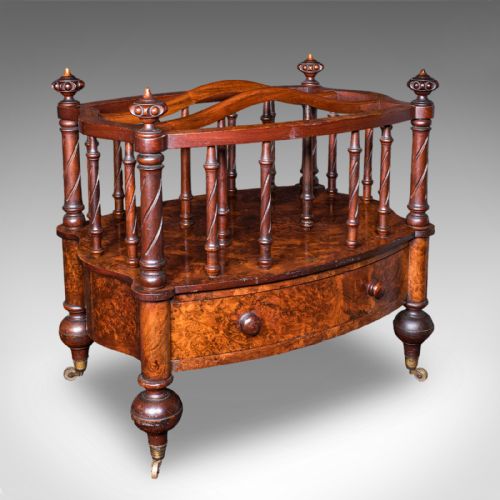
Buyers will encounter varied forms ranging from boat-shaped Regency pieces to burr walnut Victorian models and later Edwardian variations. Many incorporate magazine racks alongside their primary function, reflecting how domestic storage needs evolved over time. Rosewood, mahogany, and walnut dominate the construction, often enhanced with turned legs or intricate inlays.
Materials and construction
Cabinet makers utilised dense hardwoods such as mahogany, rosewood, and walnut to construct the structural frames and delicate upright slats. Burr walnut veneer frequently appears on mid-Victorian examples, providing rich surface patterns across the top and drawer fronts. Secondary timbers provide internal stability for the low drawers positioned beneath the partitions.
Brass fittings appear routinely, particularly in the form of castors supporting turned legs or corner mounts on boat-shaped bodies. Ceramic or porcelain components occasionally supplement the design, whilst carved details distinguish French Rococo revival and Aesthetic Movement pieces.
Materials recorded across current pieces include mahogany, walnut, burr walnut, rosewood, oak, brass, and porcelain.
Assessing quality and craftsmanship
Quality rests upon the crispness of the timber selection, such as figured walnut or dense Cuban mahogany, and the structural integrity of the slatted divisions. Superior pieces exhibit fine joinery at the corners and well-turned legs that retain their original brass castors without modification.
Proportion and decorative restraint elevate certain examples above standard production pieces, particularly where inlaid details or carved supports are integrated cleanly into the overall silhouette.
Henry Ogden and Son
The Wooden Music Canterbury Glossary
- Canterbury
- A low multi-tiered stand fitted with upright partitions, originally designed for holding sheet music or books. The form dates back to the late eighteenth century and evolved through successive stylistic periods.
- Boat-shaped
- A curved, flared hull form common in Regency furniture design. This silhouette appears frequently in early nineteenth-century stands.
- Whatnot
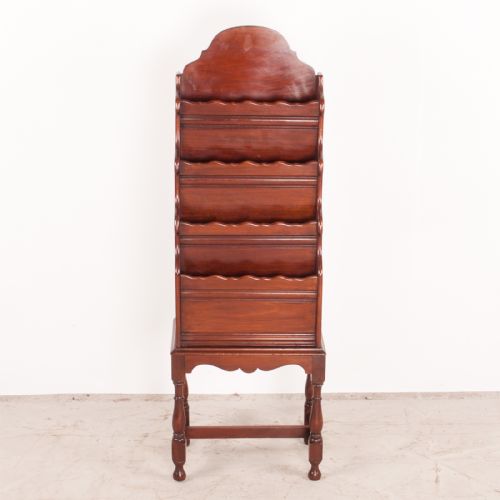
- An open set of cascading shelves used for display, occasionally combined with a lower canterbury section. These multifunctional pieces suit smaller drawing rooms.
- Etagere
- A French-derived term for a piece of furniture with several levels for displaying small objects or holding folios. They share similarities in tiered construction with standard music stands.
- Inlay
- The technique of embedding contrasting woods or other materials into a solid surface to create decorative patterns. Victorian and Georgian pieces often employ this method on drawer fronts.
Wooden Music Canterbury: Frequently Asked Questions
What is a wooden music canterbury used for?
These pieces served to hold sheet music, scores, and literary periodicals neatly beside a piano or seating area in nineteenth-century parlours.
The vertical partitions kept unbound folios upright and sorted, while the lower drawer accommodated smaller accessories and writing materials.
How do I date a wooden music canterbury?
Dating relies upon identifying the primary timber, stylistic traits, and construction methods characteristic of specific periods like the Regency or Victorian era.
For instance, rosewood and boat-shaped profiles point towards the early nineteenth century, whereas burr walnut and heavier carved ornament generally align with the mid-Victorian period.
Are these stands suitable for modern magazines?
The vertical divisions and lower shelf space accommodate contemporary magazines, art books, and newspapers rather than sheet music alone.
Their compact footprint and fitted castors allow them to sit easily beside modern sofas or armchairs as practical storage units.
What timber was used most often?
Mahogany appears frequently across Georgian and Regency examples, offering both strength and a deep natural grain for slender vertical slats.
Walnut, burr walnut, and rosewood dominate the later Victorian selections, often chosen for their decorative figure and rich colour.