
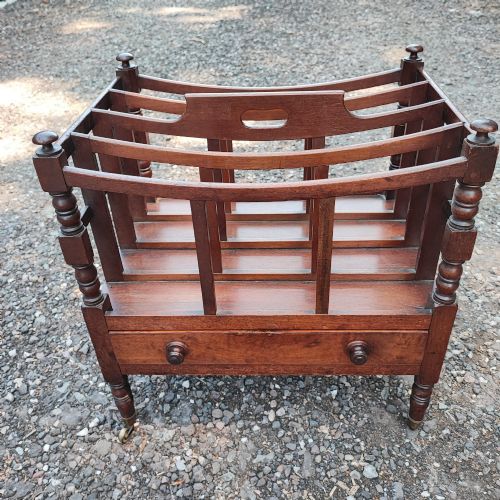


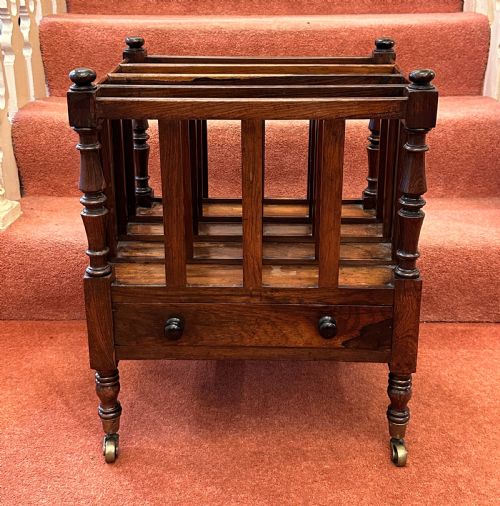
Turned Leg Music Rack
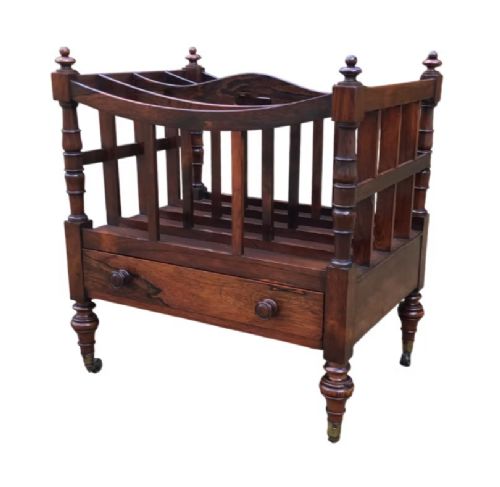
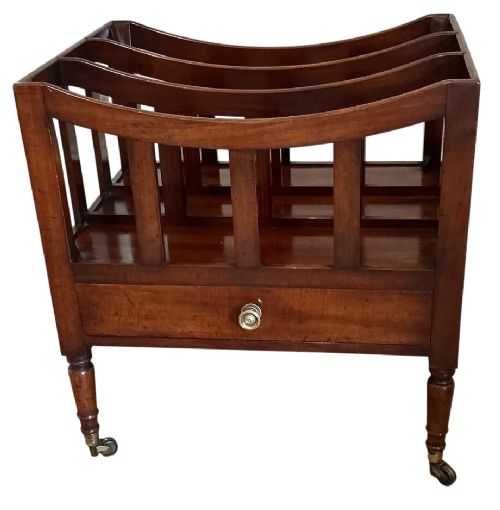
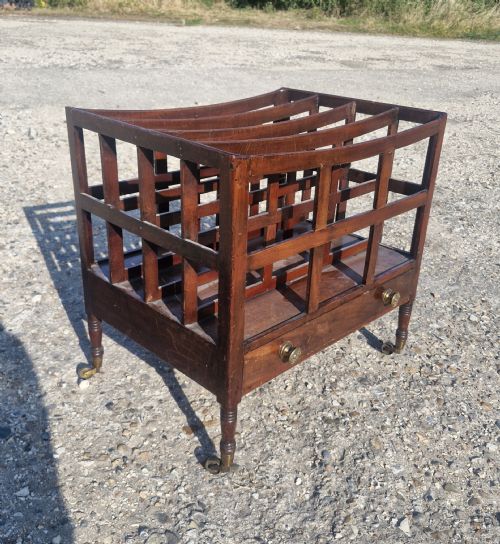
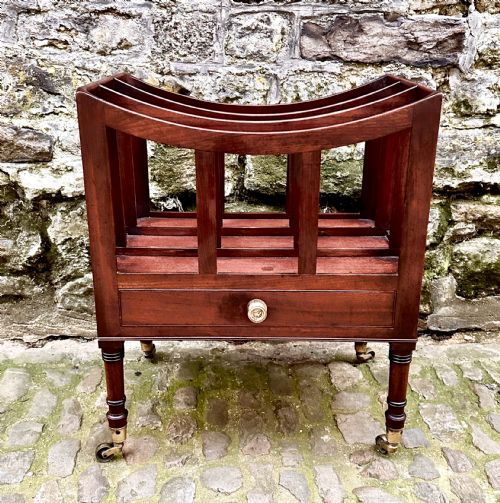
A turned leg music rack or canterbury serves as a practical repository for sheets and journals, bringing timeless timber construction into a sitting room.
Turned Leg Music Rack
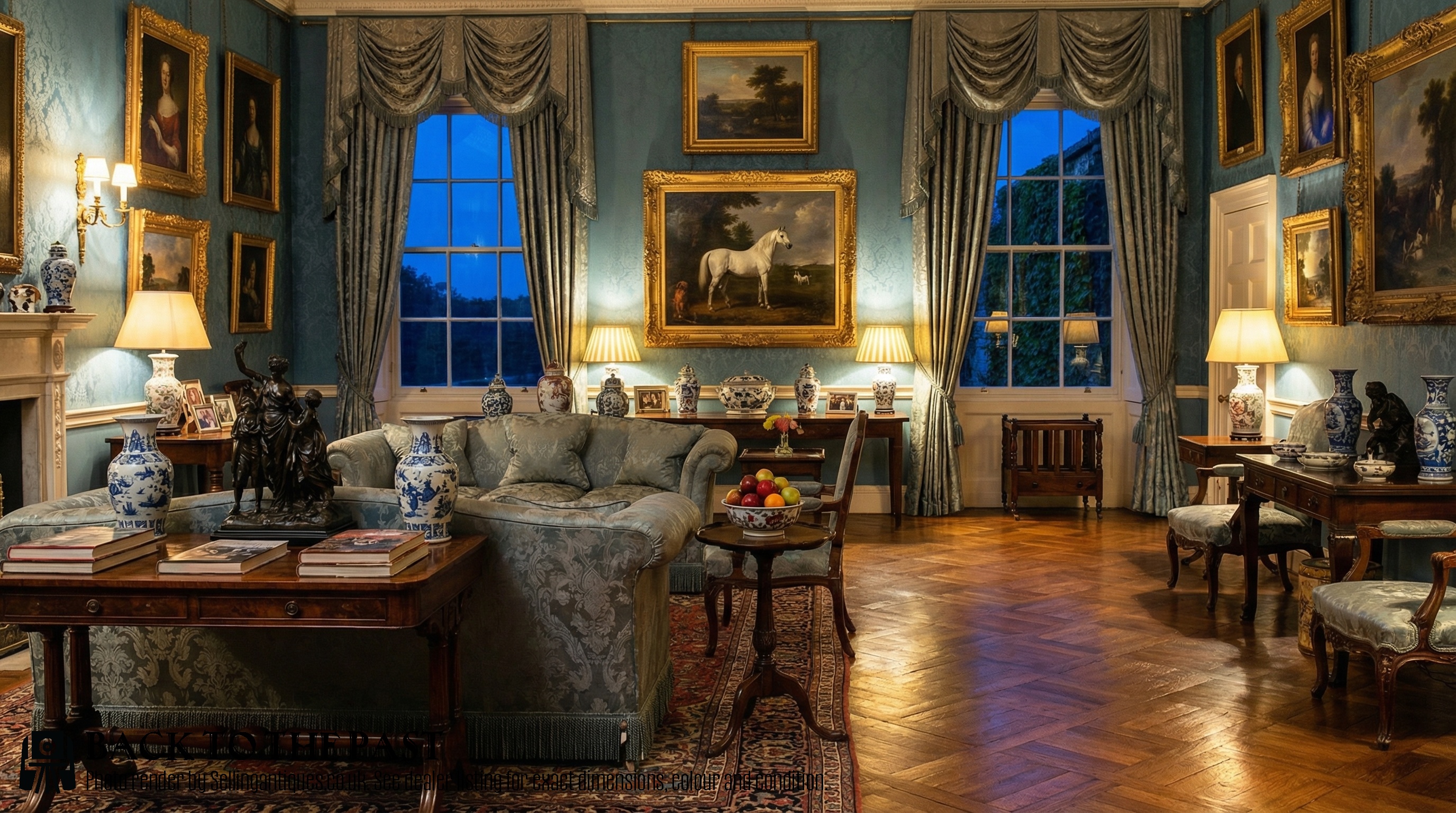
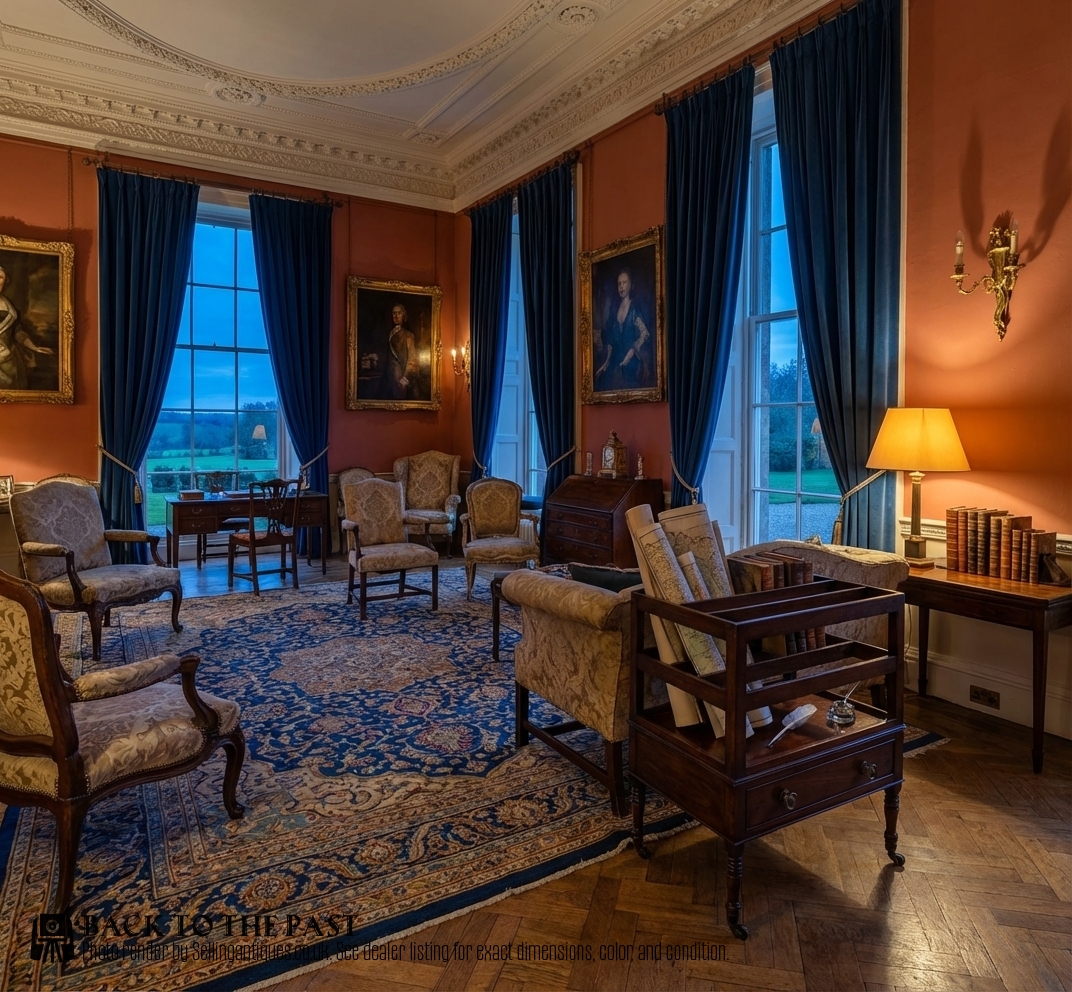
When you search for a turned leg music rack, you are looking at nineteenth-century canterburys and magazine stands designed to hold folios, newspapers, and sheets. These pieces combine vertical dividers with a low stand, frequently mounted on castors for easy movement across the floor.
The versions you are most likely to meet on this page span the Georgian, Regency, William IV, and Victorian periods. Makers produced them in forms such as boat-shaped bodies and multi-section stands, utilising rich timbers suited to formal reception rooms.
How they were made
Cabinet makers utilised solid timbers and veneers, working primarily with mahogany, rosewood, burr walnut, and oak. These woods were shaped into turned legs and slatted dividers, sometimes incorporating decorative inlay work along the frame.
Brass castors and fittings were frequently attached to the base of the legs to allow smooth transport. Joinery methods relied on traditional pegging and framing to support the weight of heavy paper volumes within the partitions.
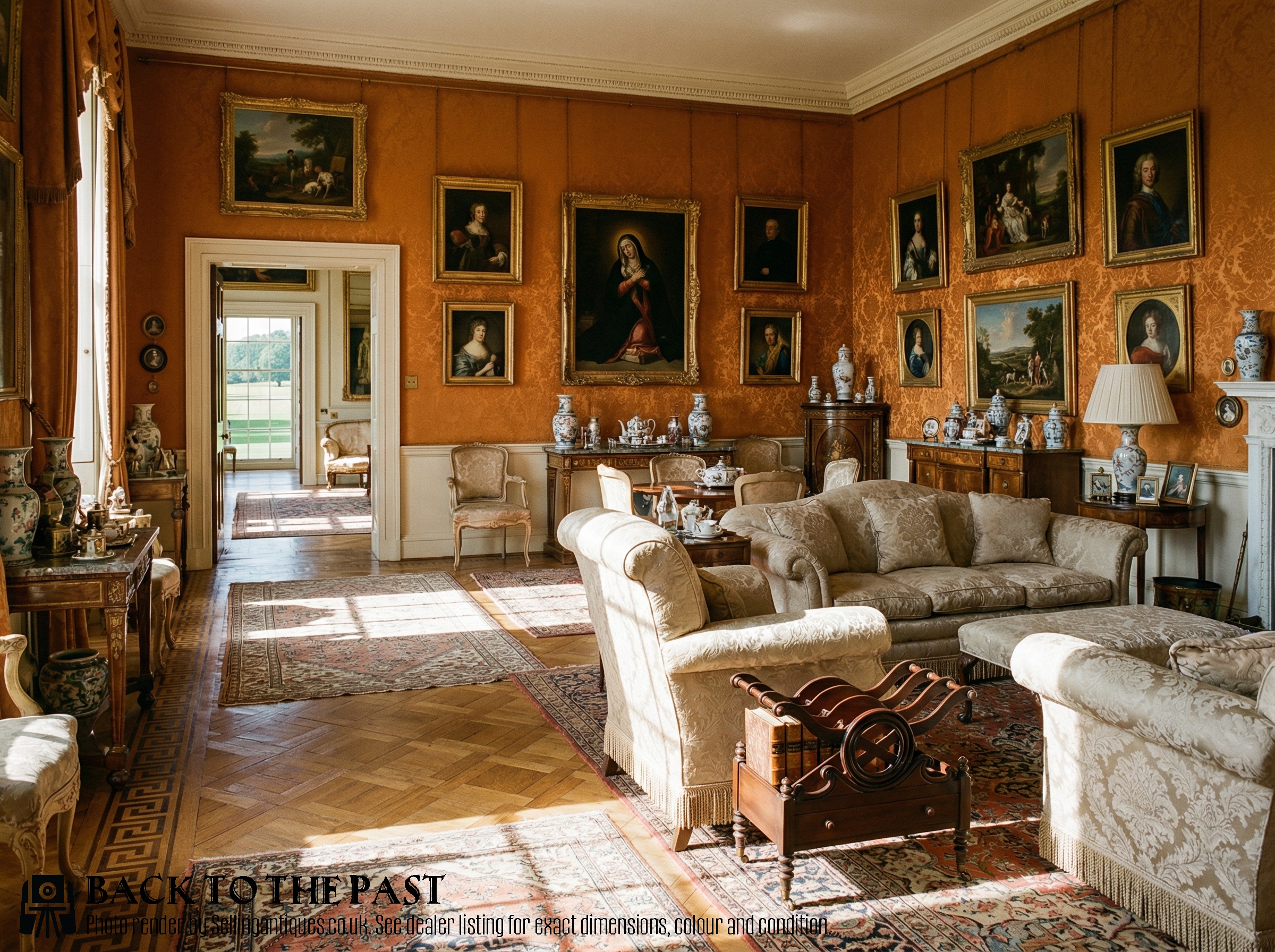
Some nineteenth-century makers mounted these stands on castors so they could follow the pianist around the drawing room.
What varies in quality
The distinction between standard examples and superior pieces rests on the choice of timber and the crispness of the turning on the legs. Fine examples exhibit carefully selected grain patterns, such as figured mahogany or burr walnut, paired with robust structural divisions.
Proportion and detailing also separate pieces within the range. Refined items feature balanced boat-shaped bodies or intricate inlay work, whereas simpler variants rely on plain oak or standard mahogany without ornamental flourishes.
The Turned Leg Music Rack Glossary
- Regency
- An English design style dating from the early nineteenth century, characterised by classical restraint and elegant proportions. Pieces from this period frequently display refined turned legs.
- Burr walnut
- A highly figured timber prized for its swirling grain patterns, sourced from the growths on walnut trees. Cabinet makers utilised it as a veneer on high-status Victorian furniture.
- Inlay
- A decorative technique where contrasting materials such as lighter woods or brass are inserted into recesses within the primary timber surface. It adds visual interest to the panels and borders.
Turned Leg Music Rack: Frequently Asked Questions
What is a canterbury used for?
A canterbury was originally designed to hold sheet music, folios, and scores near a piano or music stand. Over time, households also utilised them to store daily newspapers and periodicals within the living room.
They provided an accessible way to keep reading materials tidy while remaining portable enough to shift across the floorboards during cleaning or entertaining.
How do I date a mahogany canterbury?
Dating relies on examining the timber characteristics, construction methods, and stylistic cues present in the legs and dividers. Georgian and Regency examples often feature lighter mahogany with delicate turning, whereas Victorian pieces tend to be heavier and may incorporate burr walnut.
Hardware such as brass castors and the joinery visible underneath also offer clues to the era of manufacture, distinguishing early nineteenth-century work from later Victorian production.
Are these stands suitable for modern magazines?
These stands accommodate modern magazines, journals, and art books within their traditional wooden divisions. The spaced sections keep soft-cover publications upright and easy to browse.
Placing contemporary reading material in an antique piece blends practical storage with period character in a modern interior.
What timber was most commonly used?
Mahogany is the primary timber found across these listings, valued for its stability and rich reddish-brown tone. Makers also utilised rosewood, oak, and burr walnut depending on the prevailing style of the period.
Inlaid details and brass mounts frequently accented these primary woods to enhance the visual appeal of the piece.