


Mahogany Music Canterbury Drawer
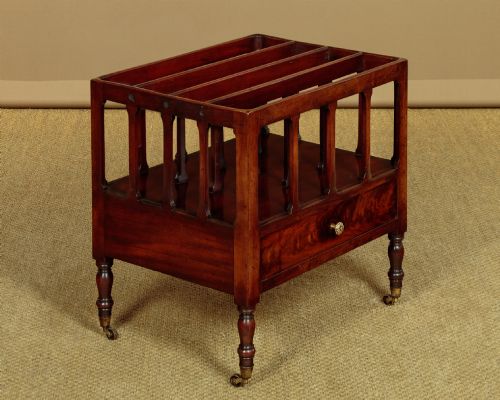
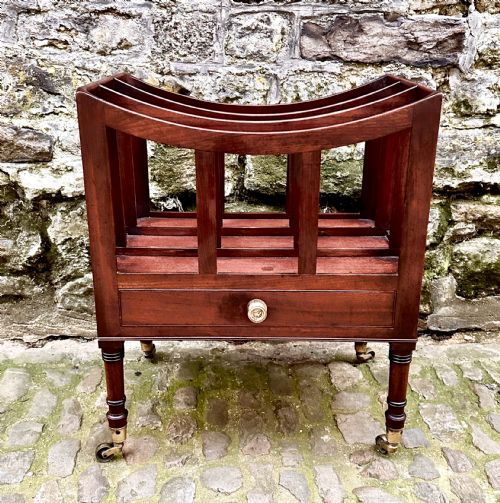
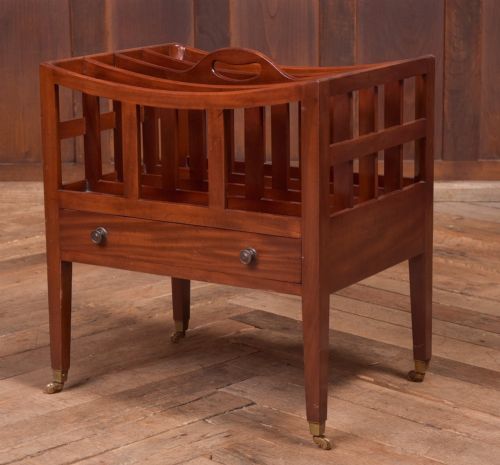
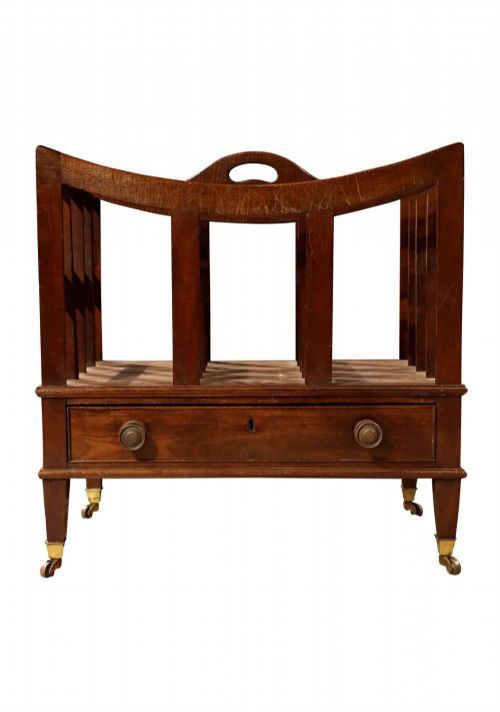
A mahogany music canterbury drawer combines slotted partitions for scores and folios with a useful base compartment for smaller accessories.
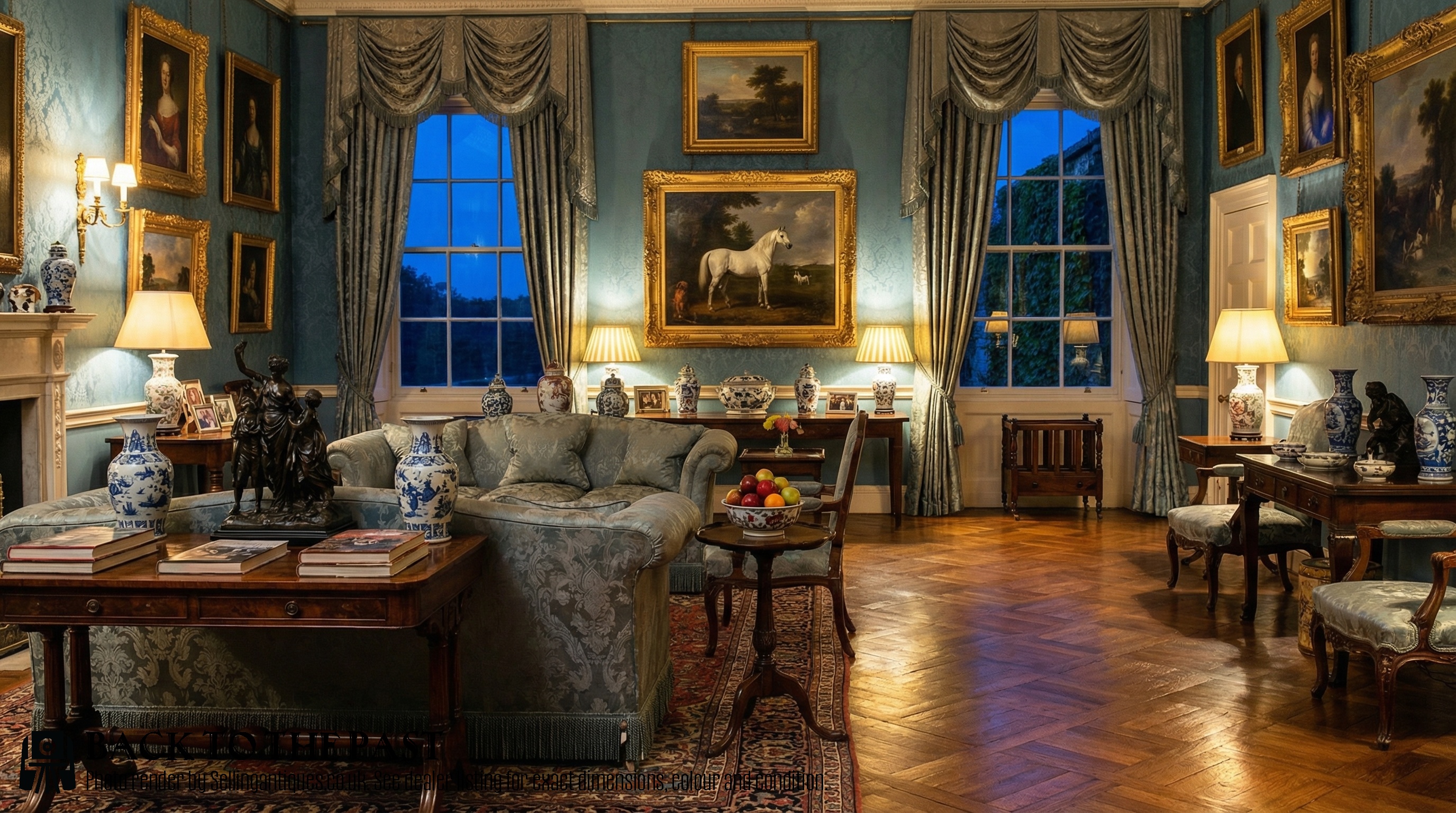
Mahogany Music Canterbury Drawer
When you search for a mahogany music canterbury drawer, you are looking at specialised occasional furniture designed to hold sheet music, periodicals, and books near a piano or in a parlor. The pieces available span several eras, appearing in Georgian, Regency, William IV, Victorian, and Edwardian guises.
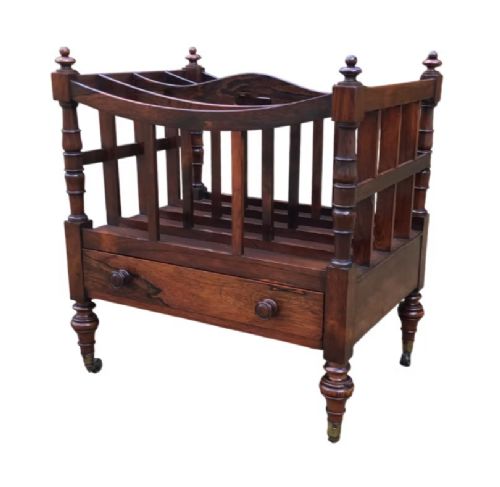
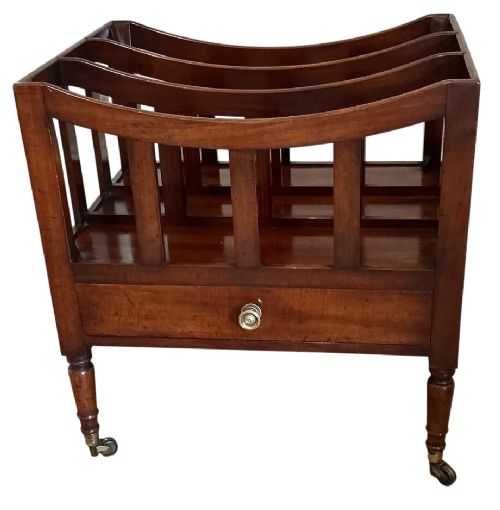
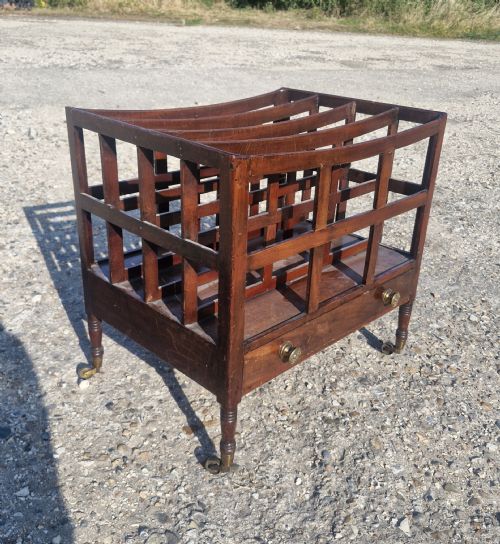
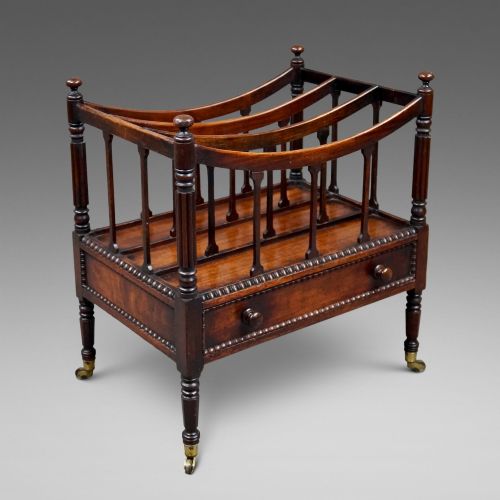
Most examples feature upright slatted divisions above a single lower drawer, though boat-shaped bodies and cabinet formats also appear. These stands originated to keep scores tidy and accessible for musicians in period drawing rooms.
How they were made
Cabinetmakers built these pieces primarily using solid mahogany and veneers, often incorporating secondary timbers for internal drawer construction. Many examples integrate turned wooden legs supported on castors for ease of movement across carpets.
Decorative detailing relies on craftsmanship rather than heavy ornamentation, utilising brass castors, boxwood inlay, and pierced scroll divisions. Rosewood also appears among the timber selections, while later Edwardian variants sometimes integrate glass panels or brass handles.
Named after an archbishop who wanted his loose sheets kept tidy, these stands ended up rolling around British drawing rooms on tiny brass wheels.
What varies in quality
The distinction between standard production and exceptional workshop output lies in the crispness of the joinery and the selection of timber figures. Superior pieces show thoughtful proportion in the turned supports and careful shaping of the pierced partitions.
Hardware and secondary details further separate workshop standards. Original brass castors, tightly fitted drawer construction, and refined edge mouldings indicate a higher grade of manufacture than plain replacement elements.
Howard and Sons of London·Gillows of Lancaster
The Mahogany Music Canterbury Drawer Glossary
- Canterbury
- A low stand with upright partitions for holding sheet music, folios, or newspapers, usually fitted with a drawer below. The form takes its name from an Archbishop of Canterbury who reportedly commissioned the first such rack.
- Boat shaped
- A curved profile to the divider walls resembling the hull of a vessel, typical of Regency designs. This contour softens the rectangular silhouette of the stand.
- Pierced division
- A partition wall cut through with decorative fretwork or handholds rather than left as a solid board. This technique lightened the visual weight of the stand.
- Castor
- A small wheel fitted to the base of each leg to allow smooth rolling across floor coverings. Regency and Victorian examples frequently employ brass socket castors.
- Fall front
- A hinged panel that drops forward to reveal interior shelving or storage compartments, seen on related music cabinets. This mechanism conceals stored papers when not in use.
Mahogany Music Canterbury Drawer: Frequently Asked Questions
What is a music canterbury used for?
These stands were designed to hold sheet music, folios, and books close to a piano or seating area. The upright partitions kept unbound scores organised and upright.
The lower drawer provided enclosed storage for smaller musical accessories, tuning keys, or writing materials. Today they serve equally well for holding modern magazines and newspapers.
How do I date a mahogany canterbury?
Dating relies on stylistic cues such as leg turning, timber choice, and the overall profile of the partitions. Regency examples often display boat shapes and delicate turned supports, while Victorian versions tend toward heavier proportions.
Edwardian pieces introduce lighter inlay work and cabinet formats with fall fronts. Cabinetmaker labels or stamps, when present, provide the most precise indication of origin.
Where should I place a canterbury in my home?
These compact pieces fit easily beside a sofa, armchair, or desk where reading materials accumulate. Their freestanding nature allows them to sit comfortably in corners or against empty wall spaces.
Because they are finished on all sides for placement in the room, they work well as freestanding accent pieces rather than strictly pushed against walls.
Are all canterburys made of mahogany?
While mahogany is the dominant timber across the recorded pieces, other woods do appear in the selection. Rosewood is represented among the higher-end Victorian and William IV examples.
Inlay work frequently incorporates lighter contrasting timbers like boxwood to accent the primary mahogany grain.