

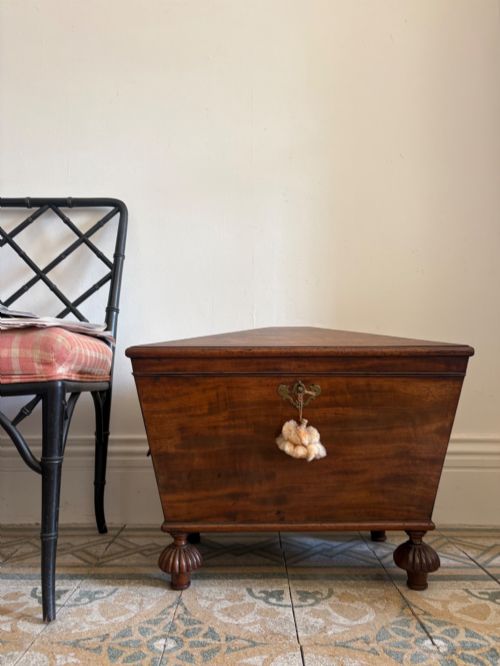


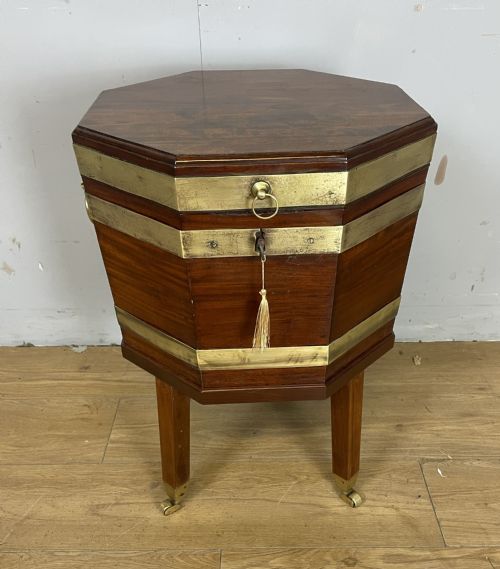
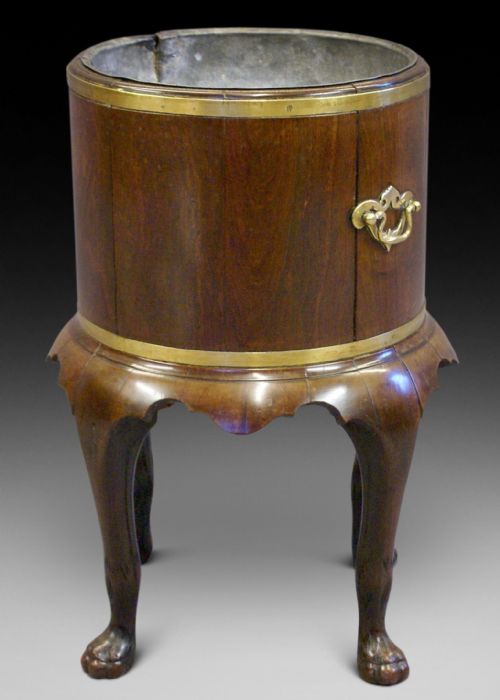


Wooden Lead Lined Cooler
A wooden lead lined cooler is a robust vessel designed to chill wine at table, prized for its handsome timber and enduring utility.
Wooden Lead Lined Cooler
A wooden lead lined cooler, often catalogued as a wine cooler or cellarette, is typically found in substantial timber forms dating from the eighteenth and nineteenth centuries. These pieces encompass Georgian and Regency designs, alongside later Edwardian and early twentieth century interpretations.
Origins span Irish workshops, Dutch neoclassical traditions and English cabinet making. Pieces range from diminutive George II proportions to large antique formats.
Materials and construction
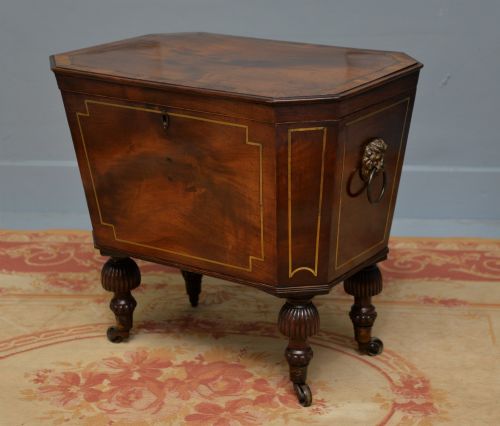
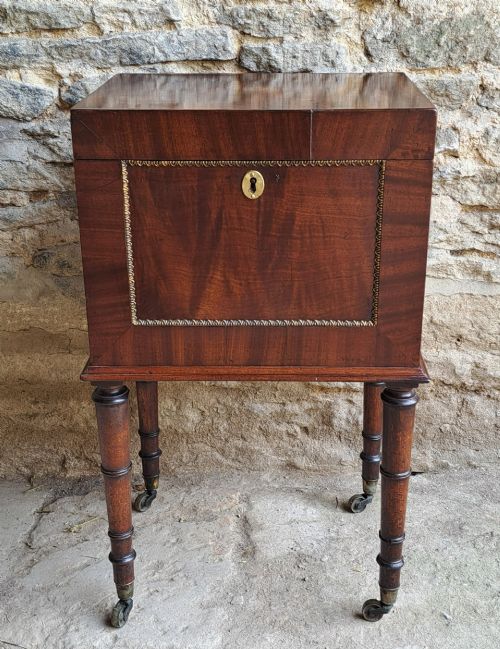
Cabinet makers utilised dense hardwoods such as mahogany, flame mahogany veneer, satinwood and rosewood to construct the bodies of these coolers. Decorative detailing frequently involved brass inlays, brass bands, ormolu mounts and marquetry work.
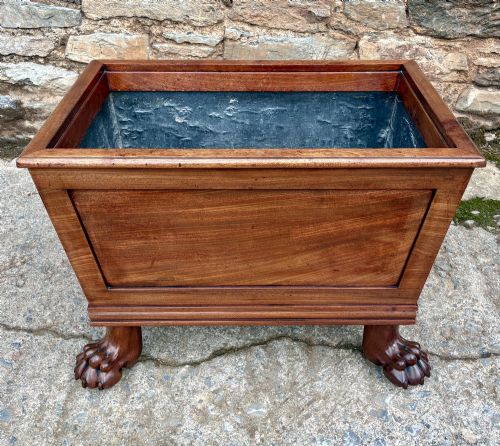
Internal waterproofing was achieved using lead or zinc linings, designed to hold ice and water for chilling bottles safely without damaging the surrounding timber. Construction methods reflect the joinery standards of the Georgian and Regency periods.
Wooden Lead Lined Cooler Retail Price Guide 2026
Typical asking prices for wooden lead lined cooler among the pieces listed under this phrase on Sellingantiques today, from the lower quarter to the upper quarter. They describe what is for sale here now, not the wider market.
Some of these grand wine coolers spent more time holding ferns than claret.
Design and execution
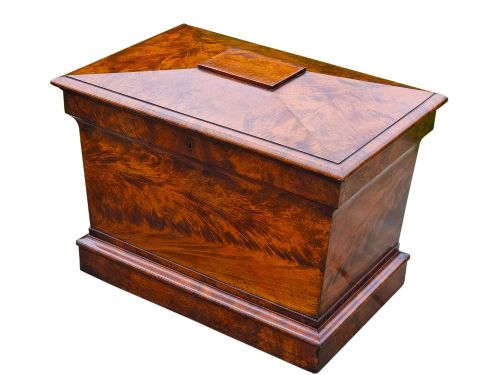
Quality rests in the selection of timber figures, such as flame mahogany or intricate marquetry veneers, and the crispness of brass inlay or ormolu mounts. The architectural proportion of a sarcophagus body or the precision of octagonal stave construction dictates visual success.
The retention of original lead liners and structural hardware distinguishes more intact examples. Refined carving upon paw feet and well executed mouldings separate standard production from superior cabinet work.
The Wooden Lead Lined Cooler Glossary
- Cellarette
- A lockable container used for storing bottles of wine near the dining table. They were often heavily lined to hold ice.
- Sarcophagus
- A monumental coffin shape with a domed lid and tapered sides, widely adopted by Regency cabinet makers for wine coolers.
- Ormolu
- Gilded bronze mounts applied to furniture for decorative enrichment. They catch the light and highlight the timber grain.
- Marquetry
- The art of applying decorative veneer pieces in various woods to form geometric or pictorial patterns. Dutch makers excelled in this technique.
Wooden Lead Lined Cooler: Frequently Asked Questions
What is a wooden lead lined cooler?
A wooden lead lined cooler is a period container built to chill wine using ice held directly against the bottles. The internal metal lining protects the wooden structure from moisture.
These pieces served dining rooms in grand houses during the Georgian and Regency eras, doubling as decorative furniture when not in active service.
How do I use one today?
These vessels function well as traditional wine coolers during dinner parties or as sculptural planters for indoor greenery. Their deep proportions suit large floral arrangements.
Placing them in rooms with stable humidity protects the timber and internal linings from unnecessary stress.
How do I date a cellarette?
Dating relies on timber choice, architectural style and construction details like brass binding or paw feet. Georgian and Regency pieces show distinct classical proportions.
Later Edwardian versions often display lighter stringing and alternative inlay techniques compared to earlier examples.
Why use lead inside wood?
Lead provides a waterproof barrier that resists corrosion from melting ice and salted water mixtures used historically for rapid chilling. It offers malleability for sealing corners effectively.
Zinc also appears in later pieces for the same protective purpose.