

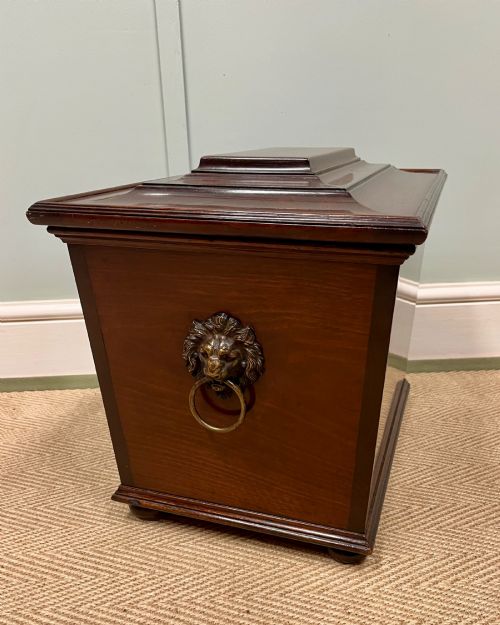
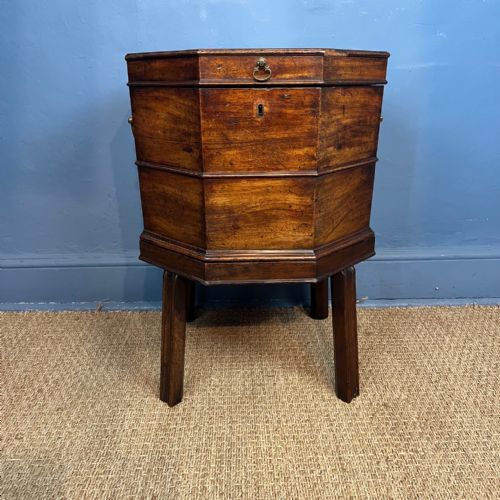
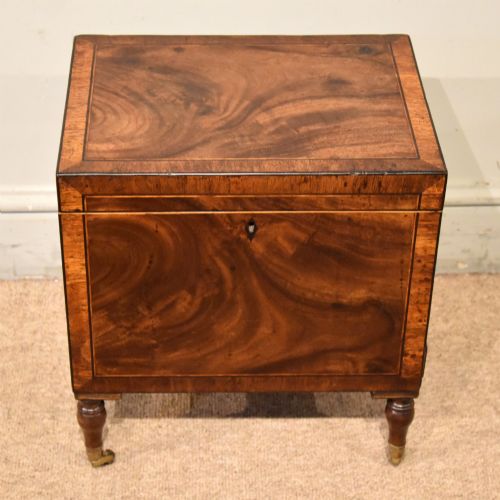
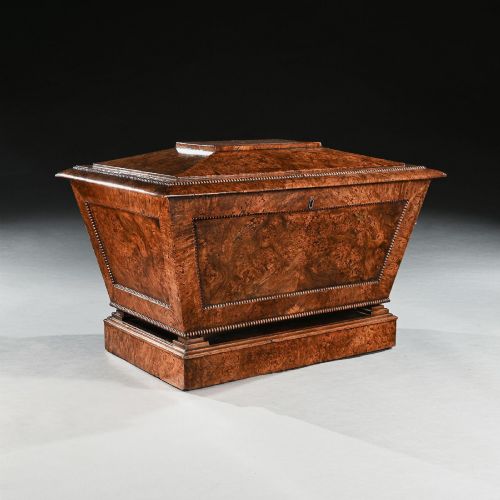
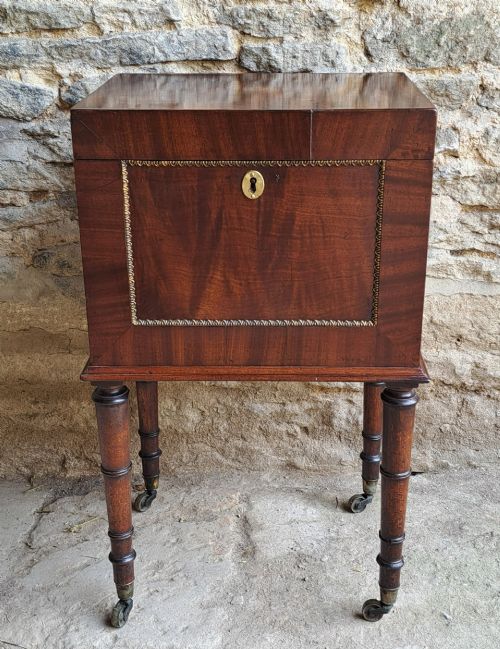
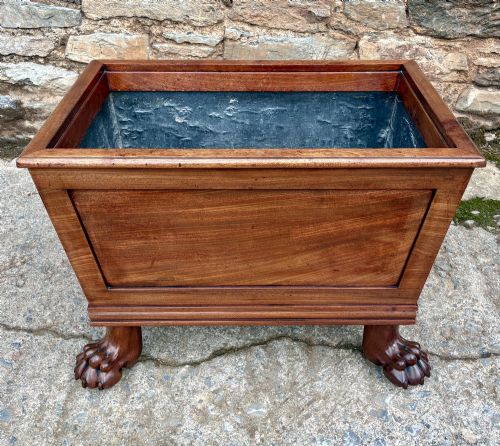
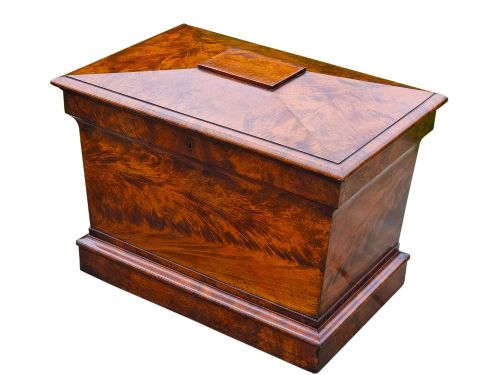
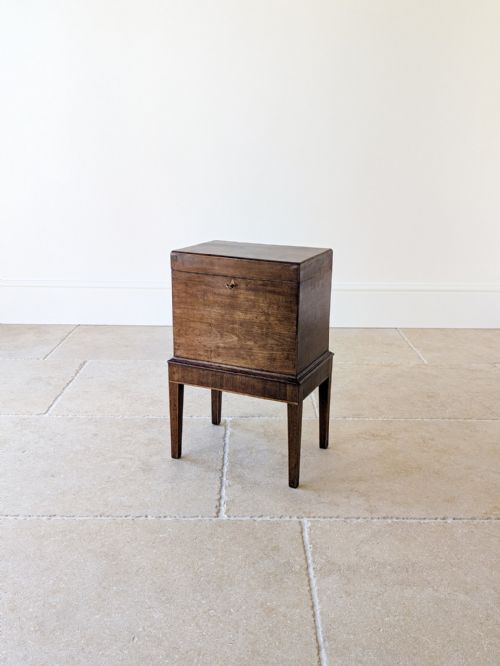

Georgian Sarcophagus Cellarette
A georgian sarcophagus cellarette is a grand dining room vessel for cooling wine, built to command attention beside a sideboard.
Georgian Sarcophagus Cellarette
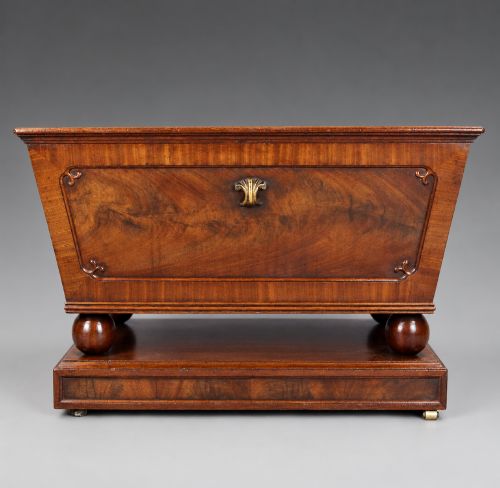
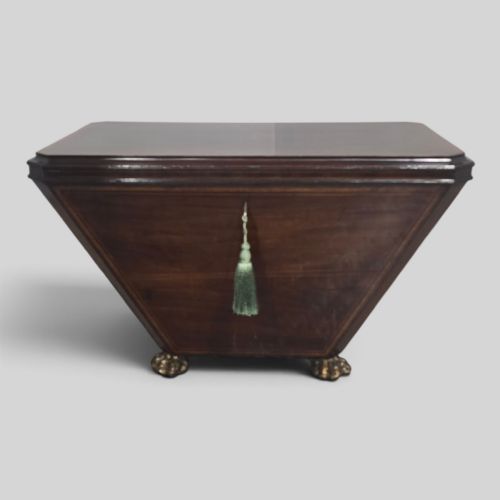
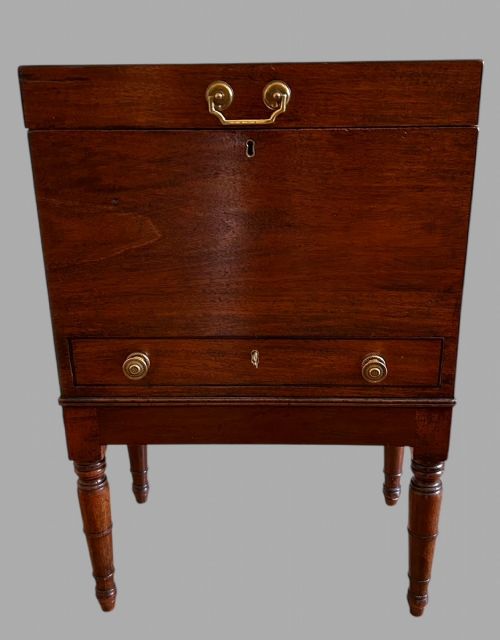
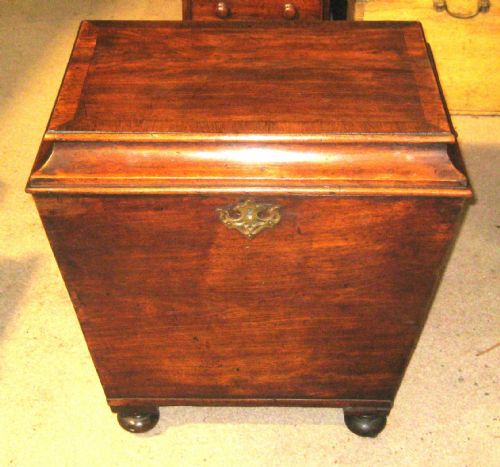
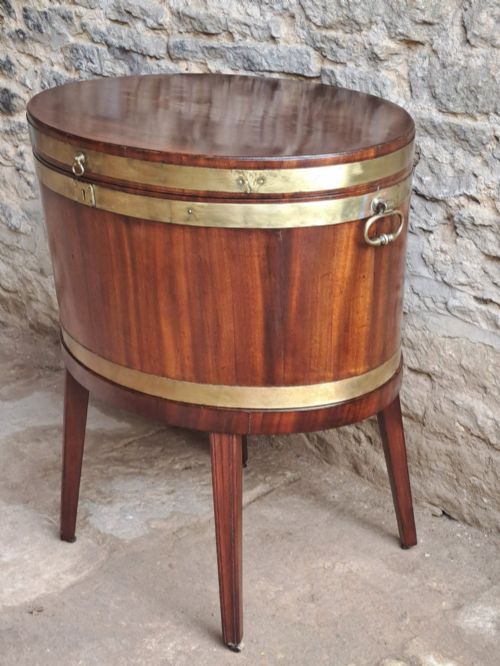
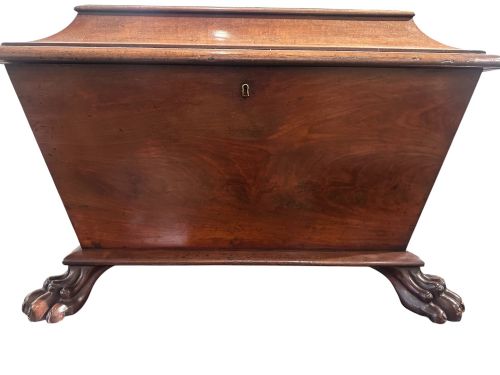
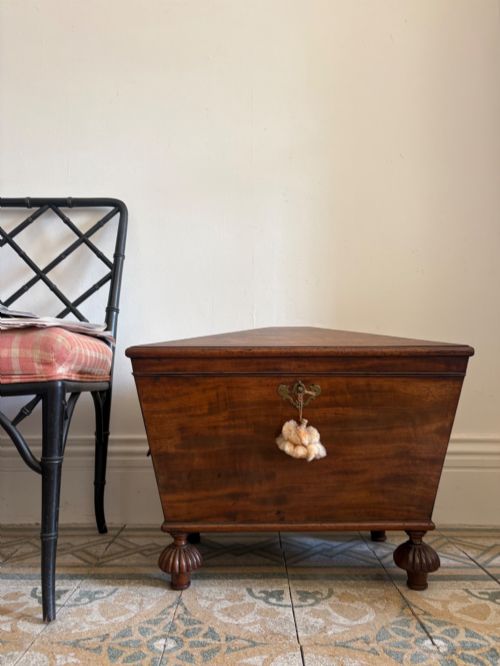
A georgian sarcophagus cellarette typically takes a heavy tomb-like form with a hinged lid, designed to hold bottles and ice beneath the formal dining room sideboard. The version you are most likely to encounter on this page is fashioned from rich timber, dating from the eighteenth or nineteenth century.
Makers shaped these vessels with distinct architectural lines, often resting upon paw feet, bracket feet or short turned legs. They appear under various descriptions including wine coolers and wine boxes, spanning periods from George II through to the Victorian era.
Materials and construction
Cabinet makers relied heavily on solid and veneered mahogany, frequently selecting flame mahogany or pollard oak to achieve dramatic grain patterns across the heavy lid and sides. Boxwood inlay, brass banding and ormolu mounts added refined decorative contrast to the dark timber frames.
Interiors required practical linings to hold melting ice and bottles safely without damaging the wood structure. Craftsmen lined the compartments with lead to ensure waterproof durability during use at the dining table.
Georgian Sarcophagus Cellarette Retail Price Guide 2026
Typical asking prices for georgian sarcophagus cellarette among the pieces listed under this phrase on Sellingantiques today, from the lower quarter to the upper quarter. They describe what is for sale here now, not the wider market.
The archive and current stock demonstrate a strong representation of Regency and George III pieces, alongside later Victorian revivals.
Assessing quality
The distinction between standard examples and superior pieces rests on the choice of timber and the depth of the natural patina. Figured veneers such as flame mahogany or pollard oak, combined with crisp boxwood inlay or finely cast ormolu mounts, elevate the visual impact.
Proportion and structural integrity define the maker's success, particularly in how the heavy sarcophagus lid meets the body. Original lead linings and well-executed feet, such as carved paw supports, separate workshops of high repute from lesser productions.
Edwards and Roberts·Gillows·Thomas Hope
The Georgian Sarcophagus Cellarette Glossary
- Cellarette
- A lockable container or chest designed specifically for storing and cooling wine bottles in the dining room. They often sat beneath the sideboard or on the floor.
- Sarcophagus
- An architectural coffin-like form with a sloping lid, adopted by furniture designers in the Regency period for large wine coolers. This shape gave the container substantial visual weight.
- Flame mahogany
- A decorative veneer cut from the fork of a mahogany tree where the branch joins the trunk. It creates a distinctive rippled, flame-like pattern across the timber surface.
- Pollard oak
- Timber taken from trees that were pollarded, resulting in dense, highly knotted growth rings with rich figuring. Cabinet makers prized this wood for its mottled texture.
- Lead liner
- A fitted metal insert placed inside the cellarette to hold ice and water for chilling wine. The soft metal prevented leaks from rotting the surrounding mahogany.
Georgian Sarcophagus Cellarette: Frequently Asked Questions
What is a georgian sarcophagus cellarette used for?
These vessels served to store and cool wine bottles during formal meals in large dining rooms. Servants placed ice and water inside the lead-lined interior to chill the wine before serving.
They stood on the floor beside the sideboard, keeping bottles close at hand while adding architectural dignity to the room's decor.
How do I tell a Regency piece from an earlier Georgian one?
Earlier eighteenth-century pieces often display restrained classical proportions with straightforward mahogany construction and subtle brass mounts. Regency examples tend to embrace bolder architectural forms, such as the distinct sarcophagus shape with paw feet.
Regency makers also made frequent use of elaborate veneers like flame mahogany and pollard oak, paired with more pronounced brass banding and ormolu.
Where should I place a cellarette in a modern home?
A cellarette works exceptionally well as a freestanding statement piece in a dining room, hallway or living space. Its deep interior provides practical storage for contemporary bottles or household items.
Because these vessels have substantial presence and weighty proportions, they require adequate floor space to be appreciated from all angles.
Are these cellarettes waterproof inside?
Many examples retain their original lead linings, which were soldered together to hold ice and melting water without leaking. Over time, however, these historic linings can develop wear or cracks.
It is wise to inspect the interior condition if you intend to use the vessel for actual cooling rather than dry storage.