



Brass Inlaid Cellarette
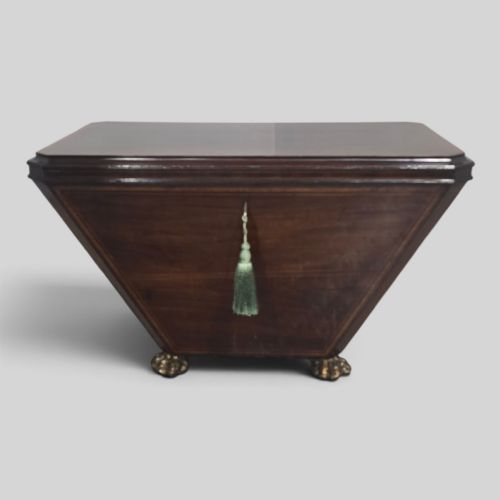
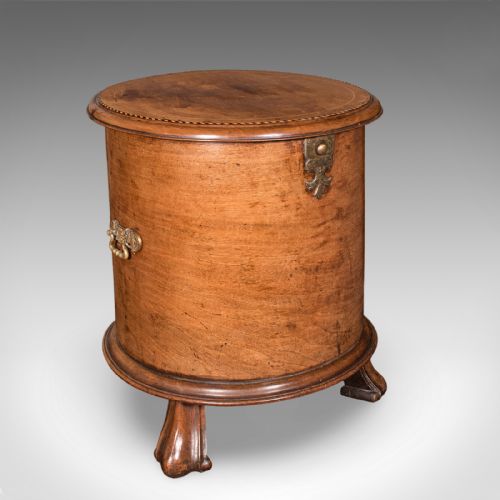
These brass inlaid cellarette pieces are timber drinks containers that hold bottles and cool wine, offering traditional storage for the dining room.
Brass Inlaid Cellarette
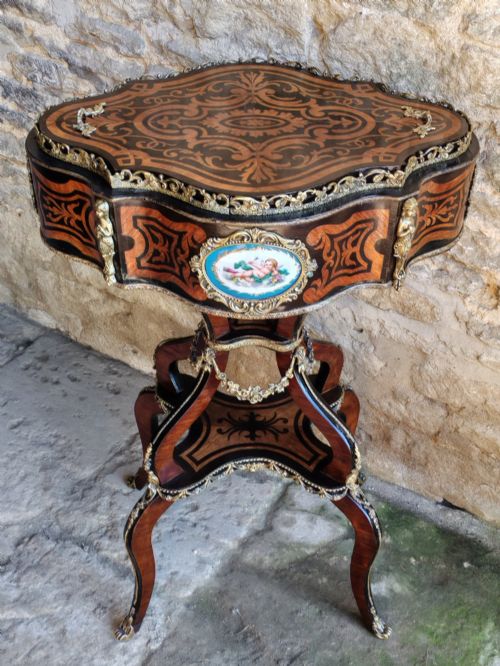
When you search for a brass inlaid cellarette, you encounter period wine coolers and drinks cabinets designed to house bottles within formal dining settings. The examples documented here span Georgian, Regency, Victorian, and Edwardian eras, taking the form of octagonal coolers, oval vessels, and drinks tables.
Most pieces on this page are constructed from dense timbers such as mahogany and rosewood, enriched with contrasting boxwood and satinwood inlay. The vessel forms range from freestanding stands to sideboard companions, reflecting the changing social rituals of dining across the nineteenth and early twentieth centuries.
How they were made
Cabinet makers utilised solid and veneered timbers including mahogany, walnut, and rosewood as the primary structural bodies for these drinks vessels. Artisans shaped octagonal and oval forms using traditional joinery before applying complex stringing and marquetry details in boxwood, satinwood, and brass.
Metal components such as castors, handles, and decorative inlay define the construction methods recorded across these listings. Fine brass stringing is embedded directly into the timber surfaces, while cast bronze or ormolu mounts provide structural support and functional hardware.
Object classifications on this site encompass wine coolers, cellarettes, jardinieres, drinks tables, and sideboards.
What varies in quality
The standard of timber selection and the precision of the brass inlay determine the overall calibre of a piece. Superior examples display tightly figured mahogany or rosewood grains paired with flawlessly flush metalwork, whereas lesser items show coarser cuts of wood and wider, less precise inlay channels.
Complexity of form and interior configuration also separate standard production from high-end workshop output. Octagonal geometries, fitted sectioned interiors, and original brass castors demonstrate a higher degree of initial craftsmanship than simpler rectangular counterparts.
Edwards and Roberts·Whytock and Reid
The Brass Inlaid Cellarette Glossary
- Cellarette
- A lockable container used for storing and cooling wine bottles near the dining table. They frequently incorporate lead linings or internal wooden partitions.
- Marquetry
- Decorative patterns formed by fitting contrasting veneers into a timber ground. This technique creates pictorial or geometric designs across the surface of the piece.
- Stringing
- Thin strips of contrasting wood or metal inlaid into shallow grooves on furniture surfaces. It outlines panels and edges to add linear definition.
- Ormolu
- Gilded bronze mounts applied to furniture for decorative effect. The metal is cast and chased before receiving a gold finish.
- Jardiniere
- An ornamental stand or vessel designed to hold plants or flowers. In some periods, these vessels shared similar waterproof forms with wine coolers.
Brass Inlaid Cellarette: Frequently Asked Questions
What is a brass inlaid cellarette used for?
These pieces served as portable or stationary wine storage containers placed adjacent to the dining table during formal meals. They kept bottles cool and close at hand before the widespread adoption of domestic refrigeration.
Today, they function well as standalone decorative items, side tables, or specialised storage containers for modern living spaces and dining rooms.
How do I identify a Regency period piece?
Regency items typically exhibit classical architectural proportions, dark mahogany or rosewood timbers, and restrained brass stringing or inlay. They often feature distinct geometric forms such as octagons or sarcophagus shapes.
Examining the interior construction, secondary woods, and the style of the brass handles helps distinguish this era from later Victorian or Edwardian reproductions.
Are cellarettes and wine coolers the same thing?
The terms overlap significantly in historical records, though traditional cellarettes often included lockable lids and internal bottle partitions. Wine coolers frequently took open or planter-style vessel forms designed to hold ice.
Many listings combine these definitions because makers adapted similar waterproof internal linings and timber bodies for both beverage storage and floral display.
How should I care for mahogany and brass inlay?
Maintain the timber by applying appropriate natural waxes sparingly and buffing gently with a soft cloth to preserve the finish. Avoid placing the vessel in direct sunlight or near heat sources that could dry out the wood and loosen the metal inlay.
Keep the brass components clean using dry methods, ensuring moisture does not seep beneath the metal stringing during routine maintenance.