
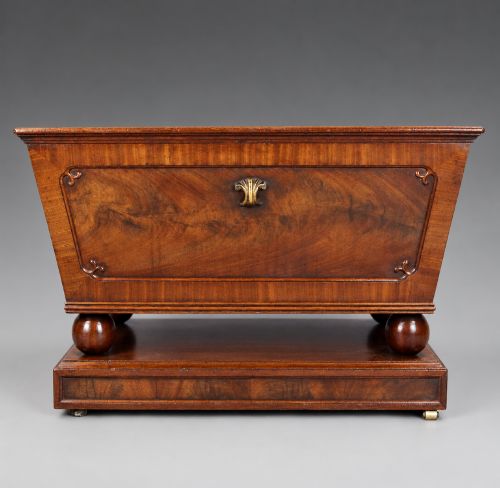
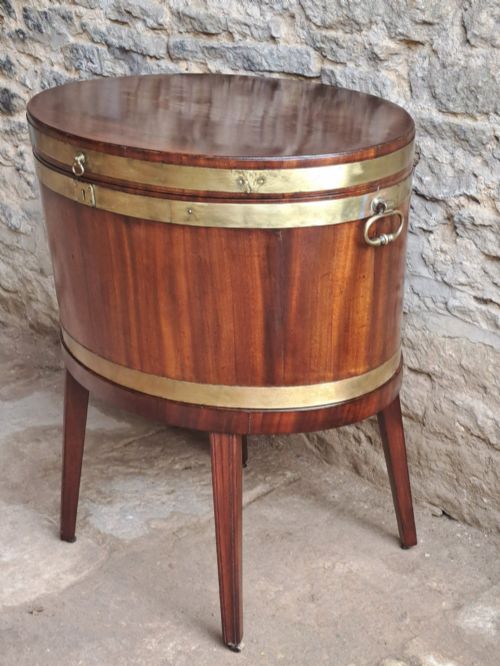


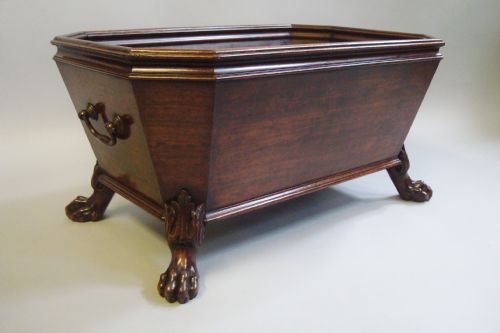
Sarcophagus Wine Cistern
A sarcophagus wine cistern is a stately timber vessel designed to chill bottles at table, bringing serious architectural presence and period gravitas to a dining room.
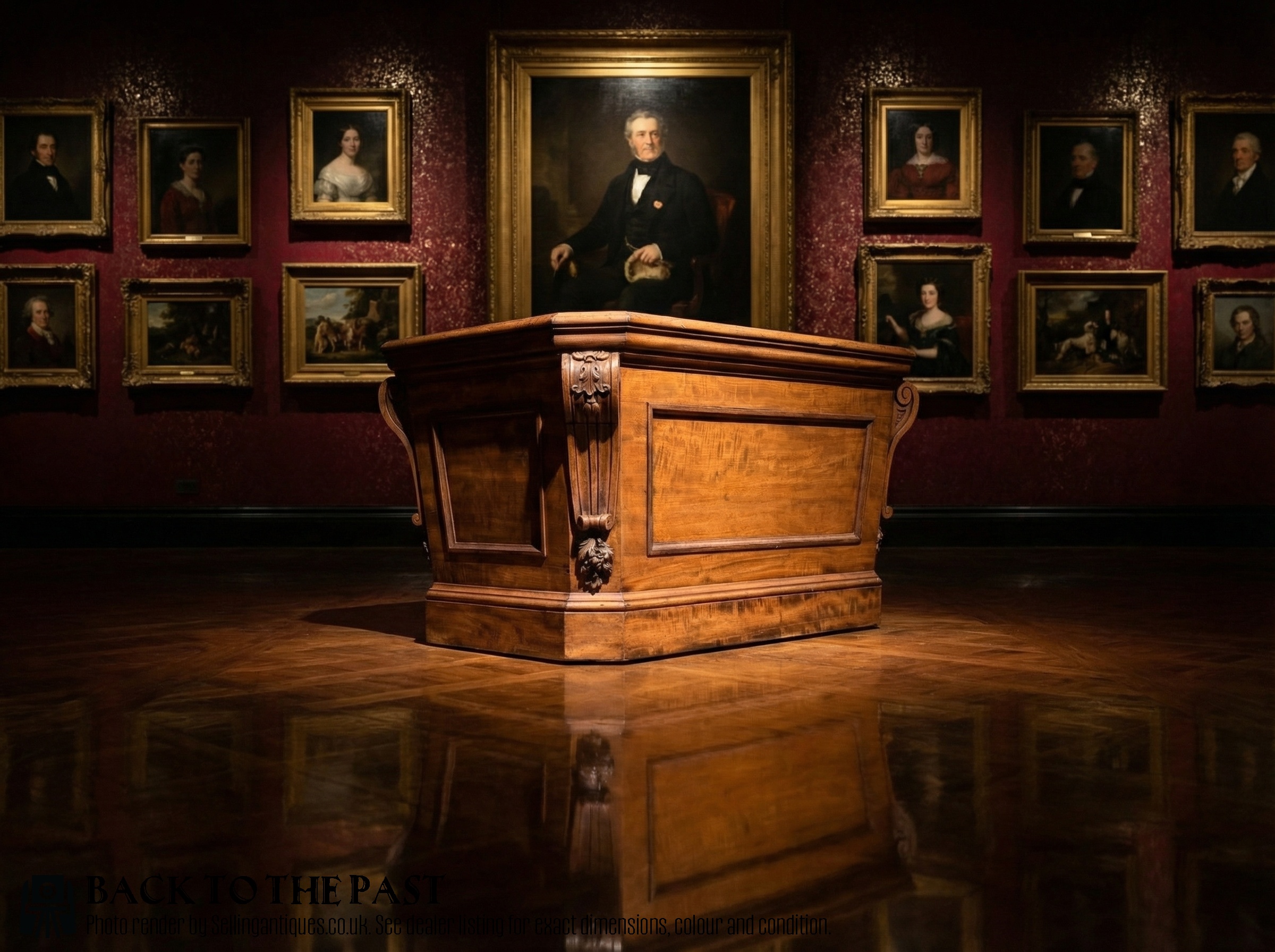
Sarcophagus Wine Cistern
A sarcophagus wine cistern takes the form of a classical burial chest, adapted for dining rooms in the eighteenth and nineteenth centuries to cool bottles in ice or water. These substantial receptacles sit low on the floor or upon dedicated stands, functioning primarily as wine coolers and cellarettes.
The pieces appearing on this page date principally from the eighteenth and nineteenth centuries, spanning Georgian, Regency, William IV, and Victorian eras. Makers drew heavily on classical Roman forms, interpreting them through British cabinet-making traditions and occasionally French Louis XVI or Regency Anglo Indian styles.
Mahogany remains the dominant wood across these listings, appearing frequently as flame mahogany or complemented by satinwood inlay, oak carcasses, and giltwood. Buyers will also encounter variants incorporating brass, ormolu mounts, and zinc linings intended to hold water and ice safely.
Materials and construction
Cabinet-makers constructed these cisterns using dense timbers like mahogany and oak, often selecting highly figured flame veneers to create dramatic grain patterns across the heavy-lidded bodies. Joinery required exceptional skill to support the sheer weight of the timber and the internal moisture.
Makers integrated functional metals into the wooden carcasses, lining the interiors with zinc to contain melting ice and water without rotting the surrounding wood. Exterior enrichment relied on cast brass or ormolu mounts, handles, and paw feet, fastening the classical aesthetic to the wooden frame.
Several examples retain their heavy metal linings, ready to hold ice just as they did when Georgian guests requested another bottle.
Judging quality and craftsmanship
The distinction between ordinary and superior pieces rests on the choice of timber and the precision of the cabinet-making. Grain selection in flame mahogany and the crispness of carved details dictate how successfully the vessel mimics classical stonework.
Hardware and internal fittings reveal the hand of a better workshop. Heavy cast brass handles, well-fitted original zinc linings, and refined satinwood inlay separate standard utilitarian examples from grander pieces attributed to notable firms.
Maples & Co
The Sarcophagus Wine Cistern Glossary
- Sarcophagus
- A stone or wooden coffin, which inspired the heavy, sloping-lidded shape of these grand dining room wine coolers. This architectural form dominated formal dining spaces in the Georgian and Regency periods.
- Cellarette
- A lockable container used to store bottles of wine safely beneath the sideboard or dining table. Many pieces sharing the sarcophagus form served this exact function.
- Flame mahogany
- Timber cut from the fork of the mahogany tree, producing a swirling, flame-like grain pattern. Cabinet-makers prized this veneer for high-status furniture.
- Ormolu
- Gilded bronze mounts applied to furniture for decorative enrichment, common in French-influenced pieces. The technique adds metallic contrast to dark timber surfaces.
- Padouk
- A dense tropical hardwood with a reddish hue, utilised in Regency Anglo Indian pieces. It offered exceptional durability and a distinctive colour for export furniture.
Sarcophagus Wine Cistern: Frequently Asked Questions
What is a sarcophagus wine cistern used for?
These vessels were designed to hold bottles of wine surrounded by ice or cold water during formal dining. Placed near the dining table or sideboard, they kept drinks chilled before serving.
Today, collectors use them as statement furniture pieces, log bins by a fireplace, or traditional planters. Their robust construction and classical proportions make them striking focal points in large rooms.
How do I care for the wood and zinc interior?
Maintain the timber surfaces by dusting with a dry cloth and applying quality wax sparingly to preserve the polished finish. Avoid placing them near direct heat sources that could dry out the antique wood.
If using the zinc liner for plants or actual cooling, protect the interior seams from standing moisture. Regular mild cleaning keeps the metal and wood stable without damaging historical surfaces.
How can I tell a Regency piece from a Georgian one?
Georgian examples typically date from the late eighteenth century, featuring restrained classical proportions and fine mahogany veneers. They lean towards architectural dignity and simpler geometric lines.
Regency and later nineteenth-century pieces often incorporate bolder classical motifs, such as brass paw feet, heavy carved lions' heads, or ormolu mounts. The overall silhouette becomes heavier and more distinctly inspired by ancient Roman sarcophagi.
Are these cisterns suitable for modern dining rooms?
Their substantial size requires adequate floor space, making them best suited to spacious dining rooms, hallways, or living areas. They work exceptionally well as standalone decorative pieces or serving stations.
Pairing a large mahogany cistern with modern minimalist furniture creates a striking contrast that highlights the rich grain and historical presence of the wood.