




Wooden Handle Coffee Pot
A wooden handle coffee pot brings warmth and historic utility to the table, combining gleaming metal with tactile timber for daily service.
Wooden Handle Coffee Pot
When you search for a wooden handle coffee pot, you encounter vessels designed for brewing and serving hot beverages across several centuries. The selections span the eighteenth century, the nineteenth century, and mid-century modern periods, showing how domestic habits changed over time.
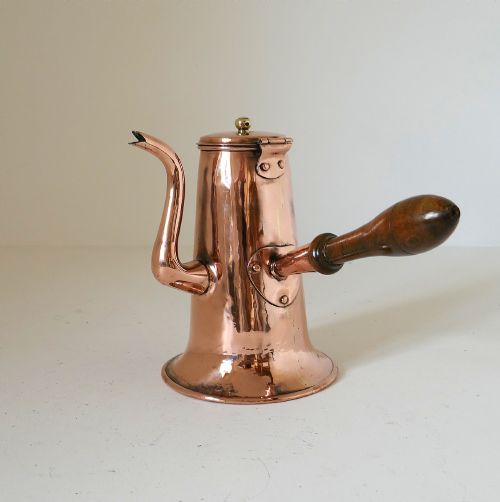
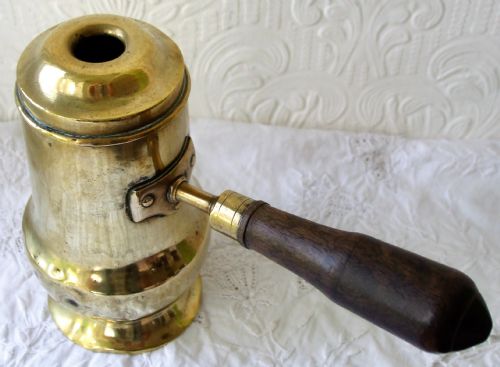
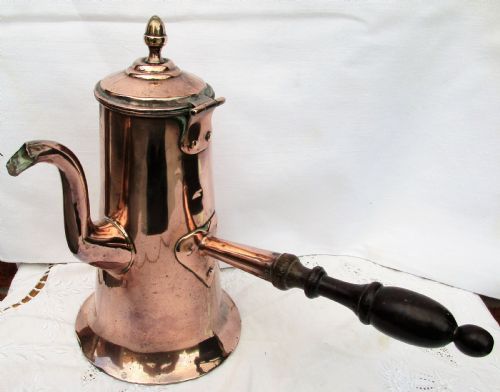
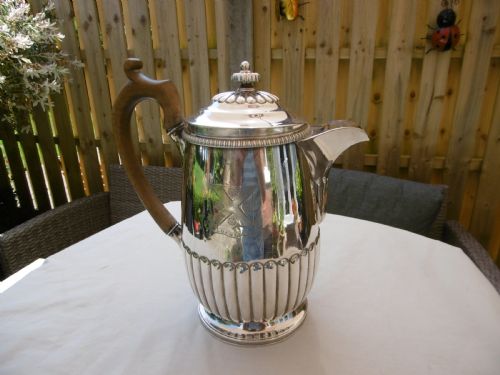
The forms on this page include standard coffee pots, chocolate pots with side handles, hot water pots, and larger hollowware pieces. Materials range from copper and brass to sterling silver, silver plate, and Old Sheffield plate, each paired with wooden elements for insulation during pouring.
Origins represented in the inventory stretch from English workshops to Dutch makers and Scandinavian studios like Georg Jensen. Styles move through Georgian, Neoclassical, Regency, Victorian Rococo Revival, and mid-century modern aesthetics.
What varies in quality
The weight of the metal and the precision of the hammer work or casting determine the structural integrity of the vessel. Heavier gauge silver, copper, or Old Sheffield plate holds heat better and resists denting over generations of handling.
The joinery of the wooden handle to the metal body indicates the level of craftsmanship involved. Secure, well-fitted attachments that align correctly with the spout demonstrate superior maker skill.
Some eighteenth-century chocolate pots feature a tiny removable lid on the main cap, designed specifically to let a frothing stick pass through.
Matthew Boulton·John Hoyland·Georg Jensen
The Wooden Handle Coffee Pot Glossary
- Old Sheffield plate
- A composite material made by fusing a layer of silver to a copper ingot before rolling them into sheets together. This technique was largely superseded by electroplating in the mid-nineteenth century.
- Hollowware
- Tableware items such as kettles, jugs, and pots that are hollow in construction rather than flat. These pieces require skilled raising or spinning from sheet metal.
- Side-handled
- A configuration where the timber grip projects at a right angle to the spout rather than opposite it. This layout appears frequently on chocolate pots designed for frothing contents with a stirring stick.
- Neoclassical
- A style spanning the eighteenth and nineteenth centuries that draws inspiration from classical antiquity. It is characterised by straight lines, symmetrical forms, and restrained ornamentation.
Wooden Handle Coffee Pot: Frequently Asked Questions
Can I still use my coffee pot daily?
Many metal pots remain robust enough for regular service, provided you clean them gently and dry the interior thoroughly after use.
Silver-plated and copper vessels require specific polishes to maintain their appearance, while the wooden handle should avoid prolonged soaking in water.
How do I clean a copper coffee pot?
Warm water and mild washing-up liquid remove ordinary surface grime without harming the metal or the timber grip. Avoid abrasive pads that scratch the polished copper or wear down silver surfaces on plated items.
Why does the handle attach at the side?
Side handles on chocolate pots allowed the user to twist a wooden stirring rod between their palms to froth the contents. This placement gave better control when pouring thick, hot liquids.
What is the difference between Sheffield plate and silver plate?
Old Sheffield plate uses a mechanical fusion of solid silver and copper sheets rolled together under heat before shaping. Standard silver plate involves electrodepositing a thin coating of silver onto a base metal substrate later in the nineteenth century.