


18th Century Coffeepot
An 18th century coffeepot brings the genuine weight of Georgian hospitality to a room, forged in gleaming copper or struck in heavy sterling silver.
18th Century Coffeepot
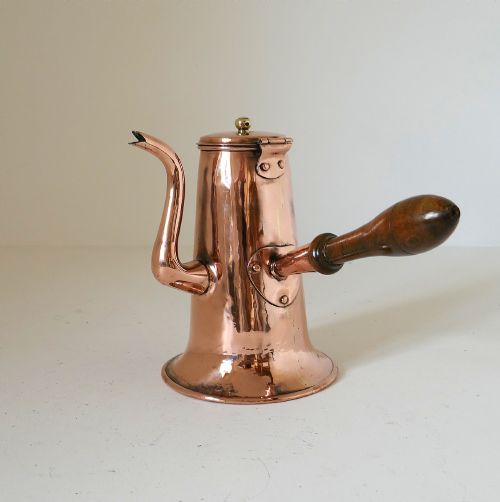
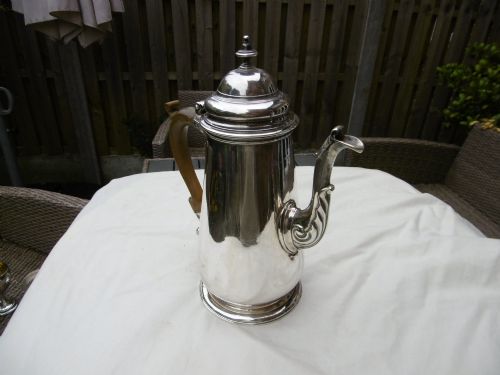
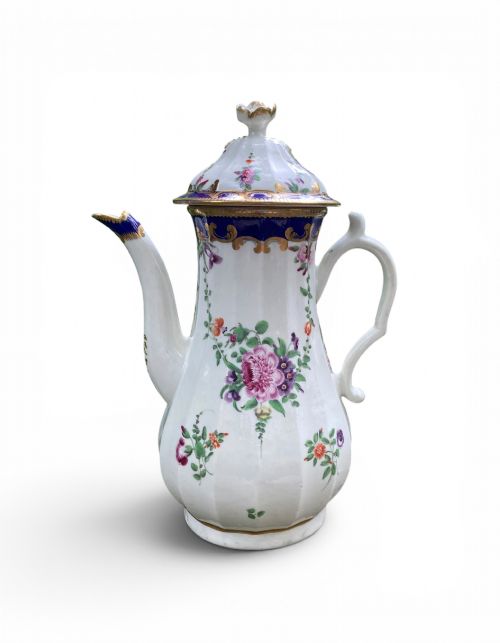
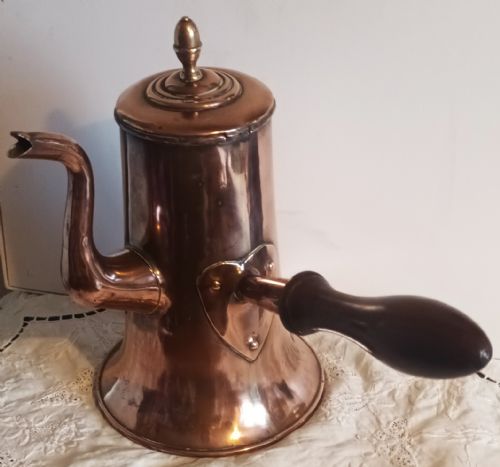
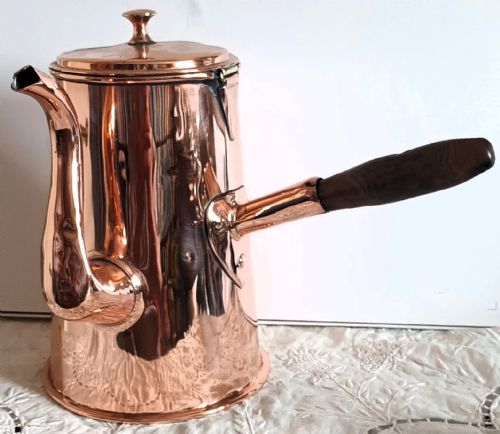
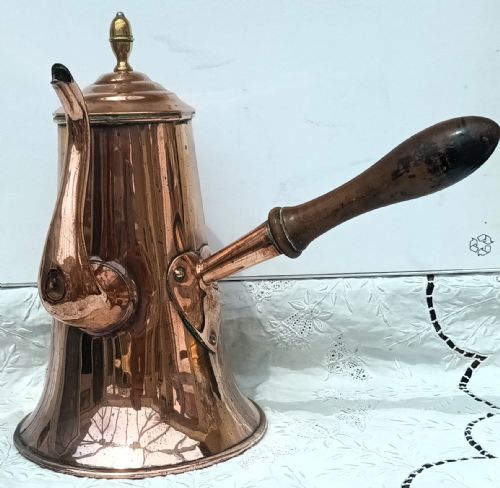
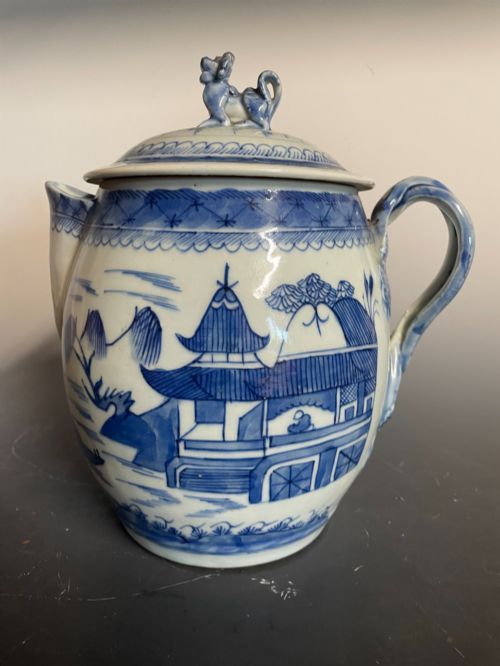
When you search for an 18th century coffeepot, you encounter vessels designed for the table service of brewed coffee during the Georgian period. The versions you are most likely to meet on this page include heavy copper pots with side handles, elegant sterling silver Georgian specimens, and delicate porcelain examples from factories such as Worcester and KPM.
These vessels span several material traditions, encompassing Old Sheffield plate, porcelain, and early metalware alongside traditional silver. Forms range from classical tapered bodies to Chinese export jugs and side-handled copper servers originating around mid-century.
How they were made
Metal vessels in this category rely heavily on hand-beaten copper and heavy gauge sterling silver, shaped by silversmiths and braziers using traditional raising and soldering techniques. Silver examples often incorporate cast details and distinct maker marks struck directly into the metal.
Ceramic equivalents utilise hard-paste or soft-paste porcelain, painted by hand and glazed before firing alongside matching covers. Old Sheffield plated items employ a thin sheet of silver fused to a copper base, displaying early plating technology.
Listings feature items spanning the eighteenth and nineteenth centuries, utilising wood, copper, brass, sterling silver, porcelain, enamel, silver plate, and gold leaf.
What varies in quality
The standard of a piece rests upon the crispness of its hand-raised form and the integrity of its original handles and covers. Heavy gauge metals and legible maker marks elevate an example far above standard utility wares.
Porcelain quality is distinguished by the clarity of the glaze and the precision of the hand-painted decoration. Plate survival, where the underlying copper remains hidden beneath the fused silver layer, dictates the worth of plated specimens.
Richard Gurney·William Soutter And Sons·John Hoyland
The 18th Century Coffeepot Glossary
- Old Sheffield Plate
- An early form of composite metal created by fusing a thin sheet of sterling silver onto a thick copper ingot. This technique preceded modern electroplating.
- Sterling Silver
- An alloy consisting of 92.5 percent silver and 7.5 percent other metals, typically copper. It provided the standard material for fine Georgian tablewares.
- Georgian
- The architectural, decorative arts, and design period spanning the reigns of the first four British monarchs named George. It covers most of the eighteenth century.
- Soft-Paste Porcelain
- An early ceramic composition made from white clay mixed with ground glass and frit. It produced a warmer tone than hard-paste porcelain.
18th Century Coffeepot: Frequently Asked Questions
How do I clean my silver coffeepot?
Use a specialist silver cloth to remove tarnish gently without disturbing the surface or any engraved decoration. Avoid harsh chemical dips that strip the natural patina.
Store the vessel in a dry environment away from direct sunlight to maintain the finish over time.
Were these coffeepots used daily?
Wealthy Georgian households utilised silver and porcelain coffeepots for formal dining and drawing room hospitality. Copper variants often served in more robust domestic settings.
Over decades of service, many acquired distinct wear patterns that reflect their active participation in period dining rituals.
How do I date a copper coffeepot?
Examine the construction methods, such as hand-cut dovetail joints at the base and the attachment style of the side handle. Early eighteenth-century examples often feature specific side-handled configurations.
Maker marks and touchmarks stamped into the metal provide further clues to the workshop origin and production decade.
Can I still brew coffee in them?
Display these historical vessels as decorative objects rather than functional kitchenware. Modern brewing methods and heat sources can damage fragile historic metals and antique solders.
Preserving the interior lining and structural integrity ensures the piece remains intact for future generations.