



Wooden Duck Ornament
A wooden duck ornament brings rural character indoors, spanning functional folk art decoys and glazed ceramic figures.
Wooden Duck Ornament
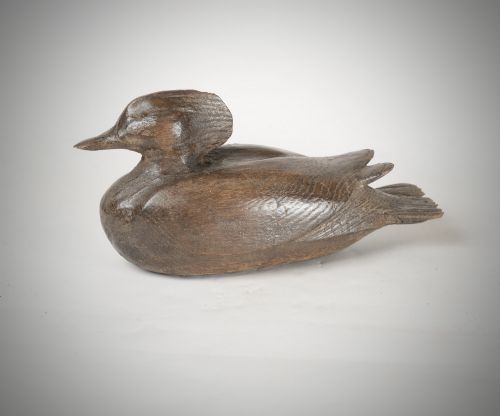
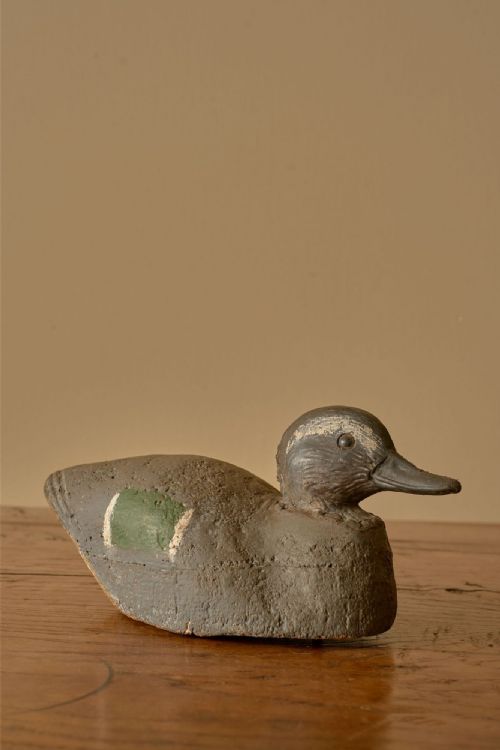
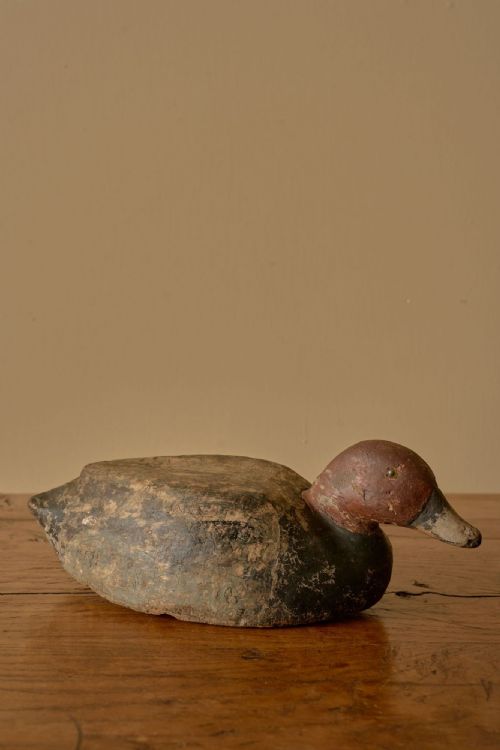
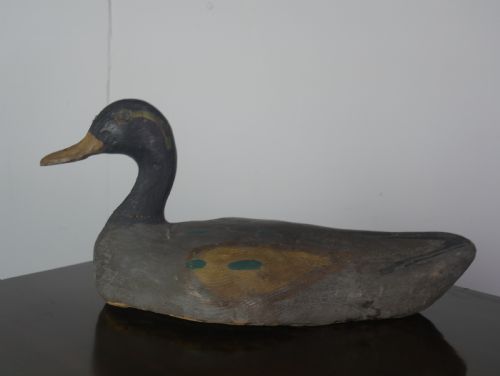
The most common examples on this page are carved and painted decoy ducks originating from the nineteenth and early twentieth centuries. Collectors also encounter distinct variations such as papier-mâché ducklings and Chinese porcelain pairs.
Makers shaped these decorative figures using timber and applied paint to mimic living birds for display or field use. They serve as versatile decorative objects that anchor rustic or traditional interiors with genuine age.
Materials and construction methods
Carvers shaped solid timber and carved wood into buoyant or static bird forms using hand tools and traditional woodworking techniques. Surfaces received layers of flat or gloss paint to delineate feathers, eyes and bills.
Alternative pieces utilise papier-mâché reinforced with straw to build lightweight sculptural forms representing young ducklings. Ceramic makers employed specialised glazes such as sancai on porcelain to achieve historical Ming style aesthetics.
Wooden Duck Ornament Retail Price Guide 2026
Typical asking prices for wooden duck ornament among the pieces listed under this phrase on Sellingantiques today, from the lower quarter to the upper quarter. They describe what is for sale here now, not the wider market.
One papier-mâché duckling relies on a hidden core of straw to hold its jaunty pose.
Assessing quality and craftsmanship
Superior examples display confident carving of anatomical details and expressive posture rather than stiff symmetry. The artistic quality of the hand-painted surfaces heavily influences the overall visual appeal of each decoy.
Original untouched paint surfaces command greater interest than heavily restored or later repainted skins. The choice of materials, from dense carved timber to delicate porcelain, sets the baseline for the piece's decorative weight.
The Wooden Duck Ornament Glossary
- Decoy duck
- A carved and painted water bird traditionally used by hunters to lure real ducks within range. These working objects are now collected primarily as decorative folk art.
- Sancai
- A traditional Chinese three-colour glaze technique typically combining amber, green and cream tones. It appears on ceramic figures inspired by historical periods.
- Papier-mâché
- A composite material consisting of paper pieces or pulp reinforced with binding agents like glue or paste. It allows artists to mould lightweight three-dimensional sculptures.
- Edwardian
- Pertaining to the reign of King Edward VII, spanning the early years of the twentieth century. Items from this era often balance practical utility with decorative flourishes.
Wooden Duck Ornament: Frequently Asked Questions
What is a decoy duck used for?
Hunters originally placed these floating wooden birds on water to attract wild ducks toward shooting hides.
Today, owners display them purely as decorative objects in studies, kitchens and living spaces.
How old are these wooden ducks?
The pieces seen here predominantly date from the nineteenth and early twentieth centuries, including Edwardian examples.
Some ceramic interpretations reference much older historical aesthetics while retaining early twentieth-century manufacture.
Are these ducks made of solid wood?
Many traditional examples feature solid carved timber bodies shaped with hand tools.
Alternative listings employ different materials entirely, such as moulded papier-mâché with straw or Chinese porcelain.
How do I style a wooden duck ornament?
These rustic water birds fit naturally onto bookshelves, mantelpieces or sideboards alongside books and pottery.
Pairs or small groups of painted decoys create an immediate focal point on wooden furniture.