
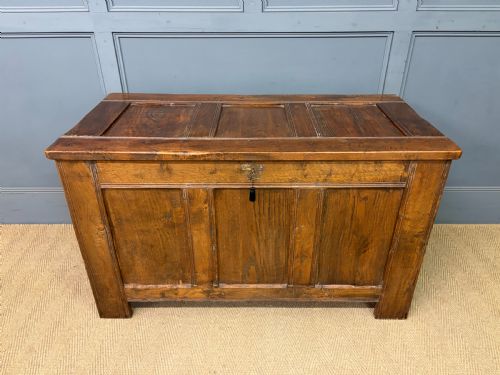
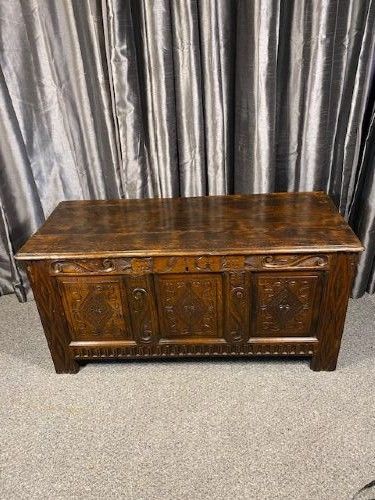
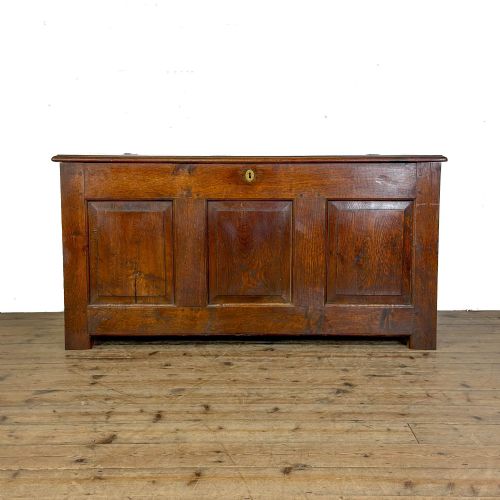
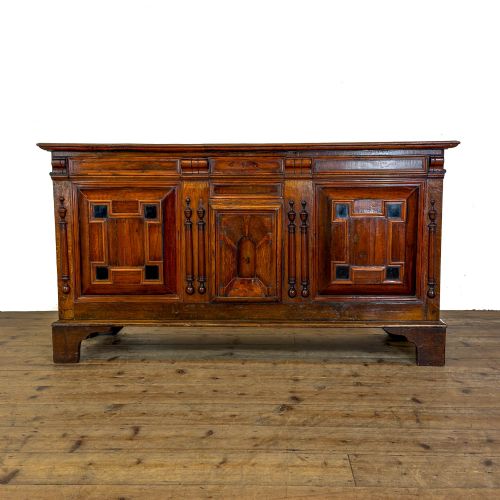
Wooden Bedding Chest
A wooden bedding chest brings centuries of practical storage into a room, offering heavy timber construction and simple vernacular character.
Wooden Bedding Chest
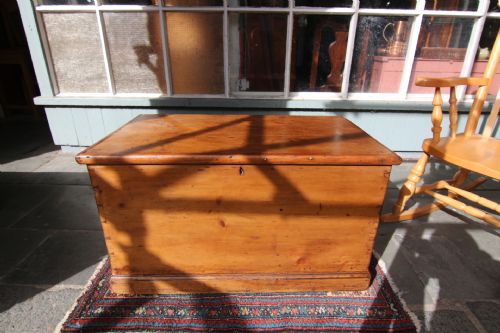
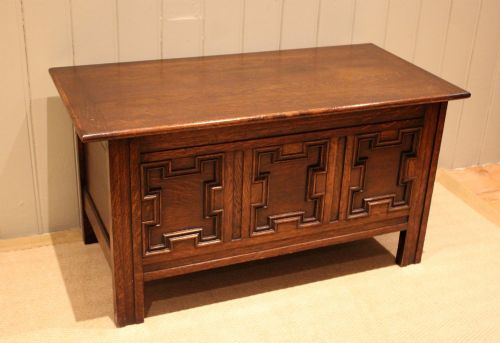
A wooden bedding chest spans centuries of domestic storage, appearing under various regional names such as coffers, kists, blanket boxes, and mule chests. These pieces were built to secure textiles, garments, and bedding in the home, combining deep interior capacity with sturdy structural timber.
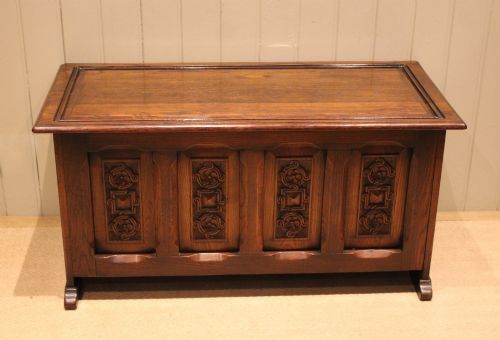
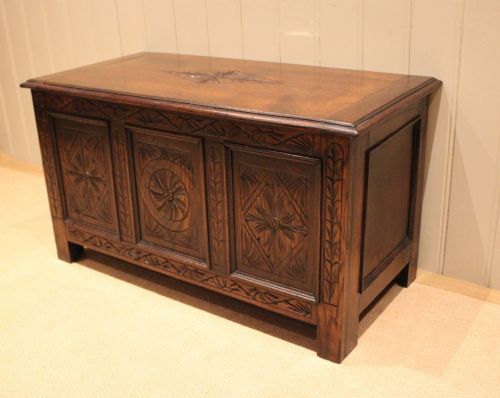
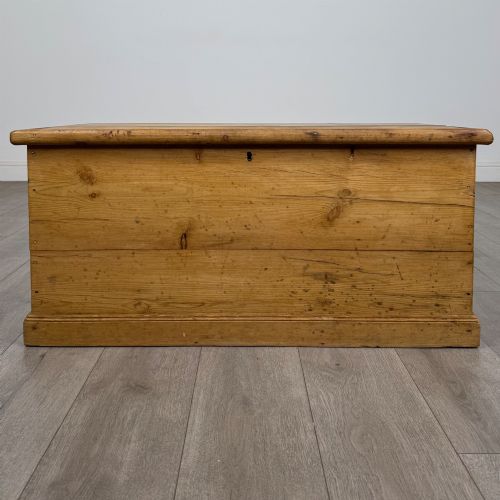
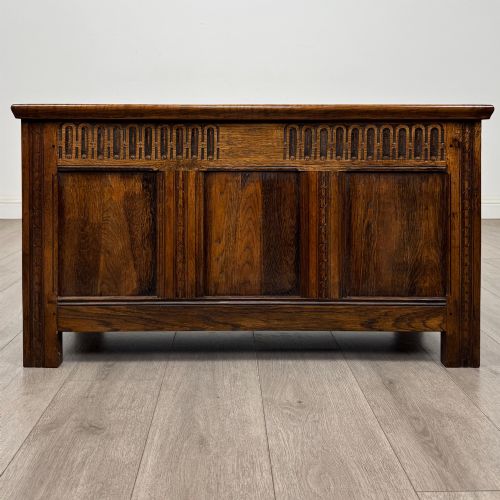
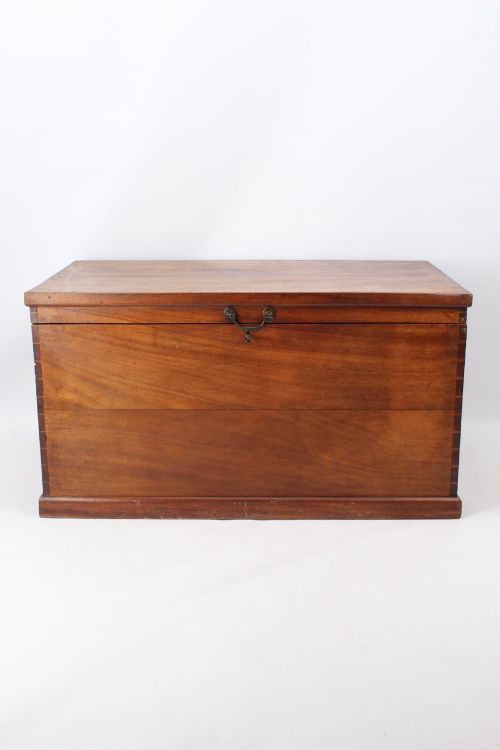
The versions most commonly met on this page include seventeenth-century and eighteenth-century oak examples, alongside nineteenth-century pieces rendered in pine, elm, or mahogany. Buyers often encounter simple boarded construction or panelled designs bearing period carving, reflecting both rural utility and formal domestic styles.
Materials and construction methods
Timbers such as oak, pine, and elm form the structural core of these chests, utilised in solid boards and heavy panels. Craftsmen employed traditional joinery, including mortise and tenon frames and dovetail joints, to build rigid housings capable of enduring heavy daily use.
Surface finishes range from natural waxed grain and dark patinated oak to original paintwork on nineteenth-century pine. Metal elements such as iron hinges, brass fittings, and occasional inlaid marquetry add functional security and decorative contrast to the primary wood.
Some nineteenth-century pine boxes retain their original paint, bringing bright historical colour straight into a modern bedroom.
Assessing quality and authenticity
The distinction between standard examples and superior pieces rests on the integrity of the timber, the depth and crispness of period carving, and the survival of original structural components like bases, feet, and hinges. Finer chests display carefully selected grain patterns and robust panel construction rather than superficial decorative additions.
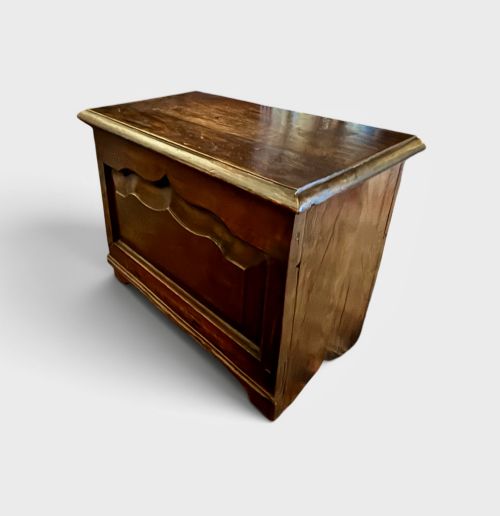
Proportion and scale also define the hierarchy of these items, with smaller, untouched vernacular chests and well-proportioned mule chests commanding greater interest than heavily altered or later revival pieces.
The Wooden Bedding Chest Glossary
- Coffer
- A heavy wooden box with a lid, traditionally used for storing valuables, documents, or textiles before dedicated wardrobes became common.
- Mule chest
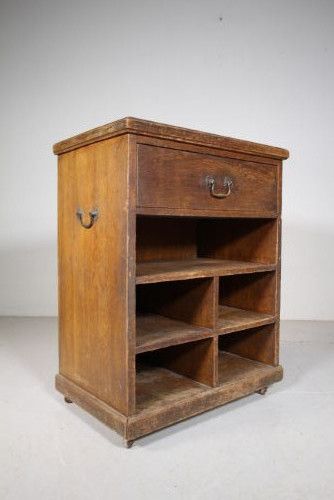
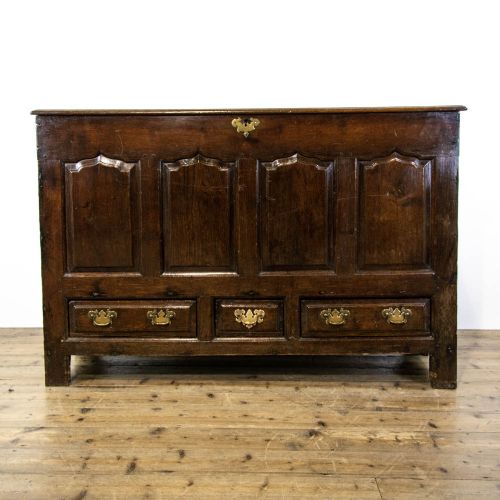
- A storage chest featuring one or more drawers built into the base beneath the main interior compartment.
- Kist
- A traditional regional term for a wooden chest or box, frequently associated with Scottish or northern domestic use.
- Marquetry
- Decorative veneer work using various woods inlaid into a primary surface to form geometric or pictorial patterns.
- Panelling
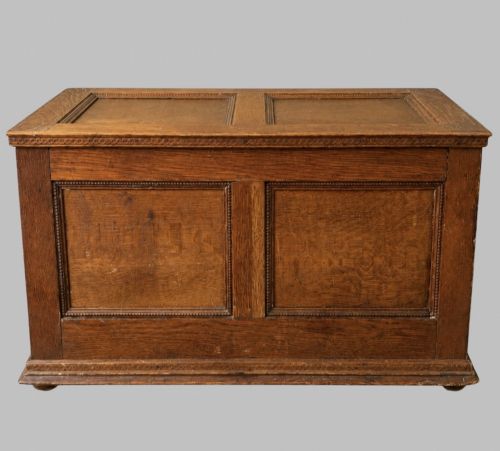
- Framework constructed from stile and rail members holding a recessed or flush wooden plate, commonly seen on seventeenth-century and eighteenth-century oak chests.
Wooden Bedding Chest: Frequently Asked Questions
What is a wooden bedding chest?
A wooden bedding chest is a deep storage box designed to hold household textiles, blankets, and garments. These pieces date across multiple centuries and utilise durable regional timbers.
They serve as both functional furniture and historical artefacts, displaying the joinery and stylistic traits of their respective periods.
How do I date a wooden chest?
Dating relies on examining the timber species, the type of joinery used in the corners and panels, and any visible tool marks. Seventeenth and eighteenth-century pieces typically feature pegged oak frames and hand-cleaved boards.
Later nineteenth-century examples often utilise machine-sawn pine, dovetails, or simpler boarded construction finished with paint or wax.
What is the difference between a coffer and a mule chest?
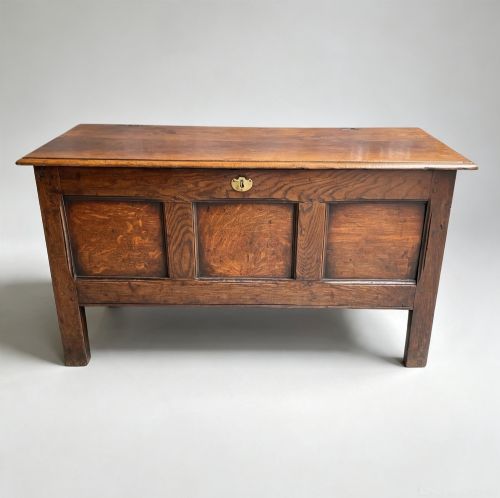
A coffer consists of a simple chest box with a lid opening from the top, providing a single deep storage well. A mule chest incorporates one or more functional drawers beneath the main compartment.
This addition of base drawers bridges the design gap between traditional top-loading chests and modern chest of drawers.
How should I care for an antique wooden chest?
Keep wooden chests away from direct heat sources and dramatic humidity fluctuations to prevent timber splitting or warping. Occasional light applications of traditional wax help nourish the dry grain and maintain the surface patina.
Avoid abrasive cleaners or synthetic polishes that can degrade the historic finish of the wood.