
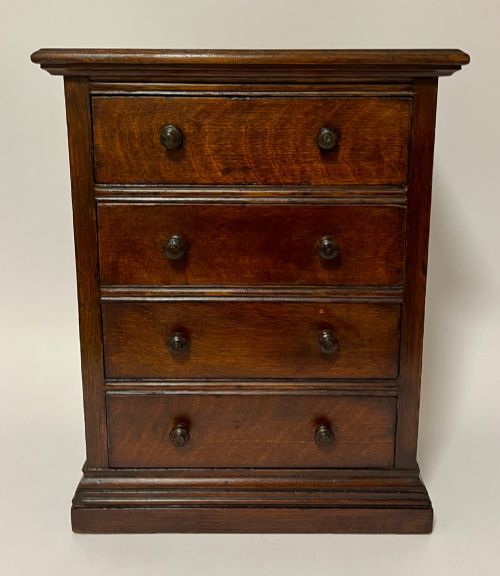
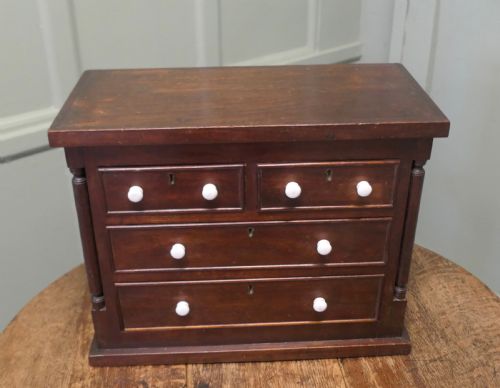
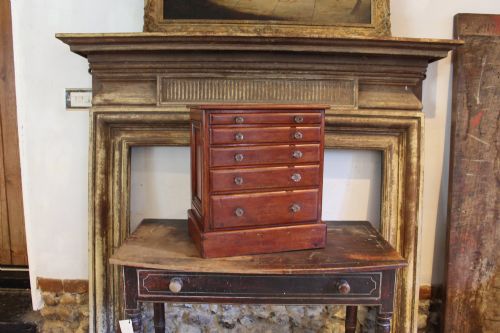
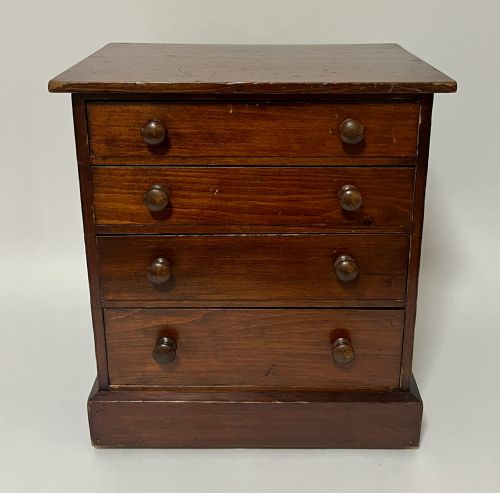
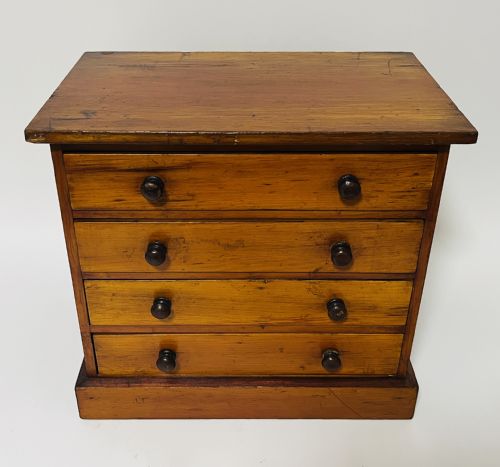
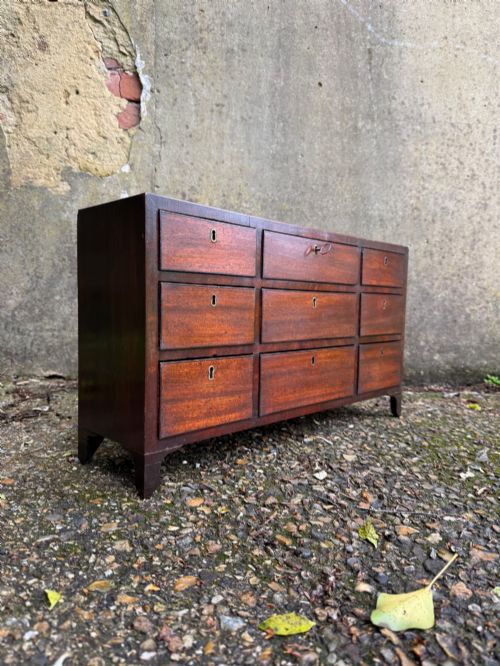
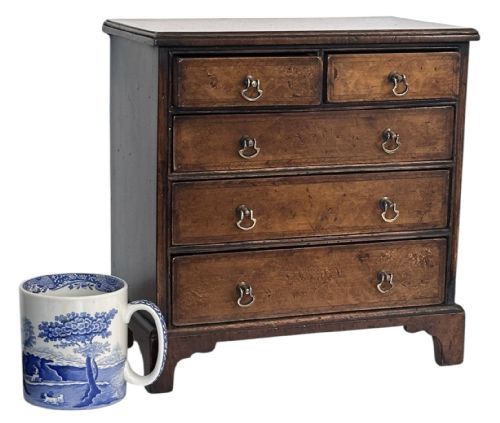


Wooden Apprentice Cabinet
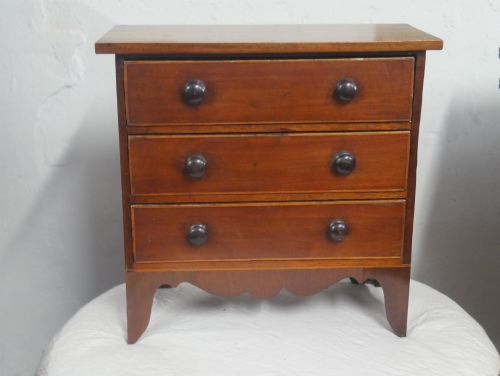
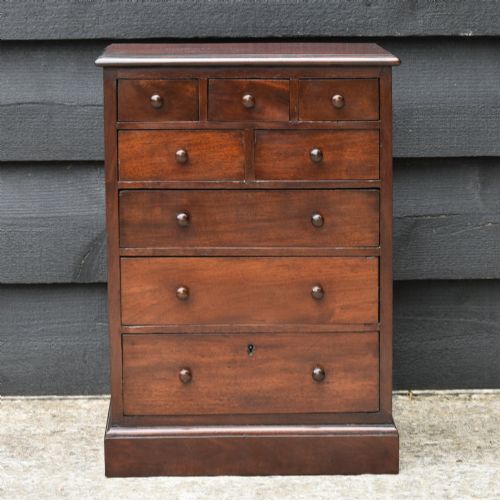
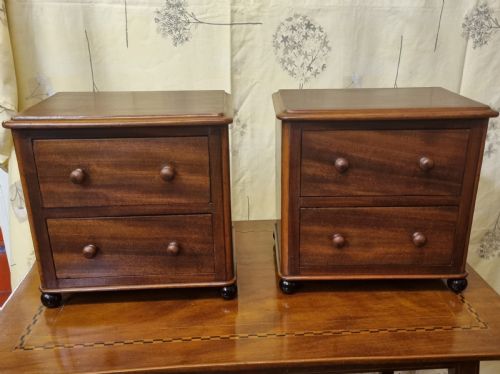
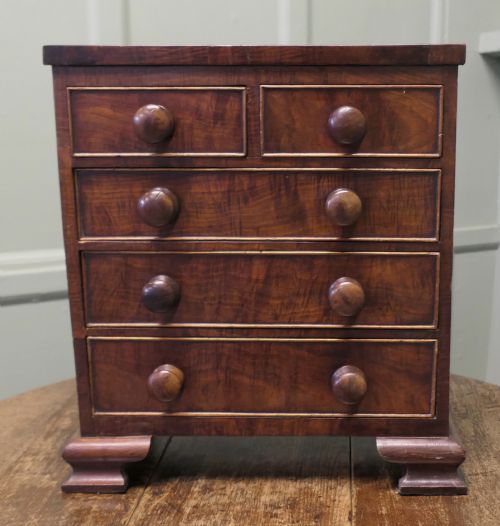
These miniature chests and small wooden apprentice cabinet pieces offer scaled-down craftsmanship from Georgian and Victorian workshops.
Wooden Apprentice Cabinet
A wooden apprentice cabinet represents a small-scale demonstration piece or miniature furniture form created during the Georgian and Victorian periods. Buyers search for these items to acquire compact chests of drawers, specimen cases and table cabinets that mimic full-scale furniture.
The versions most frequently met on this page span the 19th century and the Victorian era, constructed primarily as miniature chests of drawers or tabletop storage. These objects served as proof of skill for joiners or as specialised receptacles for collectors.
Makers produced diverse formats ranging from Scottish and Scotch chests to Wellington chests, miniature wardrobes and spice boxes. Each piece reflects the domestic storage needs and cabinet-making standards of its specific decade.
Materials and construction methods
Makers relied heavily on dense hardwoods such as mahogany, oak, walnut and burr walnut, alongside secondary timbers like pine. These woods provided the structural stability required for intricate joinery on a reduced scale.
Construction involved dovetail joints for drawer boxes, applied veneers, and occasional inlay work utilising mother-of-pearl or contrasting timber. Brass handles, drop pulls and glass elements completed the functional hardware.
Surface finishing emphasised natural timber grain and deep patination through traditional polishing techniques. Secret drawers and fitted interiors appeared in select pieces to demonstrate advanced joinery capability.
Listings feature woods such as mahogany, oak, walnut, burr walnut, yew wood, amboyna, pine and brass.
Distinctions in standard and execution
Quality separates through the precision of the miniature joinery and the selection of timber veneers. Superior examples display tightly fitted dovetails, well-matched wood grains and crisp mouldings that mirror full-sized masterworks.
The refinement of the hardware and interior fittings also dictates the grade of the piece. Fine specimens incorporate original brass drops, smooth-sliding drawers and secondary woods that match the period of manufacture.
The Wooden Apprentice Cabinet Glossary
- Apprentice piece
- A demonstration object created by a trainee cabinet maker to prove competence before joining a guild.
- Wellington chest
- A tall, narrow chest of drawers secured by a locking side flap that bars access to the drawers.
- Specimen cabinet
- A small piece of furniture fitted with shallow drawers designed for holding natural history collections or coins.
- Scotch chest
- A regional furniture form featuring a deep top drawer over multiple smaller drawers, often veneered in flame mahogany.
- Dovetail
- An interlocking joint formed by wedge-shaped fingers, utilised to secure drawer corners with high tensile strength.
Wooden Apprentice Cabinet: Frequently Asked Questions
What is a wooden apprentice cabinet?
A wooden apprentice cabinet is a miniature furniture piece made by a trainee woodworker to demonstrate mastery of joinery techniques. These items replicate full-scale chests, desks and cupboards.
Craftsmen produced them in various woods including mahogany, oak and walnut. Collectors prize them for their meticulous detail and historical utility.
How were these small cabinets used?
Historical uses varied from trade tests for aspiring cabinet makers to desktop storage for precious items. Wealthy households also utilised them to house small collections.
Later periods saw their adoption as jewellery boxes, specimen cases and decorative table accessories. Their compact size suited them for placement on top of larger furniture.
How do I date a Victorian miniature chest?
Dating relies on examining the timber species, construction methods, hardware and secondary woods. Mid-19th century pieces frequently employ solid mahogany with hand-cut dovetails.
Later Victorian examples introduce burr walnut veneers, machine-sawn components and different brass handle styles. Comparing the drawer linings to known period furniture helps narrow the decade.
Where should I place a table cabinet?
These cabinets suit display upon desks, sideboards, chests of drawers and console tables. Their small footprints allow them to occupy minimal surface area while adding vertical interest.
Positioning them away from direct sunlight and heat sources preserves the wood and prevents veneer cracking. Stable indoor humidity keeps the drawer actions smooth.