
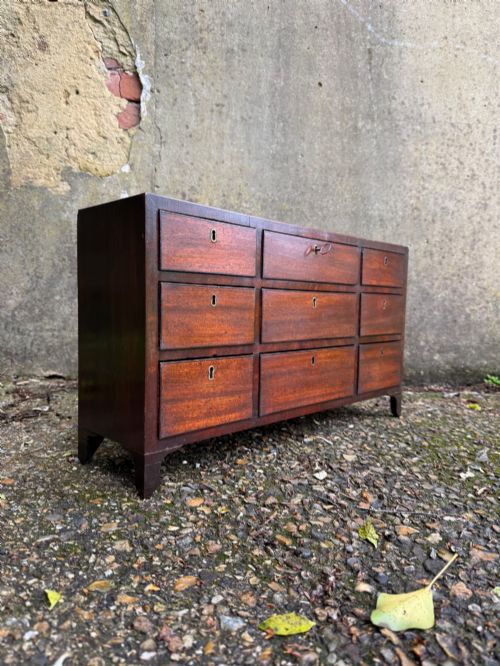


Dark Wood Miniature Cabinet
These dark wood miniature cabinet pieces are compact treasures of domestic scale, offering serious collectors the condensed charm of full-sized furniture.
Dark Wood Miniature Cabinet
A dark wood miniature cabinet brings together miniature furniture, table cabinets, and collectors' chests spanning the Georgian, Regency, and Victorian periods. Buyers search for this phrase to find small-scale masterpieces that replicate larger case furniture or serve specialised storage purposes.
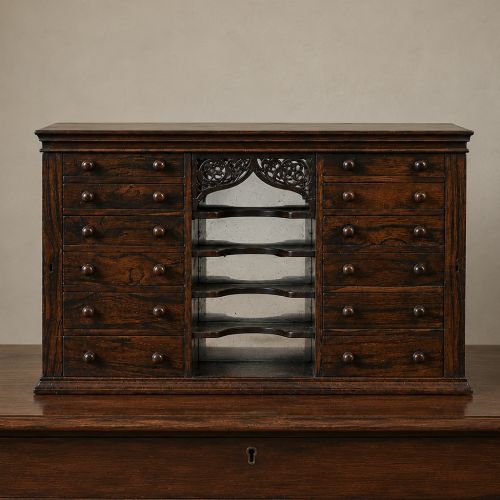
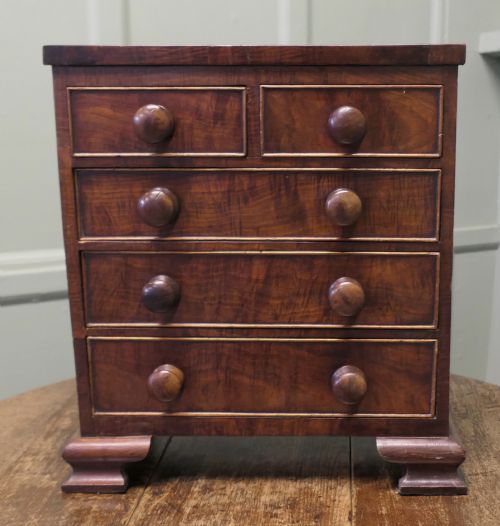
The pieces appearing on this page range from apprentice pieces and child's bureau models to multi-drawer microscope slide cabinets and tabletop storage. Mahogany and rosewood dominate the material record, frequently presenting as diminutive chests of drawers, secretaire cabinets, and tabletop display pieces.
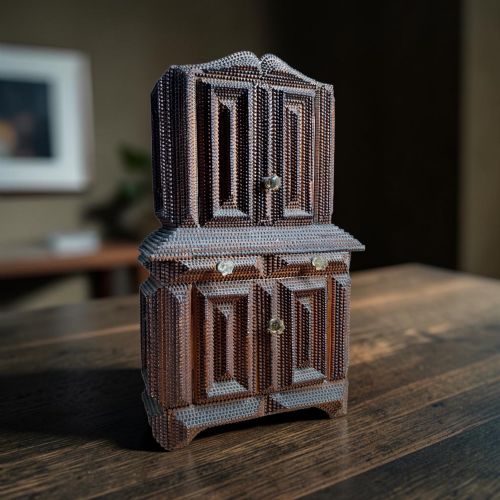
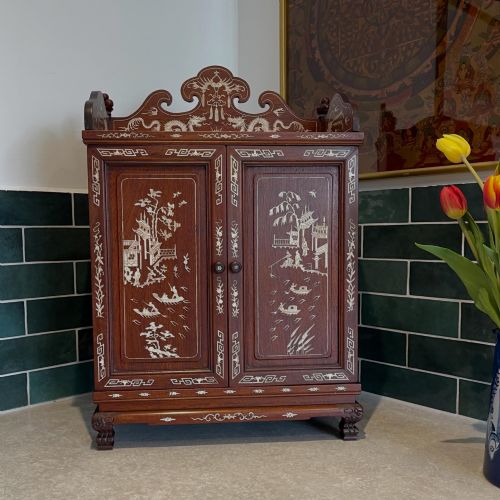
Origins stretch from British workshops to French tramp art, Chinese production, and Flemish Flemish Baroque styles. The typical encounter on this page is a mahogany or rosewood miniature chest of drawers from the nineteenth century.
Materials and Construction
Cabinetmakers utilised dense timbers such as mahogany, rosewood, oak, and ebony, often accentuating the darker grain with boxwood stringing or brass hardware. Secondary woods like deal appear in simpler utilitarian table cabinets.
Construction techniques mirror full-scale cabinet making down to the millimeter, employing dovetail joints for miniature drawers and mortise and tenon frames for larger table cabinets. Carving, glass panelling, and bronze animal decoration add surface detail to specific regional styles.
The listings feature mahogany and rosewood most frequently, alongside oak, boxwood, and ebony across various centuries.
Assessing Quality and Execution
The highest tier is defined by architectural proportion and the fidelity with which a full-scale piece is scaled down, alongside the depth of the timber's patina. Multi-drawer specimens like slide cabinets achieve superior status through intricate internal division and numerous fitted small drawers.
Workmanship in the secondary details dictates the grade of the piece, visible in the precision of the drawer dovetailing and the choice of primary veneers over secondary woods. Simpler stained deal or soft wood models sit at a different level of craftsmanship compared to finely figured rosewood and ebony examples.
The Dark Wood Miniature Cabinet Glossary
- Apprentice piece
- A small-scale furniture example traditionally made by a craftsman to demonstrate skill for guild admission. These items replicate full-size chests and cabinets with exact proportions.
- Table cabinet
- A compact cabinet designed to sit upon a desk, table, or chest rather than stand on the floor. These pieces often feature multiple internal drawers for collecting specimens or documents.
- Wellington chest
- A tall, narrow chest of drawers secured by a locking side flap that fastens over the drawer edges. Miniature versions retain this distinctive locking mechanism.
- Bowfront
- A curved front facade curving outward in the centre, frequently seen on Georgian and Victorian miniature chests of drawers. This shape requires advanced woodworking skill to execute at a small scale.
- Tramp art
- Folk art carved from scrap wood, often utilising notch-carving techniques in layers. Pieces in this style present textured, geometric surfaces distinct from formal cabinetmaking.
Dark Wood Miniature Cabinet: Frequently Asked Questions
What is a dark wood miniature cabinet?
A dark wood miniature cabinet is a small-scale piece of furniture made from timbers like mahogany, rosewood, or oak. These items include tabletop cabinets, apprentice chests, and specialised collectors' storage.
They replicate the forms of larger furniture or serve as desktop organizers for small objects, slides, or documents.
How were apprentice pieces used?
Apprentice pieces were created by woodworkers demonstrating their mastery to gain journeyman status. They reproduced standard domestic furniture in miniature to prove their joinery skills.
Over time, these items entered domestic settings as decorative objects or desktop storage.
Where do these miniature cabinets originate?
The listings include pieces from British, French, Flemish, and Asian workshops spanning the eighteenth, nineteenth, and early twentieth centuries. Regional styles range from British mahogany chests to Flemish ebony cabinets and folk art.
Materials and construction methods usually reflect the local timber availability and prevailing design tastes of the period.
How do I care for a miniature cabinet?
Keep wooden miniature cabinets away from direct sunlight and heat sources to prevent the dark wood veneers from drying out or cracking. Dust them gently with a dry, soft cloth without applying heavy modern polishes.
Maintaining a stable room humidity preserves both the timber and the delicate brass or boxwood fittings.
How can I tell the period of a miniature cabinet?
Dating relies on examining the secondary woods, joint construction methods, hardware, and stylistic traits like Georgian bracket feet or Victorian carved details. Drawer linings and backboards offer clues about the manufacturing era.
Comparing the proportions and timber choice to full-scale furniture of the same period helps confirm the timeline.