


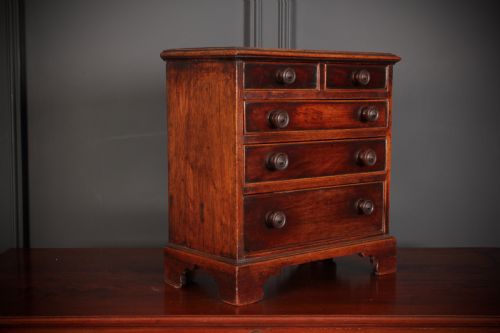

Georgian Mahogany Desktop Chest
A georgian mahogany desktop chest brings small-scale craftsmanship and traditional timber into compact spaces.
Georgian Mahogany Desktop Chest
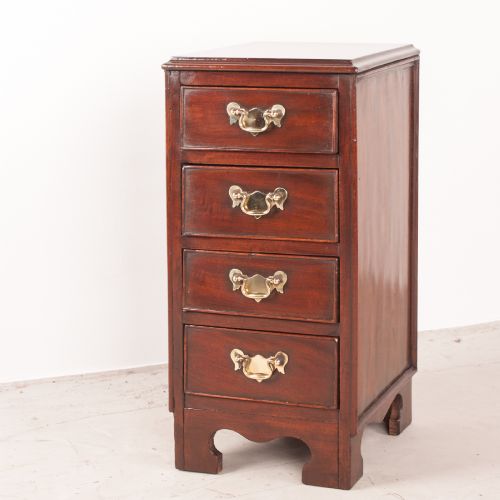
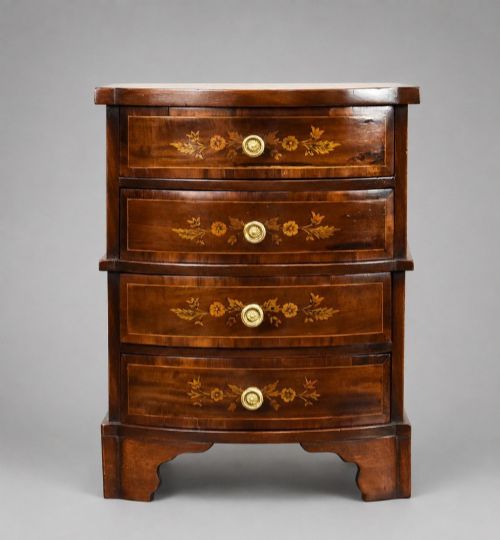
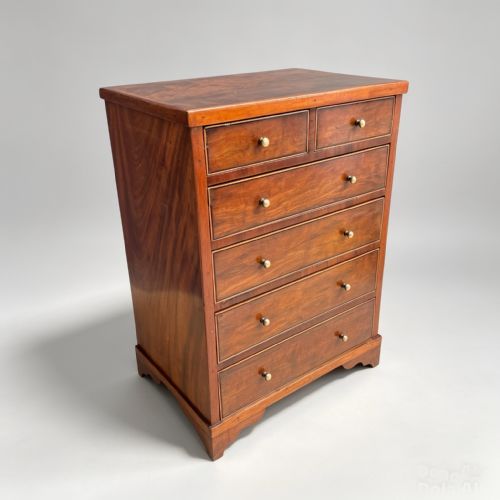
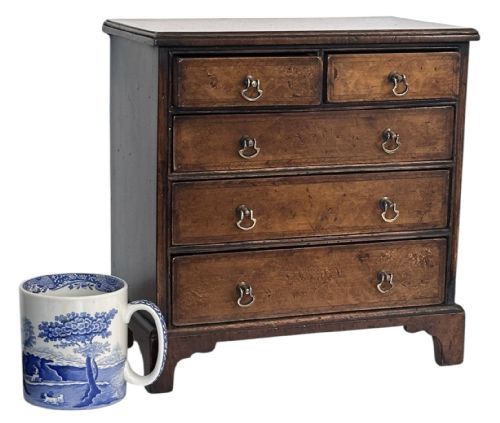
A georgian mahogany desktop chest takes the form of miniature furniture, small chests of drawers, table cabinets, and desk accessories designed to sit on a surface. These pieces range from miniature chests of drawers to miniature marquetry bow front chests of drawers and fall front desks.
The selections span periods from the eighteenth century through the nineteenth century, with Victorian, Edwardian, and later revivals appearing alongside pieces dated around 1800, 1890, and 1920. Cabinet makers produced these smaller items as apprentice pieces, salesman samples, or refined desktop storage.
Buyers meet varied forms including banks of drawers with brass drop handles, stationary boxes, and dressing mirrors constructed in miniature proportions. The overall aesthetic leans heavily on Georgian, Regency, and Victorian styling.
Materials and construction
Makers constructed these desktop pieces primarily using mahogany, often incorporating secondary timbers such as oak, pine, and walnut within the internal framing and drawer linings. Timber selection dictated both the weight and the durability of the miniature carcass.
Surface decoration frequently relied on wood inlay, marquetry, and polished mahogany veneers over solid carcases. Brass hardware, including drop handles and escutcheons, completed the functional assembly of the drawers and compartments.
Listings span multiple eras from the 18th century to the 1920s, featuring mahogany, oak, pine, walnut, brass, and wood inlay.
Assessing quality
Proportion and fidelity to full-scale furniture separate the finer examples from standard workshop pieces. Tight joinery at the drawer corners and precise alignment of the timber grain indicate superior cabinet making.
The integrity of the original brass hardware and the crispness of any inlaid wood detailing influence the overall character of the piece. Surviving polish and minimal timber distortion mark out the more successful survivals from this group.
The Georgian Mahogany Desktop Chest Glossary
- Apprentice piece
- A small-scale item created by a trainee craftsman to demonstrate mastery of joinery and woodworking techniques. These objects mirror the design of full-sized furniture.
- Miniature furniture
- Scale models of standard furniture forms built for display, design testing, or desktop use. They replicate domestic items down to the smallest drawer pulls.
- Bow front
- A convex curved furniture front that projects outward in a smooth arc. This shape appears frequently on miniature chests of drawers from the period.
- Marquetry
- Decorative patterns formed by fitting together thin veneers of various coloured woods. It creates intricate pictorial or geometric designs on the surface.
- Drop handle
- A small pendant handle suspended from a backplate fixed to the drawer face. Brass versions are typical on nineteenth-century desktop chests.
Georgian Mahogany Desktop Chest: Frequently Asked Questions
What is a desktop chest?
A desktop chest is a small-scale set of drawers or a cabinet built to sit on a table or desk surface. Makers designed them for storing small valuables, letters, or trinkets.
These pieces replicate the styles of larger furniture, offering functional storage in a compact footprint suitable for writing tables.
How were apprentice chests used?
Apprentice chests served as practical demonstrations of a woodworker's skill rather than standard domestic toys. Trainees built them to prove their competence before gaining master status.
Over time, these scaled-down items entered homes as decorative desktop accessories or specialised storage containers.
How do I identify a Georgian piece?
Georgian pieces generally display classic proportions, straightforward lines, and timber such as mahogany with deep natural patination. Details like hand-cut dovetails help confirm the period of construction.
Comparing the hardware and secondary woods against known period examples clarifies the manufacturing era.
Where should I place these in a room?
These compact chests suit placement on top of larger writing desks, sideboards, or chests of drawers where their scale can be appreciated. They provide practical organisation for small items.
Keeping them away from direct heat sources helps protect the mahogany timber and any delicate wood inlay from drying out.