
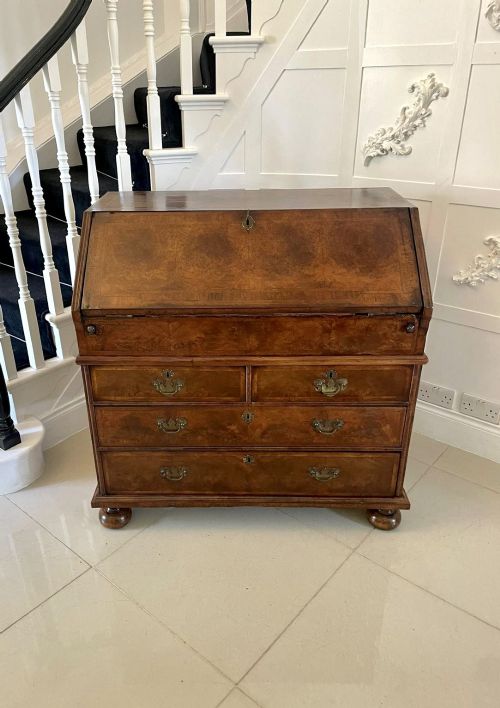
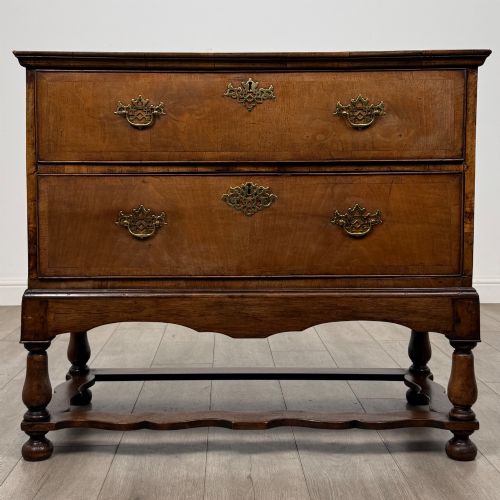
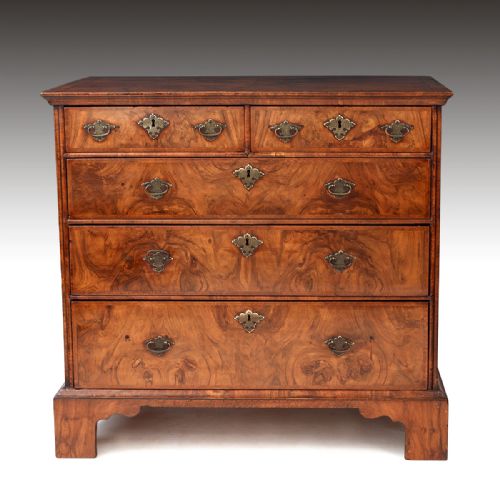
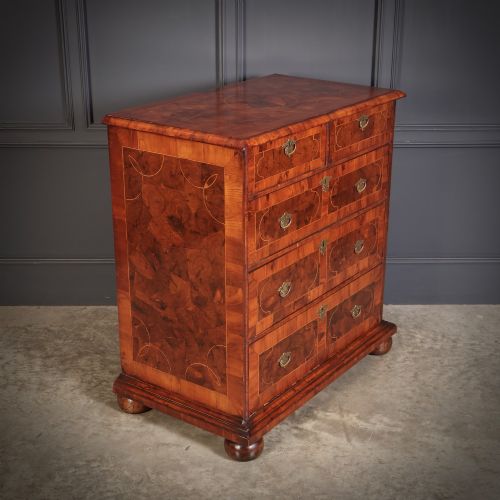


William and Mary Walnut Chest
A william and mary walnut chest brings late seventeenth-century craftsmanship and rich timber grain directly into a room.
William and Mary Walnut Chest
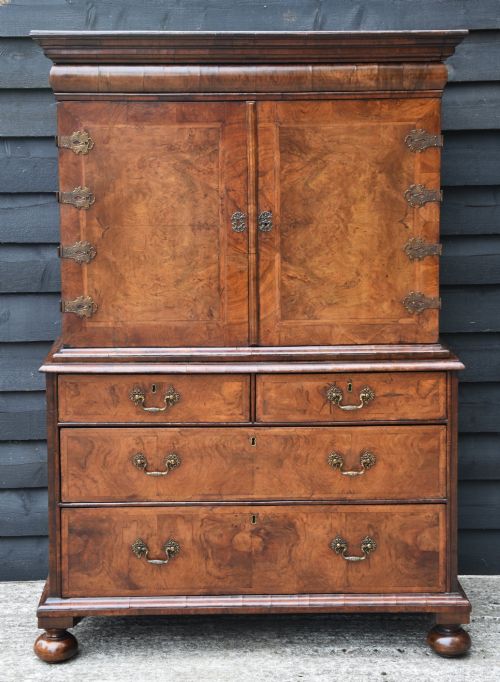
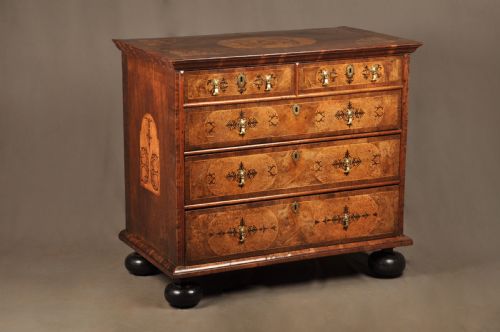
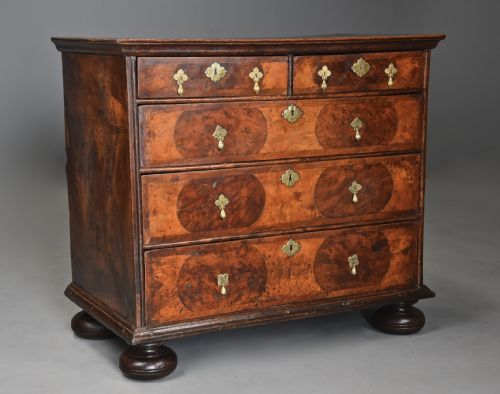
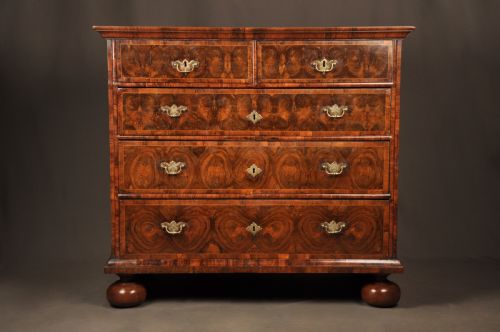
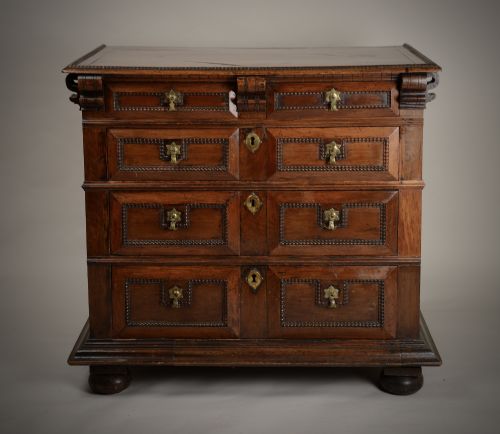
A william and mary walnut chest encompasses formal drawer chests, cabinets on stands, and escritoires dating predominantly from the late seventeenth and early eighteenth centuries. These pieces reflect the architectural symmetry and refined proportions popular during the late Stuart period.
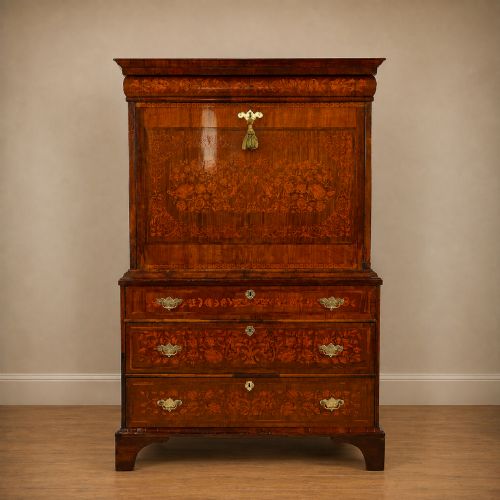
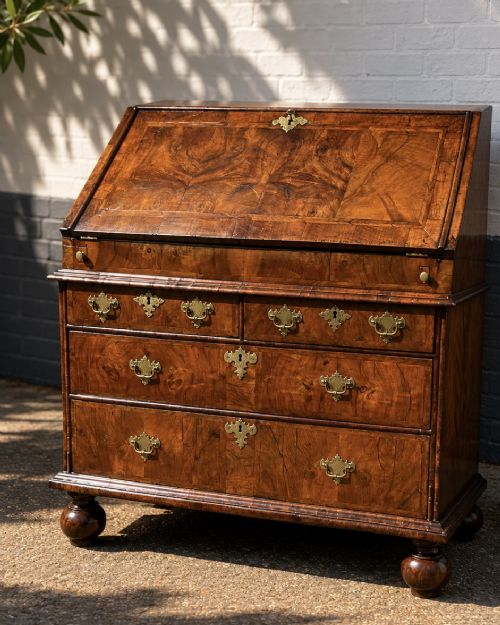
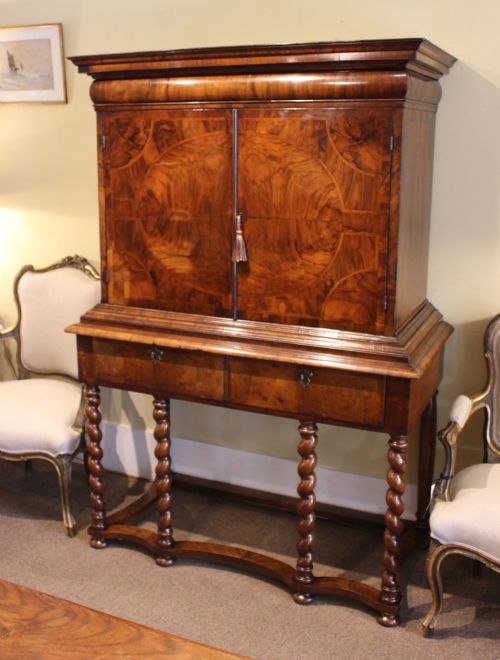
Buyers frequently encounter two-part drawer units, elevated chests on stands, and fall-front bureaux that combine storage utility with intricate surface decoration. Oak and occasionally yew or laburnum also appear alongside primary walnut shells.
While many examples date to the seventeenth century and around 1700, later Victorian revival interpretations also surface on the market. These later iterations emulate the distinctive veneered surfaces and stands of the original period.
Materials and Construction
Cabinetmakers utilised figured timbers such as burr walnut, olivewood, and amboyna sliced into thin veneers to create patterned surfaces across drawer fronts and tops. These decorative veneers were laid onto sturdier secondary woods like oak.
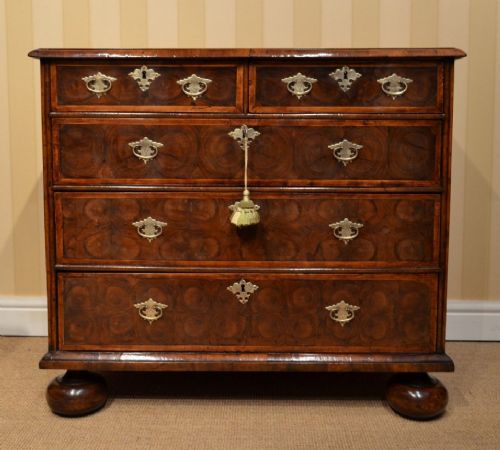
Intricate inlay techniques including seaweed, floral, and arabesque marquetry, alongside geometric herringbone banding in boxwood, ornamented the principal facades. Cross-graining and oyster cutting formed circular and repeating motifs from branch wood sections.
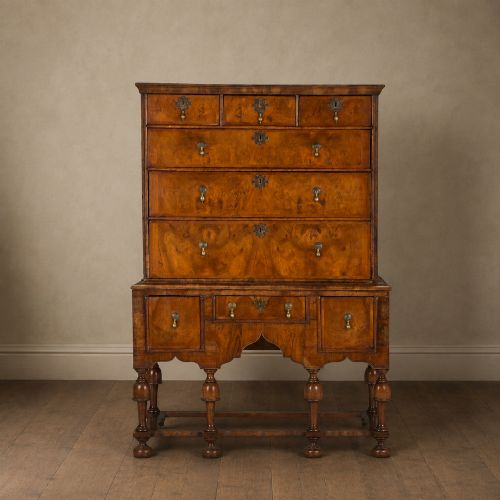
Original hardware commonly includes brass drop handles and escutcheons fixed to dovetailed drawer construction. Stands incorporated shaped stretchers supporting turned trumpet or spiral legs.
Listings feature seventeenth-century and eighteenth-century periods alongside Victorian revival interpretations.
Assessing Quality and Execution
The sophistication of the timber figure dictates much of the visual hierarchy, with densely patterned burr walnut and matched oyster veneers commanding greater admiration. Uniformity in the execution of marquetry panels and seaweed inlay reveals the skill of the original workshop.
Structural integrity depends on the preservation of original veneered surfaces, drawer linings, and supportive stands without excessive replacement. The subtlety of cross-grained mouldings and the retention of period brassware distinguish superior examples from heavily restored pieces.
Shoolbred and Co
The William and Mary Walnut Chest Glossary
- Oyster veneering
- Cutting small branches of walnut or olive transversely to produce circular or oval motifs resembling shells. These cross-sections were arranged closely together to cover large drawer surfaces.
- Marquetry
- Creating decorative pictorial patterns by fitting together various woods, ivories, or metals within a veneer layer. Floral, arabesque, and seaweed designs are common on these surfaces.
- Herringbone inlay
- Arranging small strips of contrasting timber, such as boxwood and walnut, in a V-shaped zig-zag pattern. This technique typically borders drawer perimeters and top panels.
- Chest on stand
- A two-part form consisting of a primary drawer section elevated on an open frame with legs and stretchers. This elevation lightens the visual weight of the storage unit.
- Escritoire
- A cabinet featuring a fall-front writing flap that conceals a central cupboard and multiple small interior drawers. These pieces combine desk functionality with structured cabinetry.
William and Mary Walnut Chest: Frequently Asked Questions
How do I identify a true period chest?
Examine the construction methods visible inside the drawers and along the carcass backs, where hand-cut dovetails and secondary woods like oak indicate period manufacture. Look for the characteristic patina and minor imperfections in hand-cut veneers that machine-made Victorian revival pieces lack.
Check for consistency in the timber ageing and ensure the stand configuration matches documented seventeenth-century joinery standards. Original hardware configurations and timber shrinkage patterns provide further confirmation of age.
What is an oyster veneer?
Oyster veneering involves slicing small branches of walnut, olive, or laburnum across the grain to produce small circular or oval pieces with concentric growth rings. These cross-sections are laid side by side to form decorative, undulating patterns across drawer fronts.
This technique was particularly favoured by late seventeenth-century cabinetmakers seeking to maximise the visual impact of relatively small timber branches. The resulting surface resembles an array of oyster shells arranged across the furniture facade.
Where were these pieces used originally?
These refined chests and cabinets stood in the principal bedchambers, parlours, and private withdrawing rooms of wealthy seventeenth-century residences. They served to store valuable textiles, documents, and personal possessions while displaying the owner's taste.
Their elevated designs and decorative marquetry ensured they functioned as status objects within domestic interiors. Today, they transition easily into contemporary hallways, living rooms, and studies as functional storage.
How do I care for walnut veneer?
Keep walnut furniture away from direct sunlight and strong heat sources to prevent the thin historical veneers from drying, warping, or lifting off their oak bases. Maintain a stable room temperature and humidity level to protect the fragile timbers.
Apply traditional beeswax sparingly and buff gently with a soft cloth to nourish the wood without building up heavy chemical residues. Avoid modern liquid polishes that can penetrate old veneer joints and damage the finish.