


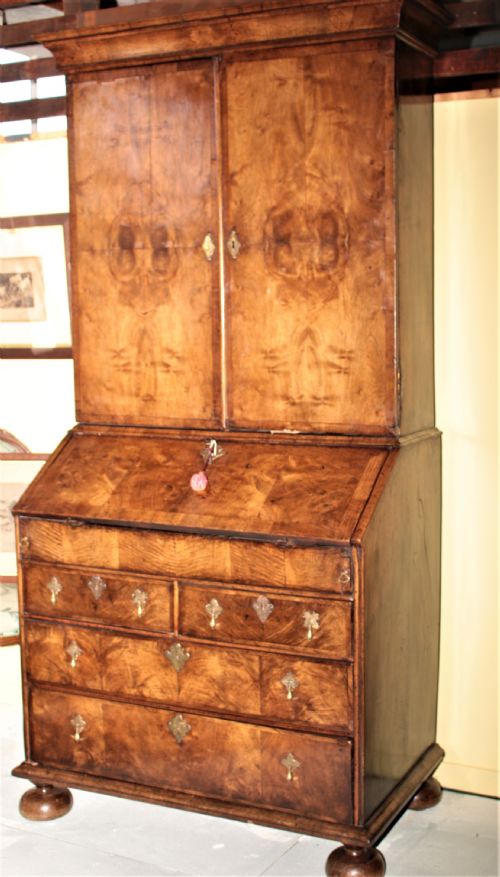
Antique Walnut Flap Desk
An antique walnut flap desk brings rich grain and practical writing space together, offering a handsome bureau to sort correspondence and hold papers.
Antique Walnut Flap Desk
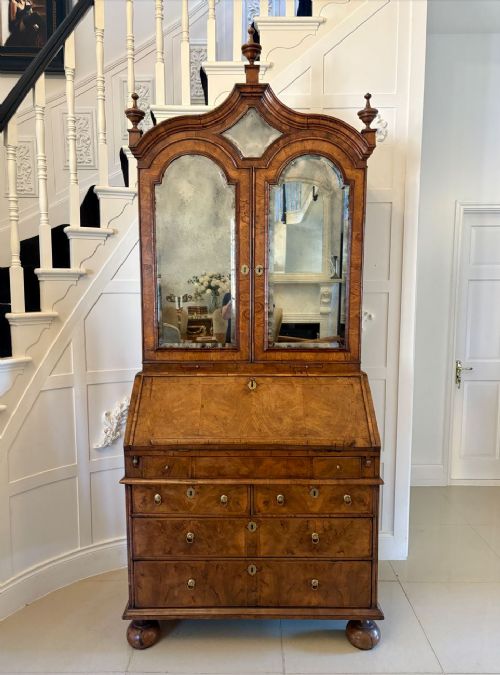
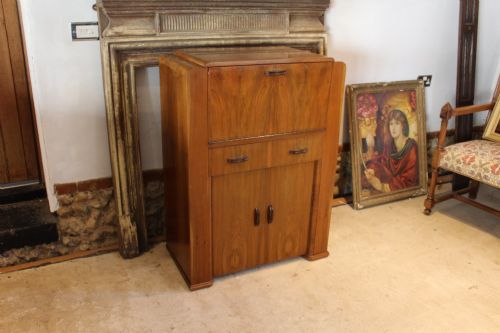
Visitors browsing this page encounter pieces ranging from early 18th-century Queen Anne and William and Mary bureau bookcases to later Georgian desks and 1930s Art Deco writing furniture.
Forms span compact writing desks, bureau bookcases with upper shelving, escritoires, and dropleaf sofa tables, each utilising walnut timber and veneer.
How they were made
Cabinetmakers constructed these pieces using solid walnut and decorative veneers applied over secondary woods like oak, frequently enhancing the surfaces with burr walnut figuring and featherbanding.
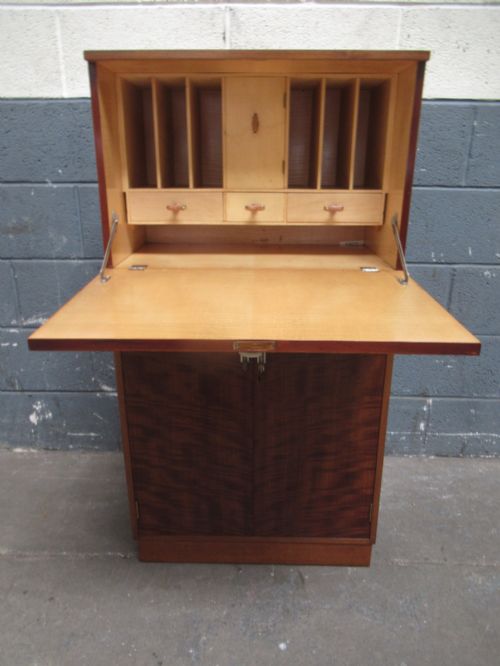
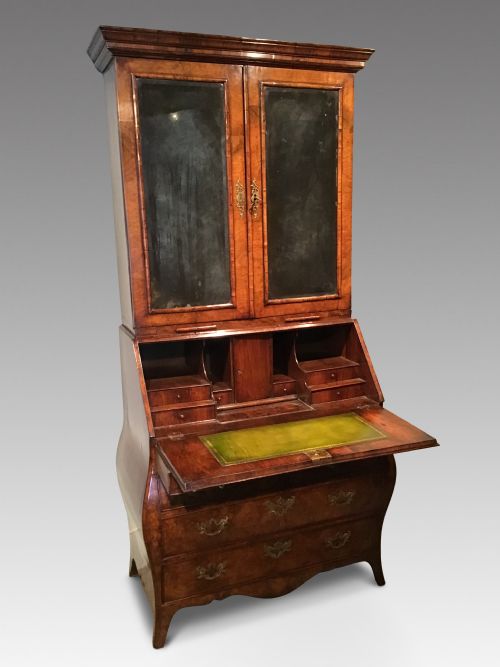
Functional elements rely on traditional joinery alongside brass hardware such as drop handles and escutcheons, while interiors incorporate fitted compartments and occasionally leather writing surfaces.
Glass panels appear on upper bookcase sections, allowing glazed doors to protect libraries while displaying bindings.
Secret compartments inside bureau bookcases often hide behind sliding pigeonhole partitions, built to guard private letters.
What varies in quality
The distinction between standard and superior examples rests upon the choice of timber, where intensely figured burr walnut and meticulous featherbanding elevate the visual presence of the desk.
Construction fidelity defines the better pieces, showing in the crispness of internal drawer divisions, the symmetry of matched veneer panels, and the preservation of original brass mounts.
Purity of period style, from the restrained lines of early Georgian designs to the bold curves of Queen Anne work, determines the historical interest of each desk.
F.H. Marshall & Co Glasgow
The Antique Walnut Flap Desk Glossary
- Bureau
- A sloping flap desk designed for writing and storing papers. It typically conceals a series of small drawers and pigeonholes inside.
- Featherbanding
- A decorative inlay technique using narrow bands of veneer arranged in a herringbone pattern. It frames drawer fronts and panels on finer pieces.
- Burr walnut
- Timber taken from the warted growths of walnut trees, yielding highly ornamental swirling grain patterns. Cabinetmakers prized it for principal display surfaces.
Antique Walnut Flap Desk: Frequently Asked Questions
What is an antique walnut flap desk?
An antique walnut flap desk is a wooden writing piece featuring a hinged or falling flap that opens to reveal a fitted interior with small drawers and compartments.
These items range from compact bureau desks to grand bureau bookcases dating from the 18th century through to the 1930s.
How do I use a bureau desk daily?
Lowering the front flap provides a stable writing surface while keeping stationery and correspondence neatly organised within the internal compartments behind it.
Closing the flap conceals your work and papers, keeping the room tidy when the desk is not in use.
How do I identify William and Mary desks?
William and Mary pieces date from around 1700 and exhibit early figured walnut timbers, distinct architectural proportions, and restrained decorative details.
Escritoires and early bureaux from this period show exceptional cabinetwork that precedes the later Georgian developments.
What is the difference between George I and Georgian?
George I denotes the specific reign during the early 18th century, characterised by refined walnut veneers and early bureau bookcase forms.
General Georgian covers a broader span of the 18th century, encompassing various styles of writing desks and dropleaf tables.