
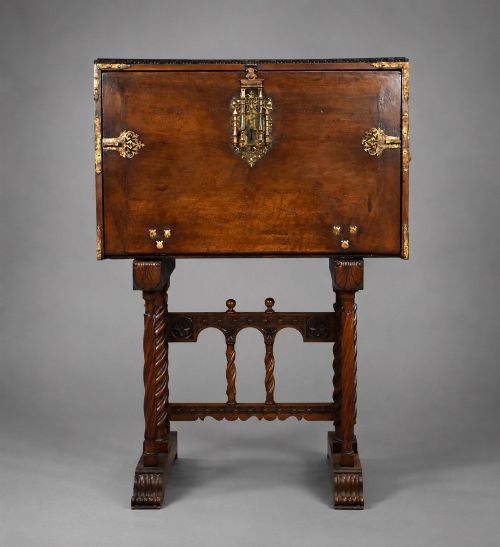


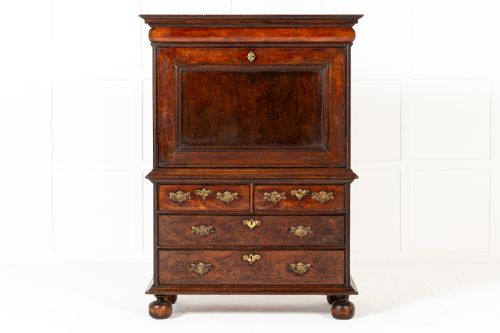


17th Century Writing Cabinet
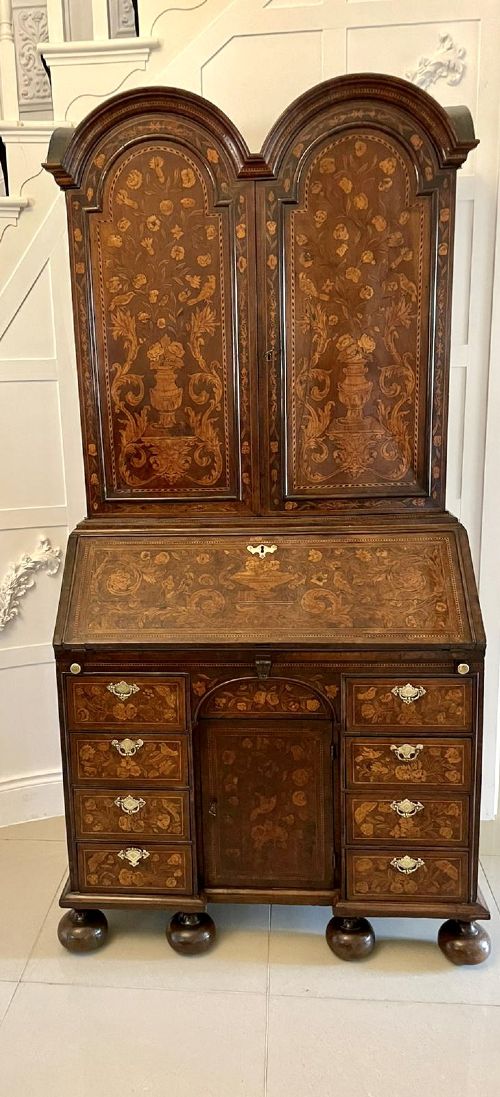
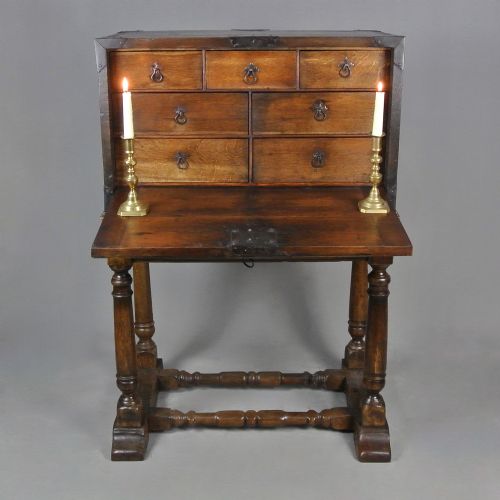
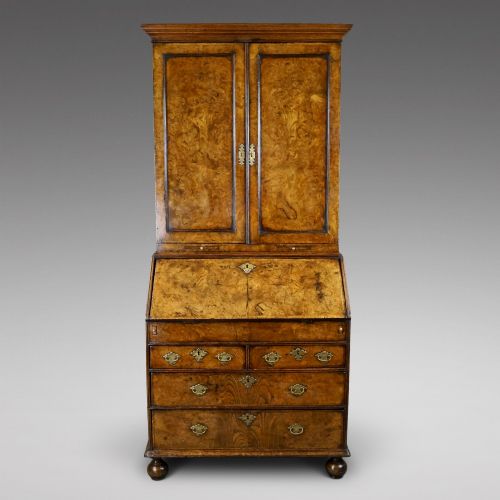
These 17th century writing cabinet examples are robust oak, walnut, and burr walnut furniture pieces designed for correspondence and storage.
17th Century Writing Cabinet
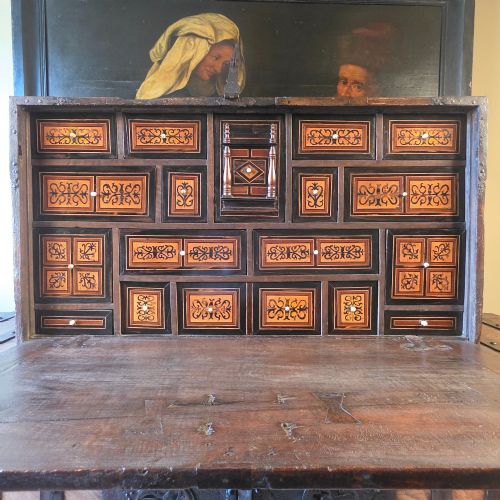
A 17th century writing cabinet serves as a secure place for correspondence and valuables, taking forms such as bureaus, escritoires, and bargueños on stands. These items originate primarily from English and Spanish workshops during the 17th century and the period around 1700.
Buyers will most frequently encounter walnut and oak versions on this page, often featuring fall-front writing surfaces or drawers enclosing smaller compartments. Styles span from vernacular oak construction to ornate William and Mary burr walnut and Spanish Baroque designs.
How they were made
Cabinet makers utilised solid timbers like oak and fruitwood for foundational carcases, applying decorative veneers of walnut, burr walnut, and burr elm to visible surfaces. Inlay work, bone accents, and japanning provided surface ornamentation.
Hardware played an essential structural and decorative role, with heavy brass handles, hinges, and wrought iron mounts securing lids, drop-fronts, and internal compartments.
Listings feature walnut, oak, and fruitwood materials across 17th-century English and Spanish cabinet forms.
What varies in quality
The sophistication of the timber selection creates a major distinction, ranging from plain vernacular oak boards to highly figured burr walnut and mulberry veneers. The complexity of internal drawer arrangements and the intricacy of inlay work also separate standard pieces from finer examples.
Coxed & Woster
The 17th Century Writing Cabinet Glossary
- Escritoire
- A writing cabinet with a fall-front flap that opens to reveal a desk surface and multiple small drawers. This form became particularly popular during the William and Mary period.
- Bargueño
- A Spanish chest-type cabinet featuring a drop-front panel, typically mounted upon a decorative stand and heavily fitted with iron hardware. It served as a portable desk and storage unit.
- Burr walnut
- A veneer sliced from the gnarly growths of a walnut tree, prized for its swirling, highly figured grain patterns. Makers used it on prominent exterior surfaces of late 17th-century cabinets.
- Papillero
- A small cabinet designed for paperwork and letters, often associated with Spanish forms and placed upon stands.
- Strong box
- A heavily reinforced box or chest constructed from oak and iron for secure storage of valuables.
17th Century Writing Cabinet: Frequently Asked Questions
What is a 17th century writing cabinet?
A 17th century writing cabinet is a piece of case furniture designed for storing writing materials and documents, incorporating a writing surface within its design.
These objects include fall-front desks, bureau bookcases, and cabinets mounted on stands, utilising materials such as oak, walnut, and iron.
How do I identify a William and Mary writing cabinet?
William and Mary writing cabinets typically feature figured walnut veneers, oyster cut veneers, or japanned finishes. They often stand on shaped legs and display refined brass hardware.
Internal arrangements include numerous small drawers and pigeonholes enclosed behind a fall-front writing flap or double doors.
Where were bargueño cabinets made?
Bargueño cabinets originate from Spain during the Renaissance and Baroque periods. They combine drop-front writing compartments with elaborate interior drawer layouts.
These cabinets usually rest on matching wooden stands and utilise decorative wrought iron mounts and locks.
How should I care for a walnut writing cabinet?
Walnut furniture requires stable room temperatures away from direct sunlight and heat sources to prevent timber movement and veneer cracking. Regular dusting with a soft cloth maintains the finish.
Applying appropriate wax polishes periodically preserves the moisture and lustre of seventeenth-century wood surfaces without building up heavy residues.