


White Tin Glazed Earthenware
White tin glazed earthenware comprises historic ceramic pieces finished with an opaque white glaze, sought after for their painted decoration and earthen forms.
White Tin Glazed Earthenware
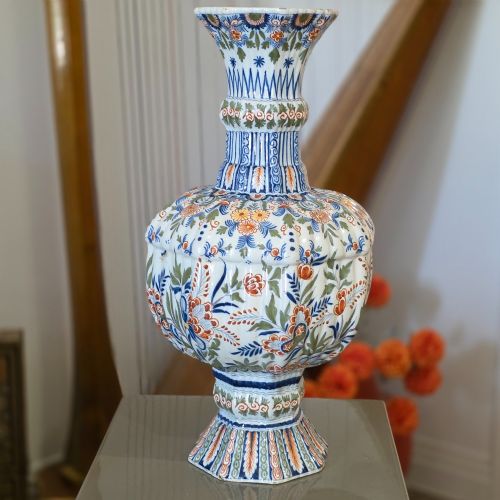
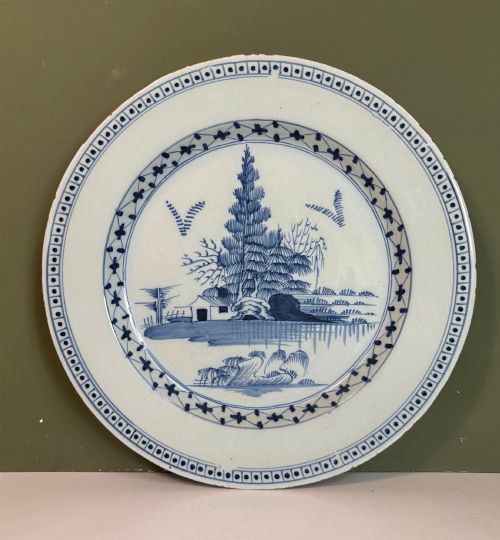
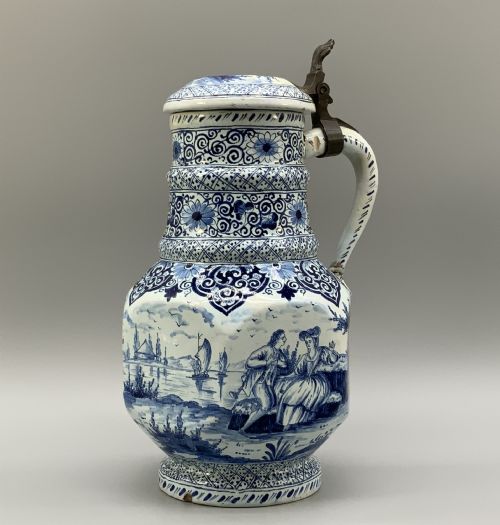
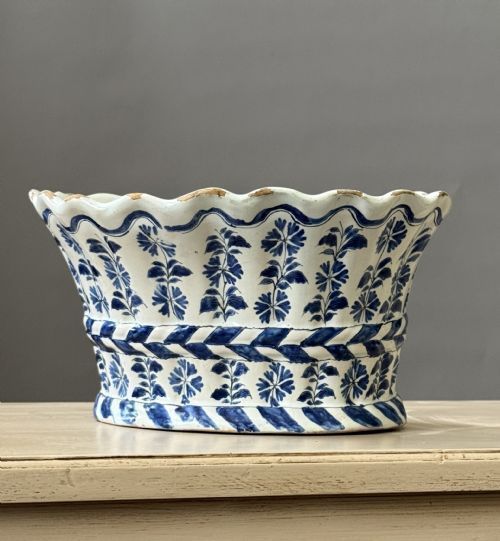
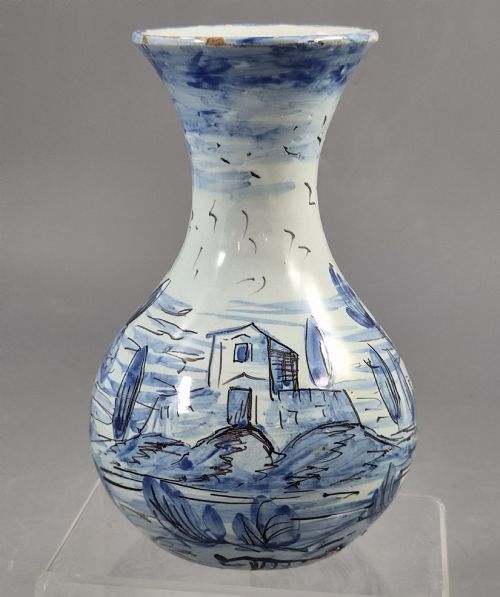
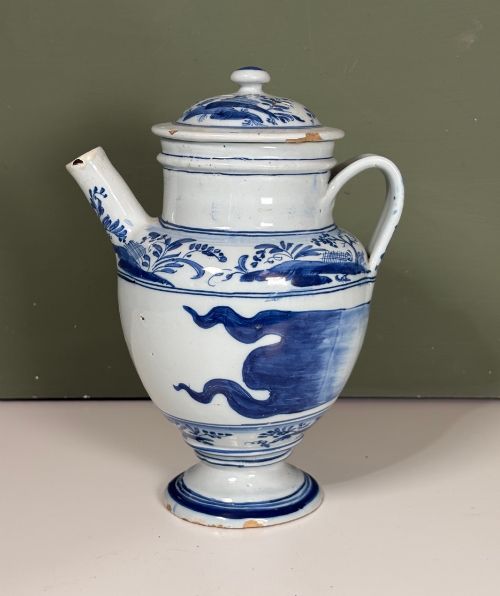
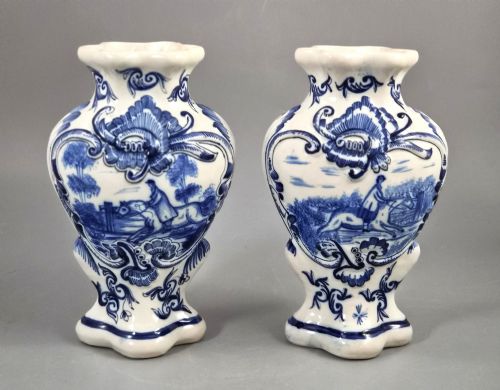
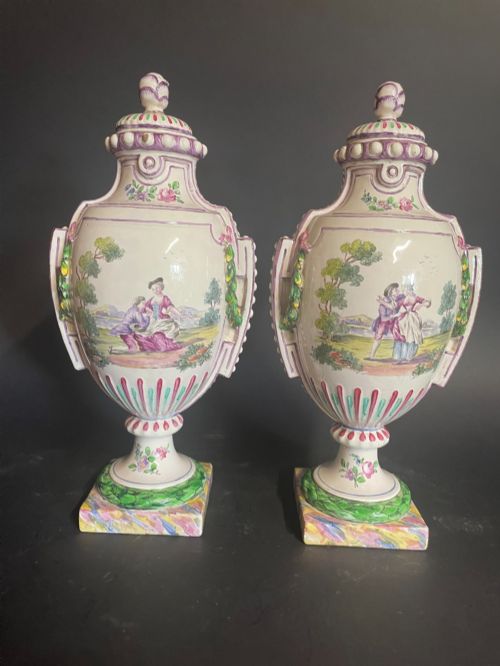
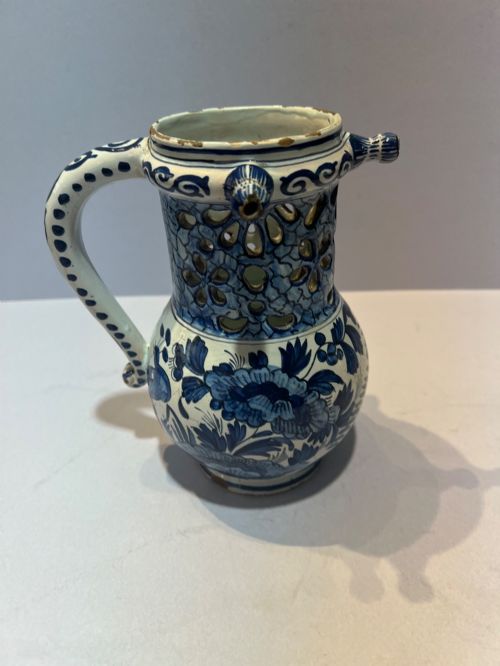
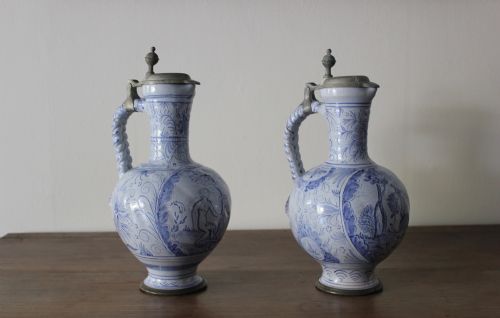
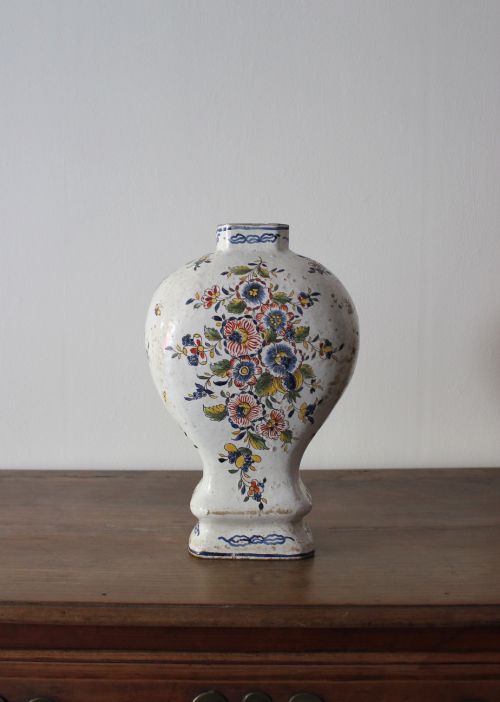
White tin glazed earthenware pieces on this page span from the seventeenth century through to the twentieth century, originating from English, Dutch, French, Italian, and Spanish kilns. The selection centres heavily on domestic and decorative vessels, including chargers, large plates, apothecary jars, bough pots, posset pots, barber's bowls, and vases.
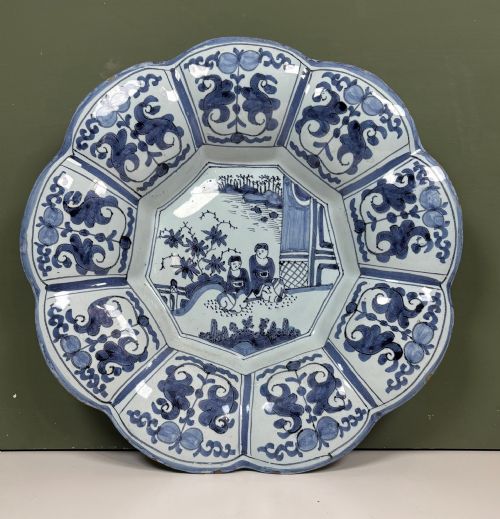
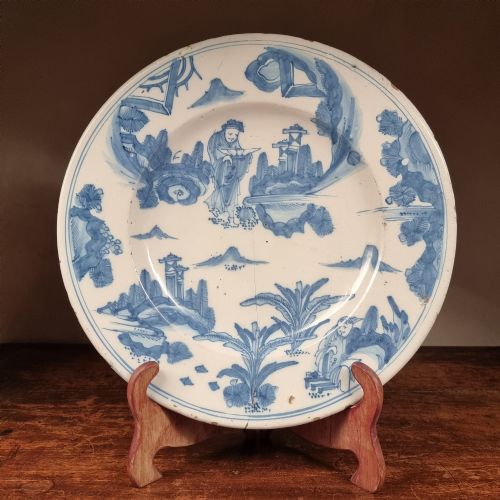
Dutch delftware forms a significant part of the available stock, alongside English delftware, French faience, and Italian maiolica. Buyers frequently encounter chargers and plates featuring blue and white or polychrome chinoiserie, floral, and animal motifs, as well as specialised vessels like puzzle jugs and drug jars.
Materials and Technique
Potters shaped these objects from earthenware bodies before coating them in a lead glaze rendered opaque and white by the addition of tin oxide. This tin glaze provided a smooth, absorbent white surface suitable for painting directly upon the unfired ground.
Painters applied metal oxides, predominantly cobalt pigment for blue, alongside manganese and yellow, which absorbed into the porous glaze during a second firing. This technique demanded steady brushwork, as the pigment settled permanently into the tin wash on contact.
Historic potters occasionally painted cheerful cows and swimming swans onto flat plates.
Evaluating Quality
Quality rests in the crispness of the hand-painted brushwork and the stability of the white tin glaze over the earthen body. Superior examples display assured, fluid lines in the cobalt or polychrome pigments, whereas lesser pieces exhibit blurred or heavy-handed execution.
The density and evenness of the glaze application also distinguish the work, alongside the complexity of the form, such as lobed rims, fitted lids, or sculptural elements like animal figures.
Cantagalli·Fourmaintraux-Courquin·Sceaux
The White Tin Glazed Earthenware Glossary
- Tin glaze
- An earthenware glaze made opaque by the inclusion of tin oxide. It produces a milky white surface that accepts painted pigments.
- Charger
- A large decorative plate intended for display on a wall or dresser rather than for dining use. These pieces often measure over thirty centimetres across.
- Faience
- The French and continental European term for tin glazed earthenware. It encompasses decorative wares produced in France and neighbouring regions.
- Apothecary jar
- A ceramic container used in pharmacies and dispensaries to store dry drugs or liquid syrups. They frequently bear painted Latin labels denoting their contents.
- Chinoiserie
- European artistic styles reflecting Chinese motifs and landscapes. Painters applied these fantastical scenes to chargers, dishes, and vases during the seventeenth and eighteenth centuries.
White Tin Glazed Earthenware: Frequently Asked Questions
How do I clean white tin glazed earthenware?
Dust these ceramics gently with a dry, soft cloth to remove surface particles.
Avoid immersing old earthenware in water, as moisture penetrates through glaze cracks into the porous clay body.
Can I use these antique bowls for food?
Historic tin glaze contains metallic oxides and the porous body absorbs liquids over time.
Display these vessels safely on walls, shelves, or tables rather than serving food from them.
How do I date a delft charger?
Examine the thickness of the earthenware body, the tint of the white glaze, and the pigment style.
Seventeenth and eighteenth-century pieces often show distinct foot rims, glaze pooling, and hand-mixed mineral colours.
What is the difference between delft and faience?
Delft specifically describes tin glazed earthenware produced in the Netherlands or England.
Faience serves as the broader continental term for the same ceramic technique practised in France, Spain, and Italy.