
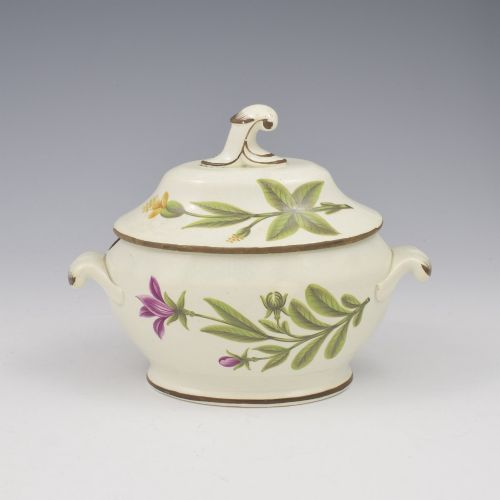
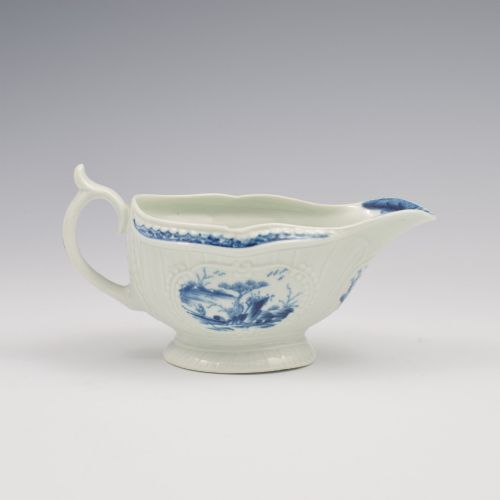
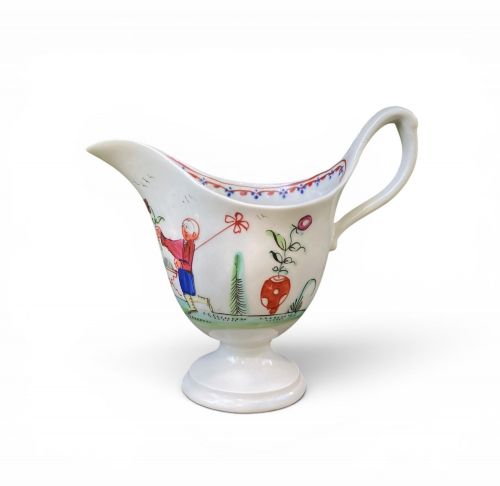


White Porcelain Sauce Boat
A white porcelain sauce boat brings eighteenth-century dining tables to life with fluid forms and hand-painted cobalt scenes.
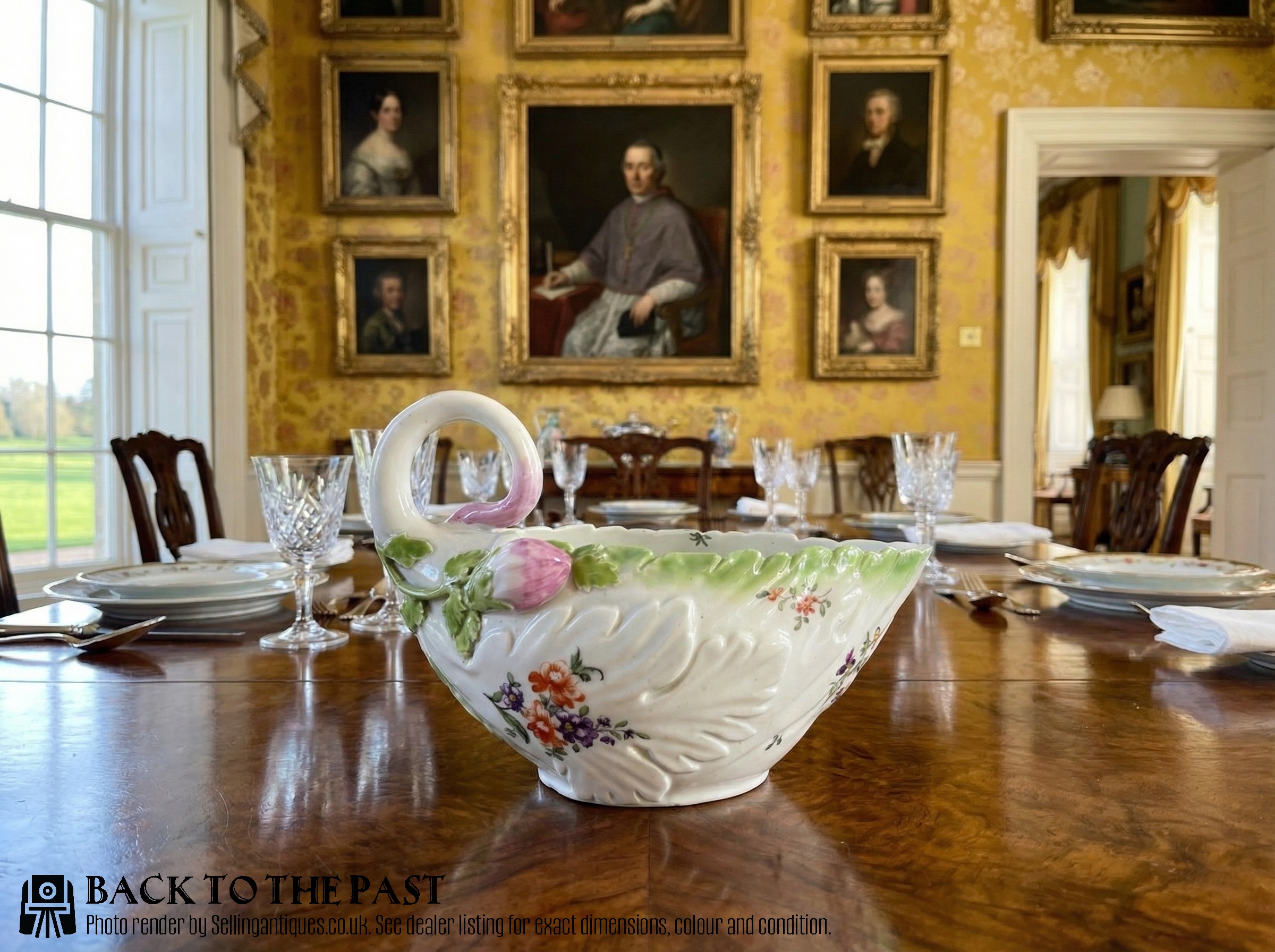
White Porcelain Sauce Boat
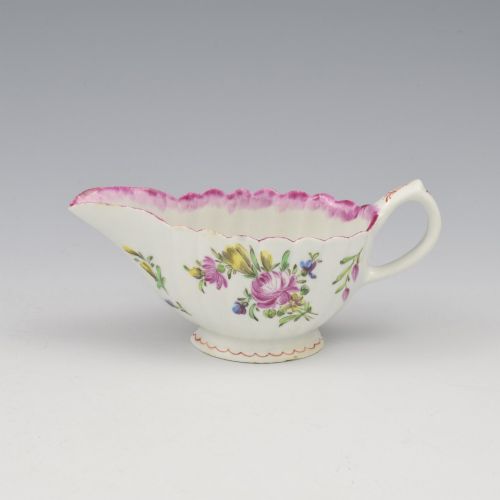
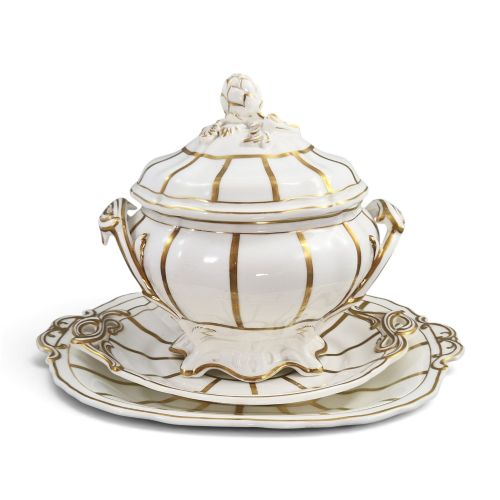
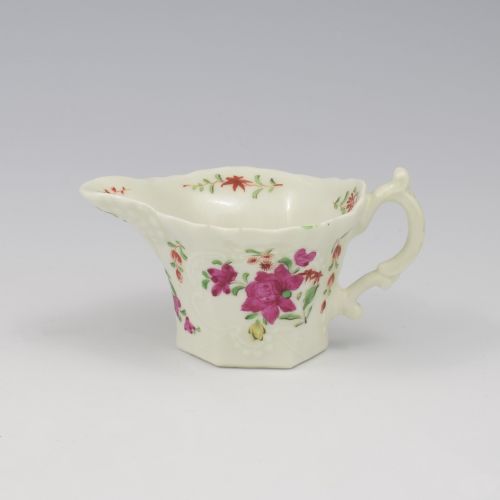
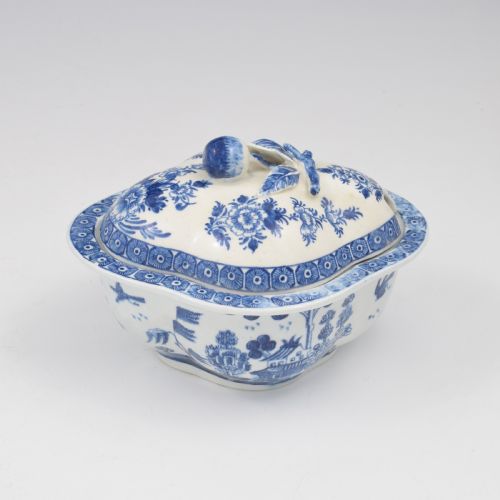
A white porcelain sauce boat sits ready to serve gravies and sauces at formal dining tables, appearing across eighteenth and nineteenth-century periods. The examples found here span Georgian, Regency, and Victorian eras, taking the form of fluted vessels, sauce tureens with covers, and handled jugs.
Makers shaped these tableware pieces from soft-paste porcelain, bone china, and pearlware, often painting them with Chinese figures, botanical motifs, or blue and white patterns. The nineteenth-century pieces include ironstone tureens with ladles and Imari designs alongside earlier soft-paste Worcester forms.
Collectors encounter distinct regional styles, from Bow and Chelsea-Derby creations to Meissen and Davenport productions. The focus remains on utilitarian serving pieces that doubled as decorative elements on dining sideboards.
Materials and production methods
Potters utilised soft-paste porcelain and bone china as the primary bodies for these vessels, applying glaze and cobalt decoration before kiln firing. Cobalt glaze provided the deep blue tones seen in transfer-printed and hand-painted chinoiserie patterns.
Enamel colours and gold leaf embellishments were added in subsequent low-temperature firings on select pieces, particularly during the Regency and Victorian periods. Artisans moulded fluted bodies, lettuce leaf forms, and hexagonal platforms using hand-thrown and slip-cast techniques.
White Porcelain Sauce Boat Retail Price Guide 2026
Typical asking prices for white porcelain sauce boat among the pieces listed under this phrase on Sellingantiques today, from the lower quarter to the upper quarter. They describe what is for sale here now, not the wider market.
Blue and white decoration and cobalt glaze dominate the early Worcester and Bow pieces on this page.
Judging quality and execution
The crispness of the moulded relief work, such as fluting or leaf patterns, separates refined pieces from simpler production items. Clean potting and balanced handles show the skill of the original factory thrower.
Hand-painted precision dictates the visual success of the surface decoration, especially on intricate blue and white scenes or Kakiemon patterns. The smoothness of the glaze and the careful placement of gilt highlights mark out the superior examples in this range.
Davenport·Worcester·Derby·New Hall·Bow·Chelsea·Flight Barr And Barr·Masons·Meissen
The White Porcelain Sauce Boat Glossary
- Soft-paste porcelain
- An artificial ceramic body composed of white clay, glass, and ground minerals, fired at lower temperatures than hard-paste porcelain. It produces a warm, slightly creamy tone under the glaze.
- Sauce tureen
- A covered serving vessel designed for gravies or sauces, often accompanied by a matching undertray and ladle. These pieces became popular for formal dining in the late eighteenth and nineteenth centuries.
- Chinoiserie
- European artistic interpretations of Chinese and East Asian decorative motifs. Potters painted these fanciful landscapes and figures on eighteenth-century porcelain vessels.
- Pearlware
- An earthenware body developed in the late eighteenth century featuring a thin glaze with a slight bluish tinge. It was often decorated with botanical designs or blue transfer prints.
- Imari
- A decorative style inspired by Japanese export wares featuring a palette of underglaze blue, iron red, and gilt. British factories frequently adopted this aesthetic during the Regency period.
White Porcelain Sauce Boat: Frequently Asked Questions
How do I identify eighteenth-century soft-paste porcelain?
Soft-paste porcelain often displays a warmer, slightly translucent body with subtle variations in the glaze. Under magnification, you may spot minor kiln scars or pinholes from the manufacturing process.
These pieces feel lighter than later ironstone or bone china equivalents and show softer edges on moulded details.
How were these vessels used on historic dining tables?
Servants used them to present drawn butter, gravies, and fruit sauces alongside roasted meats and puddings. They sat directly on the dining table or upon sideboards until needed for service.
Matching ladles and covers helped maintain the temperature and consistency of the sauces during long dinner courses.
Can I use antique porcelain sauce boats for daily dining?
These pieces function well for occasional serving if handled with care, though hand washing is essential to protect historical glazes and gilding. Enamel decorations and gold leaf can wear down with frequent abrasive washing in modern dishwashers.
Many collectors prefer to display them on sideboards or within cabinets to preserve their fragile ceramic bodies.