
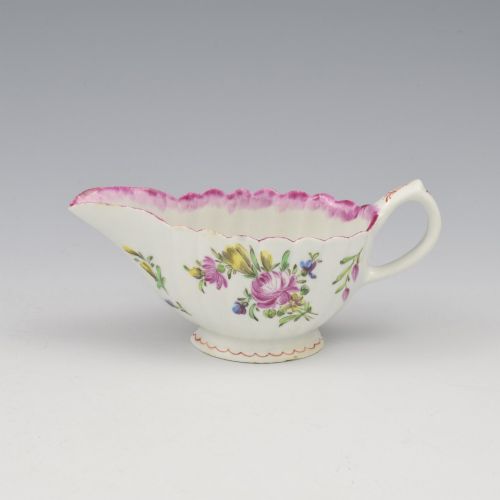
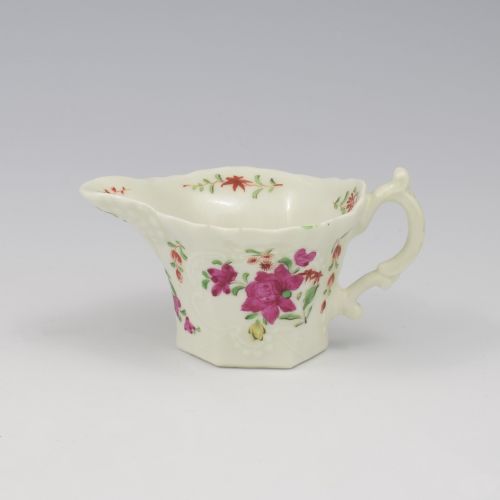
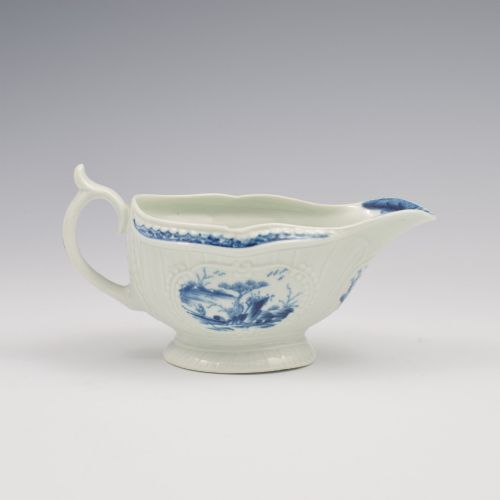


Georgian Porcelain Gravy Boat
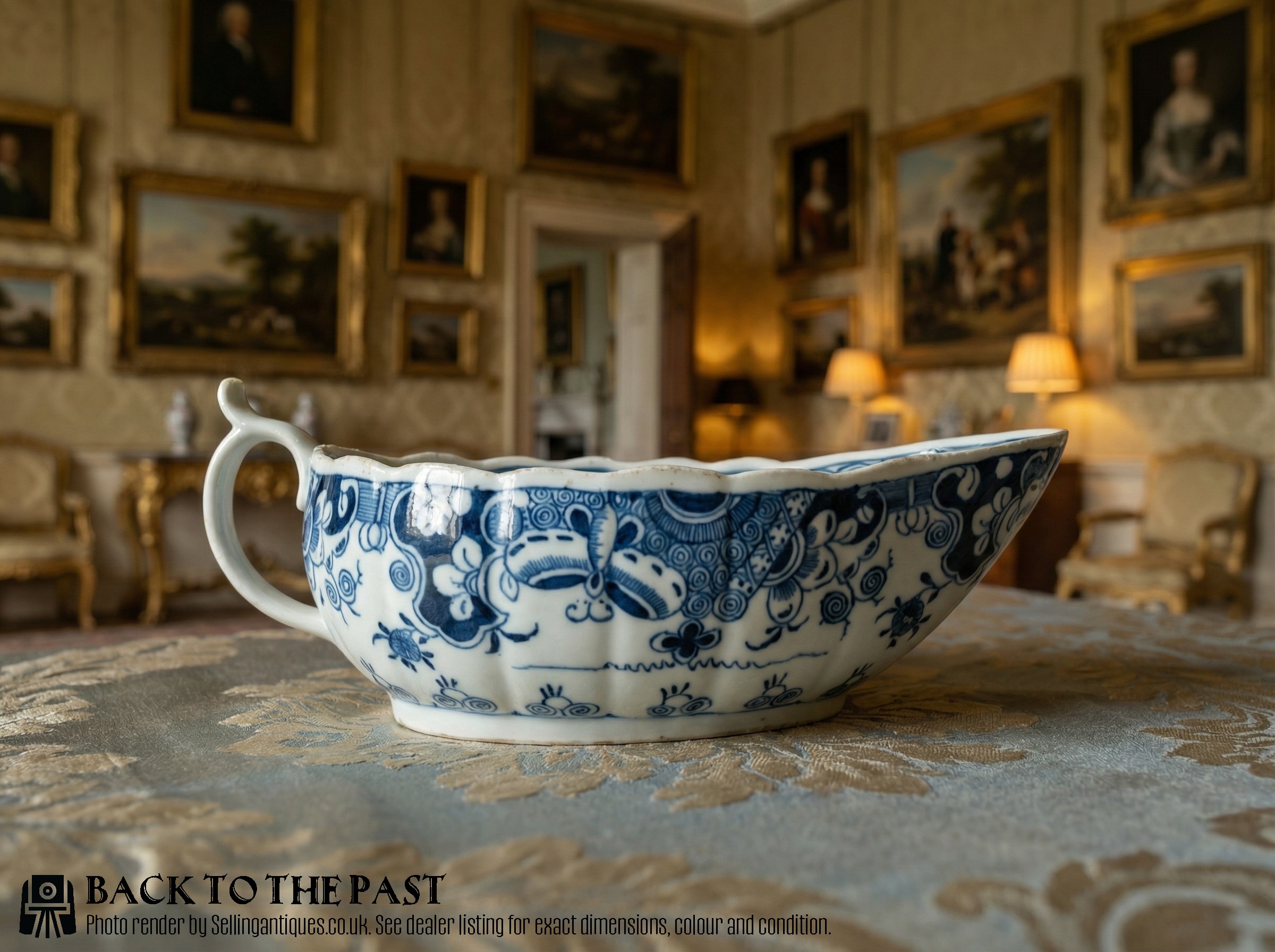
These Georgian porcelain gravy boat examples bring eighteenth-century form and hand-painted cobalt glaze straight to the table.
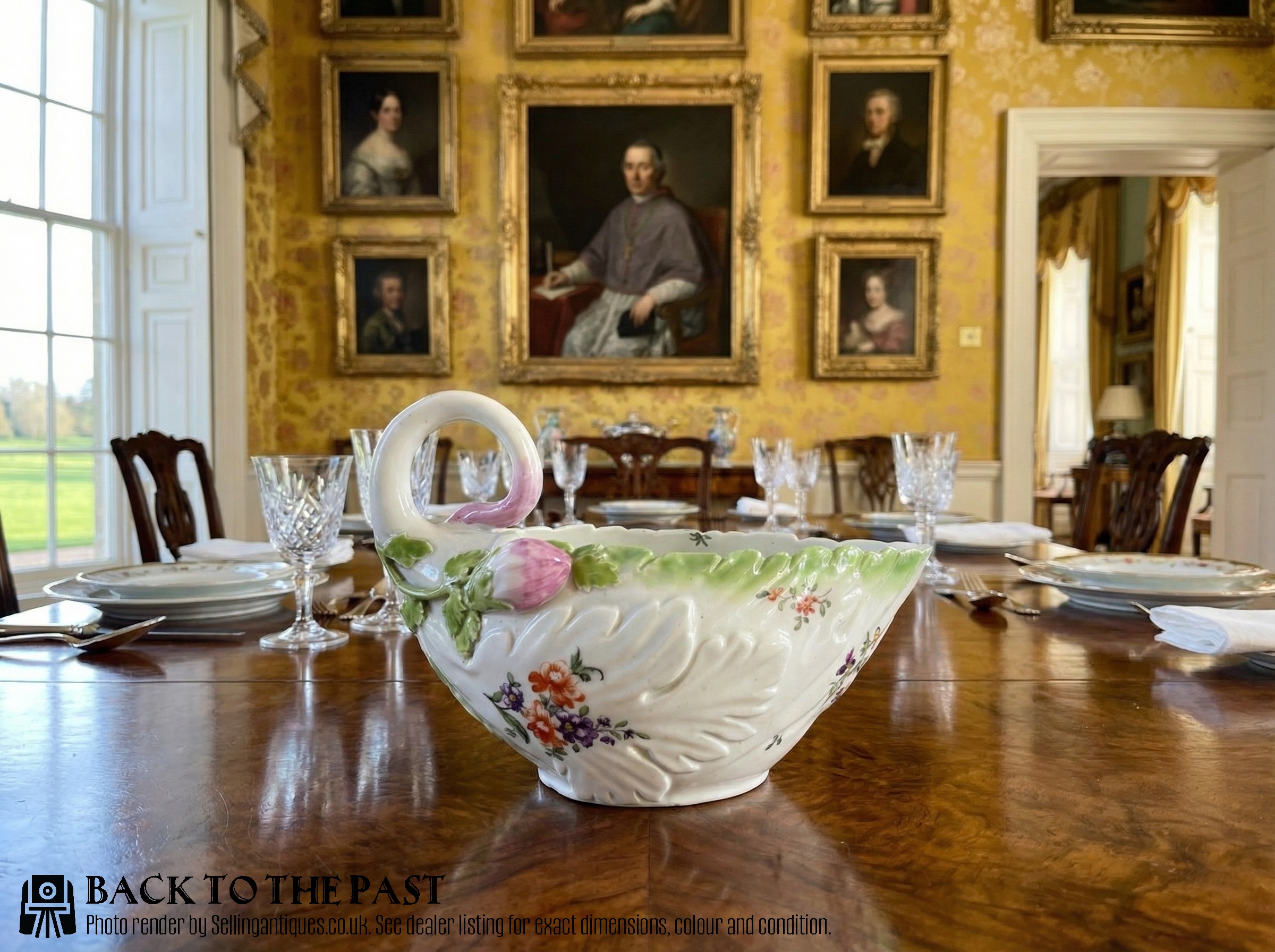
Georgian Porcelain Gravy Boat
A georgian porcelain gravy boat serves sauces and gravies at the dining table, taking shapes shaped by eighteenth-century silver prototypes. Most examples met here hail from the eighteenth century, spanning periods like the mid-century decades up to the late seventeen-seventies.
Makers fashioned these vessels as sauce boats, sauceboats, and sauce boats, sometimes moulding them into botanical lettuce forms or hexagonal and triangular platform bases. Decoration frequently draws on Georgian Chinoiserie and Georgian Rococo styles, featuring motifs such as the Fisherman and Billboard Island, the Rose, or Mandarin Chinese figures.
Forming the core of these listings, soft-paste porcelain and soft-paste porcelain dominate alongside early nineteenth-century pairs. Buyers encounter fluted bodies, blue and white transfer printing, and hand-applied cobalt glaze that defines the palette of the era.
How they were made
Potters shaped soft-paste porcelain by hand or pressed it into moulds, creating fluted bodies, lettuce leaves, and geometric platforms. Artisans then applied enamel, cobalt glaze, and cobalt blue glaze before firing the pieces in kilns.
Painters finished many vessels by hand with cobalt blue pigments and polychrome enamels, occasionally adding gilt highlights for contrast. This combination of fluid glaze and delicate body defines the material character of eighteenth-century English factories.
Georgian Porcelain Gravy Boat Retail Price Guide 2026
Typical asking prices for georgian porcelain gravy boat among the pieces listed under this phrase on Sellingantiques today, from the lower quarter to the upper quarter. They describe what is for sale here now, not the wider market.
Garden greens met the dinner table when potters turned cabbage leaves into gravy boats.
What varies in quality
Quality rests on the crispness of the moulded relief, whether in fluted panels, lettuce leaf veins, or sharp hexagonal and triangular platform angles. Finer specimens display clean potting without excessive warp or kiln distortion.
The precision and depth of the hand-painted cobalt glaze or enamel decoration set superior examples apart from simpler production. Transfer-printed patterns like the Fisherman and Billboard Island or the Doughnut Tree show varying degrees of clarity and registration in the blue.
Bow Porcelain·Dr Wall Worcester·Chelsea Derby
The Georgian Porcelain Gravy Boat Glossary
- Soft-paste porcelain
- An artificial ceramic body fired at lower temperatures than hard-paste porcelain, common in eighteenth-century English factories. It yields a warm, slightly creamy body beneath the glaze.
- Cobalt glaze
- A metallic oxide pigment used under the glaze to produce a deep blue colour during firing. It reacts distinctively with soft-paste bodies.
- Fluted
- Having parallel shallow grooves running vertically along the body of the vessel. This technique adds structural rigidity and visual rhythm to sauce boats.
- Chinoiserie
- European artistic style reflecting Chinese motifs and landscapes, popular on porcelain during the Georgian period. It often depicts figures in imaginary gardens.
- Rococo
- An ornate design style characterised by asymmetrical scrolls, C-curves, and naturalistic shell or leaf motifs. It heavily influences the handles and bodies of mid-eighteenth-century vessels.
Georgian Porcelain Gravy Boat: Frequently Asked Questions
What is a georgian porcelain gravy boat?
A georgian porcelain gravy boat is a small ceramic vessel designed for serving sauces at the dining table during the eighteenth and early nineteenth centuries. These pieces were moulded in soft-paste porcelain and decorated with hand-painted cobalt blue or enamel.
Potters drew inspiration from silver tableware of the period, creating handled forms with fluted bodies, leaf shapes, or elevated platforms. They remain collected for their artistry and direct connection to Georgian dining customs.
How were they used?
These vessels held drawn butter, gravies, and thin sauces to accompany roasted meats and fish at formal meals. Servants passed them around the table or placed them centrally for guests to help themselves.
Because soft-paste porcelain is sensitive to thermal shock, they served warm liquids rather than boiling contents straight from the fire. Today, many collectors display them on sideboards or use them for holding small floral arrangements.
How do I spot eighteenth century pieces?
Eighteenth-century examples display soft-paste porcelain bodies that often show characteristic glaze pooling, pinholes, or translucent qualities when held to the light. Decoration relies on hand-painted cobalt blue, early transfer printing, and underglaze techniques typical of the period.
Forms also provide clear clues, such as the distinct Rococo scrolls, hexagonal bases, and Chinoiserie figures seen in mid-century production. Later nineteenth-century pieces tend to show different potting standards and whiter, harder ceramic bodies.