
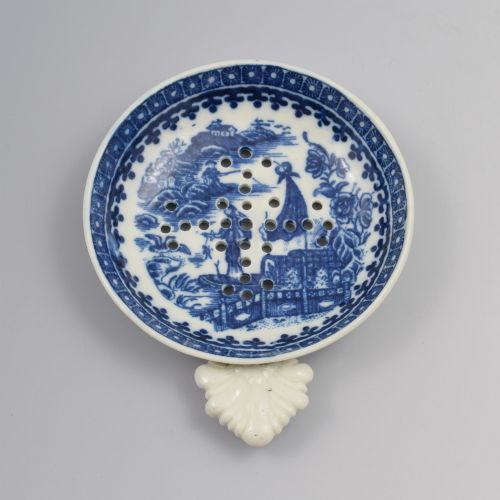


18th Century Ceramic Tableware
These pieces of 18th century ceramic tableware bring period dining rooms to life through hand-painted porcelain, creamware, and earthenware.
18th Century Ceramic Tableware
When you examine 18th century ceramic tableware, you encounter functional serving vessels and dining plates created during the Georgian era. These items include sauce boats, teapots, soup bowls, pudding bowls, and dinner plates used in formal and domestic settings.
The pieces present on this page originate predominantly from the 18th century and the Georgian period, alongside occasional 19th-century examples. English factories and continental workshops both contributed to this broad category of domestic pottery and porcelain.
Forms span everyday utility and fine display, taking shapes such as chestnut baskets, gravy boats, egg drainers, and pickle dishes. Each object reflects the dining habits and interior aesthetics of the Georgian household.
How They Were Made
Potters utilised ceramic bodies such as soft-paste porcelain, creamware, earthenware, and faience to shape these objects. Hand-painting and blue and white printing applied intricate decoration directly onto the glazed surfaces.
Specialised factories formed plates, boats, and bowls using local clays and refined pastes before firing them in kilns. Enamel colours and occasional gold leaf added final decorative layers to select porcelain and pottery bodies.
Listings feature creamware, porcelain, and earthenware shaped into sauce boats, plates, and bowls across the 18th century.
What Varies in Quality
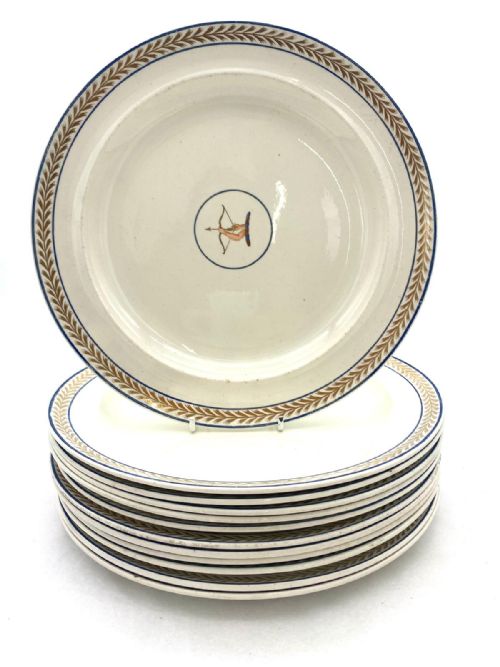
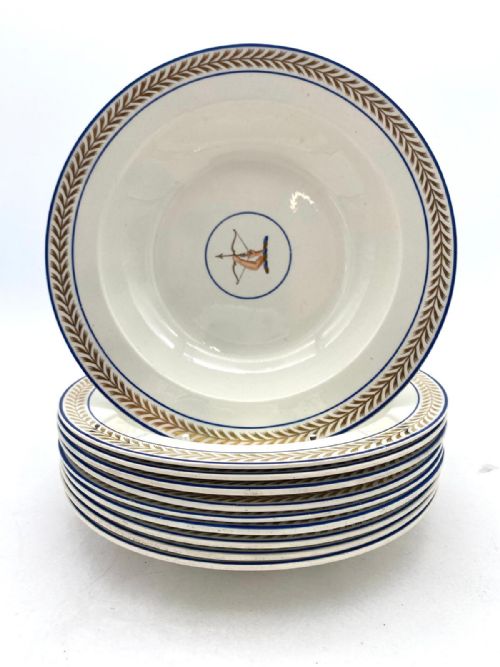
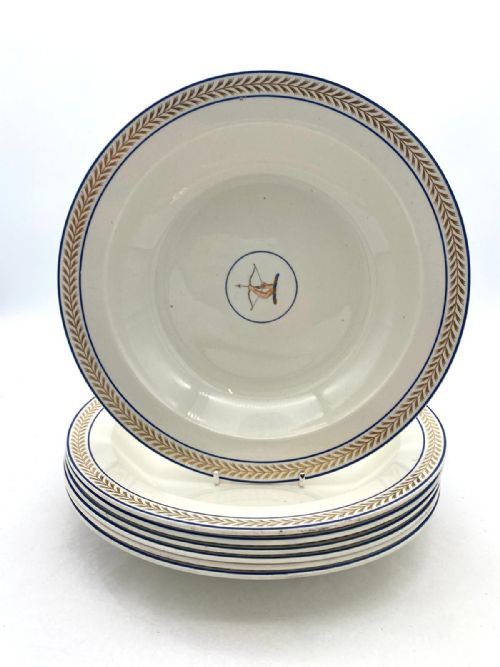
The crispness of the moulded form and the precision of the hand-painted or printed decoration distinguish finer examples from standard production. Armorial crests, delicate piercing, and well-preserved enamel colours indicate higher ambition from the maker.
The consistency of the glaze and the refinement of the ceramic body, whether soft-paste porcelain or creamware, mark the level of craftsmanship involved. Pieces that retain their structural integrity and original decorative palette demonstrate superior survival through the centuries.
Wedgwood·Caughley·Bow·Worcester·Veuve Perrin·KPM·Leeds·Meissen
The 18th Century Ceramic Tableware Glossary
- Soft-paste porcelain
- A ceramic material composed of white clay and glass frit, fired at lower temperatures than hard-paste. It possesses a warm glaze tone often found in early English factory production.
- Armorial
- Bearing a coat of arms or heraldic crest. Such decoration was commissioned by wealthy families for bespoke dinner services.
- Transfer printing
- A method of applying engraved designs to pottery using paper templates and metallic oxides. This technique allowed intricate patterns like the fisherman design to be replicated consistently.
- Faience
- Tin-glazed earthenware produced in continental Europe. It offers an opaque white surface suitable for hand-painted polychrome decoration.
18th Century Ceramic Tableware: Frequently Asked Questions
How do I care for 18th century ceramic tableware?
Wash these pieces gently by hand using mild soap and warm water, avoiding abrasive sponges or modern dishwashers. Enamel and gold leaf decorations require careful handling to preserve their historic surfaces.
Store plates and bowls securely on padded shelves or within dedicated display cabinets. Minimise stacking heavy items directly on top of fragile porcelain to prevent rim chips and surface scratches.
Can I use these plates for everyday dining?
These items function primarily as display pieces or historical collections rather than modern tableware. The porous nature of early earthenware and soft-paste porcelain makes them vulnerable to thermal shock and staining.
Exposing old glazes to acidic foods or high microwave heat risks damaging the historic material. Gentle use during special occasions remains preferable to daily service.
How do I distinguish creamware from porcelain?
Creamware displays a warm, pale yellow or ivory hue characteristic of refined earthenware bodies. Porcelain presents a harder, whiter body that often transmits light when held up to a lamp.
The weight and ring of the material also differ, as porcelain feels denser and rings higher when tapped lightly. Glaze pooling around the footring provides further clues to the underlying ceramic composition.
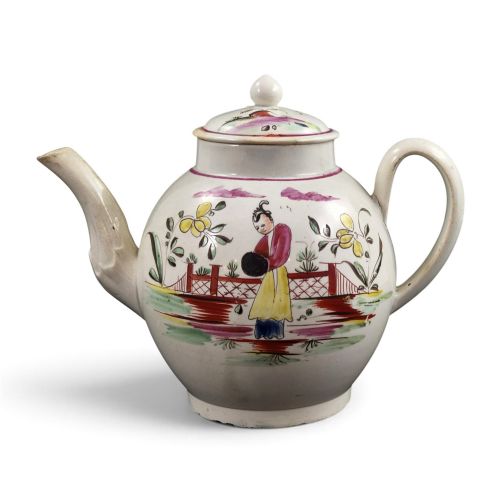
What does Chinoiserie mean on these items?
Chinoiserie describes European artistic interpretations of Chinese and East Asian decorative motifs. Artisans painted imaginative landscapes, figures, and architectural elements onto English and continental ceramics.
This style flourished during the 18th century as trade with Asia inspired widespread fascination. Objects featuring these patterns combine European forms with whimsical oriental scenes.