


White Porcelain Dessert Plate
These white porcelain dessert plate selections span eighteenth-century English works to later European services, offering delicate serving forms for the dining table.
White Porcelain Dessert Plate
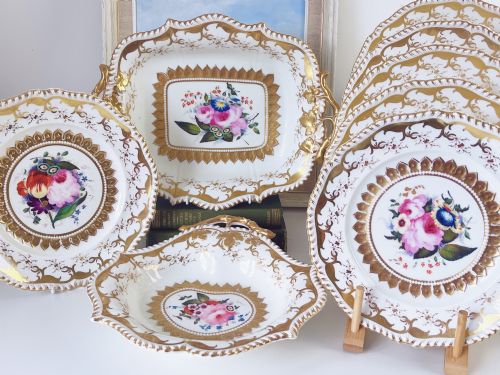
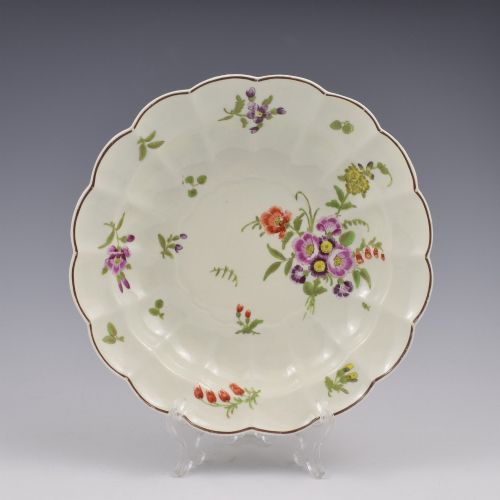
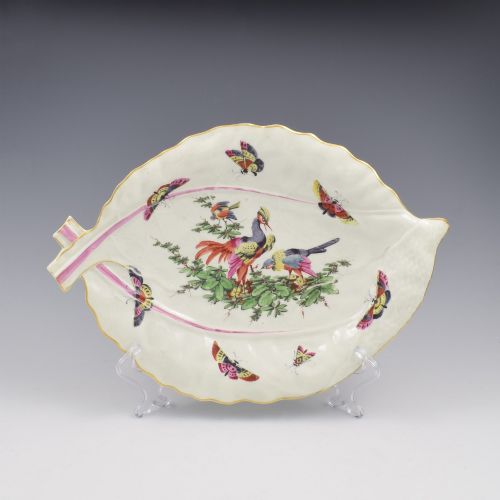
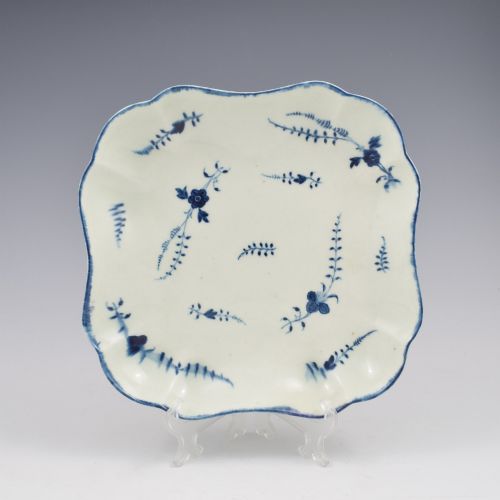
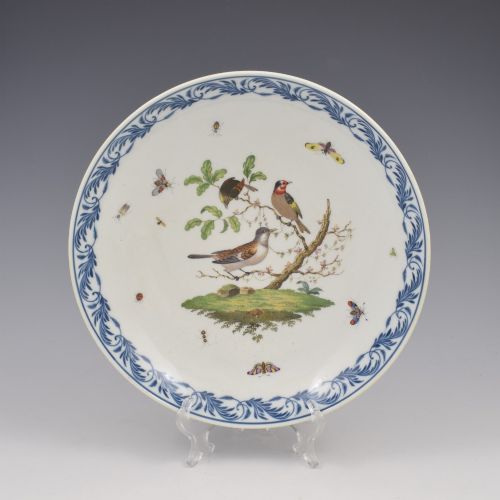
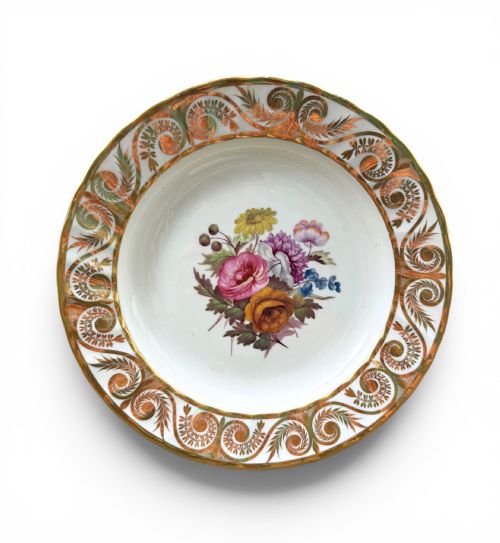
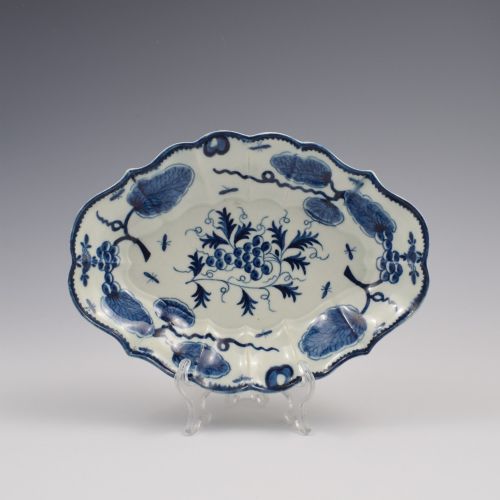
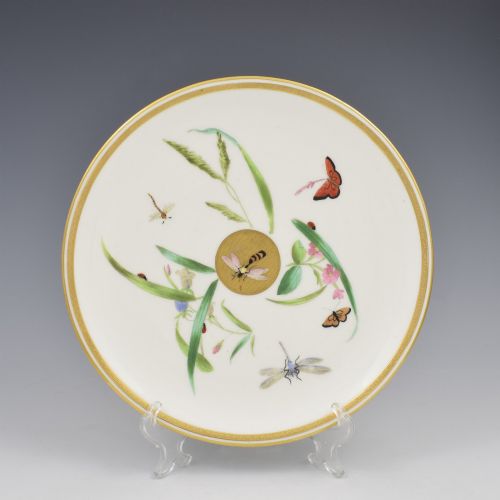
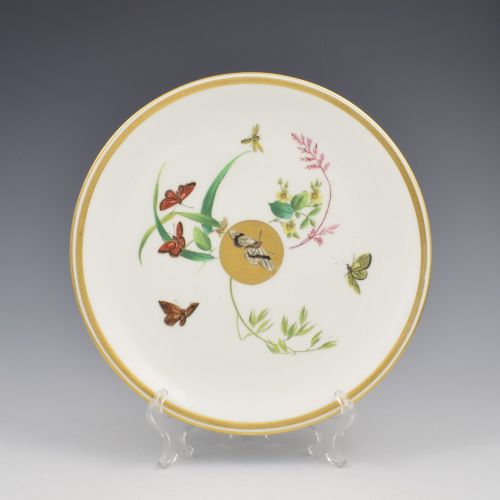
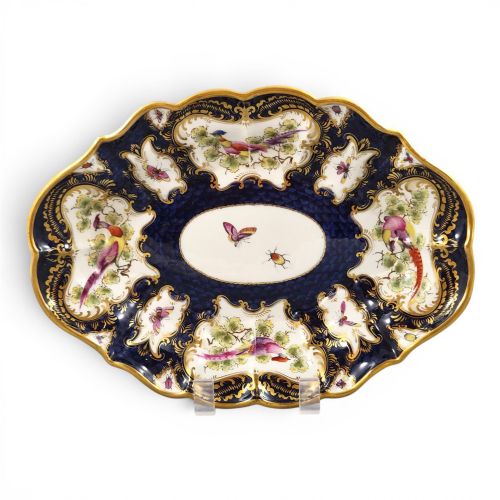
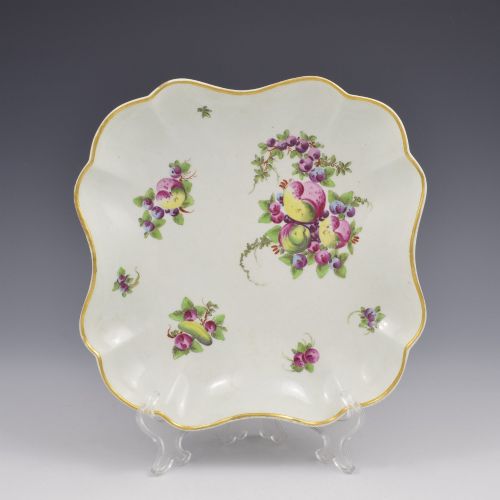
A white porcelain dessert plate serves sweet courses, fruit, or pastries at the conclusion of a meal, taking forms from lobed soup plates to square dishes and round decorative plates. When exploring a white porcelain dessert plate on this page, a buyer encounters everything from eighteenth-century Dr Wall Worcester pieces with hand-painted birds and flowers to nineteenth-century Aesthetic Movement Minton designs.
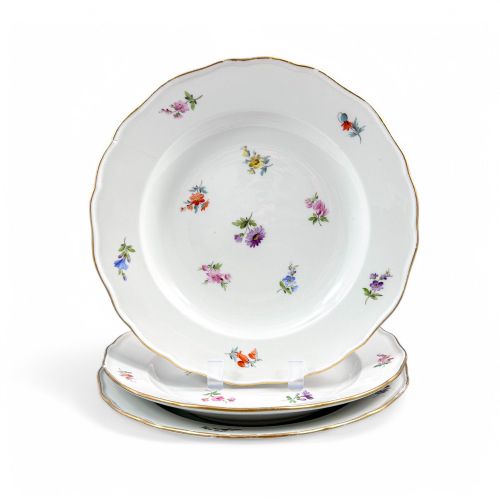
The material foundations shift between soft-paste porcelain, hard-paste porcelain, and glazed bodies, spanning Georgian, Regency, Victorian, and Edwardian eras. Pieces often arrive singly, in pairs, or as part of larger dessert services originating from English factories like Worcester, Derby, and Minton, as well as continental makers such as Meissen.
Makers decorated these surfaces with hand-painted botanical motifs, ornithological studies, Chantilly sprigs, and Japanese-style gilding. Collectors select them for display in cabinets or for use during formal dining, appreciating both the historical hand-painting and the varied moulded borders.
Materials and production techniques
Potters shaped these objects using soft-paste or hard-paste porcelain clay bodies, sometimes employing basketweave or ozier moulded borders to give texture to the rim before firing. The pieces received an overall glaze to create a smooth white surface suitable for subsequent painting.
Artisans applied enamel colours by hand, featuring subjects like botanical specimens, topographical views, and insects, frequently accentuating the rims with gold leaf or gilding. Kiln firings fixed these mineral pigments and precious metals permanently to the glazed porcelain base.
Listings feature hard-paste porcelain and soft-paste porcelain bodies adorned with enamel, gold leaf, and glaze.
Distinctions in quality and execution
The standard of a white porcelain dessert plate rests primarily on the crispness of the porcelain body, the complexity of the moulded shape, and the artistic merit of the hand-painted decoration. Finer examples display meticulous brushwork in botanical or ornithological subjects, whereas standard items rely on simpler transfer prints or minimal floral sprigs.
The presence of rich gilding, gold leaf highlights, and specialised factory marks on the underside elevate a piece's standing among collectors. Preservation of the enamel colours and the integrity of the glaze without excessive wear also divide ordinary examples from exceptional ones.
Grainger Lee And Co·Meissen·Derby·Minton·Royal Worcester·Flight Barr And Barr·Chelsea-Derby·James Giles·Wedgwood·Royal Crown Derby·Rockingham
The White Porcelain Dessert Plate Glossary
- Soft-paste porcelain
- An artificial porcelain composition fired at lower temperatures than hard-paste, common in eighteenth-century English factories like early Worcester and Chantilly. It produces a warm, slightly translucent body.
- Hard-paste porcelain
- A true porcelain made from kaolin and petuntse fired at high temperatures, yielding a durable, vitrified white body utilised by continental makers like Meissen.
- Ozier border
- A moulded wicker or basketweave pattern impressed into the porcelain rim of plates and dishes during the eighteenth and nineteenth centuries. It adds subtle texture to the white surface.
- Gilding
- The application of gold leaf or ground gold mixture to the rims and accents of porcelain plates. It was frequently hand-burnished to achieve a bright finish.
White Porcelain Dessert Plate: Frequently Asked Questions
How are antique dessert plates different from dinner plates?
Dessert plates generally measure smaller in diameter and feature more ornate hand-painted decoration, such as botanical studies or birds, suited for sweet courses rather than savory meals.
They often include specialised shapes like square lobed dishes, basketweave rims, or matching service components designed specifically for the conclusion of dining.
Can I use these antique porcelain plates for daily dining?
While these pieces were originally created for functional use, their age, delicate hand-painted enamels, and historical value generally prompt owners to reserve them for special occasions or display.
Hand washing is essential to preserve the delicate gilding and enamel pigments against modern detergents and mechanical cycles.
How do I identify First Period Worcester porcelain?
First Period Worcester pieces, produced during the eighteenth century under Dr Wall, typically exhibit soft-paste porcelain bodies with distinct glaze pooling and characteristic blue scale or hand-painted floral motifs.
Many bear underglaze blue workman marks or crescent symbols on the underside, though unmarked examples are also documented.
What does Aesthetic Movement style look like on these plates?
Aesthetic Movement porcelain draws heavy inspiration from Japanese design principles, replacing traditional European florals with asymmetrical compositions, gilt sun motifs, and insects.
These pieces, produced around the final quarter of the nineteenth century by factories like Minton, favor uncluttered white glazed surfaces with precise, stylized detailing.