




Gold Rimmed Decorative Plate
A gold rimmed decorative plate brings rich painted detail and metallic borders to a wall or cabinet.
Gold Rimmed Decorative Plate
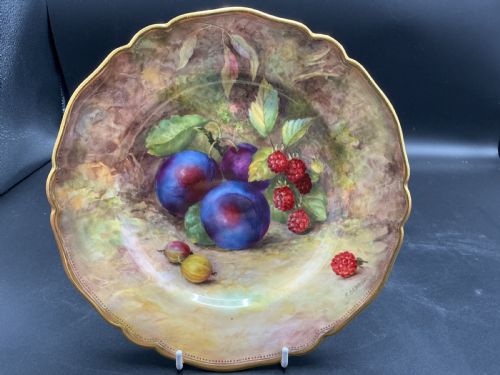
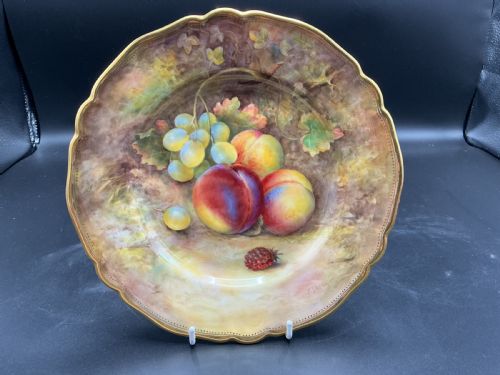
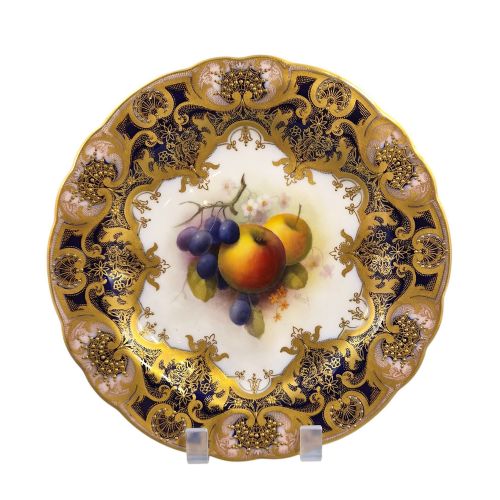
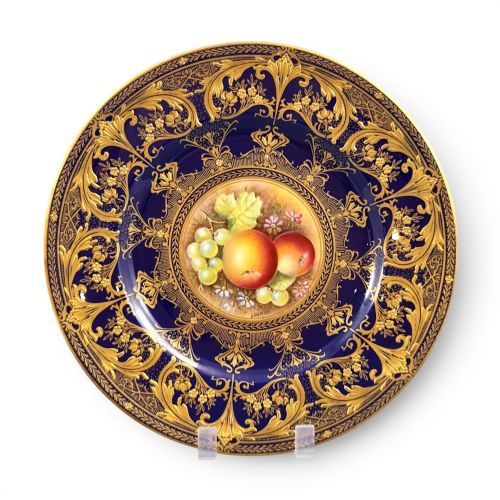
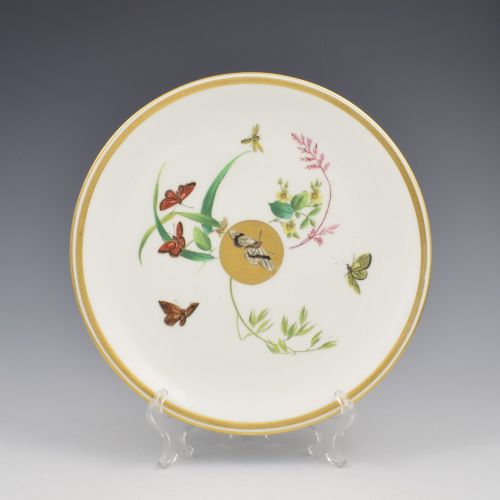
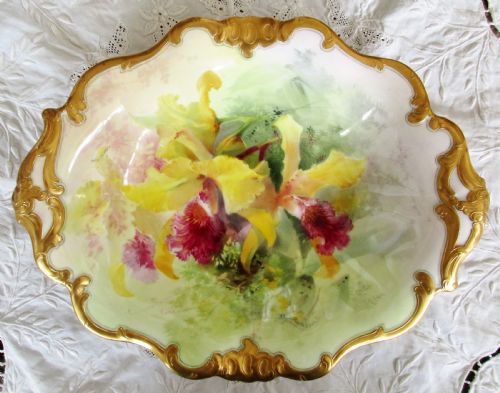
A gold rimmed decorative plate serves as a vibrant display piece rather than everyday tableware, often featuring hand-painted fruit, floral studies, or intricate Japanese motifs across porcelain and bone china. These items appear across various periods, from the Victorian era and the Aesthetic Movement through to mid-century British ceramic production.
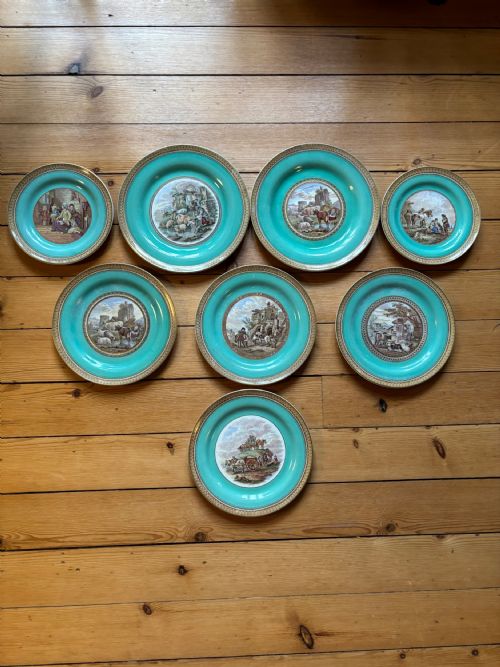
The version most frequently encountered on this page is the English porcelain cabinet plate, particularly examples originating from Worcester, Minton, and Royal Doulton. Such pieces frequently combine traditional floral or orchard scenes with gilded edges, ranging from simple gold leaf lines to elaborate rope-edge moulding.
Materials and construction
Makers shaped fine porcelain, bone china, earthenware, and enamel into specialised cabinet dishes and wall chargers, often employing moulded forms such as basketweave textures or rope edges. These bodies provided a smooth white surface suited to detailed botanical and figurative painting.
Artists applied enamels and pigments by hand before finishing the rims and motifs with gold leaf, gilt, and gilding. Firing fixed the metallic lustre and colours permanently to the ceramic body.
Listings feature porcelain, bone china, earthenware, and enamel, decorated with gold leaf and gilding across multiple centuries.
Judging quality in painted and gilded ceramics
The standard of a gold rimmed decorative plate rests heavily upon the skill of the painter, visible in the precision of brushwork on fruit studies, portraits, or Japanese-style patterns. Signed artist works by established ceramic painters naturally represent a higher tier of craftsmanship than standard factory decoration.
The application and preservation of the gold leaf or gilding also dictate value, alongside the crispness of the underlying moulding on shapes such as basketweave or rope edges. Intact metallic lustre without rubbing indicates careful preservation and superior initial application.
Royal Worcester·Minton·Royal Doulton·Coalport·Royal Crown Derby·Fukagawa
The Gold Rimmed Decorative Plate Glossary
- Cabinet plate
- A decorative ceramic dish intended for display in a cabinet or on a wall rather than for dining. These items frequently display elaborate painted scenes and gilded rims.
- Gilding
- The application of gold leaf or powdered gold to the surface of ceramics. This technique highlights rims and decorative motifs with a metallic shine.
- Bone china
- A type of porcelain composed of clay mixed with bone ash. It yields a strong, translucent white body ideal for fine cabinet pieces.
- Enamel
- Opaque vitreous glass fused to ceramic surfaces through firing. It provides the vibrant, lasting colours seen on painted plates.
Gold Rimmed Decorative Plate: Frequently Asked Questions
How do I hang a cabinet plate safely?
Use a coated spring hanger designed specifically for plates, ensuring the tension holds the rim securely without scratching the porcelain or the delicate gold leaf border.
Alternatively, mount the piece on a sturdy plate stand inside a glass-fronted cabinet to protect the painted surface from dust and accidental knocks.
Can I use these plates for dining?
These items are designed strictly for display as cabinet plates, decorative dishes, or wall chargers rather than for serving food. Everyday use risks wearing away the hand-painted enamels and delicate gilding.
Keep them away from cutlery and washing water to preserve the artistic detail and the integrity of the gold rim.
How do I clean a gilded plate?
Dust the surface gently with a soft, dry cloth or a feather duster. Avoid commercial cleaners, abrasive sponges, and immersion in water, which can damage old enamels and tarnish the gold leaf.
If stubborn marks appear, consult a professional restorer rather than attempting harsh chemical cleaning at home.
What period do most of these plates come from?
The listings span the nineteenth and twentieth centuries, featuring Victorian and Aesthetic Period designs alongside Edwardian ceramic art and mid-century British pieces.
Stylistic cues such as basketweave moulding or Japanese-inspired motifs often point towards specific decades like the eighteen-seventies or nineteen-thirties.