



White Marble Top Sideboard
A white marble top sideboard brings polished stone surfaces and figured timbers together, offering both grand display and practical storage.

White Marble Top Sideboard
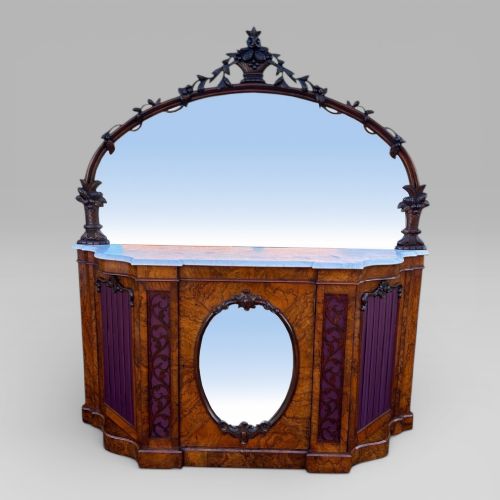
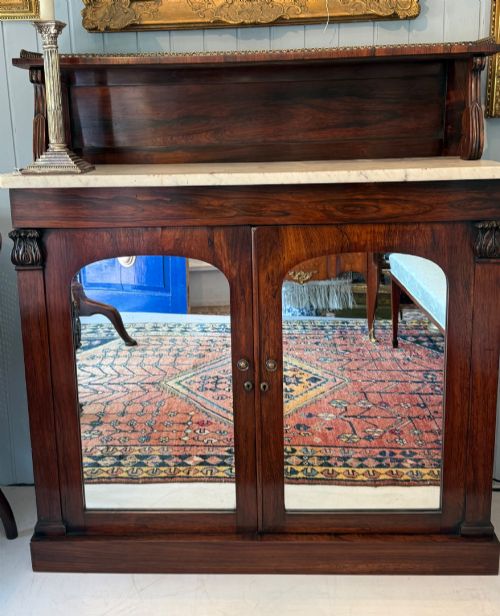
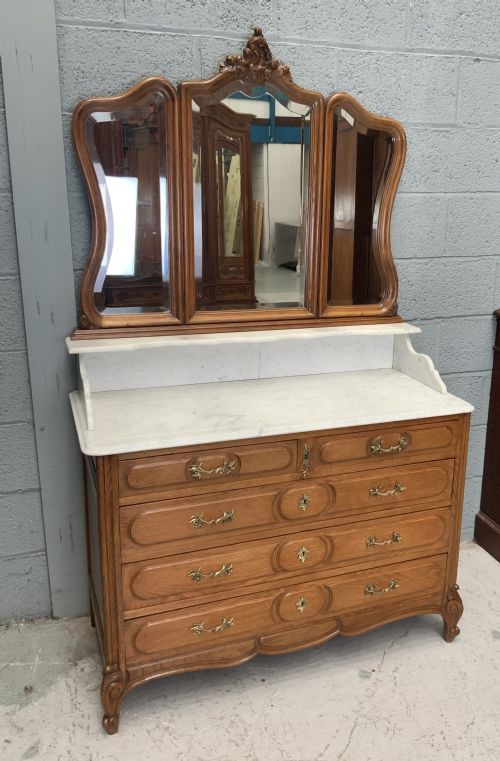
A white marble top sideboard is a heavy, substantial piece of furniture combining timber carcases with smooth stone surfaces. The listings here include Victorian mirror-backed credenzas, Edwardian washstands, French commodes, and Regency side cabinets.
Makers through the nineteenth and early twentieth centuries utilised various forms, from serpentine four-door cabinets to console tables and chiffoniers. The white marble acts as a durable top surface, frequently paired with walnut, burr walnut, mahogany, rosewood, and oak.
How they were made
Constructed from solid timbers and dense veneers, these pieces rely on stable carcases to support heavy stone slabs. Walnut, burr walnut, and mahogany form the main bodies, often enhanced by floral marquetry and carved mirror backs.
White marble, including Carrara varieties, is shaped to fit the profile of each cabinet or console, sometimes accompanied by brass mounts, ormolu, and glass components.
Several washstands on this page once held porcelain ewers before finding new life as living room sideboards.
What varies in quality
Quality rests in the selection of figured timbers and the crispness of carved details on the timber frame. Burr walnut and marquetry inlay require high skill to execute cleanly across curved doors and panels.
The integration of the marble top with the timber base also defines the grade of the piece, alongside the presence of matching mirror backs and quality metal mounts.
The White Marble Top Sideboard Glossary
- Credenza
- A sideboard or cabinet, frequently low to the ground, designed for display and storage in principal rooms. Victorian examples often incorporate mirrored backs and burr walnut veneers.
- Chiffonier
- A compact sideboard cabinet originating in the nineteenth century, typically featuring shelves or a low gallery above a cupboard base. They appear in rosewood and mahogany.
- Marquetry
- Decorative veneer work arranged in intricate floral or geometric patterns across the wooden surface. It is commonly found on nineteenth-century walnut cabinets.
- Serpentine
- A furniture front curved in a gentle wave shape with a convex centre flanked by concave ends. This contour requires precise carpentry to fit stone tops accurately.
- Ormolu
- Gilded bronze mounts applied to furniture for decorative effect. French cabinets frequently utilise these metal ornaments around the marble top or doors.
White Marble Top Sideboard: Frequently Asked Questions
How do I clean the marble top?
Use soft cloths with warm water and mild, non-abrasive soap to maintain the polished stone surface without scratching.
Avoid harsh acids or vinegar, which can etch white marble and dull the natural finish over time.
Where should I place a sideboard?
These pieces suit dining rooms, grand hallways, or living spaces where the stone top and timber body serve as a focal point.
Ensure the floor bears the considerable weight of both the timber carcase and the heavy marble slab.
Can I use a washstand as a sideboard?
Washstands share the same combination of timber and white marble, though they often feature tile backs or lower splash guards originally intended for washing.
Many buyers repurpose them as console tables or small sideboards in hallways and compact reception rooms.
How do I date a Victorian credenza?
Examine the timber species, such as burr walnut or rosewood, alongside construction methods like hand-cut dovetails and mirror-back frames.
Stylistic cues like floral marquetry and ormolu mounts point towards specific decades within the nineteenth century.