
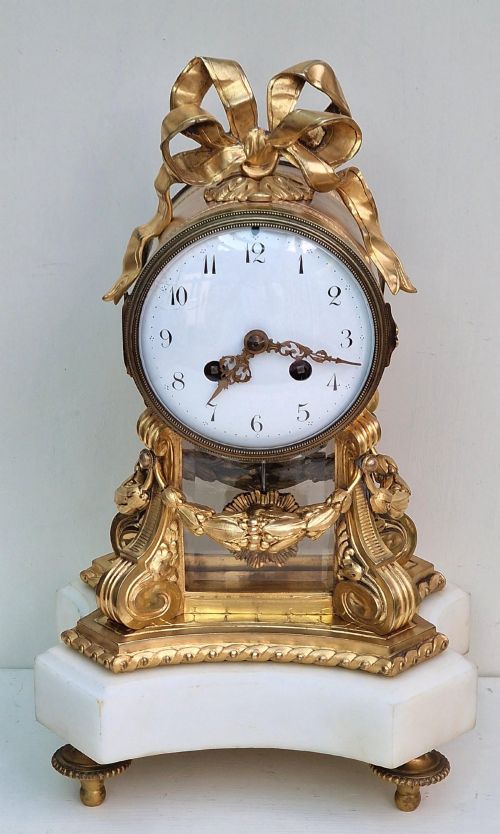
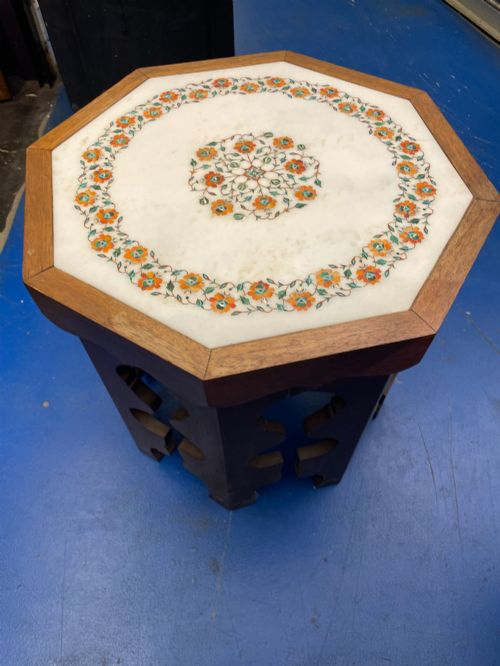

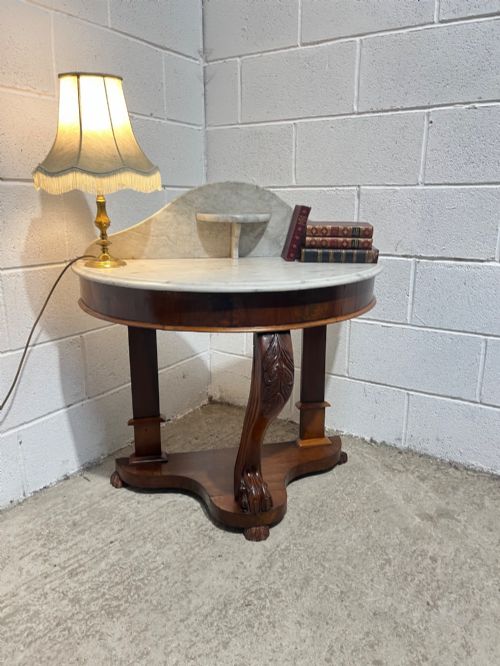
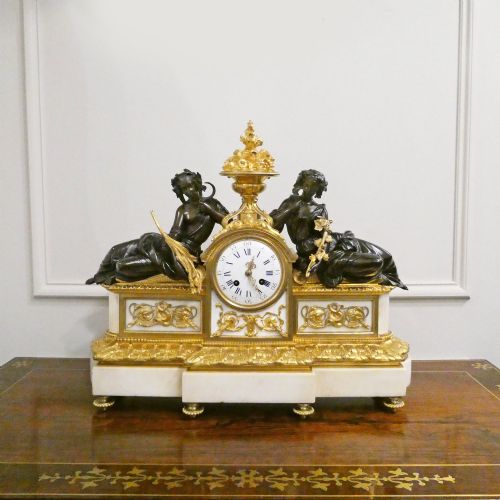

White Marble Table
When you search for a white marble table, you find a surface defined by cool stone and refined domestic utility spanning centuries.
White Marble Table
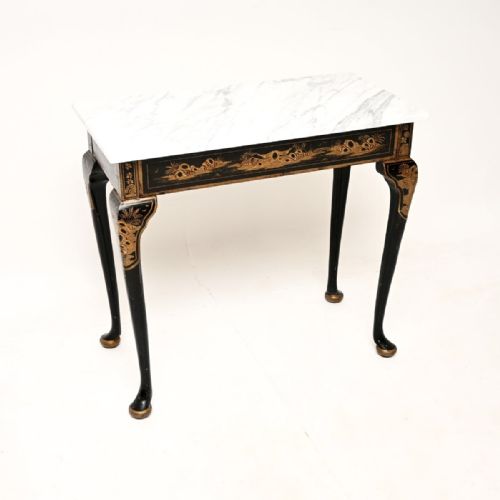
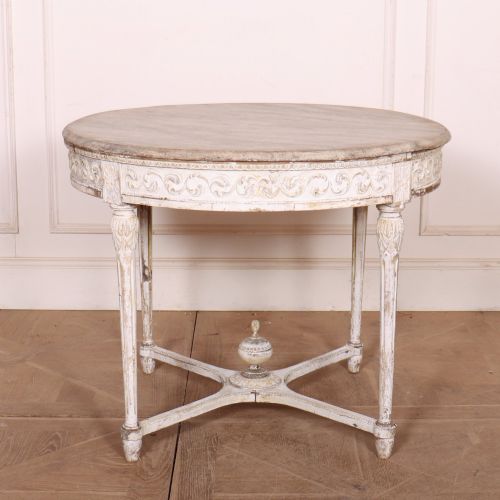
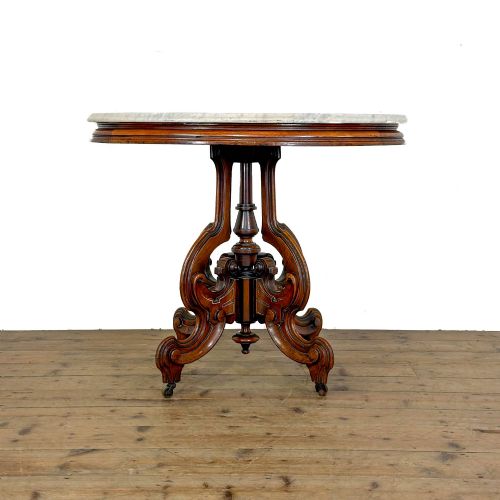
A white marble table brings together heavy stone tops and supporting bases fashioned from mahogany, cast iron, gilt bronze, or painted wood. These pieces span the nineteenth century and the early decades of the twentieth, reflecting distinct periods from Victorian formality to industrial bistro utility.
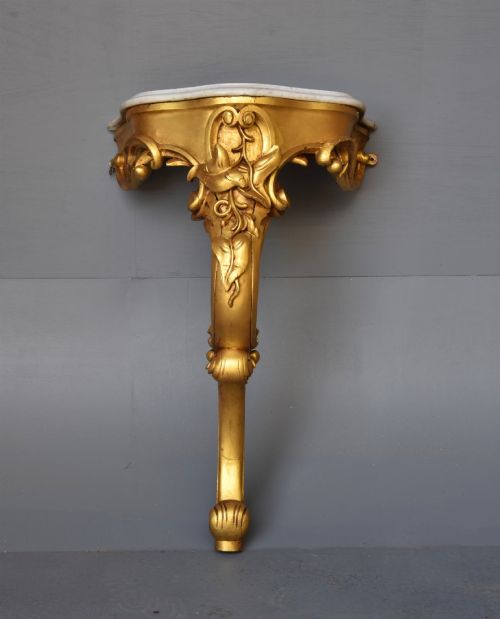
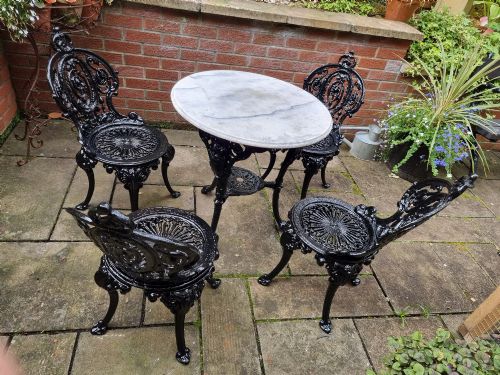
Console tables and side tables dominate the selection, often featuring shaped slabs of Carrara or statuary marble fitted to carved wooden frames. Buyers also encounter smaller gueridon tables, washstands, and garden furniture resting on sturdy iron bases.
The aesthetic ranges from French Louis XVI revival and neoclassical proportion to simpler café and garden designs. Each piece marries the practical resilience of polished stone with decorative framing characteristic of its period of origin.
Materials and construction
Makers paired thick slabs of white marble with structural supports built from dense hardwoods like mahogany and walnut, or durable metals such as cast iron and ormolu. Stone tops were hand-finished and polished to highlight natural veining before being secured to timber or metal bases using traditional joinery and brackets.
Foundries cast iron and bronze mounts with intricate detail for French neoclassical and revival pieces, while cabinetmakers carved mahogany, oak, and giltwood frames by hand. The integration of stone and frame demanded precise fitting to support the substantial weight of the marble top.
Listings feature marble, brass, mahogany, glass, and cast iron across nineteenth-century and early twentieth-century periods.
Factors of quality
Quality rests upon the purity and thickness of the marble slab, alongside the crispness of the carving or casting on the base. Finer examples display select white or lightly veined stone paired with expertly proportioned wooden or gilt-bronze mounts that show no sign of hurried manufacture.
The relationship between the stone top and the supporting frame dictates the integrity of the piece, where superior cabinetmaking ensures the heavy marble rests securely without straining the underlying structure.
Vincenti·Siffel and Cartier
The White Marble Table Glossary
- Gueridon
- A small round table, typically supported by a central pillar or tripod base. These pieces often feature marble tops and served various decorative and functional roles in nineteenth-century interiors.
- Console table
- A table designed to stand against a wall, frequently secured with brackets. They commonly display ornate carved wooden frames topped with fitted marble.
- Ormolu
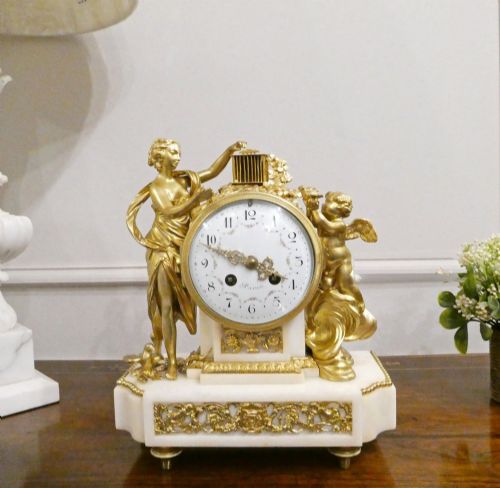
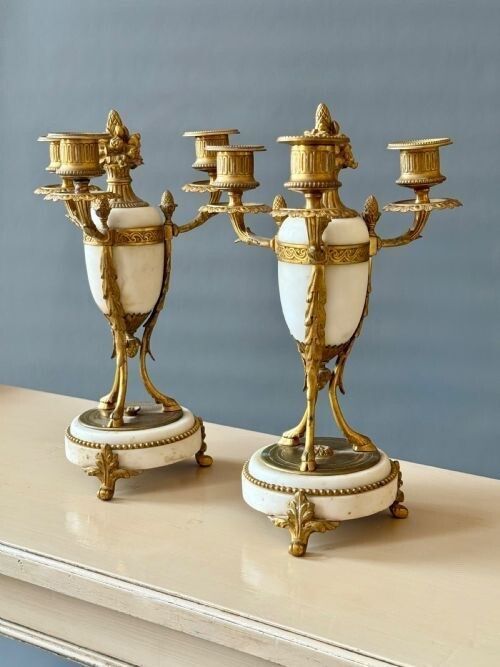
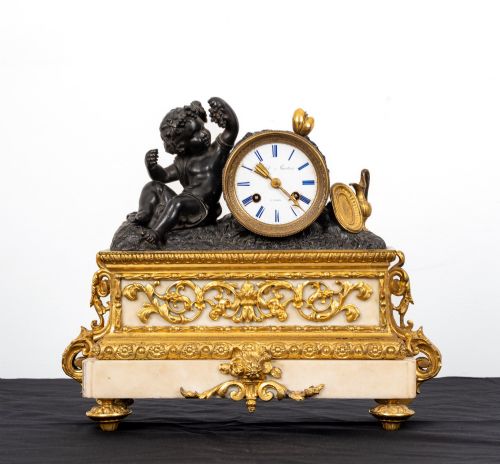
- Gilt bronze mounted onto furniture or clocks. This technique involves applying finely ground gold-mercury amalgam to bronze.
- Carrara marble
- A type of white or blue-grey marble from the city of Carrara in Italy. It is prized for its fine grain and frequent use in classical sculpture and tabletops.
White Marble Table: Frequently Asked Questions
Where should I place a console table?
Console tables suit entrance hallways, living rooms, and dining spaces where floor space is limited. Their shallow depth allows them to sit flush against walls while providing a sturdy display surface.
Pairing a console table with a wall mirror, as seen in period examples, creates a balanced focal point in a room.
How do I care for a marble top?
Marble requires gentle cleaning with warm water and a soft cloth to preserve the polished surface. Acidic substances can etch the stone, so coasters and placemats help protect the finish during everyday use.
Regular dusting keeps the stone and any intricate wooden or gilt mounts free from accumulation.
Are these tables heavy?
Solid stone tops combined with hardwood or cast-iron bases make these pieces substantial in weight. This heft provides stability, particularly for taller console tables and garden furniture.
Moving these items generally requires two people to lift the marble top separately from the base where possible.
How do I identify a nineteenth-century piece?
Nineteenth-century tables exhibit traditional construction methods, hand-carved details, and materials characteristic of the Victorian, Regency, or revival styles. Examining the underside of the tabletop and the joinery reveals the age and craftsmanship.
Wear patterns on the marble and frame also offer clues to the history of the object.