


Victorian Marble Console Table
A victorian marble console table brings sturdy stone surfaces and carved wood frames together for hallways and reception rooms.
Victorian Marble Console Table
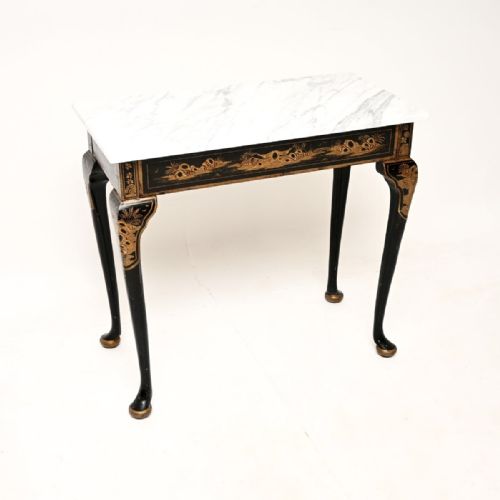
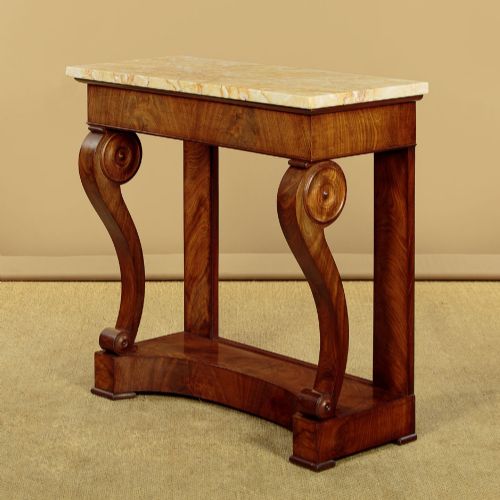
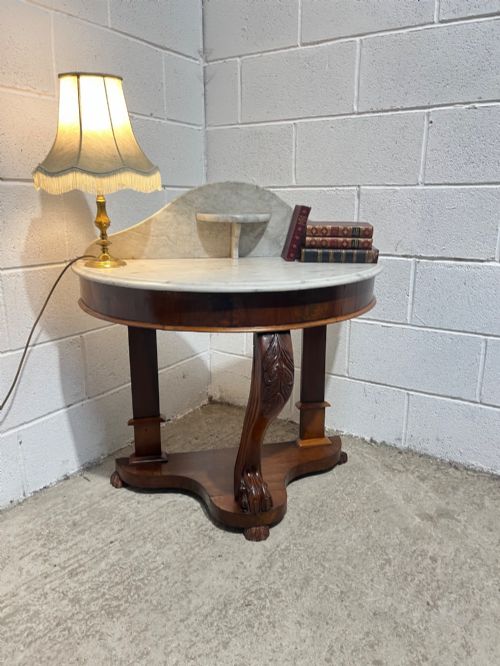
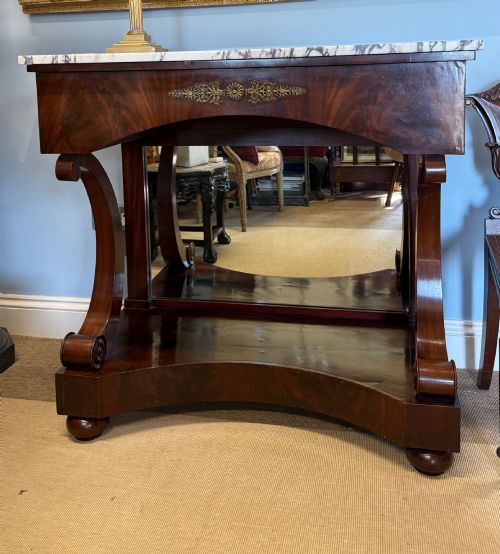
A victorian marble console table combines heavy stone slabs with timber bases designed to stand flush against a wall in hallways and principal rooms. The most common forms on this page include mahogany, walnut, and giltwood frames supporting white or coloured marble tops.
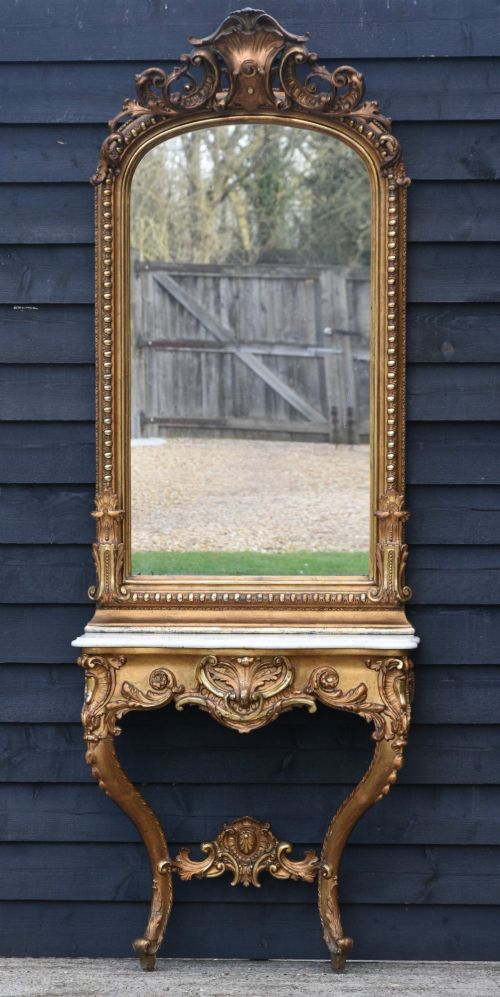
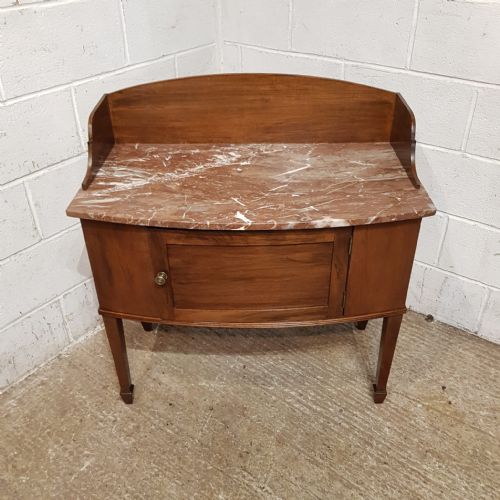
Makers often adapted these tables into related forms such as pier tables with matching wall mirrors, washstands with tiled backs, and low garden tables. French rococo revival and classical English designs dominate the surviving examples from the nineteenth century.
Materials and Technique
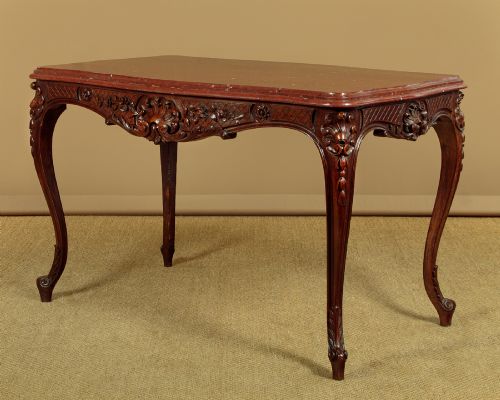
Cabinetmakers utilised dense timbers like mahogany, walnut, and satinbirch for the structural frames, often shaping them into cabriole legs or bow fronts. Giltwood and gesso finishes appeared on pieces intended for formal reception rooms.
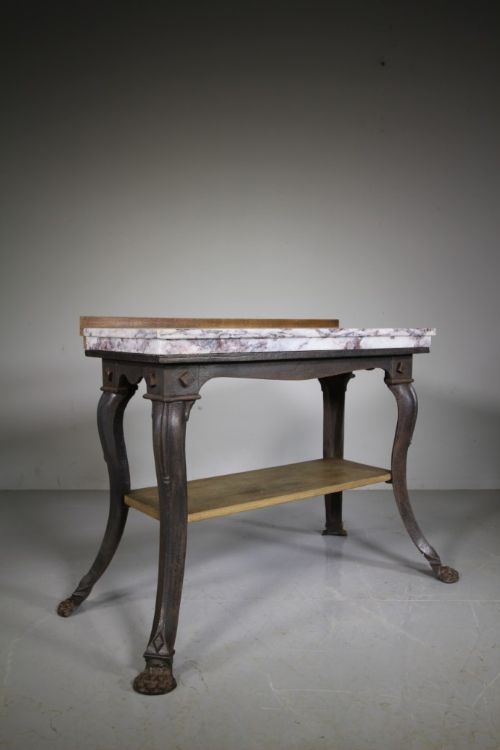
The heavy marble inserts, ranging from plain white slabs to rouge and green varieties, were cut to fit recessed wooden tops or supported directly by cast iron and brass framing.
Some nineteenth century makers carved side tables directly into the lifelike form of seated hounds.
Craftsmanship and Proportion
Quality rests in the depth of the wood carving and the integration of the marble slab within the timber frame. Superior pieces display crisply carved foliage on cabriole legs and tightly fitted stone tops without excessive shims.
The choice of secondary timbers and the weight of the giltwood or cast iron structure separate standard utility hall stands from elaborate architectural console tables.
Maples
The Victorian Marble Console Table Glossary
- Console table
- A table designed to stand against a wall, traditionally supported by wall brackets or console legs rather than four independent vertical supports. They frequently feature decorative stone tops.
- Pier table
- A low table specifically built to sit against the wall beneath a pier glass mirror between windows. These pieces often match the frame of the associated mirror.
- Washstand
- A domestic bedroom or dressing room table fitted with a marble top to resist water damage from basins and ewers. Many examples share similar timber construction to console tables.
- Giltwood
- Timber coated with a thin layer of gold leaf over a prepared gesso ground. This finish appears frequently on formal nineteenth century console frames.
- Cabriole leg
- A furniture leg that curves out in a convex shape at the knee and tapers inward in a concave shape to the foot. It is a defining feature of rococo revival designs.
Victorian Marble Console Table: Frequently Asked Questions
Where should I place a console table?
These tables suit narrow entrance halls, corridors, and living room walls where floor space is limited. Their shallow depth allows them to sit flush against a wall without obstructing pathways.
Pairing a table with a matching mirror creates a balanced focal point in a reception room or entryway.
How do I care for the marble top?
Clean the stone surface with a soft, damp cloth and mild soap, avoiding acidic substances like lemon juice or vinegar that etch polished marble. Use coasters and mats to protect the porous surface from moisture and staining.
Regular dusting keeps the stone and the carved wooden base preserved without requiring harsh chemical polishes.
Were these tables originally used outdoors?
Most surviving examples served inside principal rooms, hallways, and boudoirs as decorative furniture surfaces. Cast iron variants sometimes appeared in garden settings or covered verandahs.
Indoor pieces utilise delicate giltwood or polished mahogany that reacts poorly to prolonged dampness or exposure to weather.
How do I distinguish a console table from a washstand?
Washstands typically include splashbacks, lower shelves for basins, or cutouts designed for ceramic jugs and washing equipment. Console tables focus purely on display, often featuring open frames and decorative aprons.
Both forms utilise marble tops, but washstands generally show more utilitarian secondary timbers beneath the surface.