


White Marble Maiden Statue
A white marble maiden statue brings classical grace indoors, shaped from pale stone into timeless figures of youth and poise.
White Marble Maiden Statue
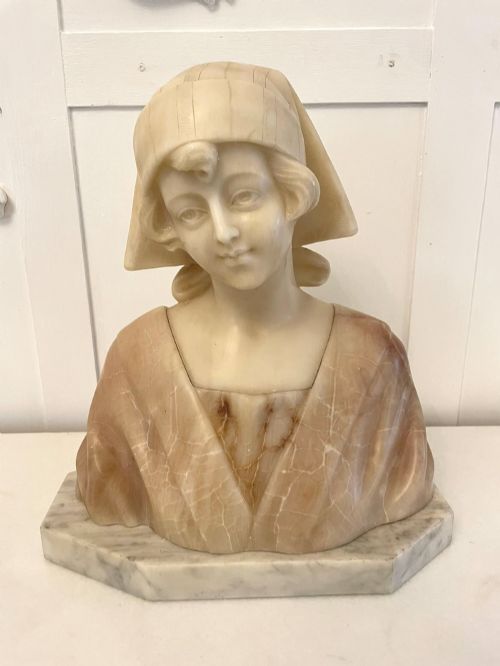
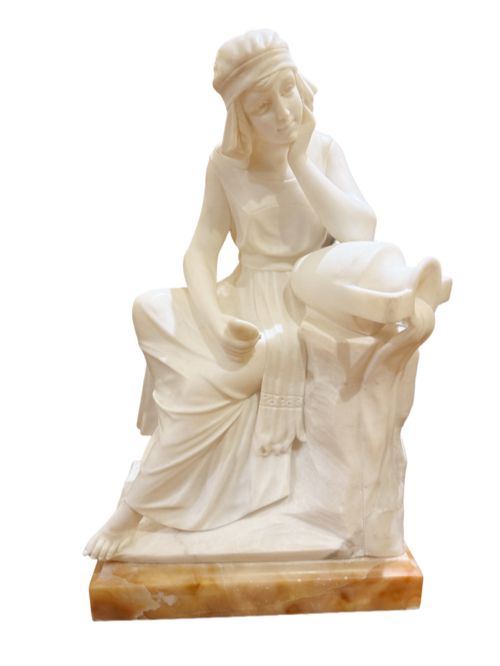
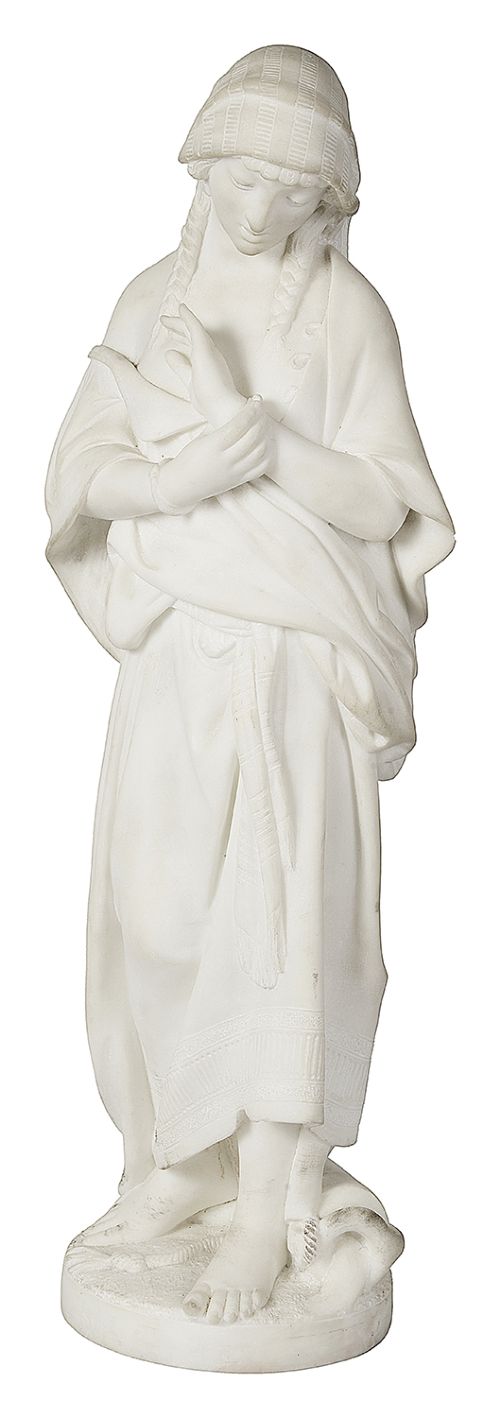
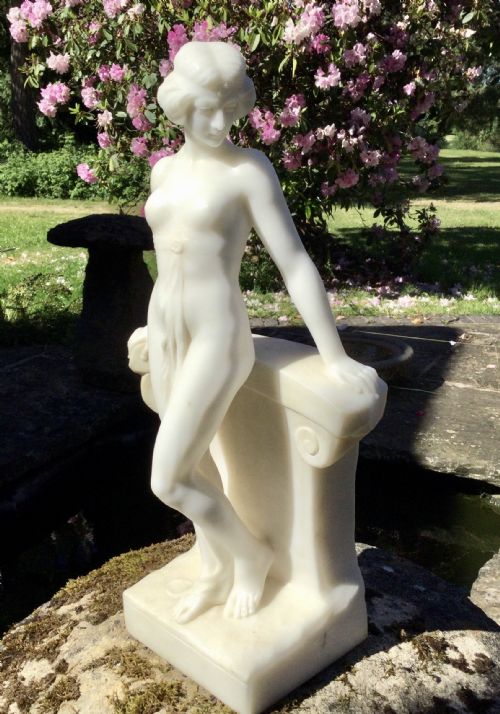
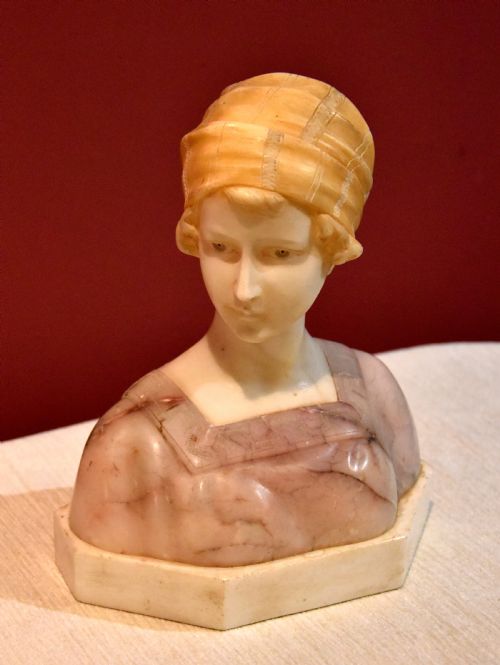
A white marble maiden statue draws on classical antiquity, presenting youthful female figures carved with serene expressions and flowing drapery. These pieces span from the mid nineteenth century into the early twentieth century, reflecting enduring academic tastes across European workshops.
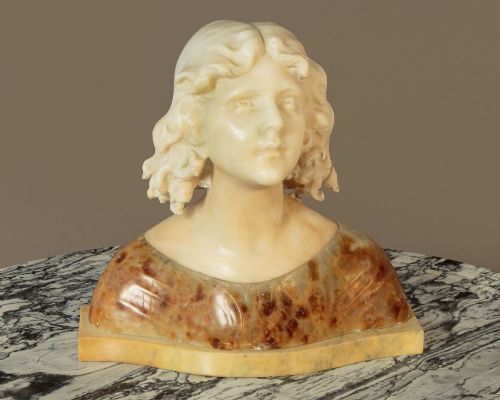
The selections here range from full length statues holding wheat sheaves, mandolins, or baskets to intimate portrait busts and figures rendered in alabaster and parian porcelain. Italian and French makers dominate the selection, bringing neoclassical restraint and decorative warmth to domestic interiors.
Buyers encounter subjects such as veiled ladies, classical maidens, and young girls, often mounted on contrasting bases like Vert de Mer marble. These works capture a romantic vision of antiquity that suited Victorian drawing rooms and Edwardian halls alike.
Materials and construction
Carvers shaped these pieces primarily from white marble, Carrara marble, and alabaster, utilising soft translucent stones that allowed for delicate facial expressions and detailed drapery. Sculptors also employed parian porcelain for moulded figurines, achieving a matte finish that mimicked carved statuary.
Workshops combined different stones for visual effect, mounting white marble and alabaster busts onto darker bases made of Vert de Mer marble. Artisans finished surfaces by hand, polishing the stone to highlight the natural crystalline structure and grain.
Several maidens carry musical instruments or baskets, proving that even classical stone figures enjoyed a tune or a trip to the market.
Assessing quality in carved statuary
The choice of material dictates the refinement of the piece, with fine Carrara marble and translucent alabaster offering greater depth than standard stone. Signature marks from named sculptors and documented Italian or French foundries elevate the stature of an individual work.
Barranti Florence·Auguste Henri Carli·Eduardo Giolli·Copeland·Auguste Moreau
The White Marble Maiden Statue Glossary
- Alabaster
- A fine grained, translucent stone often used for Victorian portrait busts and decorative figures. It accepts intricate detail and offers a warm glow when polished.
- Carrara Marble
- A white or blue grey marble quarried in the city of Carrara in Tuscany, prized by sculptors since antiquity for its purity and fine texture.
- Parian Porcelain
- A bisquit porcelain developed in the nineteenth century to imitate carved marble. It produces smooth, matte statuary figures with a bright white appearance.
- Vert de Mer Marble
- A dark green ornamental marble featuring complex veining, frequently utilised for sculptural bases and pedestals. It provides a striking contrast to white statuary.
- Neoclassical
- A style revived in the eighteenth and nineteenth centuries that draws inspiration from the art and culture of classical Greece and Rome.
White Marble Maiden Statue: Frequently Asked Questions
Where should I display a white marble maiden statue?
These sculptures suit prominent spots in a hallway, library, or drawing room where light catches the carved details.
Place them on sturdy pedestals or side tables away from direct heat sources to protect the stone surface.
How do I clean alabaster and marble sculptures?
Dust the stone regularly with a soft, dry cloth to prevent dirt from settling into the porous surface.
Avoid using water, soap, or chemical cleaners, especially on alabaster, which dissolves easily in moisture.
How can I tell the difference between marble and parian porcelain?
Marble feels cool to the touch and shows natural stone veining or crystalline sparkle under close inspection.
Parian porcelain is a ceramic material that has a uniform matte finish and sometimes exhibits mould seams from production.
What is a Grand Tour sculpture?
Grand Tour pieces are smaller decorative works purchased by nineteenth century travellers visiting cultural sites in Italy and France.
They bring classical subjects into domestic spaces as refined souvenirs of European travel.