
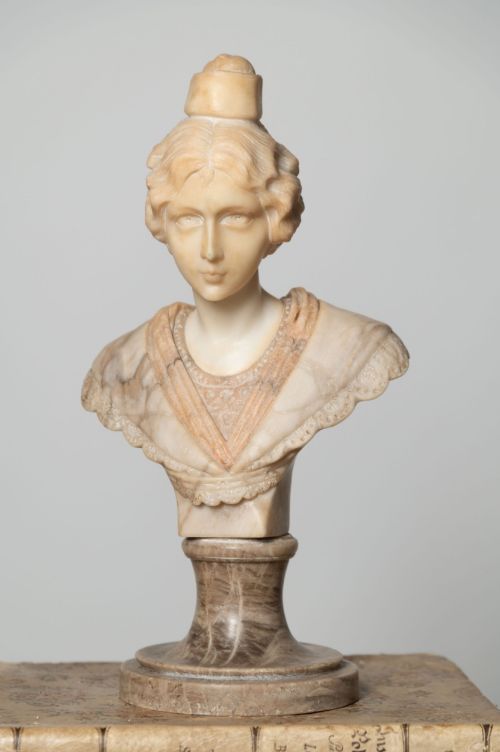
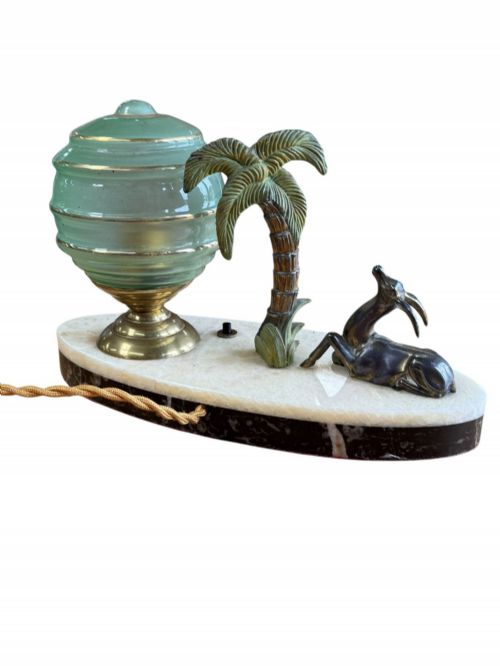
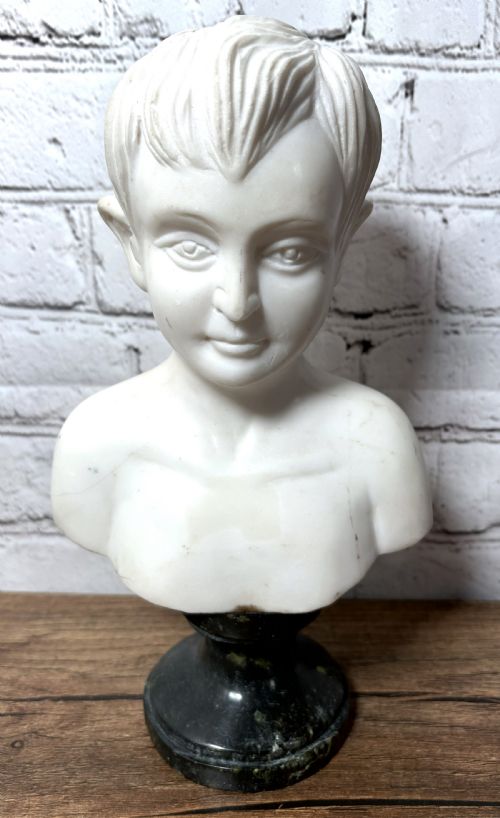


Vintage Alabaster Figurine
A vintage alabaster figurine brings classical softness and sculptural form into a room, capturing carved detail through translucent stone.
Vintage Alabaster Figurine
A vintage alabaster figurine represents carved sculptural work produced across the nineteenth and early twentieth centuries, spanning periods from eighteen-fifty to nineteen-thirty. These pieces take the form of busts, reclining figures, female forms, and children interacting with animals or instruments.
The versions most commonly met on this page include French and Italian carvings from the turn of the century, alongside Art Deco interpretations set upon contrasting stone or metal bases. They draw heavily upon neoclassical and romantic traditions, rendering mythological figures and genre scenes in miniature.
How they were made
Carvers shaped these pieces primarily from alabaster and white marble, sometimes combining the stone with spelter, brass, bronze, or glass elements. Artisans worked the soft calcium or gypsum stone by hand using chisels and rasps to achieve smooth drapery and lifelike skin tones.
Many examples are mounted onto dedicated marble or metal bases, occasionally incorporating functional elements such as lamp fittings. Signatures and foundry marks are sometimes incised directly into the stone or applied to metal components.
Vintage Alabaster Figurine Retail Price Guide 2026
Typical asking prices for vintage alabaster figurine among the pieces listed under this phrase on Sellingantiques today, from the lower quarter to the upper quarter. They describe what is for sale here now, not the wider market.
Materials appearing across the inventory include alabaster, white marble, spelter, glass, and brass.
What varies in quality
Quality in these carvings rests upon the fineness of the stone's grain and the sensitivity of the chisel work in rendering hands, hair, and facial expressions. Master carvers captured delicate translucency and fluid movement, whereas lesser works remain stiff and opaque.
The distinction also lies in the ambition of the composition, ranging from simple portrait busts to complex multi-figure groups involving children or mythological subjects. The presence of a recognised signature or association with established European workshops elevates the standing of an individual piece.
Mieczyslaw Leon Zawiejski·Antonio Frilli·Pugi·Joseph Gott·Greuze
The Vintage Alabaster Figurine Glossary
- Alabaster
- A fine-grained, translucent stone prized for sculpture because it permits light to penetrate slightly beneath the surface. It is softer than marble and requires careful handling.
- Neoclassical
- A style rooted in classical antiquity that emphasises restrained emotion, noble simplicity, and idealized human forms. It heavily influenced nineteenth-century European sculptors.
- Spelter
- A zinc alloy frequently used as a cheaper substitute for bronze in nineteenth and twentieth-century figures. It is often painted or bronzed to imitate heavier metals.
- Grand Tour
- A traditional trip through Europe undertaken by upper-class scholars and collectors to acquire art and antiquities. Figures from this context often reproduce famous classical statues.
- Belle Epoque
- A period of European history lasting from the late nineteenth century until the First World War. It is characterised by optimism, economic prosperity, and refined decorative arts.
Vintage Alabaster Figurine: Frequently Asked Questions
Where were most of these figurines made?
The majority of nineteenth and early twentieth-century stone carvings originated in workshops across France and Italy. Italian artisans often worked near major quarries, while French studios produced refined neoclassical and romantic subjects.
Export markets carried these decorative pieces across Europe and beyond, satisfying the demand for classical aesthetics in domestic interiors.
Are these pieces solid alabaster throughout?
While the primary sculptural elements are carved from solid stone, many examples incorporate mixed media. It is common to find stone figures mounted upon marble bases or combined with spelter and bronze components.
Some later twentieth-century variations also integrate electrical fittings to function as table lamps while retaining carved stone figural bases.
How can I tell the age of a carved figure?
Dating relies upon stylistic markers such as the transition from nineteenth-century romanticism and neoclassical revivals to nineteen-thirties Art Deco geometries. Clothing styles, hair arrangements, and signatures provide further chronological context.
The patina of the stone and the manufacturing techniques used on any supporting metal bases also help establish the era of production.