
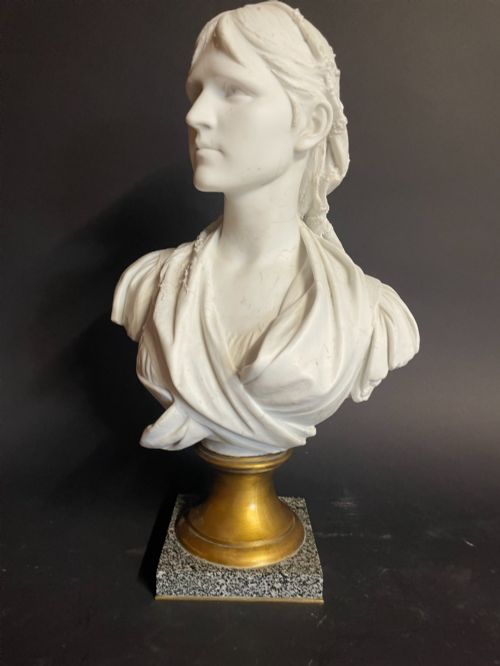
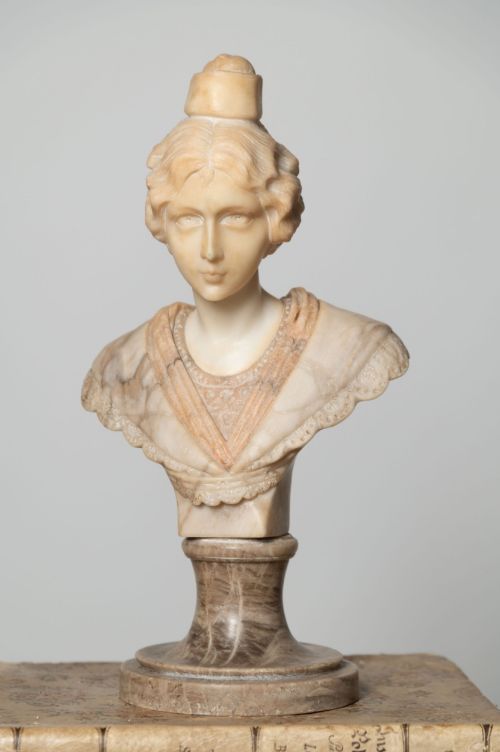
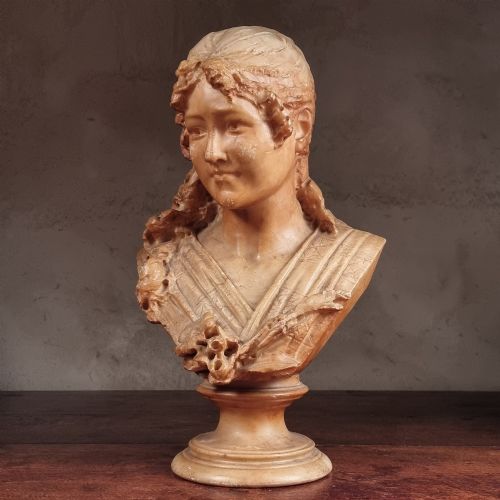
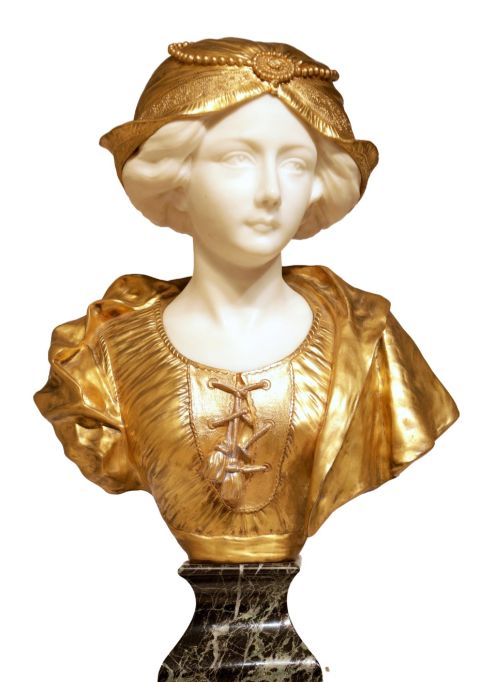

Antique Alabaster Statue
An antique alabaster statue brings carved stone figures and classical busts into a room, offering tactile warmth and nineteenth-century craftsmanship.
Antique Alabaster Statue
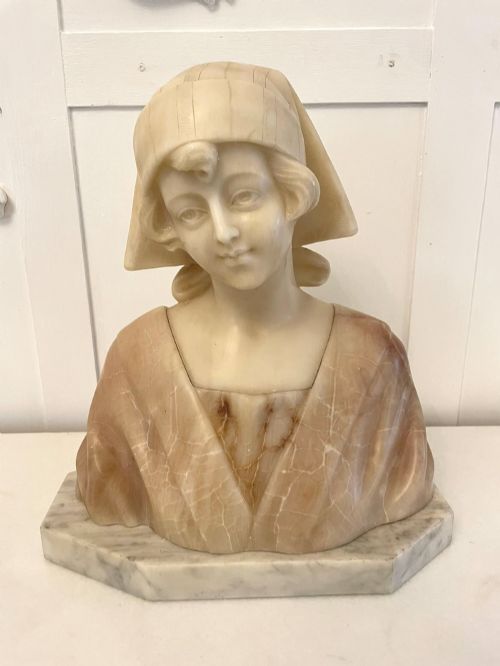
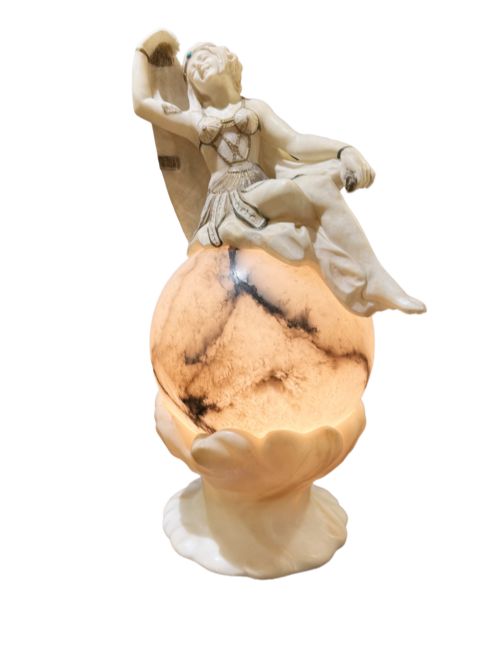
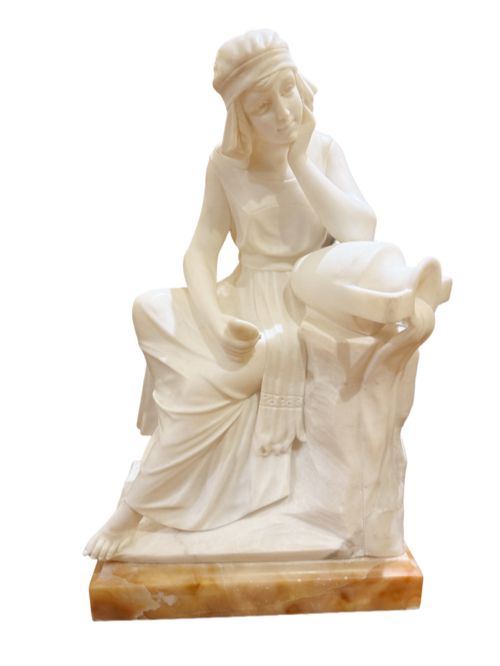
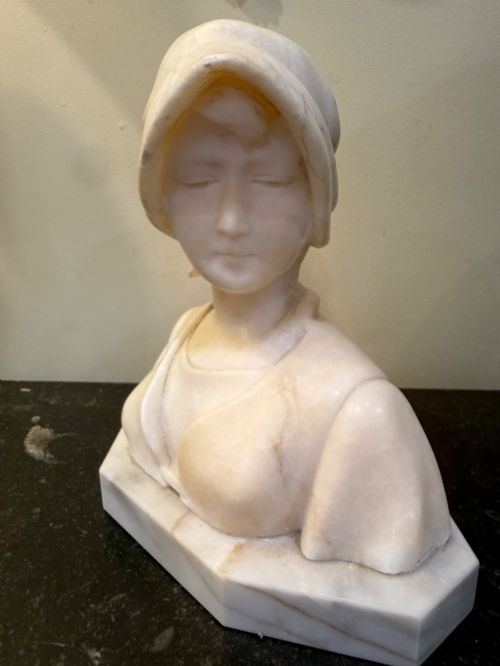
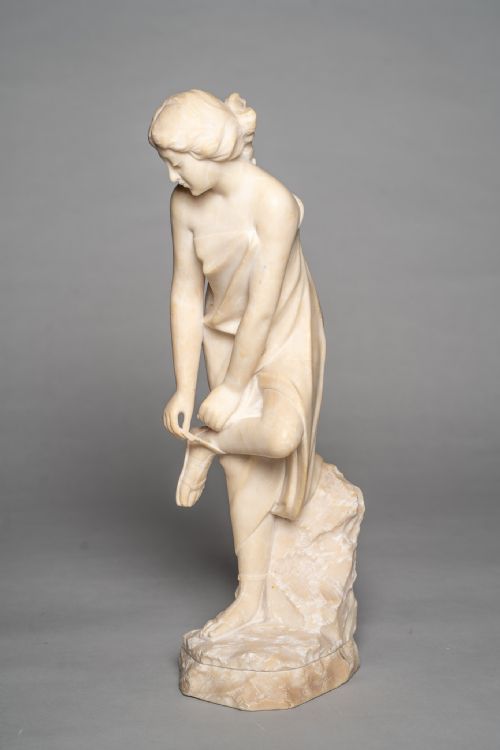
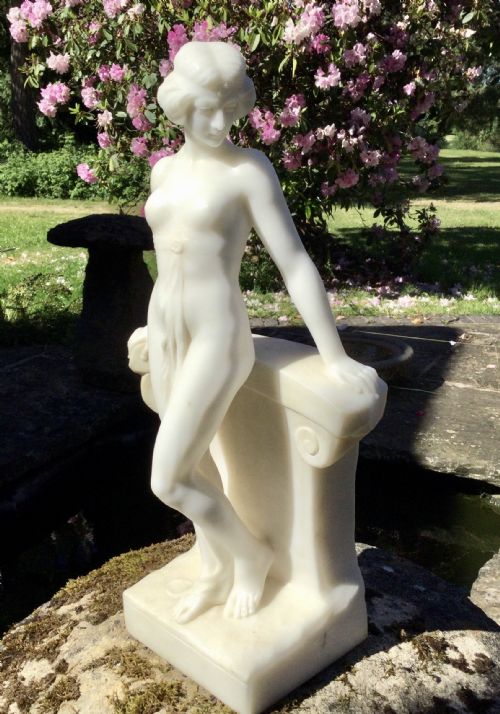
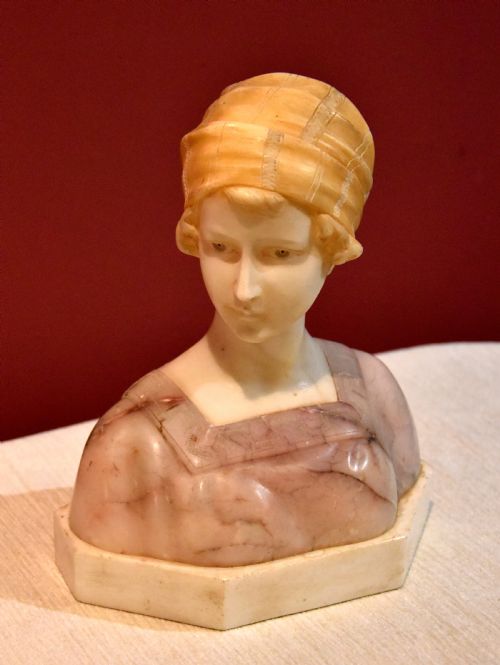
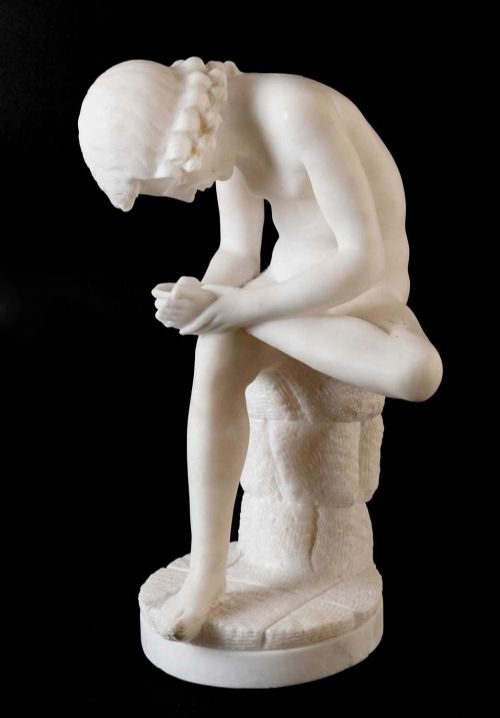
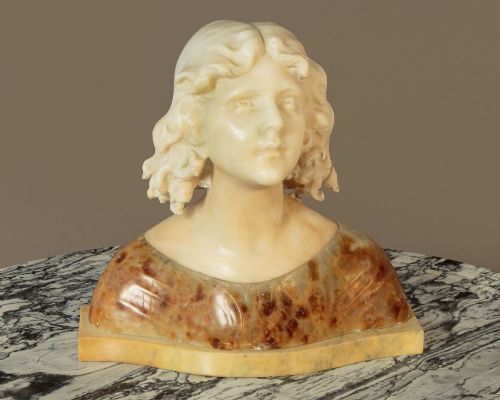
An antique alabaster statue typically takes the form of a carved bust, a full figure, or a classical subject produced during the nineteenth and early twentieth centuries. These works draw upon neoclassical, Art Nouveau, and Art Deco styles, often originating from Italian and French workshops.
The most common examples on this page are female portrait busts and mythological figures dated between eighteen eighty and nineteen twenty. Such pieces range from library figures to substantial sculptures designed for mantelpieces and pedestals.
Materials and Methods
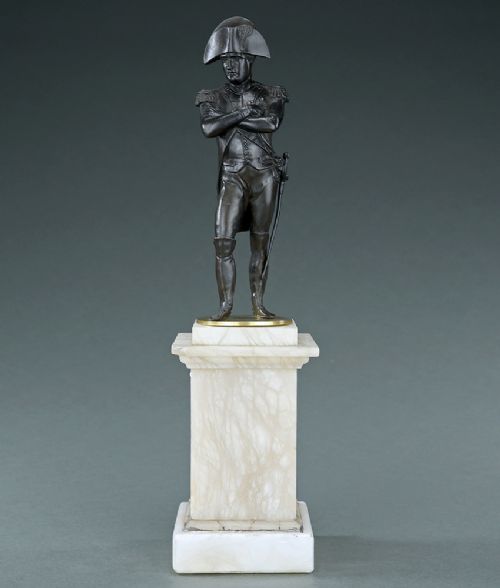
Carvers shaped these pieces from quarried stone, utilising alabaster alongside white marble and veined Carrara marble for contrasting textures and tones. Selected works incorporate bronze, gilt bronze, spelter, and brass elements to mount the carved figures or form complementary bases.
Artisans applied hand-carving and polishing techniques to capture drapery, hair, and facial expressions with precision. Signatures and foundry marks occasionally appear on the stone or metal components, recording the hand of specific sculptors.
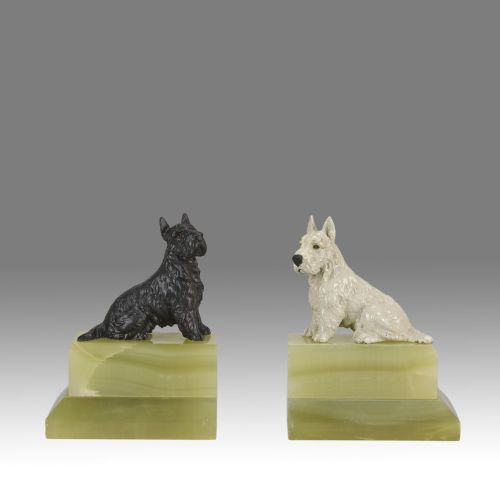
Several sculptors carved domestic animals alongside humans, leaving behind lasting stone portraits of sharp-eyed terriers and heavy-coated lionesses.
Evaluating Quality
The choice of stone also defines the standard, with translucent, evenly toned alabaster commanding greater regard than stone marred by heavy veining or natural flaws. Original integration with bronze or marble mounts further separates standard items from finer works.
Affortunato Gory·Auguste Henri Carli·Fritz Kochendorfer·George Van Der Straeten·Mieczyslaw Leon Zawiejski
The Antique Alabaster Statue Glossary
- Alabaster
- A soft, fine-grained stone that allows light to penetrate slightly beneath the surface. Sculptors favour it for its smooth finish and warm translucency.
- Grand Tour
- A traditional trip through Europe undertaken by nineteenth-century travellers who collected small marble and alabaster sculptures as souvenirs. These pieces often reproduce classical antiquities.
- Spelter
- A zinc alloy used as a substitute for bronze in nineteenth-century casting. It is frequently painted or electroplated to resemble bronze or brass.
- Neoclassical
- A style rooted in the art and architecture of classical Greece and Rome. It emphasises proportion, restraint, and mythological subjects.
Antique Alabaster Statue: Frequently Asked Questions
How do I clean an alabaster statue?
Dust the stone gently with a dry, soft microfibre cloth or a clean brush. Water and chemical cleaners dissolve or stain the surface.
Keep these sculptures away from direct sunlight and damp environments to prevent yellowing or structural weakening over time.
Are alabaster and marble the same material?
Alabaster is a softer stone composed of calcium sulphate or gypsum, possessing a warm, translucent quality. Marble is a harder metamorphic rock formed from limestone.
Sculptors use marble for durability and sharper architectural details, while alabaster provides a softer glow when polished.
What is a Grand Tour sculpture?
Grand Tour sculptures are nineteenth-century reductions of famous classical statues purchased by travellers in Italy. They served as academic souvenirs of European journeys.
Subjects typically include mythological figures, gods, and ancient architectural monuments carved in marble or alabaster.
How can I date an alabaster bust?
Examine the hairstyle, clothing, and overall aesthetic style to establish a baseline period. Art Nouveau pieces display flowing natural lines, while Art Deco works feature geometric forms.
Signatures, foundry stamps, and the type of secondary materials like bronze or spelter offer further clues to the decade of manufacture.