
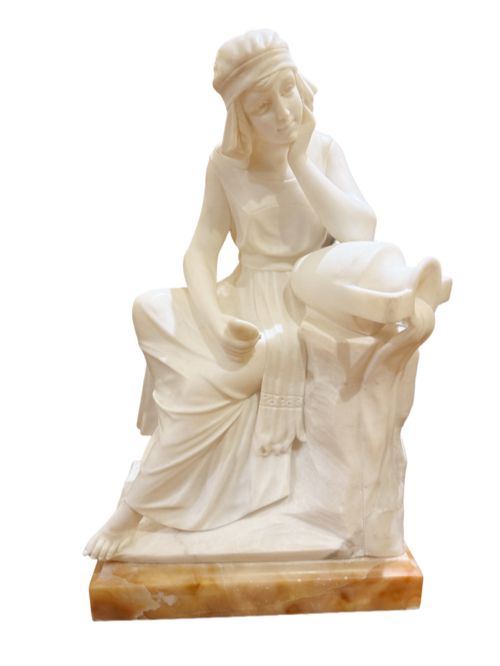
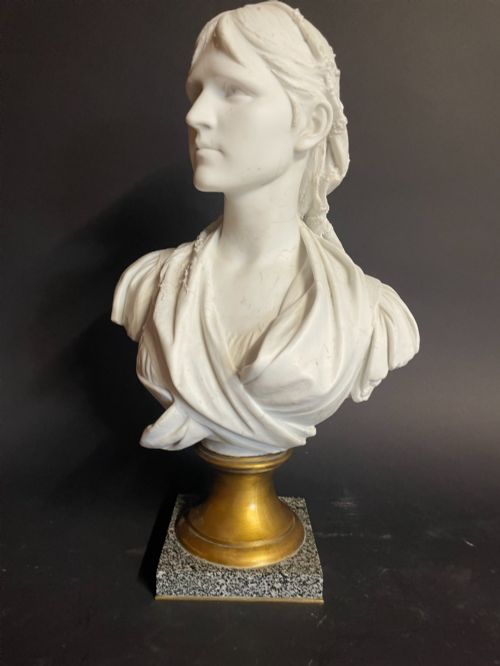

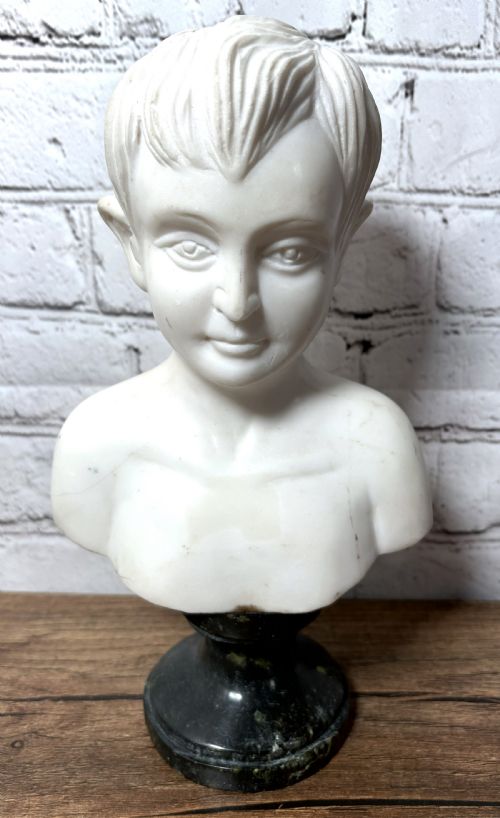


Neoclassical Alabaster Statue
A neoclassical alabaster statue brings ancient myth and classical form into a room through carved stone figures of maidens, goddesses, and historical subjects.
Neoclassical Alabaster Statue
When you search for a neoclassical alabaster statue, you are looking at carved stone figures and busts that draw upon classical antiquity, often representing mythological deities or idealised female subjects. The pieces on this page span the nineteenth and early twentieth centuries, capturing the enduring European fascination with classical sculpture through various revivals.
The selection here includes full figure sculptures, portrait busts, figural lamps, and bookends. Many of these works originate from Italian and French workshops, reflecting the Grand Tour tradition where travellers brought home smaller replicas of famous classical monuments.
Subjects range from individual figures like Diana the Huntress and Hestia to narrative groups such as a child playing with a puppy. These pieces serve as sculptural focal points, bringing a refined classical aesthetic to nineteenth-century and Edwardian interiors.
How they were made
Makers shaped these pieces primarily from alabaster and white marble, sometimes mounting them on bases of brass, granite, or metal. Alabaster offers a softer, translucent quality that allows light to penetrate the surface slightly, while marble provides a dense, durable medium for crisp detail.
Craftsmen carved these works by hand, sometimes translating famous ancient models into scaled-down versions for collectors. Details such as drapery folds, hair, and facial expressions required patient chiselling and polishing to achieve the desired finish.
Listings feature works spanning the nineteenth century up to the early twentieth century, incorporating materials like stone, brass, and metal alongside marble and alabaster.
What varies in quality
Material selection also plays a significant role in a piece's visual impact. Uniformity of the stone, the absence of distracting natural flaws in the alabaster or marble, and a skillful polish enhance the depth and luminosity of the finished figure.
Antonio Frilli·Joseph Gott·Pugi·Greuze
The Neoclassical Alabaster Statue Glossary
- Alabaster
- A fine-grained, translucent stone that is softer than marble, often used for detailed figurative carvings and decorative lamps.
- Neoclassical
- A style spanning the eighteenth and nineteenth centuries that revived the aesthetic and proportions of classical Greece and Rome.
- Grand Tour
- A traditional trip through Europe undertaken by upper-class young men to collect art and antiquities, inspiring later souvenir sculptures.
- Bust
- A sculpted representation of a person's head, shoulders, and chest, frequently employed for portraiture in marble and bronze.
Neoclassical Alabaster Statue: Frequently Asked Questions
What is the difference between alabaster and marble?
Alabaster is a softer, more translucent mineral that lets light pass just beneath its surface, giving figures a warm glow. Marble is a harder metamorphic rock that stands up to heavier wear and takes a sharper, more durable edge.
Carvers chose alabaster when they wanted a gentle, wax-like softness for skin and drapery. Marble was the preferred medium for larger, sturdier busts and statues that needed crisp structural definition.
Where were these statues made?
Many of these pieces originate from workshops in Italy and France, catering to domestic collectors and international travellers. Italian studios in Florence and Rome produced a high volume of classical copies.
French makers also contributed significant figural sculptures and lamps during the nineteenth century. These items often found their way into European and Scandinavian homes as refined decorative art.
How do I date a neoclassical alabaster statue?
Dating relies on stylistic clues, the type of stone, mounting materials, and any signatures or foundry marks on the base. Nineteenth-century pieces often reflect the revival movements popular during the Victorian and Edwardian eras.
Examining the tooling marks and the wear on the underside of the base provides further context. Comparing the subject matter to known Grand Tour productions helps narrow down the decade of creation.
How should I display a stone statue at home?
Place these figures on stable surfaces away from heavy foot traffic where they might be knocked over. A sturdy console table, mantelpiece, or dedicated pedestal works well.
Keep alabaster and marble out of direct sunlight and away from rapid temperature changes. Dust them gently with a dry, soft cloth and avoid chemical cleaners that can damage the porous surface.