



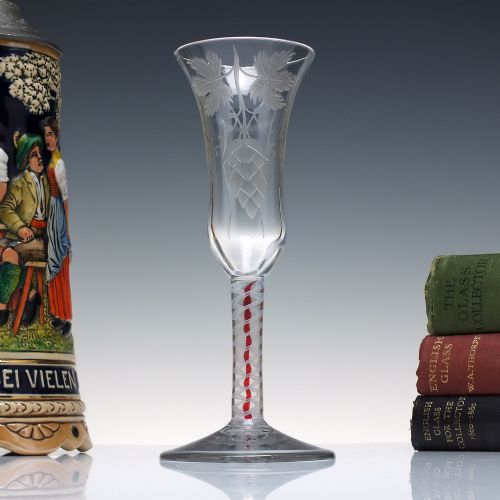


White Enamel Stemware
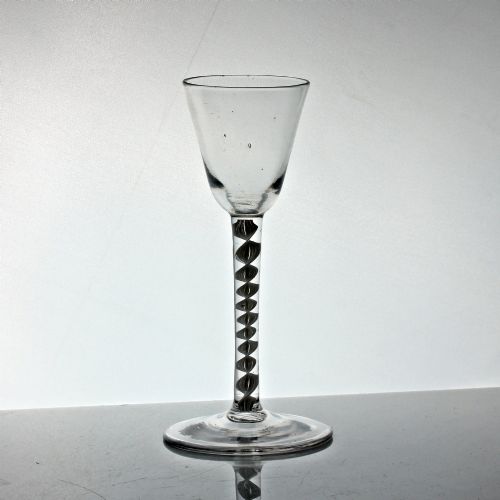
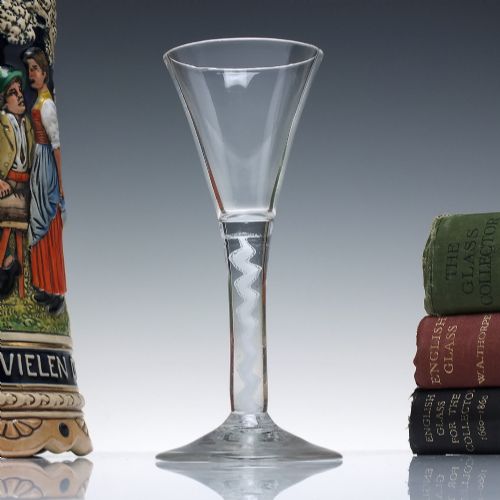
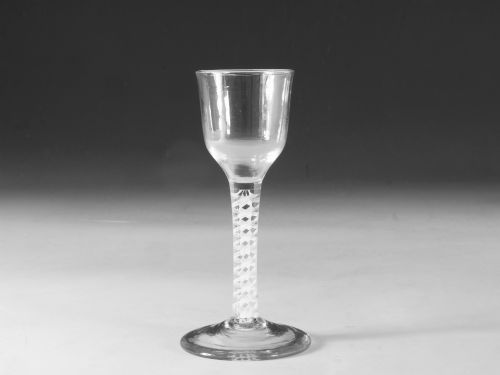
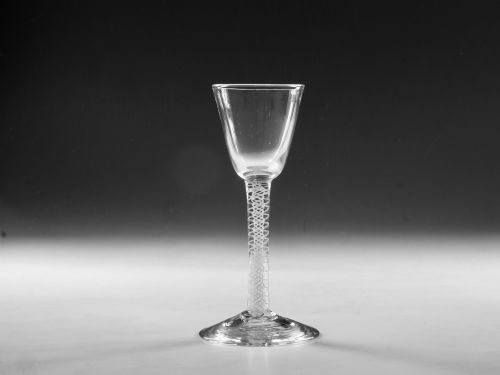
White enamel stemware brings eighteenth-century Georgian drinking glasses with opaque twist stems to your table.
White Enamel Stemware
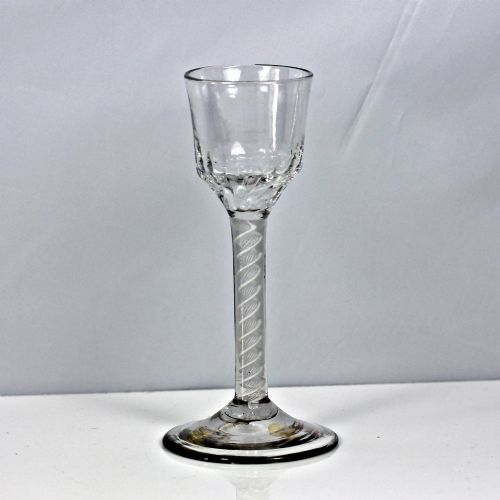
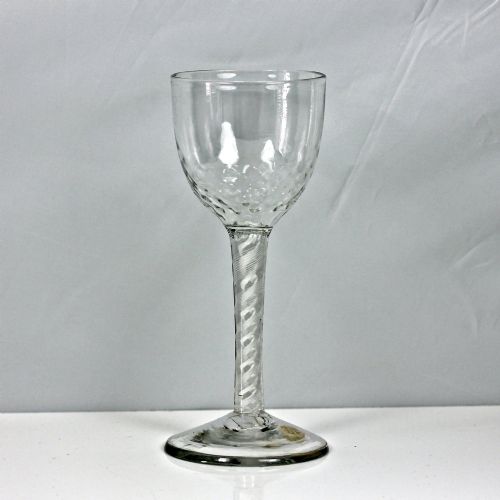
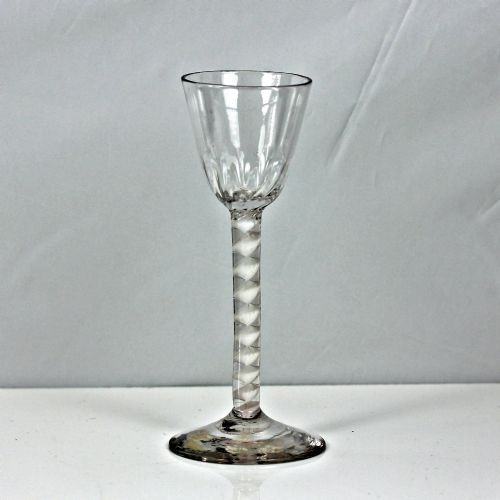
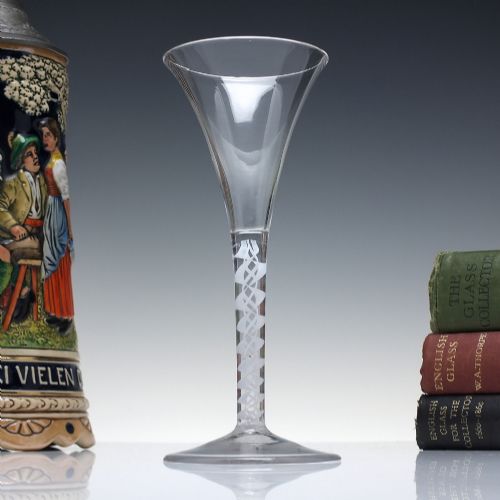
White enamel stemware comprises eighteenth-century Georgian drinking vessels, specifically wine glasses, goblets and ale glasses featuring opaque twist stems. These pieces date principally from the mid-to-late eighteenth century, showing English origin.
The glassware includes trumpet, ovoid and flute-moulded ogee bowls resting on delicate stems formed from white enamel threads enclosed within clear lead glass or lead crystal. You are most likely to encounter single and double series opaque twists alongside multi-spiral variations.
How they were made
Glassmakers created white enamel stemware using lead glass and lead crystal, shaping bowls into trumpet, ovoid or flute-moulded ogee forms. Engraving sometimes ornamented the bowls of ale glasses and wine glasses.
Stems were formed by trapping white enamel twists inside the molten glass, producing single series, double series or multi-spiral patterns before fusing the components together.
White Enamel Stemware Retail Price Guide 2026
Typical asking prices for white enamel stemware among the pieces listed under this phrase on Sellingantiques today, from the lower quarter to the upper quarter. They describe what is for sale here now, not the wider market.
Listings span the eighteenth century and Georgian period, recording lead glass, lead crystal and enamel materials across wine glasses, ale glasses and goblets.
What varies in quality
Quality in white enamel stemware rests on the precision and complexity of the internal twist formation within the stem. Multi-spiral and double series white enamel configurations demand greater skill than single twists.
The refinement of the bowl shape, such as flute-moulded ogee profiles or engraved detailing, distinguishes finer drinking glasses and goblets from simpler domestic pieces.
The White Enamel Stemware Glossary
- Opaque twist
- A stem containing white enamel threads enclosed in clear lead glass. This technique gained popularity during the Georgian period.
- Ogee bowl
- An S-curve profile curving out at the rim and in at the base. Flute-moulded versions feature vertical ribs.
- Double series
- A stem containing two distinct sets of twists, often combining an opaque white enamel spiral with another element.
- Lead crystal
- A high-clarity glass containing lead oxide, used for eighteenth-century English drinking vessels. It provides weight and brilliance.
- Ale glass
- A tall glass designed for drinking ale, frequently featuring an elongated ovoid or trumpet bowl.
White Enamel Stemware: Frequently Asked Questions
What is white enamel stemware?
White enamel stemware consists of eighteenth-century Georgian drinking glasses featuring stems made with opaque white enamel twists.
These pieces date primarily from the mid-to-late eighteenth century and originate in England.
Were these glasses used for wine?
Georgian drinkers used these vessels for wine, ale and other beverages depending on the bowl capacity and form.
Ale glasses generally feature taller, narrower bowls, whereas wine glasses often present trumpet, ovoid or ogee profiles.
What does double series mean?
A double series stem contains two distinct layers or pairs of twist formations running through the clear lead glass.
This technique involves twisting white enamel canes together with other glass threads before drawing the stem.
Are all these glasses English?
The recorded pieces from this period are of English origin, produced during the Georgian era.
Craftsmen in English glasshouses utilised lead crystal to form the bowls and intricate stems.