


White Enamel Snuff Box
A white enamel snuff box is a pocket-sized container for tobacco that offers tactile eighteenth-century charm and delicate painted scenes.

White Enamel Snuff Box
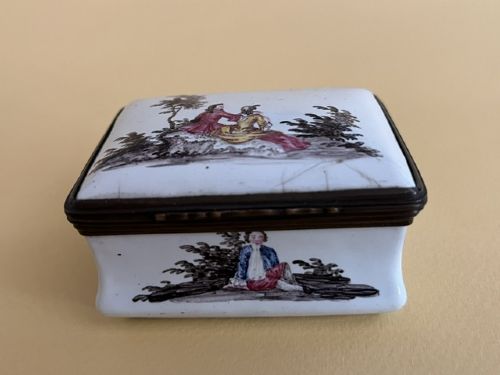
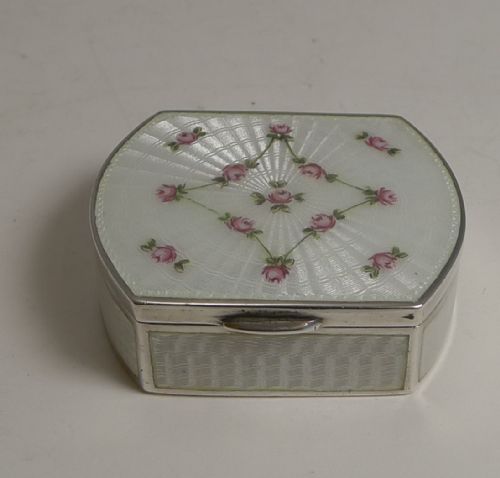
A white enamel snuff box is a pocket container designed for carrying powdered tobacco or small personal items like patches and pills. The pieces on this page span the eighteenth century, the nineteenth century, the Georgian era, and around nineteen hundred.
Many items feature hand-painted transfer or enamel decoration, including landscape views with inscriptions such as Cheltenham Wells or figural scenes like musicians in parkland. Later nineteenth-century and Edwardian variants introduce styles like Rococo Revival alongside guilloche enamel work.

How they were made
These boxes are constructed primarily from copper, brass, or sterling silver bodies coated in a white enamel paste. The metal is shaped to form the base and hinged lid before the vitreous enamel is applied and fired in a kiln.
Decoration is achieved through hand-painting or transfer printing directly onto the white enamel surface, often supplemented by gilt metal or gilded mounts. Hinge mechanisms and bezels are soldered securely to join the lid and base compartments.
Listings feature white enamel items paired with copper, brass, and sterling silver bases from the eighteenth and nineteenth centuries.
What varies in quality
Quality in these boxes rests upon the crispness of the painted or transferred detail on the white enamel and the delicacy of the surrounding metal mounts. Finer pieces display finely rendered miniature scenes and well-preserved surface polish without excessive crazing.
The precision of the hinge mechanism and the tightness of the lid closure also distinguish finer specimens from standard production. Heavier gauge metals and rich gilding on the brass or copper mounts indicate higher grade manufacture.
The White Enamel Snuff Box Glossary
- Enamel
- A glassy substance fused to a metal base through high-temperature firing. It provides a smooth, durable, and white ground suitable for painting.
- Patch box
- A small decorative container originally used to hold cosmetic face patches. They frequently feature mirrors fitted inside the lid.
- Bonbonniere
- A small ornamental box intended to hold sweets or confectionery. These often take playful or moulded shapes beyond simple rectangles.
- Guilloche
- A decorative engine-turning technique that etches precise geometric patterns into metal beneath a translucent enamel layer. It is commonly found on later pieces.
- Bezel
- The metal rim or collar that surrounds the inset panel of the lid and secures the hinge. It ensures a snug fit when the box is closed.
White Enamel Snuff Box: Frequently Asked Questions
What is a white enamel snuff box?
A white enamel snuff box is a small lidded container made of metal coated in fused glass, used historically for holding dry tobacco.
These pieces often feature painted top scenes and served as fashionable personal accessories during the eighteenth and nineteenth centuries.
How do I date a Georgian enamel box?
Dating relies on examining the manufacturing style, hinge construction, and any named topographical inscriptions on the lid.
Eighteenth-century examples from Bilston or Staffordshire typically show hand-painted details on copper bases with simple brass mounts.
Were patch boxes used for snuff?
Patch boxes share a similar construction to snuff boxes but were primarily sized to hold small silk cosmetic patches.
Many boxes served multiple purposes over time, accommodating pills, snuff, or patches interchangeably depending on the owner's needs.
How should I clean an antique enamel box?
Clean the surface gently using a soft, dry microfiber cloth to remove dust without harming the delicate painted enamel.
Avoid using liquid cleaners, chemical solvents, or abrasive polishes that might damage the fired glass or wear away the gilding.