
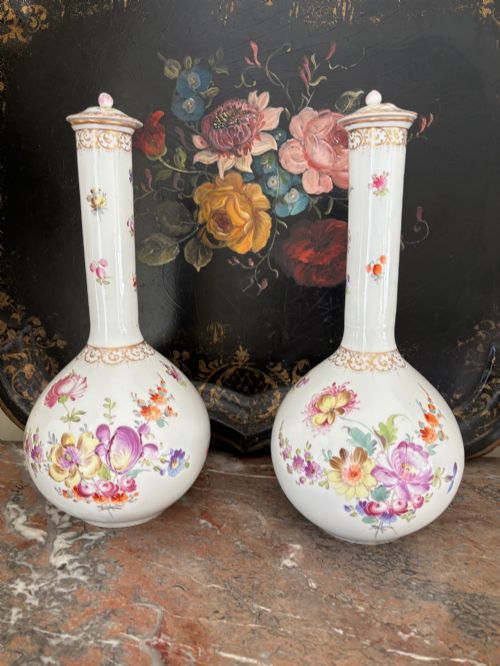
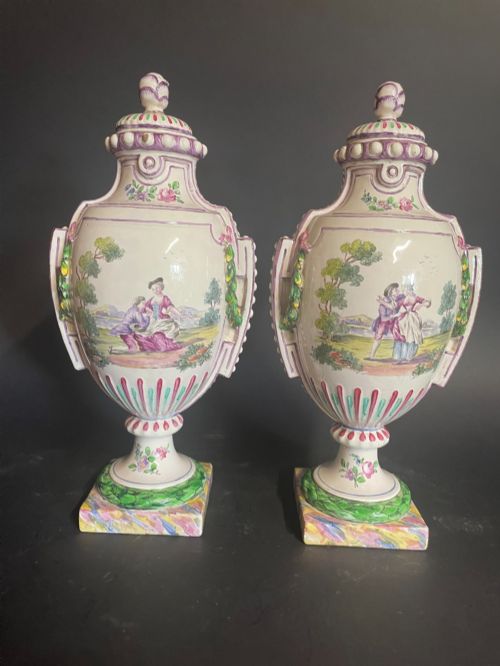
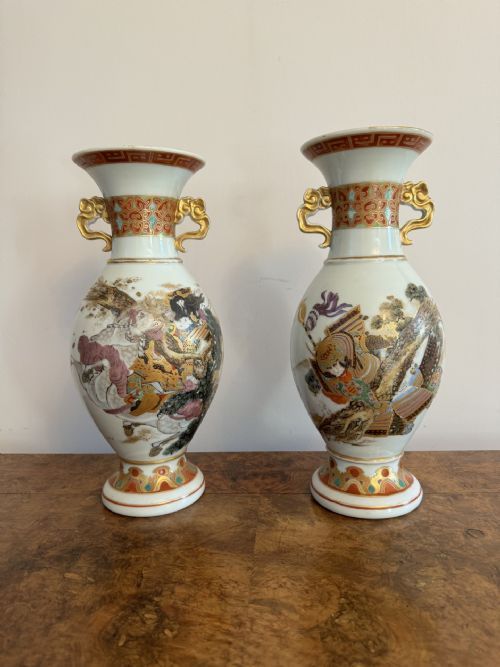
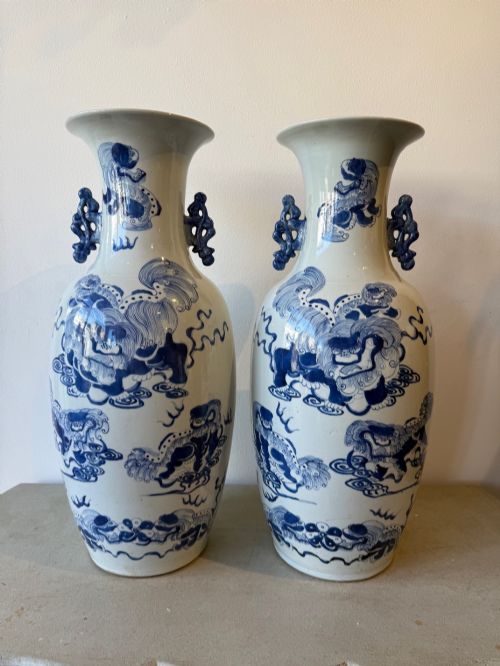
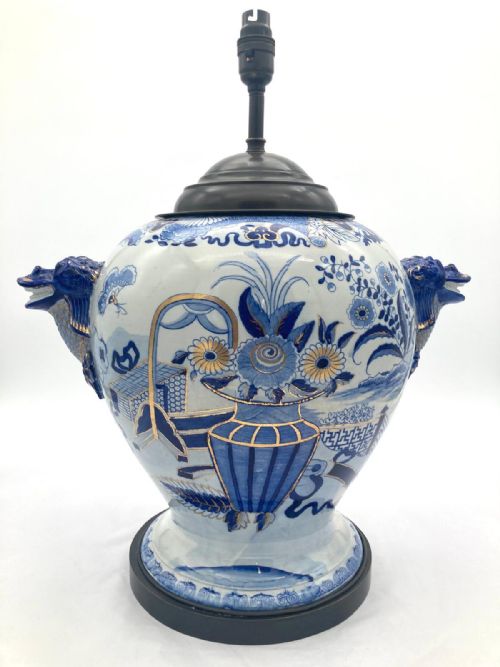
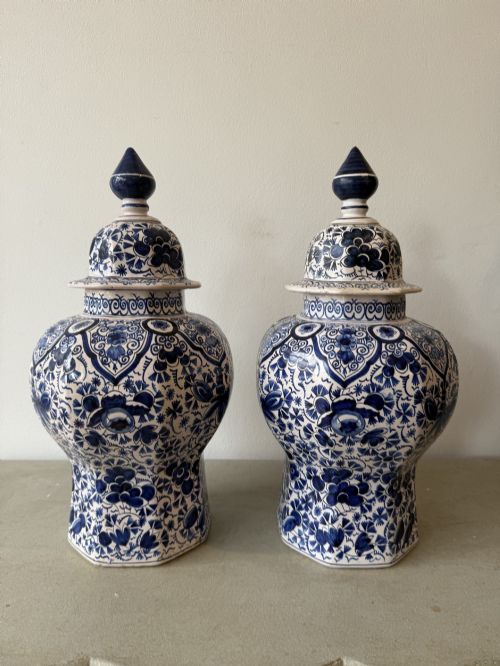


White Ceramic Urn Pair
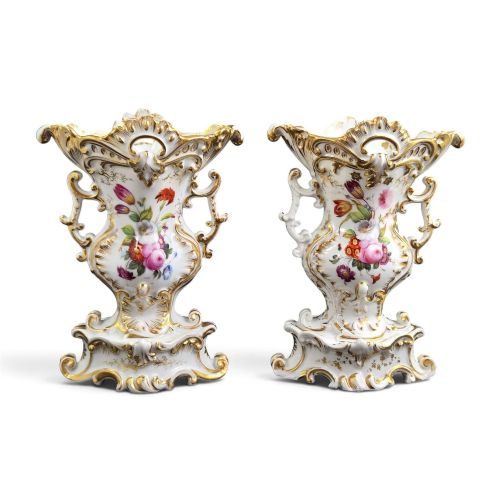
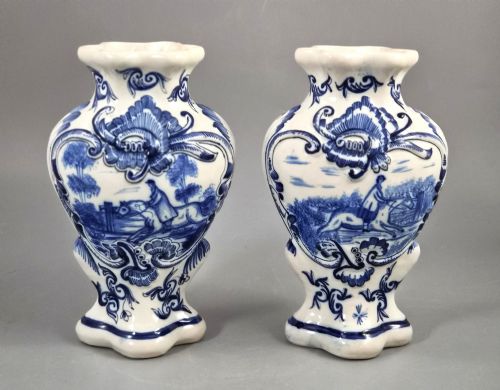
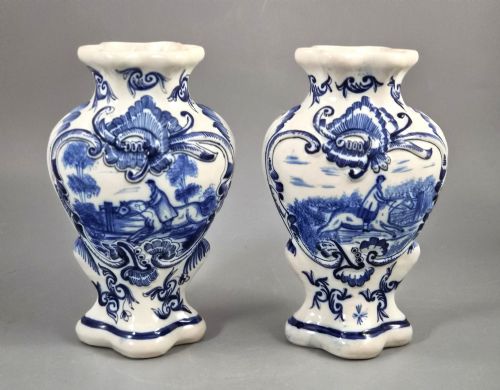
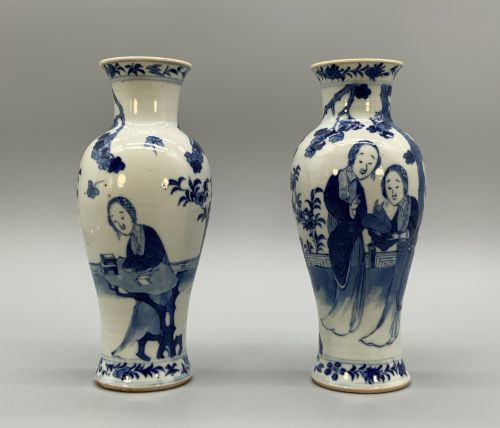
These white ceramic urn pair selections bring classical symmetry and historic ceramic craft into a room, offering matched dual forms shaped by centuries of European and Asian kiln traditions.
White Ceramic Urn Pair
When you examine a white ceramic urn pair on this page, you encounter matched sets of decorative vessels spanning several centuries of production. The forms range from traditional lidded ginger jars and baluster vases to campana urns and monumental display pieces.
European factories such as Wedgwood, Sitzendorf, and Paris workshops appear frequently alongside Chinese export porcelain and Japanese Satsuma or Arita wares. Many examples display white ground surfaces embellished with blue painting, raised enamel, or classical moulded bas-reliefs.
Makers adapted traditional vessel shapes into decorative mantel ornaments, table lamps, and architectural centrepieces. These dual objects reflect historical tastes shifting from neoclassical revival to orientalist Chinoiserie across the nineteenth and early twentieth centuries.
How they were made
Potters shaped these vessels using porcelain, earthenware, and ironstone bodies finished with tin glazes or translucent white lead glazes. Artisans applied hand-painted cobalt blue pigments, enamel details, and gold leaf before firing the ceramics in high-temperature kilns.
Many items incorporate moulded white jasperware reliefs or applied earthenware details adhered to contrasting coloured grounds. Workshops utilised specialised turning and casting techniques to achieve identical dimensions across both halves of a matched pair.
Listings feature white ceramic urn pairs spanning earthenware, porcelain, and ironstone across nineteenth-century European and Asian traditions.
What varies in quality
The precision of the modelling and the crispness of the applied bas-reliefs separate standard production wares from masterworks. Hand-painted details show distinct levels of artistic control, with superior pieces displaying nuanced brushwork and balanced compositions on both vessels.
The preservation of original glazes, matched lids, and supplementary elements such as gilt bronze mounts or custom bases heavily influences the standing of a pair. Consistency between the two individual objects in size, colour saturation, and firing stability determines the overall integrity of the set.
Jacob Petit·Fourmaintraux Courquin·Sitzendorf·Hicks and Meigh·Wedgwood·Flight Barr and Barr·Mason s·Samson Paris·Berlin·Dresden·Poole Pottery
The White Ceramic Urn Pair Glossary
- Campana urn
- A bell-shaped vessel with a flared rim and footed base, frequently utilised in neoclassical decorative ceramics. This classical silhouette originated in ancient Roman stone monuments.
- Jasperware
- A type of fine stoneware developed by Josiah Wedgwood featuring a matte surface and contrasting white moulded reliefs. The chemical composition allows the body to take various pastel body colours while retaining sharp exterior details.
- Faience
- European tin-glazed earthenware produced from the sixteenth through the nineteenth centuries. It provides an opaque white background suitable for painted decoration.
- Imari
- Japanese export porcelain decorated in underglaze blue and iron red, often augmented with gold. Production centred around the town of Arita for both domestic and international markets.
- Baluster
- A vase form characterised by a rounded body that tapers toward a narrow neck and wide foot. This curved profile appears frequently in Chinese and European decorative ceramics.
White Ceramic Urn Pair: Frequently Asked Questions
How are matching urn pairs displayed?
These vessels work best when positioned symmetrically on mantels, sideboards, or flanking a central architectural feature in a room. Their balanced forms draw the eye and anchor interior layouts.
Larger floor vases or pedestal-mounted examples stand alone in entryways or corners where their scale can be appreciated without crowding surrounding furniture.
Can wired lamp conversions be reversed?
Many historical ceramic vessels were adapted into table lamps by drilling bases or mounting hardware through existing openings. Reversibility depends entirely on the original intervention made by past electricians.
Buyers should inspect the mounting points carefully to determine if the ceramic body sustained permanent alteration during the conversion process.
How do I distinguish earthenware from porcelain?
Porcelain possesses a dense, vitreous body that typically rings when struck gently and appears translucent under strong light. Earthenware is more porous, opaque, and fired at lower temperatures.
Tin-glazed earthenwares like faience and delft display a softer body beneath the white glaze compared to hard-paste nineteenth-century porcelain wares.
What defines a true matched pair?
A genuine pair shares identical dimensions, concurrent manufacturing marks, and consistent hand-painted or moulded decorative motifs executed by the same hand or workshop. Minor variations often occur in hand-finished antiques.
Discrepancies in glaze colour or firing shrinkage suggest the vessels may have been assembled as a pair later in their history rather than created together.