
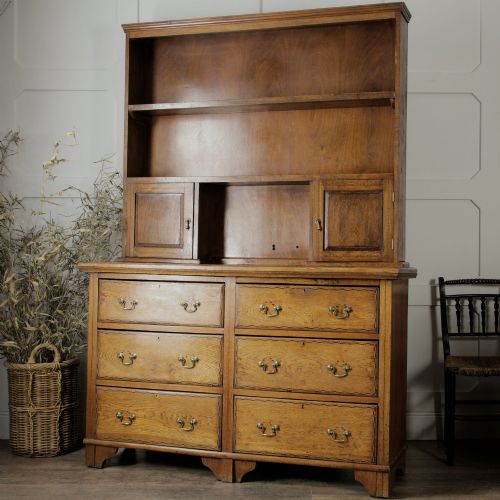

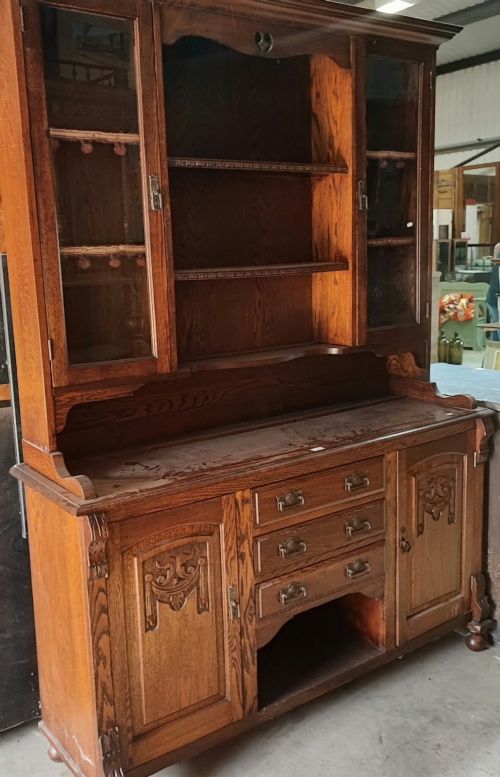
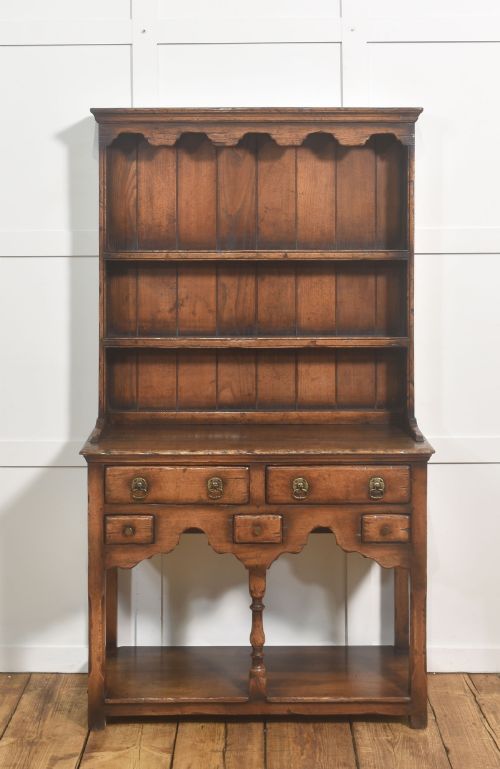
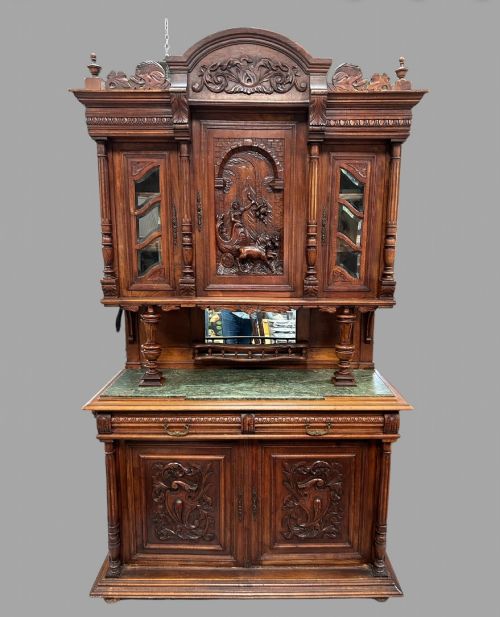
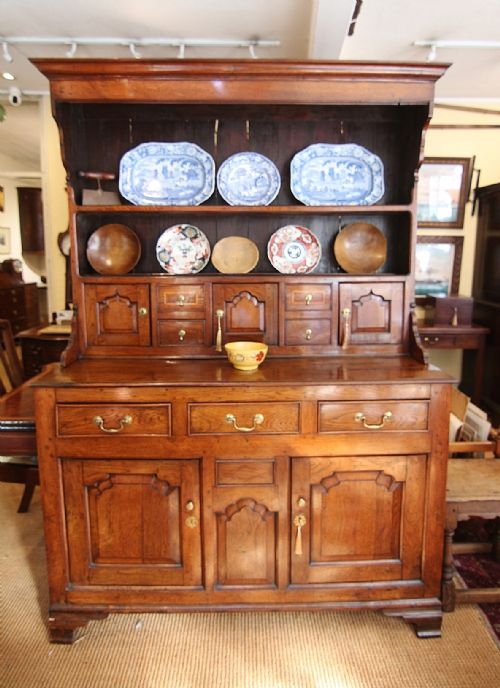
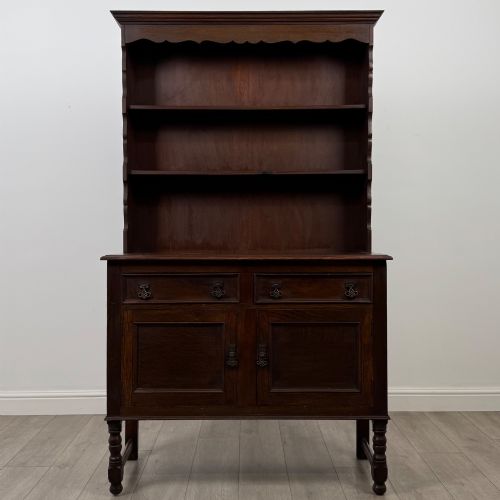
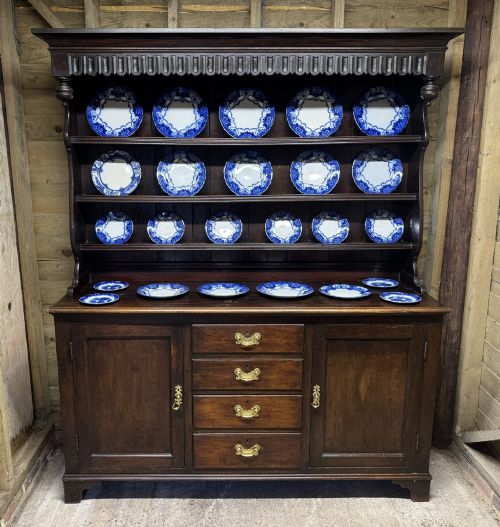
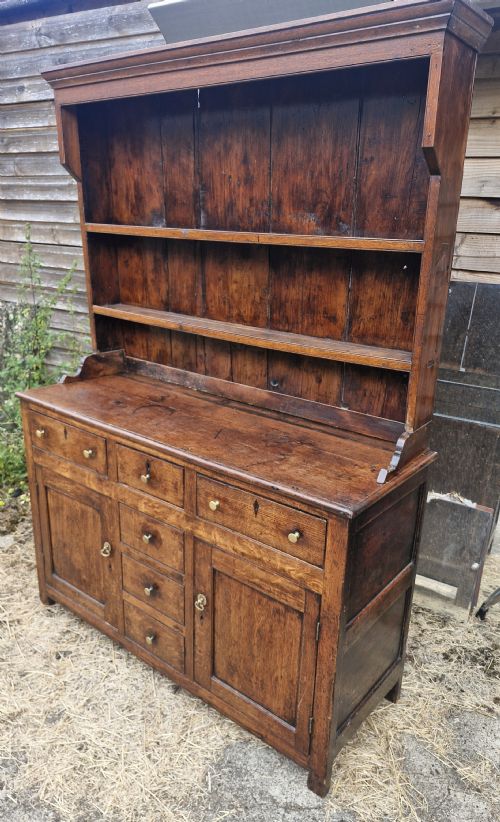
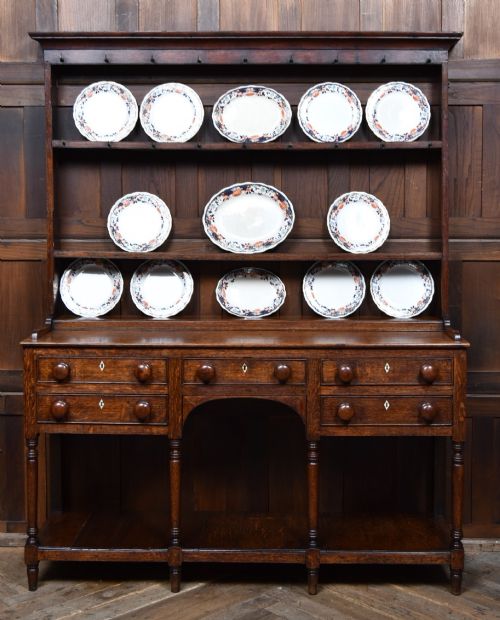
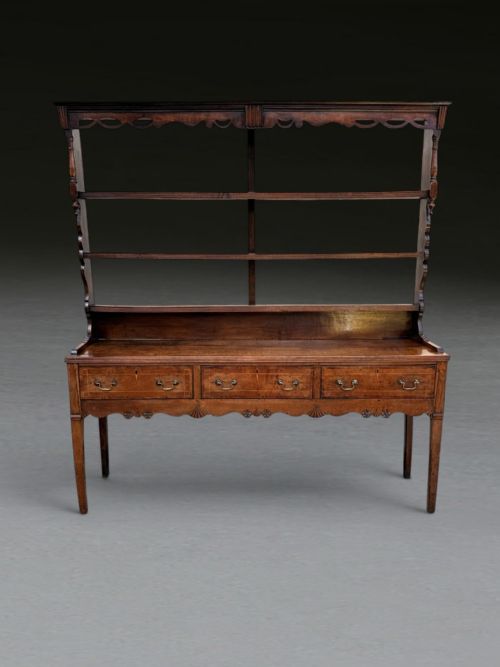
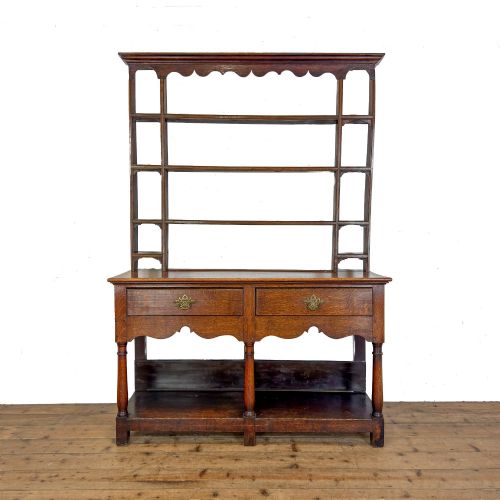
Welsh Oak Kitchen Dresser
A welsh oak kitchen dresser brings sturdy regional character and open display space to a room.
Welsh Oak Kitchen Dresser
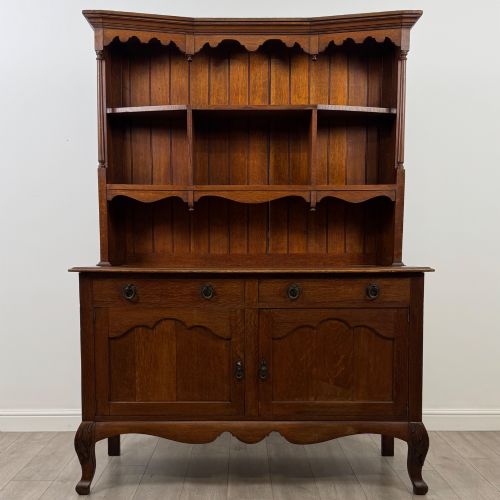
A welsh oak kitchen dresser is a utilitarian storage piece comprising a lower base of drawers and cupboards topped by open shelving for plates. When searching this phrase, buyers encounter traditional forms spanning the eighteenth, nineteenth, and early twentieth centuries. Regional variations such as Snowdonia or Llanrwst pieces frequently appear alongside standard Georgian and Victorian country formats.
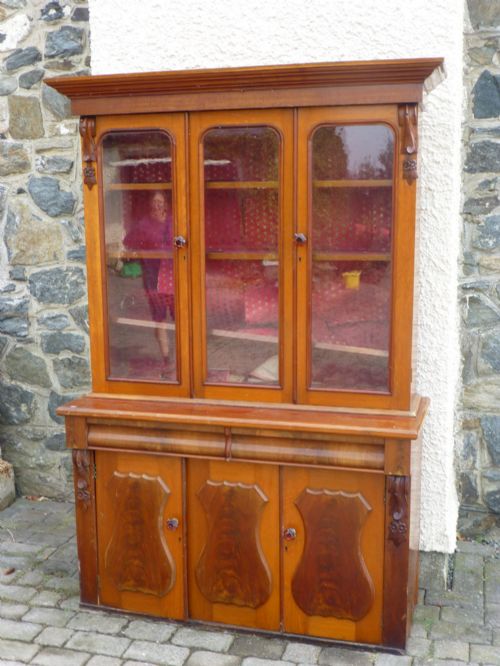
The most common examples on this page are nineteenth-century and Georgian designs that combine solid timber bases with integral plate racks. These pieces range from simple cottage potboard bases to larger glazed bookcase hybrids incorporating mahogany or walnut highlights. Buyers select them for functional kitchen storage and traditional display presence.
How they were made
Joiners built these items primarily from solid oak, sometimes utilising pine for secondary drawer linings and carcass backs. Timber selection dictated the structural integrity of the base, while brass hardware furnished handles and escutcheons on drawers and cupboards.
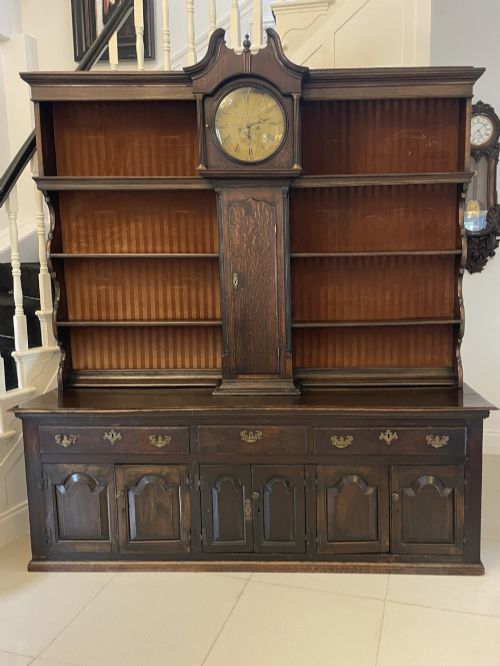
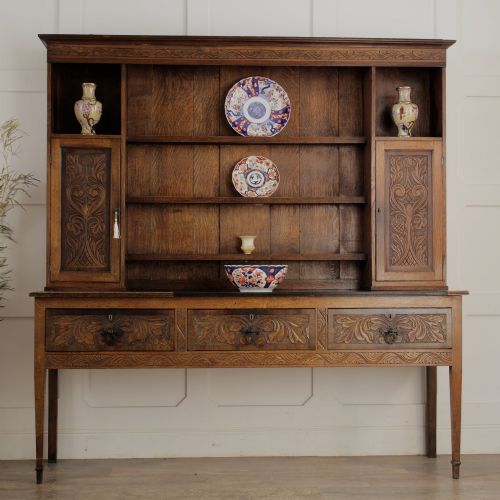
Makers shaped the timber using traditional hand joinery, incorporating panelled doors, pegged joints, and carved details such as regional green man motifs or geometric inlays. Upper plate racks were attached to the lower base, occasionally complemented by glazed upper bookcase sections or enclosed food cupboards.
Listings span the eighteenth, nineteenth, and early twentieth centuries, featuring oak, mahogany, walnut, pine, brass, and glass materials.
What varies in quality
Quality separates through the integrity of the timber selection and the sophistication of regional construction. Superior examples display dense, well-figured oak boards, crisp hand-carved detailing, and integrated elements such as potboards or dental cornices that reflect local workshop traditions.
Construction methods and proportions also distinguish finer specimens from standard utility pieces. Tighter joinery, well-balanced plate racks, and original brass or iron hardware indicate higher workshop execution during the Georgian and Victorian periods.
The Welsh Oak Kitchen Dresser Glossary
- Potboard
- An open slatted lower shelf positioned beneath the main base drawers of early dressers. This platform originally held pots and heavy kitchen utensils off the floor.
- Plate rack
- The tiered upper shelving unit designed to display ceramics upright against a wooden backboard. These structures range from simple open slats to enclosed glazed cabinets.
- Bread and cheese cupboard
- A regional vernacular storage cabinet integrated into the dresser base, traditionally ventilated for food preservation. These compartments showcase specific rural Welsh cabinet-making practices.
- Vernacular
- Furniture built by local country joiners using regional styles and available native timbers rather than following metropolitan academic designs. These pieces often exhibit distinct geographical characteristics.
- Breakfront
- A cabinet front where the central section projects forward from the flanking outer sections. This architectural arrangement adds depth and visual complexity to larger dresser bases.
Welsh Oak Kitchen Dresser: Frequently Asked Questions
How do I date an oak dresser?
Dating relies on observing construction techniques, timber patination, and stylistic markers across the piece. Eighteenth-century examples often display pegged joinery and open potboard bases.
Nineteenth-century items frequently incorporate glazed doors, mahogany inlays, or machine-sawn components alongside traditional hand-planed surfaces.
Where were these dressers made?
These pieces originate primarily from rural workshops across Wales and English border regions. Specific districts like Snowdonia or Anglesey developed distinct regional building traditions.
Local joiners utilised native timber stocks and specific vernacular designs tailored to farmhouse kitchen requirements.
How do I style a kitchen dresser?
A kitchen dresser functions practically for storing tableware while providing display space on the upper plate racks. Arranging ceramics and glassware on the shelves highlights the traditional open format.
The sturdy oak surfaces and deep drawers accommodate everyday kitchen equipment and dining accessories.