


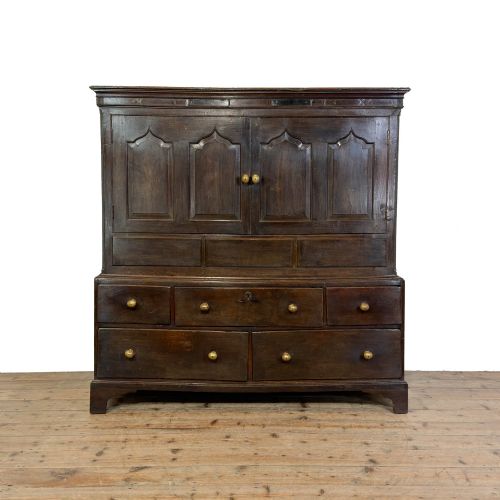
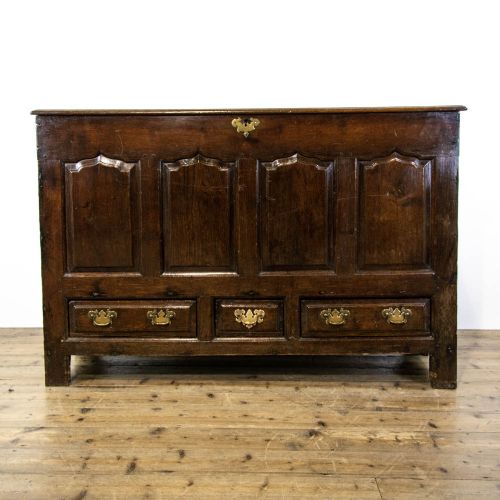
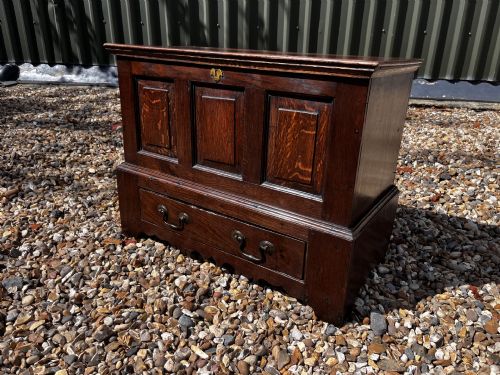
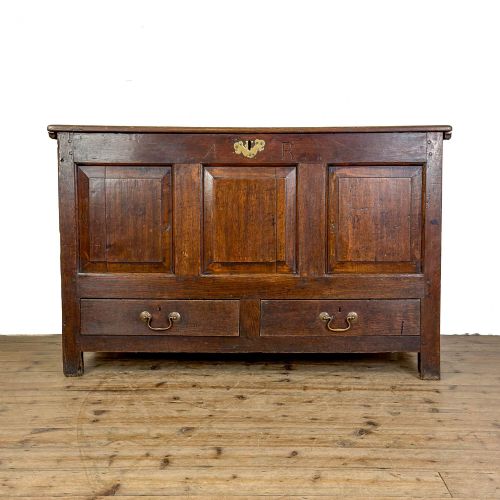


Welsh Oak Blanket Chest
These welsh oak blanket chest pieces are rugged utilitarian containers built by country joiners to hold linens and woollens.
Welsh Oak Blanket Chest
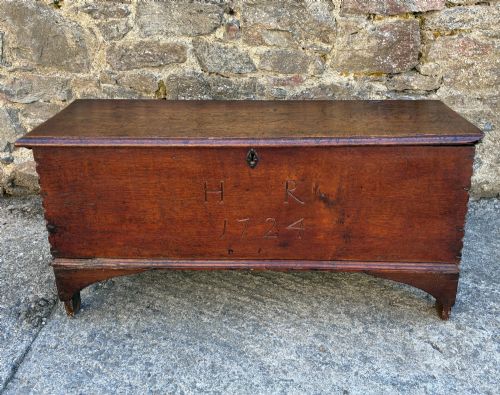
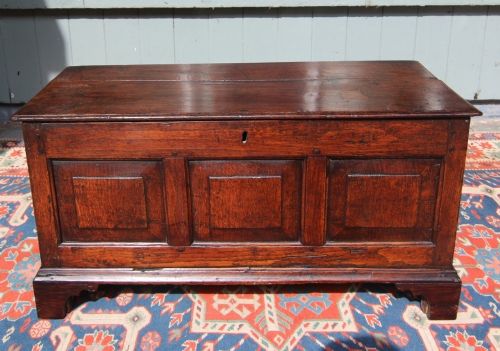
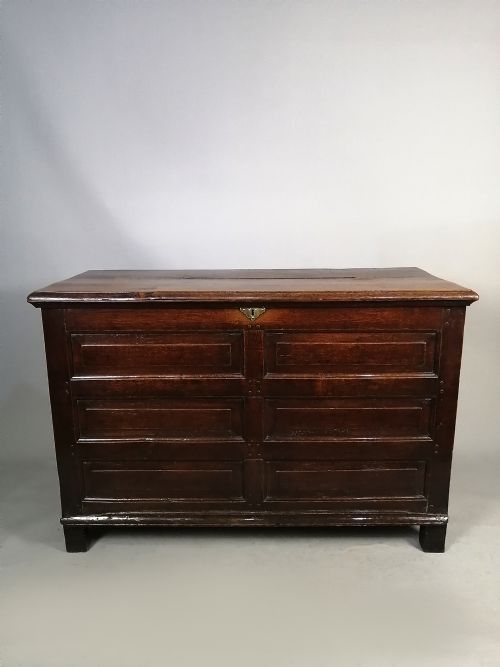
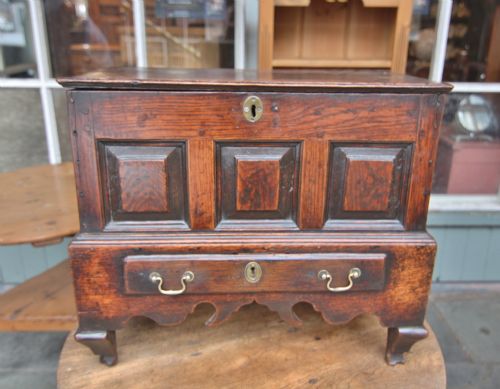
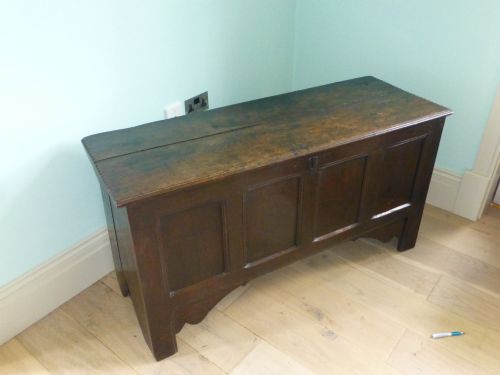
A buyer seeking a welsh oak blanket chest encounters several distinct domestic forms built across centuries of rural craftsmanship. The inventory ranges from substantial six-plank chests and large regional coffers to smaller tabletop variants known as coffer bach.
Many examples originate from specific localities such as Carmarthenshire, Snowdonia, the Gower Peninsula and Montgomeryshire. These regional pieces reflect local construction habits and decorative idioms ranging from plain utilitarian boxes to intricately carved panels.
Evaluating standard and survival
Quality rests on the integrity of the original timber, the crispness of any carving and the retention of authentic structural elements such as feet, hinges and lids. Pieces preserving their early surface patination hold greater interest than those stripped or heavily restored.
Proportion and scale also distinguish the work, particularly among smaller pieces where delicate turned feet or precise miniature joinery demand high skill from the local carpenter.
Welsh Oak Blanket Chest Retail Price Guide 2026
Typical asking prices for welsh oak blanket chest among the pieces listed under this phrase on Sellingantiques today, from the lower quarter to the upper quarter. They describe what is for sale here now, not the wider market.
Many a miniature coffer hides a tiny secret drawer beneath the main well, built just large enough for a farmer's hidden coin.
The Welsh Oak Blanket Chest Glossary
- Coffer bach
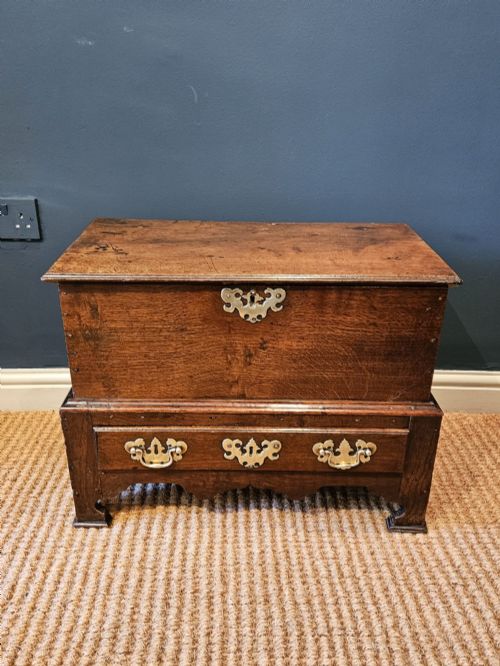
- A small Welsh miniature chest or box, often raised on short feet and fitted with a single drawer beneath the main compartment. These diminutive pieces served for holding valuables or linens.
- Mule chest
- A storage chest equipped with one or more drawers in the base beneath the main lift-top compartment. This form bridges the evolution between the simple trunk and the chest of drawers.
- Six-plank chest
- An elementary form of box constructed from six principal boards joined at the edges with pegs or nails. Early Elizabethan and Tudor examples frequently employ this sturdy construction.
- Vernacular
- Architecture and furniture built by local craftsmen using regional materials and traditional methods rather than academic architectural designs. Welsh country pieces display distinct local traits.
Welsh Oak Blanket Chest: Frequently Asked Questions
What is a coffer bach?
A coffer bach is a small Welsh miniature chest or box, typically featuring a hinged lid above a single small drawer. These scaled-down pieces were built by country joiners for domestic use.
They often sat upon tables or dressers to store documents, small textiles or personal valuables. Surviving examples date from the seventeenth century through the Georgian period.
How do I date an oak chest?
Dating relies on observing construction methods, hinge types, nail marks and the style of any carved decoration. Sixteenth-century pieces use simple board construction, while seventeenth-century items often show framed panelwork.
Later eighteenth and nineteenth-century examples incorporate turned feet, inlaid fruitwood decoration or small base drawers. Regional traits also help narrow down the period of manufacture.
Were these used for blankets?
Large coffers and mule chests served primarily to store heavy woolen blankets, household linens and winter clothing. Oak provided a sturdy, enclosed environment that protected textiles from dust and dampness.
Smaller variants and coffer bach were intended for more delicate items or documents rather than heavy bedding. Their robust construction allowed them to double as seating benches in modest homes.
How should I care for old oak?
Keep wooden chests away from direct heat sources and rapid temperature fluctuations to prevent the oak panels from splitting. Maintain a stable indoor environment and avoid harsh modern polishes.
An occasional application of traditional beeswax helps nourish dry timber and preserve the historic surface patina. Handle moving parts and old iron hinges gently.