

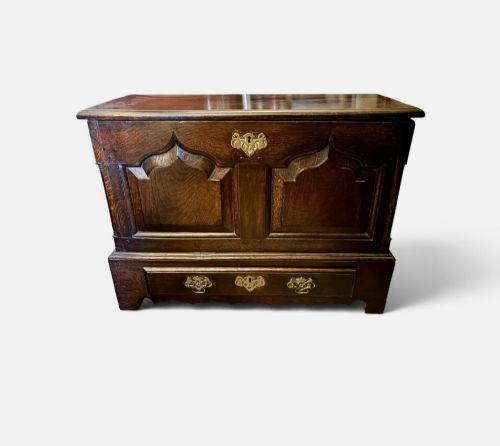
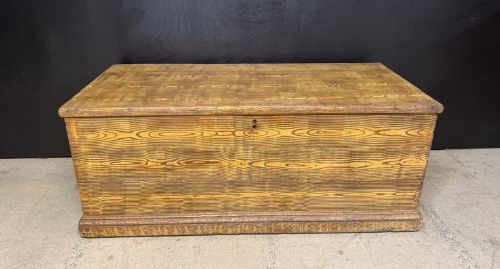
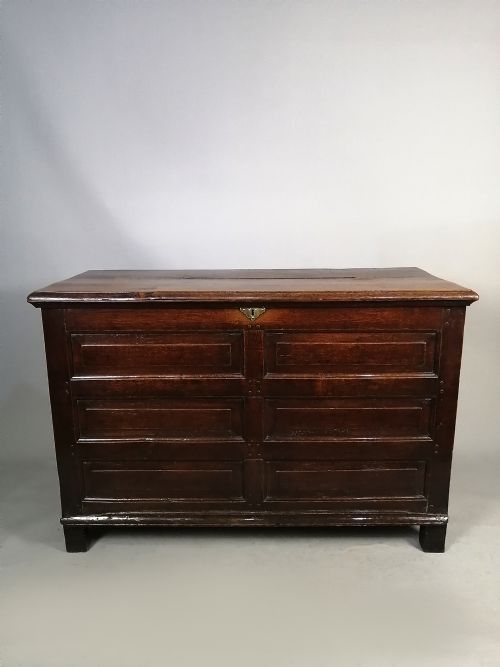
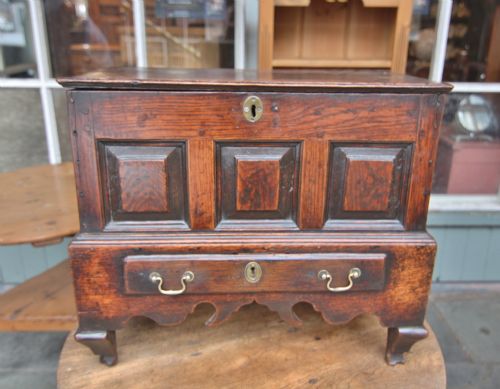



Welsh Blanket Chest
A welsh blanket chest brings solid vernacular character into a room, offering robust storage shaped by centuries of local joinery.
Welsh Blanket Chest
Most pieces on this page emerge from regional traditions across Wales, utilising local timbers like oak and pine. You will frequently find specific regional expressions, such as examples originating from the Gower Peninsula or Snowdonia.
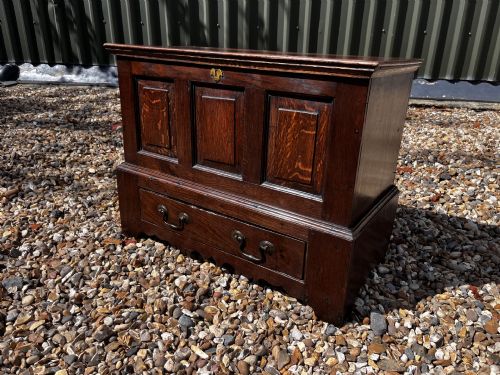
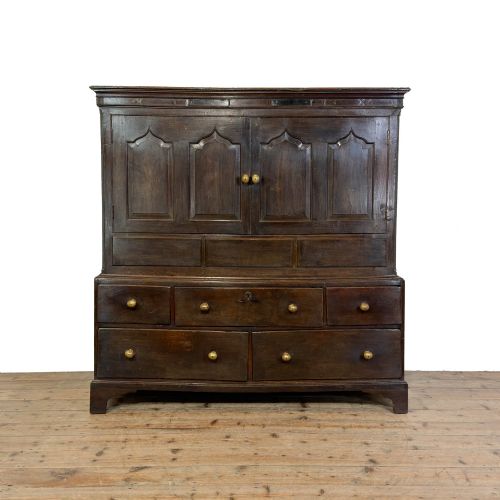
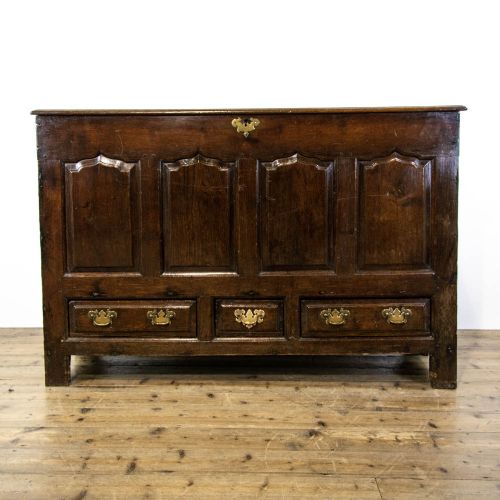
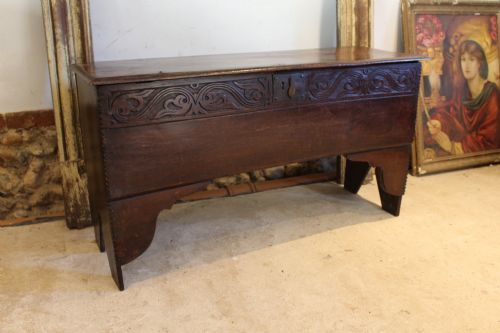
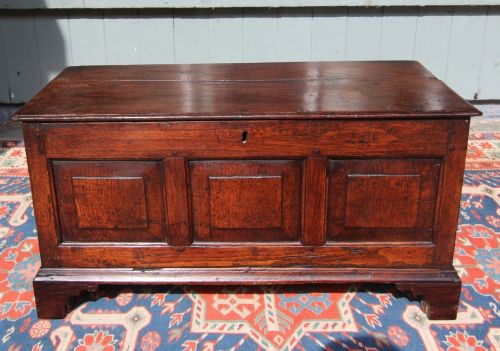
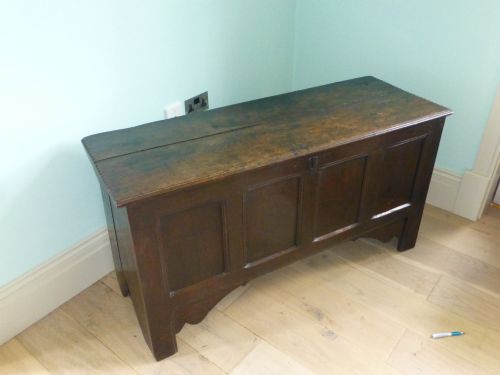
The forms vary from simple six-plank constructions to panelled receptacles and grain arks. Many items reflect Georgian periods or earlier Stuart and Elizabethan eras, showing how domestic storage evolved to hold household textiles.
Materials and Technique
The construction relies heavily on solid oak and pine, frequently assembled with pegged joints, hand-riven boards, or simple six-plank methods. Elm and fruitwood inlay appear occasionally, adding textural variety to regional workshops.
Metalwork plays a functional role through wrought iron or brass hinges, latches, and lock plates that secure the heavy lids. Some surfaces retain traces of early paint or develop deep patination through centuries of handling and wax polish.
Listings span from the sixteenth century through the nineteenth century, uniting oak, pine, elm, and painted finishes.
Judging Quality
Quality rests in the integrity of the original timber and the retention of early surfaces, feet, and ironwork. Unaltered proportions and genuine regional vernacular details separate honest provincial pieces from heavily restored examples.
The nuance lies in the joinery of the panels and the crispness of any carved detailing, particularly on sixteenth and seventeenth-century chests. Good domestic utility survives best where the hinges, lids, and internal tills remain undisturbed by later alterations.
The Welsh Blanket Chest Glossary
- Coffer Bach
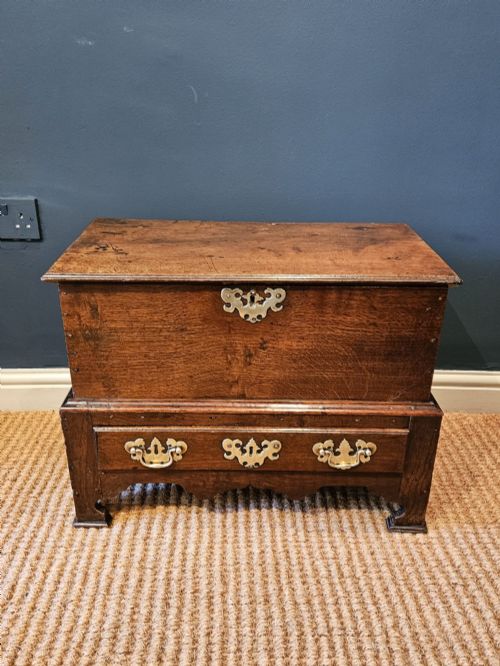
- A small Welsh miniature chest or box, often raised on short feet and fitted with a single drawer beneath the main compartment.
- Mule Chest
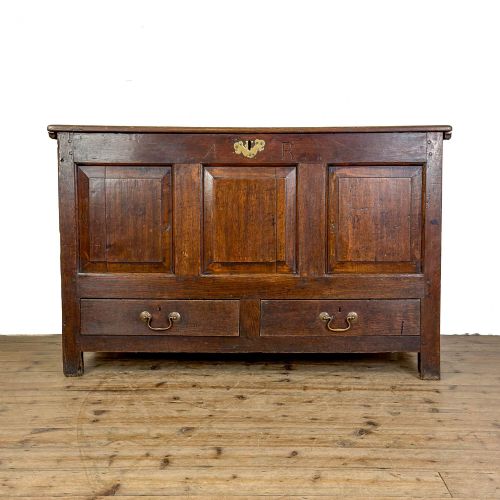
- A storage chest featuring one or more drawers built into the base beneath the primary lift-top compartment.
- Six-Plank
- A primitive chest construction method joining six solid boards together simply at the edges with pegs or nails.
- Vernacular
- Regional building or furniture traditions relying on local materials and customary local designs rather than court styles.
- Grain Ark
- A specialised heavy wooden chest traditionally utilised for storing agricultural grain in rural farmhouses.
Welsh Blanket Chest: Frequently Asked Questions
How do I identify a mule chest?
A mule chest combines the deep lift-top storage space of a traditional blanket chest with one or more drawers fitted directly beneath.
This form emerged to provide easier access to folded textiles without requiring items on top to be moved every time the lid was lifted.
What wood was used?
Oak is the predominant timber found in early Welsh storage chests, valued for its strength and local availability. Pine appears frequently in nineteenth-century vernacular pieces.
Intermittent examples incorporate elm or fruitwood inlay details to decorative effect.
Where were they made?
These chests were made by regional carpenters and joiners across various parts of Wales, including Snowdonia and the Gower Peninsula. Each area developed slight stylistic nuances in proportions and joinery.
This local craftsmanship gives the pieces their distinct vernacular identity.
How do I care for antique oak?
Keep antique oak furniture away from direct heat sources and sudden temperature shifts to prevent the timber from splitting. Apply occasional natural wax to maintain the patina.
Avoid modern silicon-based polishes that can damage historic dry-surface finishes.