

Walnut Tier Shelf
A walnut tier shelf brings layered display space into a room, offering open tiers for books, ceramics, and small objects.
Walnut Tier Shelf
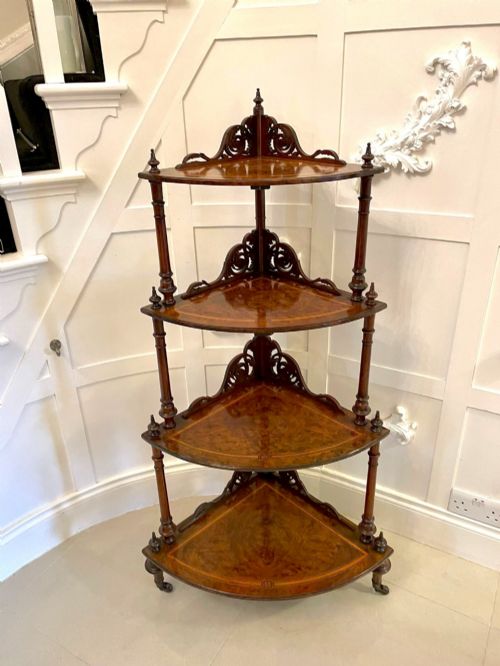
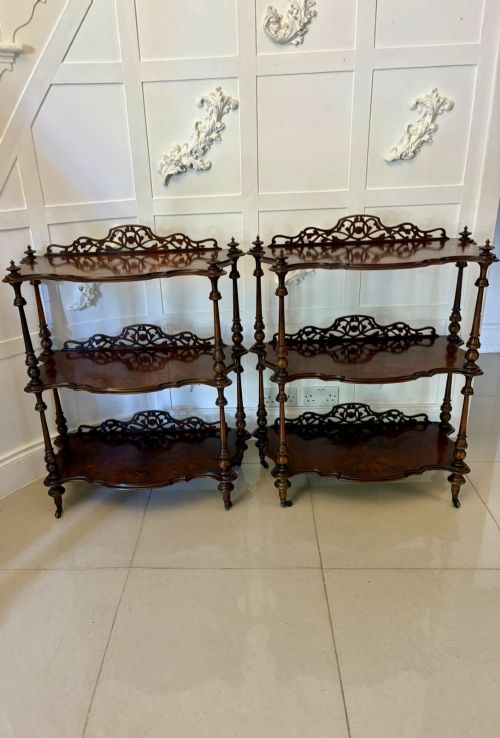
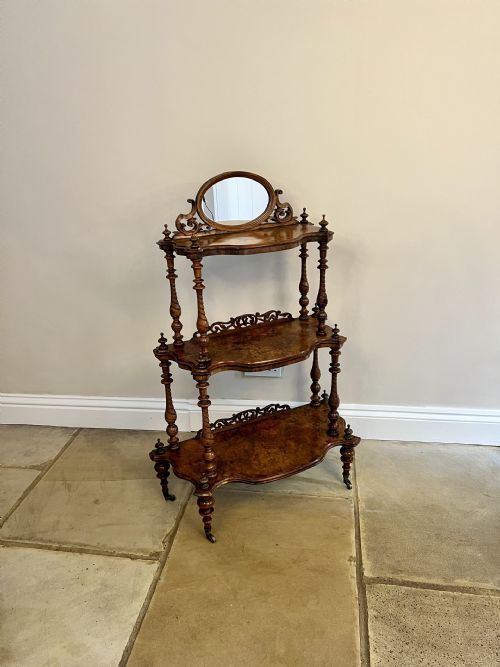
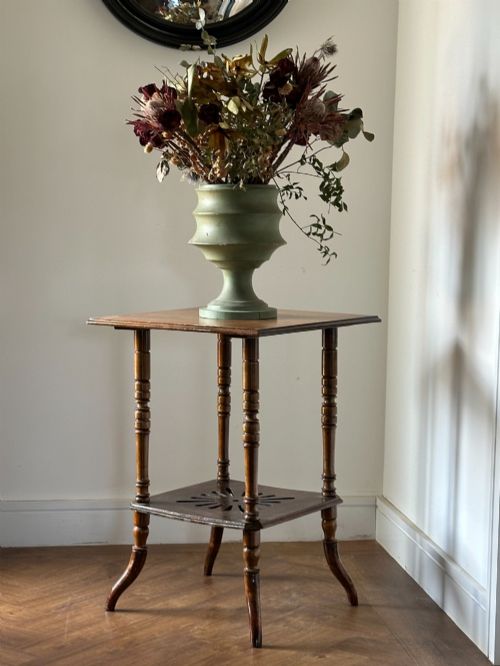
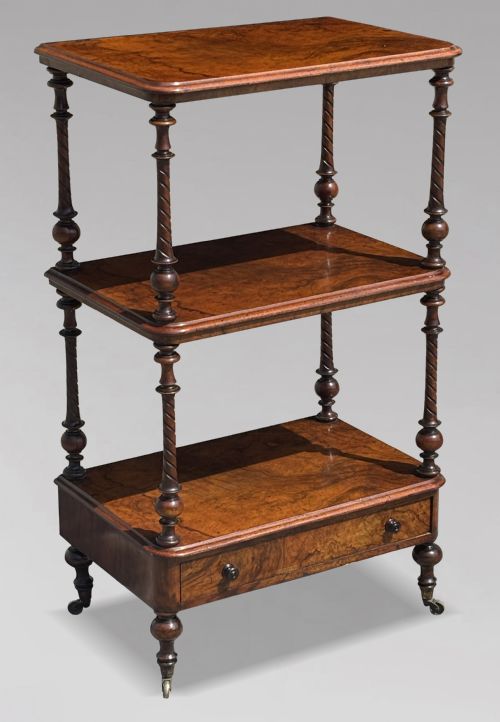
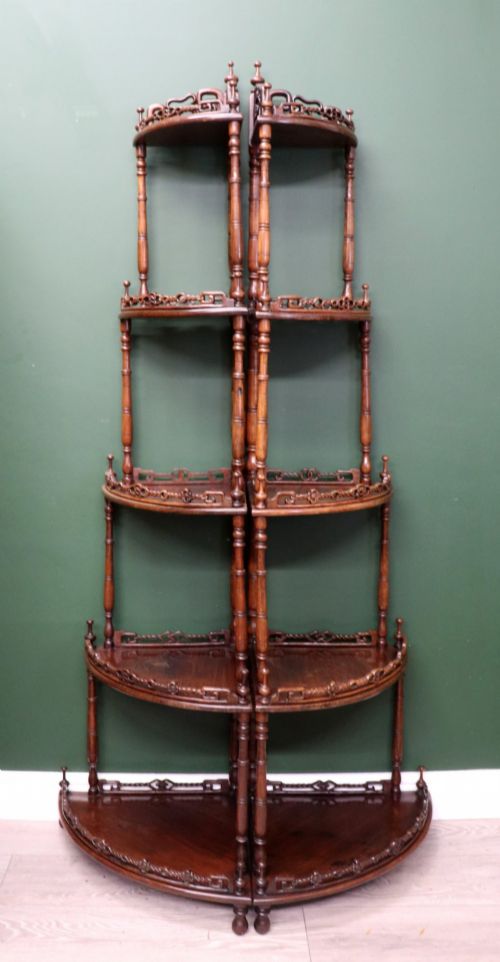
A walnut tier shelf appears across multiple historical periods, taking forms such as whatnots, etageres, wall shelves, and occasional tables with multiple levels. These multi-tiered pieces emerge most frequently from the Victorian era and the nineteenth century, built to hold ornaments and decorative items in reception rooms.
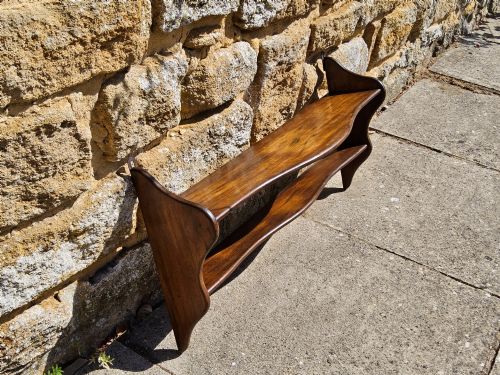
The primary forms on this page include freestanding whatnots and etageres alongside wall-mounted shelves and corner cabinets. Makers constructed these tiered pieces to utilise vertical space efficiently while displaying precious objects.
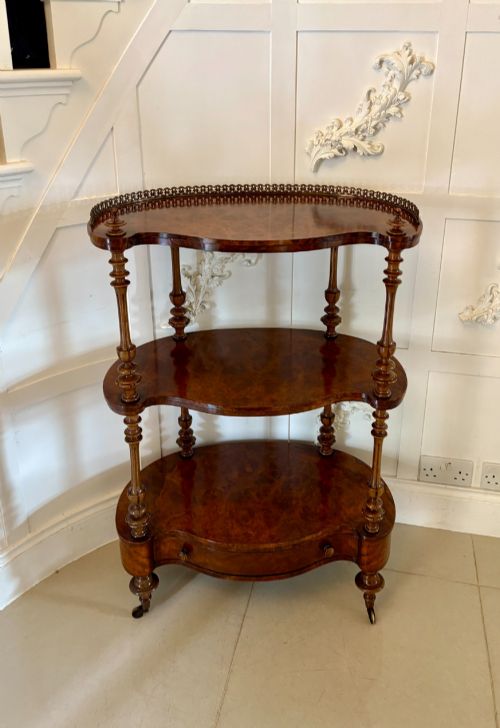
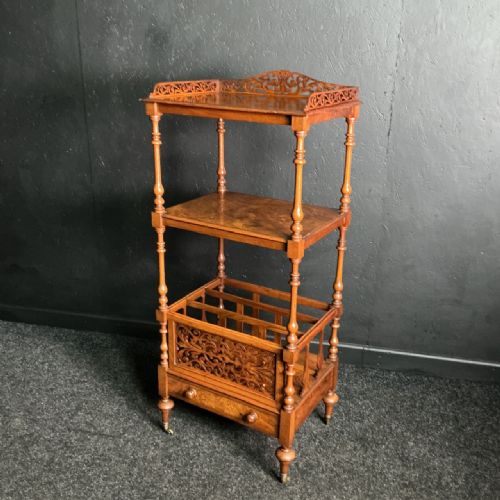
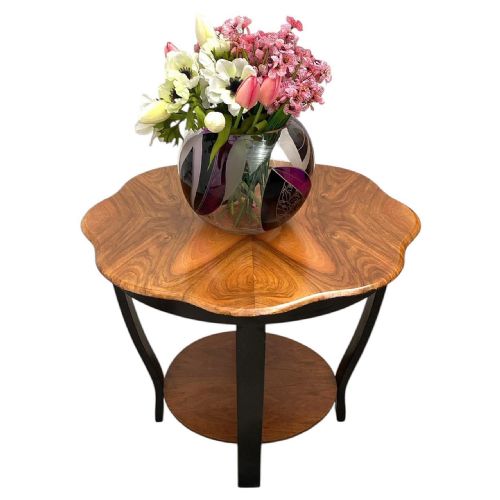
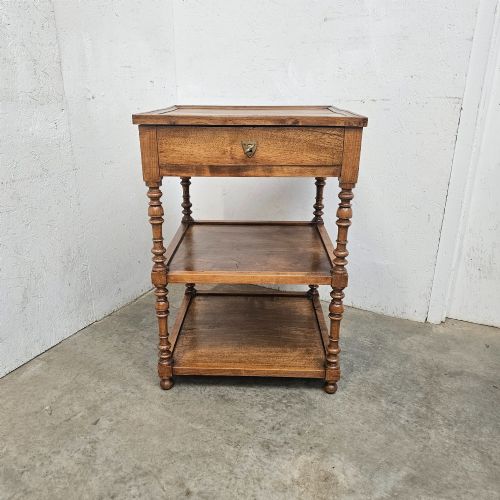
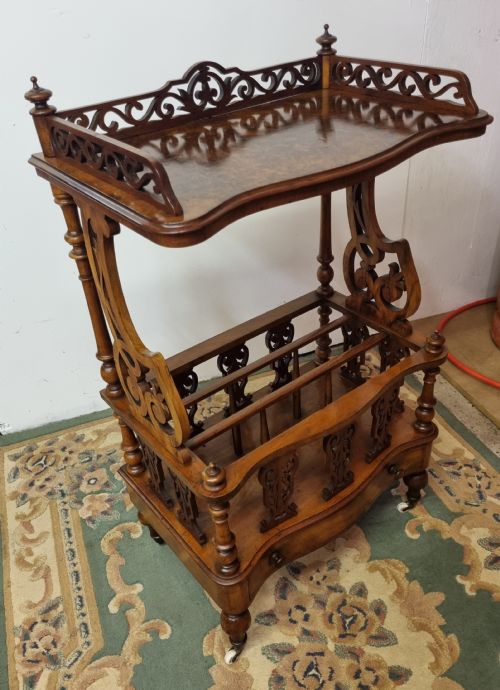
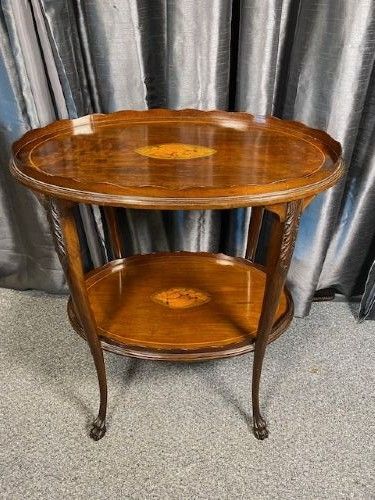
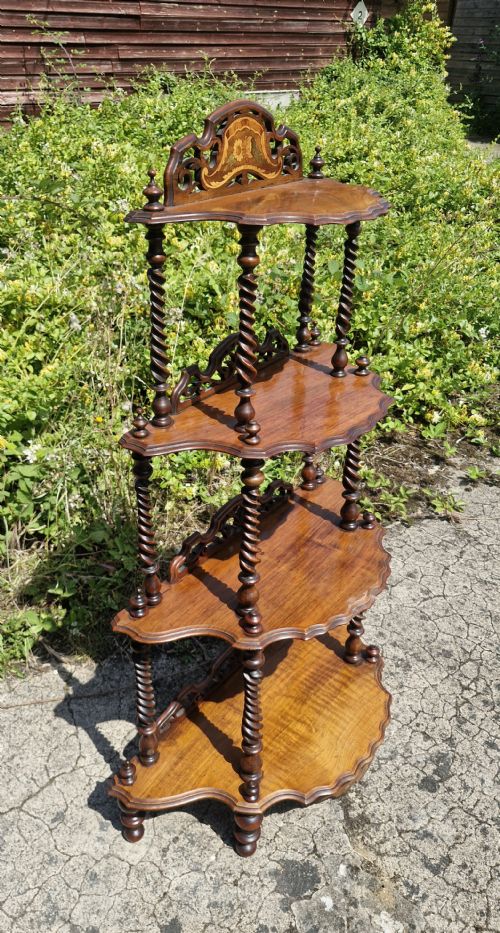
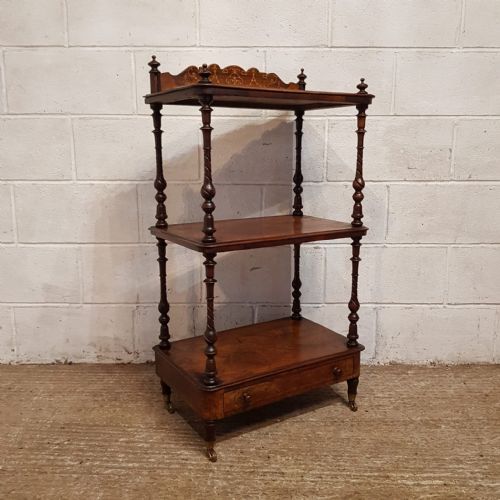
Victorian examples dominate the selection, often featuring shaped serpentine shelves, turned supports, and integrated cabinets or music compartments. Alongside these, occasional tables and coffee tables provide lower tiers for surface storage in twentieth-century contexts.
How walnut tier shelves were made
Cabinet makers utilised solid walnut and figured burr walnut veneers over secondary timbers to construct the tiers and upright supports. This timber choice provided rich grain patterns that defined the visual character of each tier.
Workshops incorporated brass mounts, ormolu, and glass components to accent the woodwork on French-influenced and exhibition pieces. Turned wooden legs, marquetry inlay, and carved details further distinguished the construction of higher-tier pieces.
Form variations span freestanding whatnots, wall shelves, etageres, and multi-tiered occasional tables.
What varies in quality
The choice of timber creates a primary distinction, moving from plain walnut to highly figured burr walnut veneers and intricate marquetry. Grain selection dictates the visual impact of the upper surfaces.
Construction complexity separates standard items from exhibition pieces, with serpentine shaping, brass mountings, and integrated cabinets or canework marking the upper tier of execution.
The Walnut Tier Shelf Glossary
- Whatnot
- A movable piece of furniture with shelves for holding books, ornaments, or china. This form gained popularity during the Victorian period for displaying household collections.
- Etagere
- A piece of furniture consisting of a set of open shelves for displaying small articles. French examples frequently incorporate marquetry and ormolu mounts.
- Burr walnut
- A veneer taken from the warted growth on a walnut tree, showing intricate and swirling grain patterns. Cabinet makers utilised this timber on high-status Victorian furniture.
- Canterbury
- A low stand with partitions for holding music sheets or books, often combined with tiers or a whatnot top. These pieces served domestic music rooms in the nineteenth century.
- Marquetry
- Decorative veneer work formed by fitting together small pieces of wood, shell, or ivory to create pictorial designs. Makers applied this technique to surface panels on etageres and cabinets.
Walnut Tier Shelf: Frequently Asked Questions
What is a walnut tier shelf used for?
A walnut tier shelf serves as an open display unit for books, ceramics, and decorative objects. The multiple levels allow for vertical organisation and presentation across different rooms.
Historically, these pieces stood in parlours and drawing rooms to hold decorative collections. Today, they function similarly in domestic interiors for everyday display.
How do I identify a Victorian walnut whatnot?
Victorian walnut whatnots feature tiered wooden shelves supported by turned columns or carved uprights. Many examples date from the mid-nineteenth century and employ burr walnut veneers.
Look for serpentine shelf edges, brass mounts, and occasional lower cabinets or drawers. These design markers separate nineteenth-century pieces from later reproductions.
Where should I place a walnut tier shelf?
A walnut tier shelf fits well against a living room wall or within an empty corner, depending on the specific frame shape. Freestanding whatnots suit open spaces where they can be viewed from multiple angles.
Wall-mounted versions require secure fixing to support the weight of timber and displayed objects. Corner shelves utilise otherwise empty junctions in a room layout.