

Victorian Tier Shelving
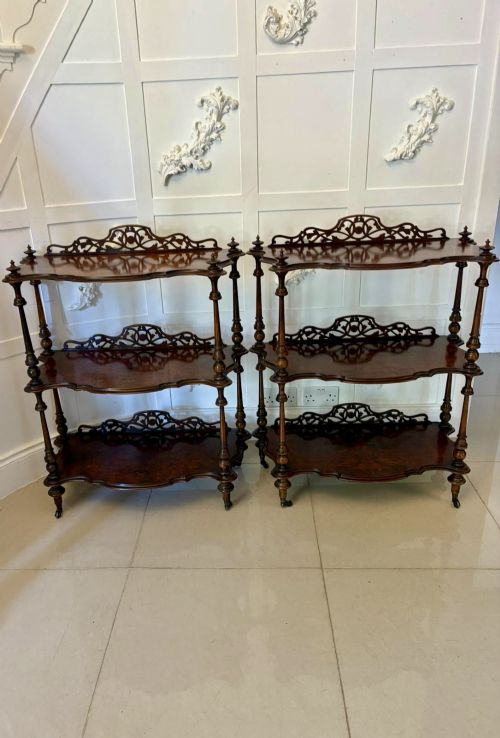
Victorian tier shelving brings multi-level display space into a room, offering upright timber tiers for books and ornaments.
Victorian Tier Shelving
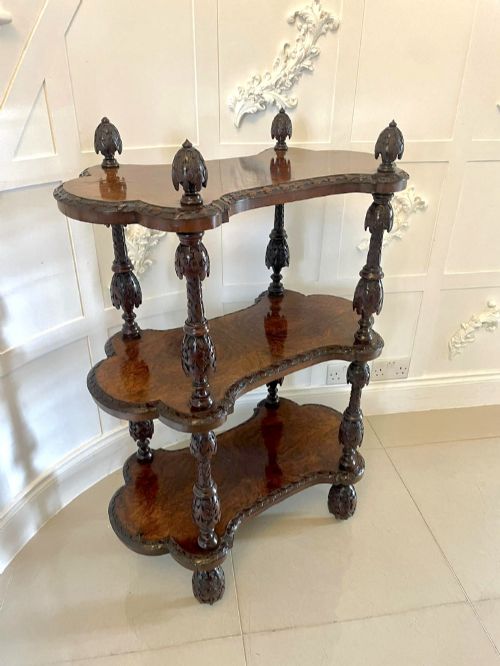
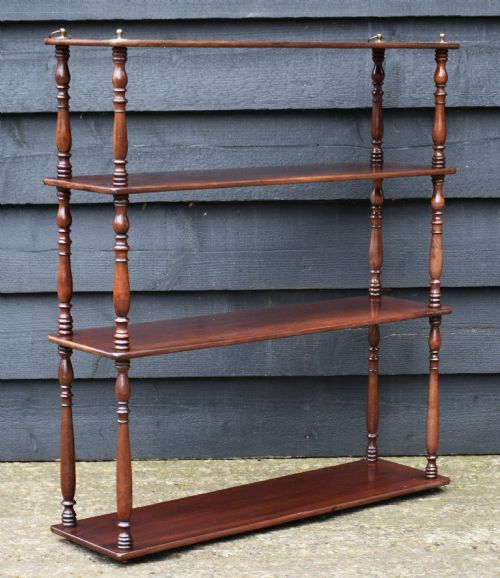
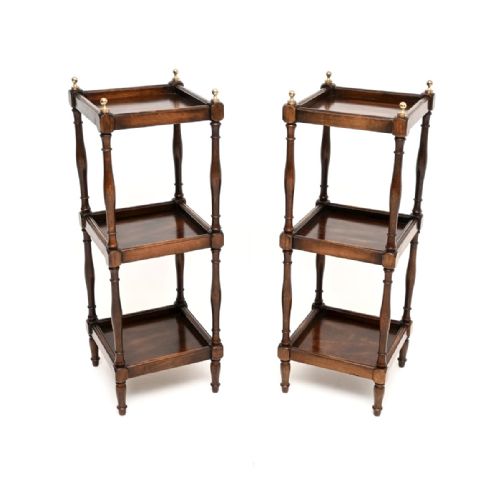
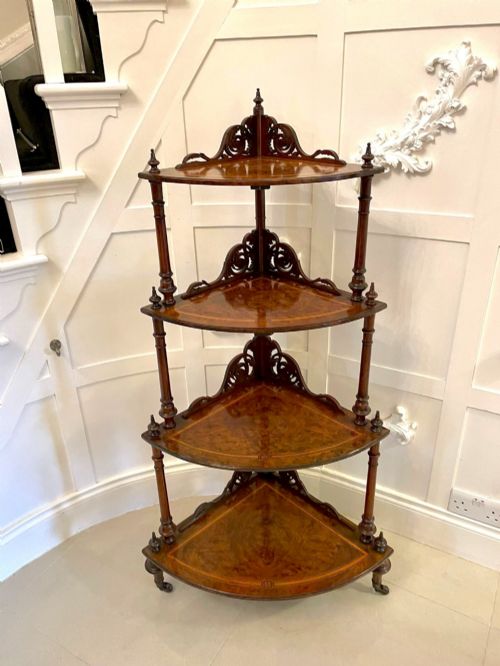
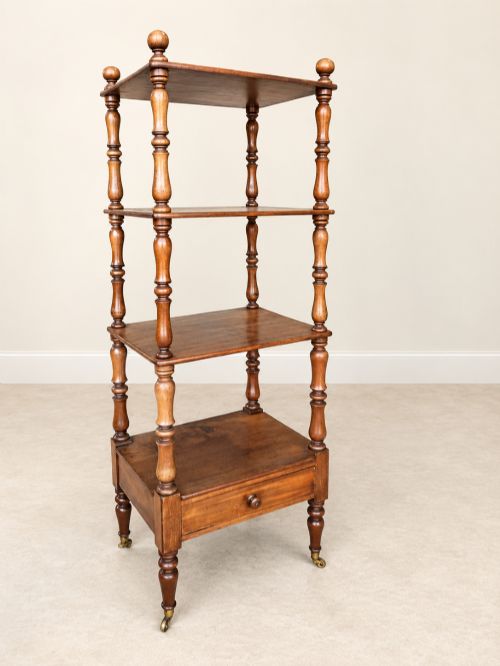
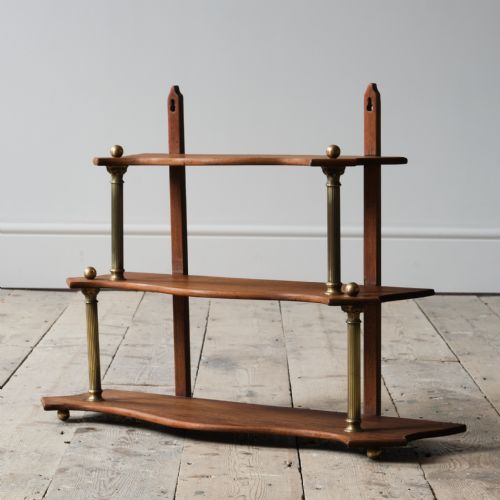
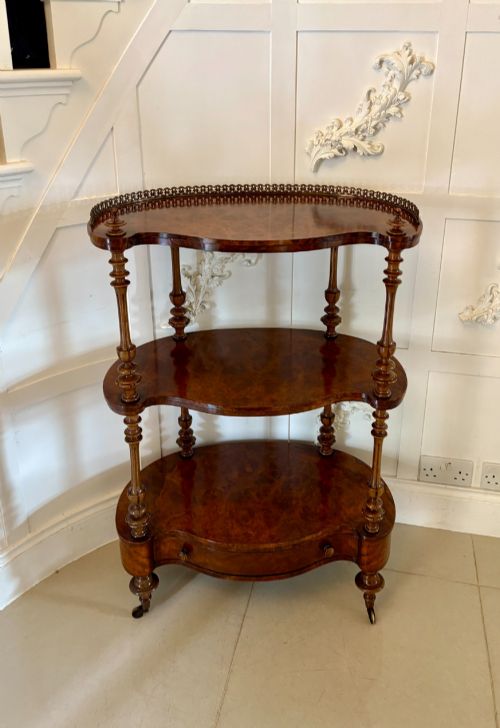
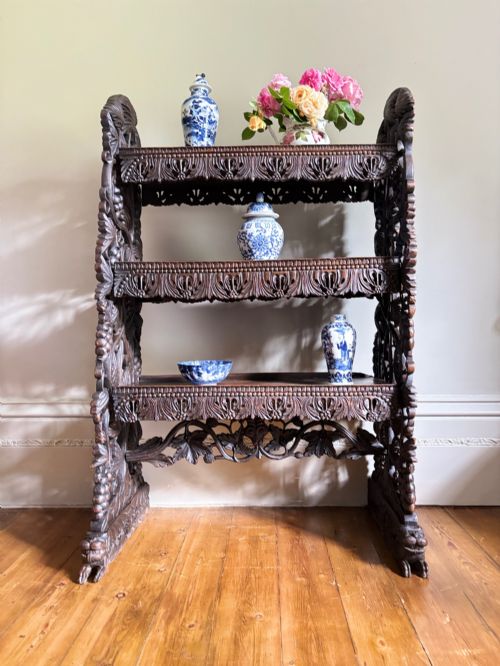
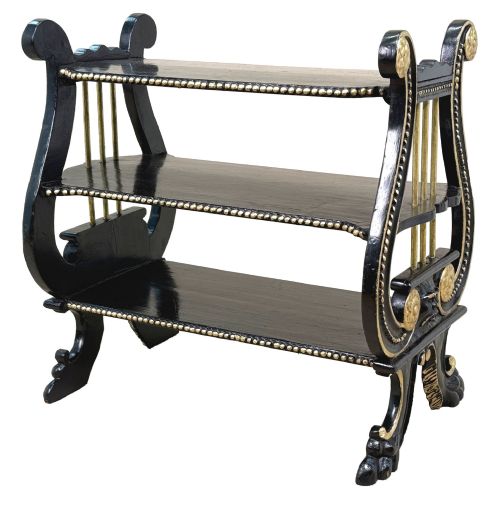
When you search for Victorian tier shelving, you encounter pieces designed to hold books, ceramics, and ornaments across multiple horizontal levels. These items appear as freestanding whatnots, etageres, and wall-hanging shelves originating from the nineteenth century.
The selections available range from compact corner units to tall multi-tiered stands. Mahogany and walnut dominate the offerings, while woods such as rosewood, satin birch, and ebonised timber also shape the category.
Materials and construction methods
Cabinet makers utilised dense hardwoods including mahogany, walnut, and rosewood to support stacked tiers without warping. Finer examples incorporate burr walnut veneers, brass mounts, and gilt metal details.
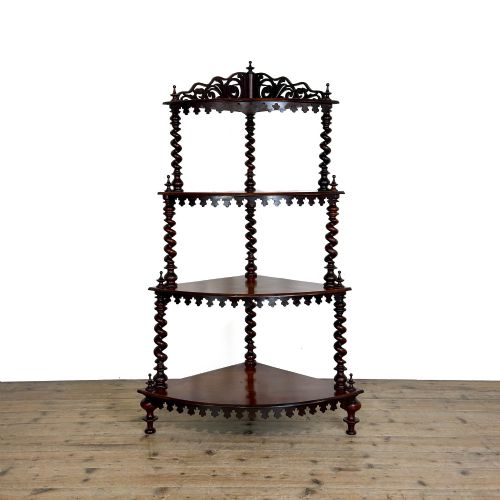
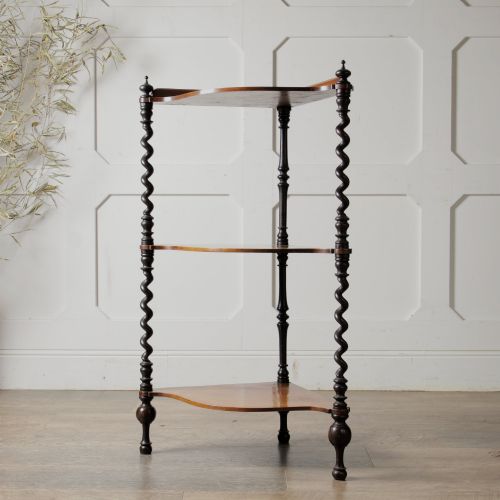
Support systems vary from turned columns and barley twist uprights to delicate side panels and wall brackets. Fixed shelves rely on mortise and tenon joints, whilst mobile pieces occasionally feature brass castors.
Listings for this phrase include pieces built from mahogany, walnut, rosewood, burr walnut, oak, glass, and ebonised wood across the nineteenth century.
Distinctions in quality
The calibre of a piece rests upon the choice of timber and the crispness of any turned supports or carved enrichment. Figured veneers like burr walnut elevate a standalone whatnot above a simple utility shelf.
Structural integrity dictates longevity, with superior examples exhibiting tight joints, straight uprights, and well-matched grain patterns across every tier. Secondary woods and finishing work on hidden surfaces further separate standard workshop output from exceptional commissions.
The Victorian Tier Shelving Glossary
- Whatnot
- A freestanding piece of furniture composed of multiple open shelves used for displaying ornaments. These items became popular during the nineteenth century for drawing rooms and parlours.
- Etagere
- A set of open tiered shelves designed for displaying small objects and bric-a-brac. The form originated in France before becoming a staple of Victorian interior decoration.
- Burr walnut
- A highly figured wood veneer taken from the warted growths of walnut trees. Cabinet makers prized this material for its swirling patterns on prominent surfaces.
- Barley twist
- A turned wooden column carved in a spiral shape resembling a twist of barley sugar. This decorative support appears frequently on nineteenth-century whatnots and bookcases.
Victorian Tier Shelving: Frequently Asked Questions
What is the difference between a whatnot and an etagere?
A whatnot is typically a sturdy freestanding shelving unit with three or more tiers, often incorporating a small enclosed cupboard at the base. An etagere tends to be lighter and more decorative, built purely for displaying ornaments.
Both forms belong to the nineteenth-century family of tiered display furniture, though etageres more frequently show French stylistic influences.
How do I hang wall shelves safely?
Wall-hanging shelves require secure fixings into solid masonry or direct attachment to timber wall studs. Given the weight of dense nineteenth-century hardwoods, appropriate brackets support the structure safely.
Distributing books and heavy ceramic objects evenly across the tiers prevents undue strain on the hanging loops.
Where should I place tier shelving in a modern room?
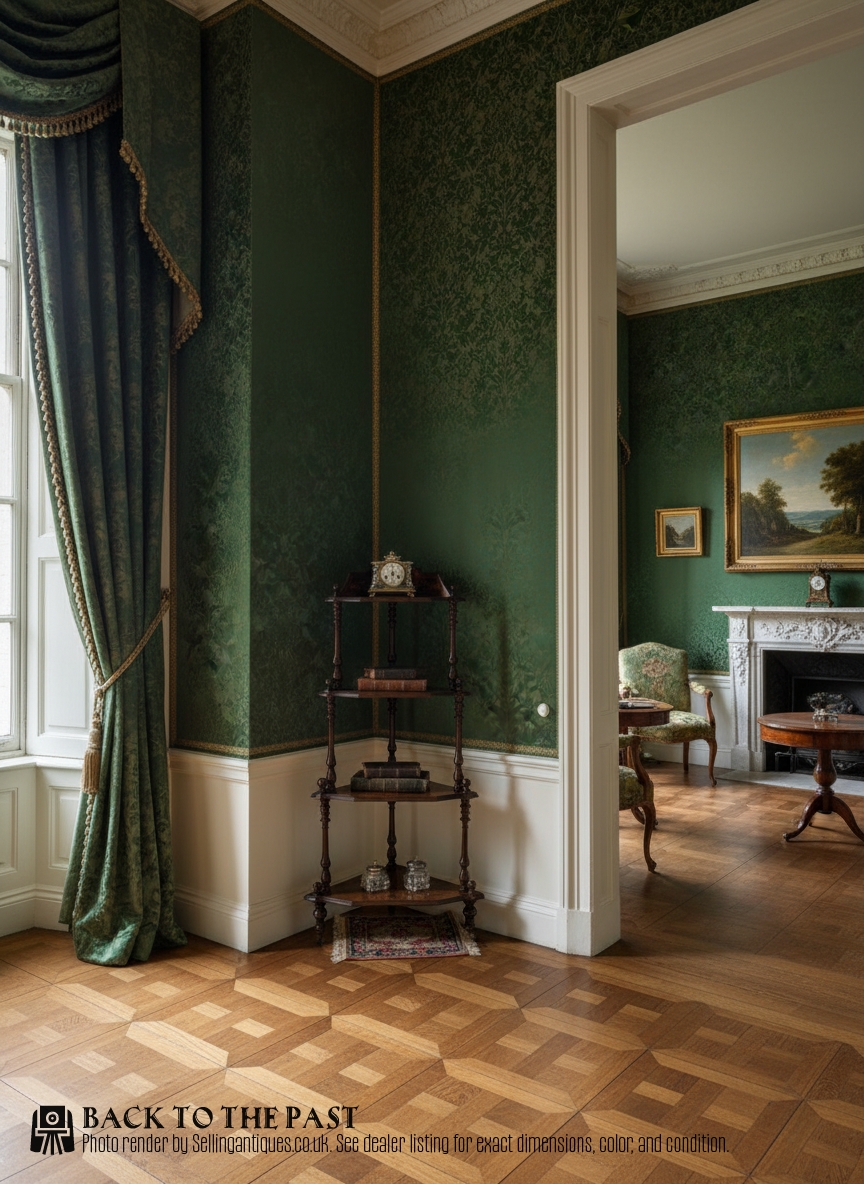
Corner whatnots fit neatly into unused room angles, making them practical for smaller spaces. Freestanding etageres work well against plain walls where their open timber tiers remain visible.
Keeping these shelves away from direct heat sources protects the antique timber veneers from drying and cracking.
How can I tell the period of a tiered shelf?
Nineteenth-century pieces display specific timber choices like mahogany, rosewood, and burr walnut alongside traditional hand-cut joinery. Tool marks and the absence of modern plywood indicate nineteenth-century hand manufacture.
Stiles and turning styles match documented Victorian, Regency, and Edwardian furniture patterns found across the broader evidence.