


Walnut Tall Case Clock
A walnut tall case clock brings a profound sense of time and architectural presence into a room.
Walnut Tall Case Clock
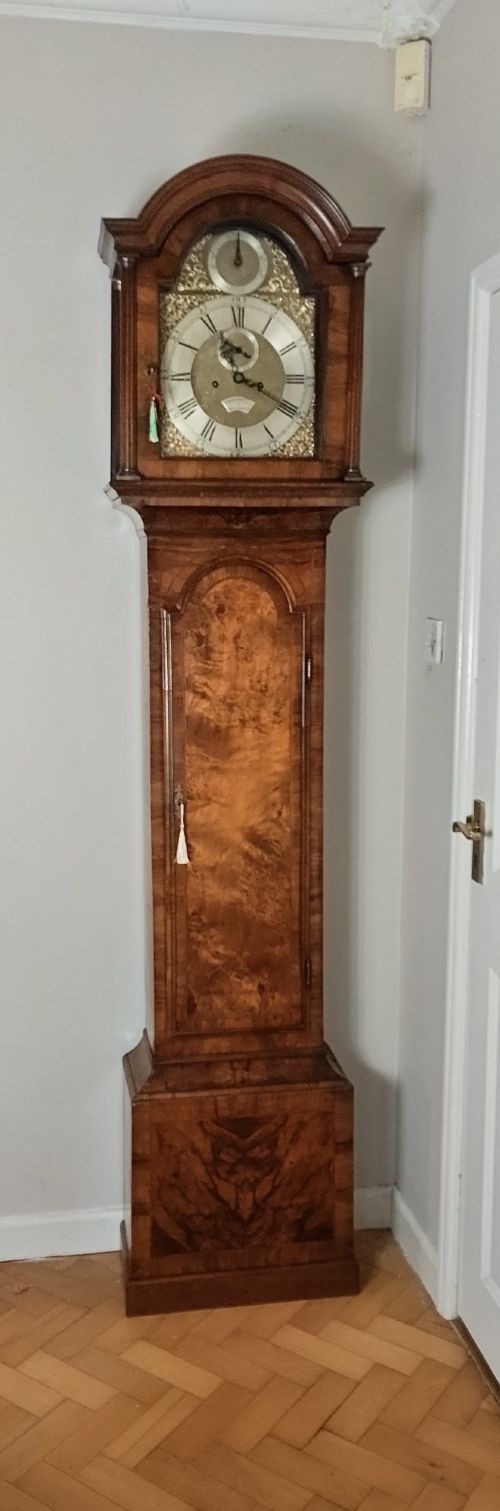
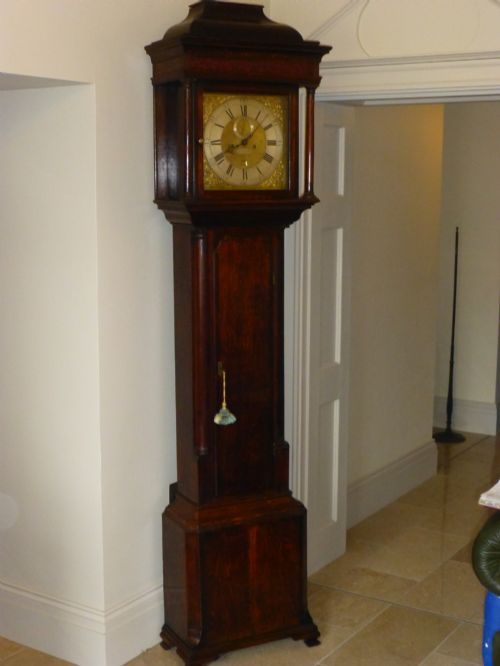
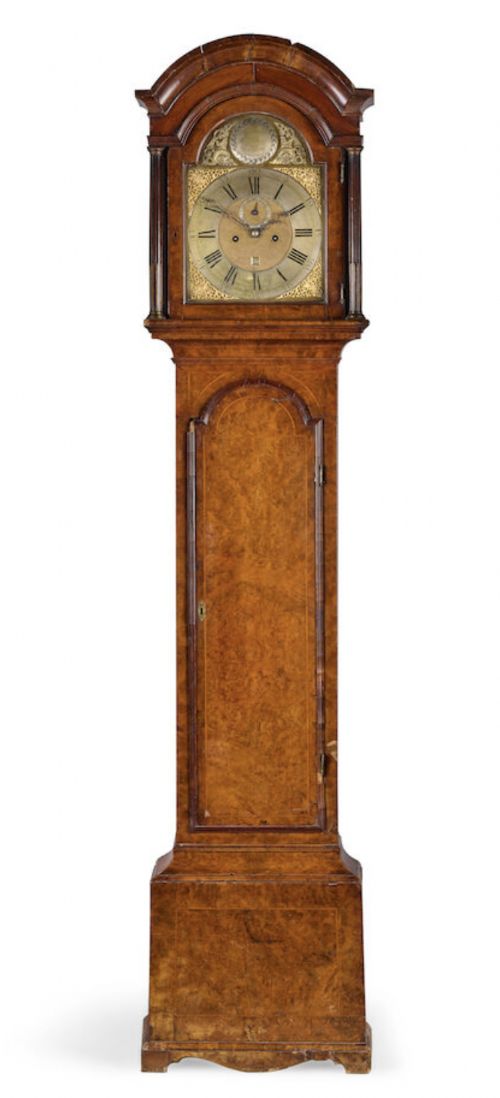
When you search for a walnut tall case clock, you encounter grand vertical timepieces designed to house precision movements while displaying rich timber grain. These tall case clocks stand as monumental furniture pieces, integrating cabinetry and horology into a single upright form.
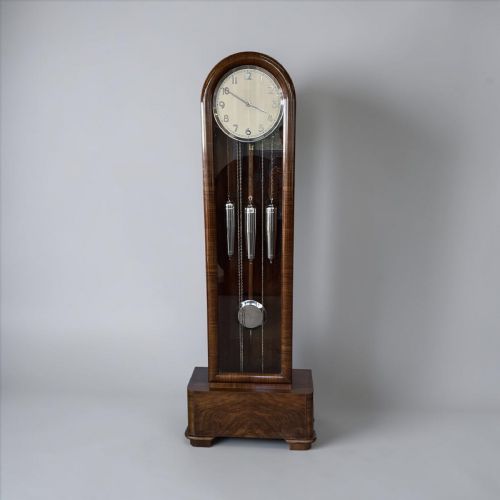
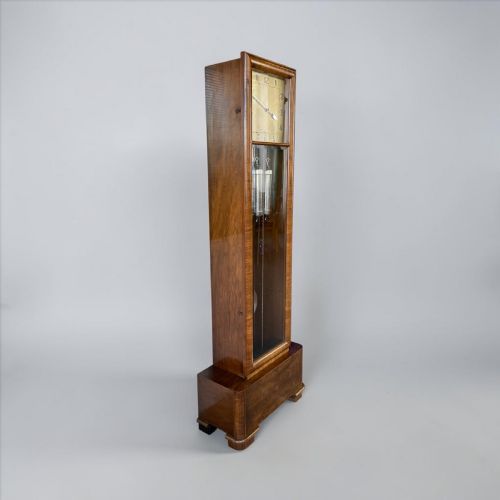
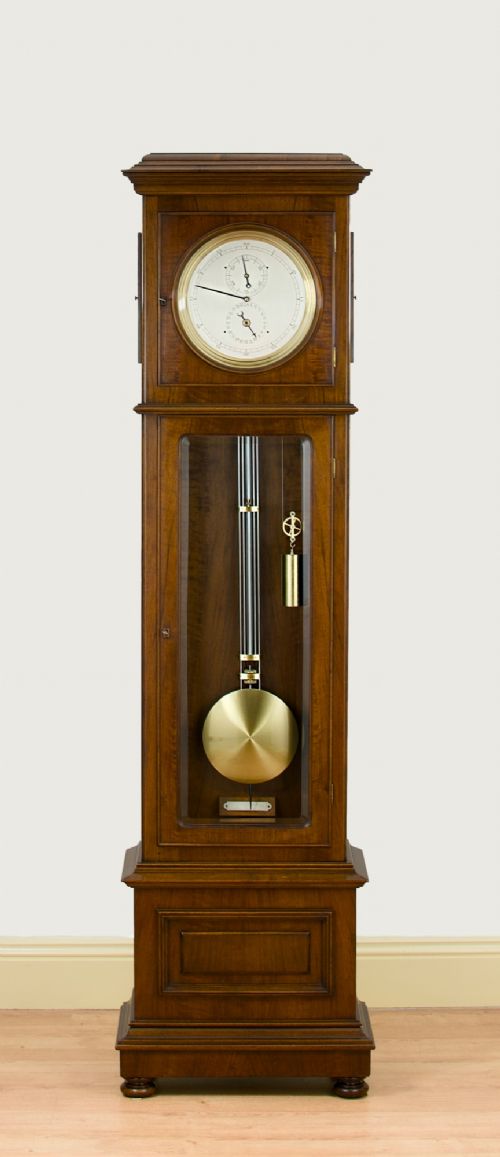
The versions most likely to meet you on this page date predominantly from the seventeenth and eighteenth centuries, spanning periods such as William and Mary, George I, and George II. Alongside these traditional examples, later interpretations from the early twentieth century appear.
Makers housed these movements in tall wooden trunks, often incorporating brass dials with moonphase mechanisms or calendar rings. The architectural proportions range from substantial London examples to modest provincial cottage clocks.

How they were made
Cabinetmakers constructed the primary carcases using oak or pine as a stable foundation, applying figured veneers of burr walnut or red walnut to the exterior surfaces. Marquetry inlay and crossbanding frequently embellished the primary panels.
Clockmakers fitted brass dials featuring engraved chapter rings, cast corner spandrels, and eight-day weight-driven movements. Glass panels were integrated into the hood doors to protect the dial while allowing visibility of the hands.
Walnut Tall Case Clock Retail Price Guide 2026
Typical asking prices for walnut tall case clock among the pieces listed under this phrase on Sellingantiques today, from the lower quarter to the upper quarter. They describe what is for sale here now, not the wider market.
Some provincial clockmakers signed their dials with such elaborate flourishes that the exact spelling of their home village became a lifelong puzzle.
What varies in quality
The quality of a walnut tall case clock rests on the selection and matching of the veneer, particularly where burr walnut creates intricate symmetrical patterns across the door and base. Finer examples display meticulous attention to timber grain continuity and cabinet proportions.
Movement execution dictates the upper tiers of the craft, involving signed brass dials by notable makers and sophisticated quarter-chiming or moonphase complications. The integration of the hood design with the trunk further separates standard workshop production from master output.
Richard Corless of Stockport·Windmills and Wightman·Thomas Vernon·Nathaniel Pyne·Edin Burgis·Edward East·Joseph Knibb·Samuel Young·Edward Stanton·Joseph Saer·Joseph Windmills·Jonathan Marsh·Peter Wise·Joseph Jackeman·Henry Massy·Joseph Oxley
The Walnut Tall Case Clock Glossary
- Longcase clock
- A freestanding, weight-driven timepiece with a pendulum enclosed in a tall wooden case. Often referred to colloquially as a grandfather clock.
- Burr walnut
- A decorative timber harvested from the wart-like growths on walnut trees, prized for its swirling, highly figured grain patterns. Cabinetmakers sliced this wood into thin veneers for furniture fronts.
- Moonphase
- A dial mechanism tracking the lunar cycle through a rotating disc showing the phases of the moon. This complication added both utility and visual interest to the clock face.
- Marquetry
- The art of applying pieces of veneer to a structure to form decorative patterns or pictorial designs. Makers utilised various woods to create contrasting floral or geometric motifs.
- Spandrel
- The ornamented corner pieces placed between the circular dial and the square frame of the clock face. These were typically cast in brass and chased by hand.
Walnut Tall Case Clock: Frequently Asked Questions
How do I wind an antique walnut tall case clock?
You wind the clock by inserting a key into the winding holes on the brass dial to draw the lead weights back up. Care must be taken not to overwind the movement.
Most eight-day movements require winding once a week, ideally on the same day to maintain consistent timekeeping habits.
Where should I place a tall case clock?
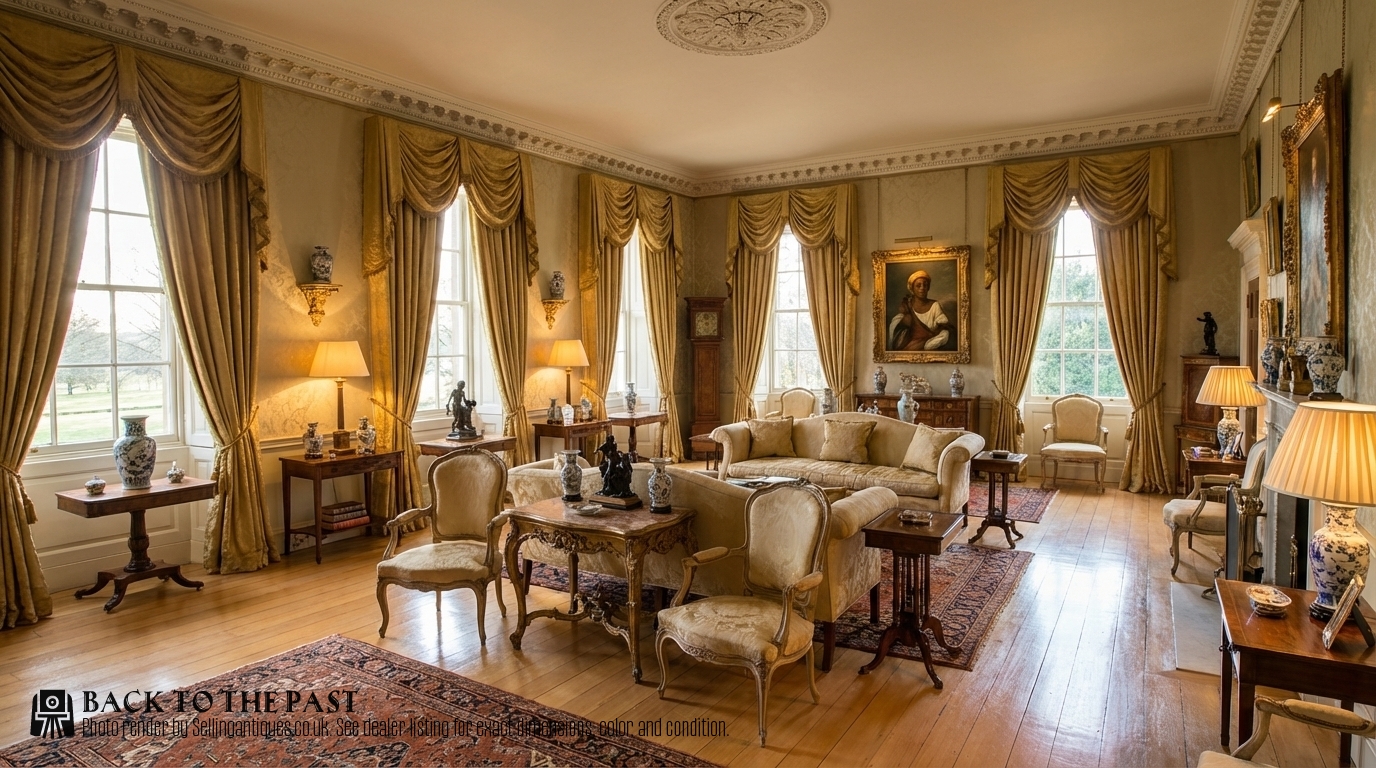
Position the clock against an interior structural wall away from direct sunlight, central heating vents, and dampness. Wood veneers react poorly to extreme fluctuations in humidity.
Ensure the floor is level so the pendulum swings freely without catching against the inside of the case.
How can I distinguish a seventeenth-century case from an eighteenth-century one?
Seventeenth-century walnut cases often feature richer marquetry panels and smaller, more restrained proportions with cushion-moulded hoods. The wood patination tends to be darker and deeper through age.
Eighteenth-century examples transition toward taller arched hoods, architectural pilasters, and dramatic burr walnut veneer panels framed by crossbanding.
What is the difference between a grandfather and a grandmother clock?
Grandfather clocks are standard full-sized longcase clocks standing over six feet tall, designed to house long pendulums and heavy weights. Grandmother clocks are significantly smaller scaled versions.
Grandmother clocks emerged later, particularly during the early twentieth century, offering the presence of a tall case clock in more compact rooms.