
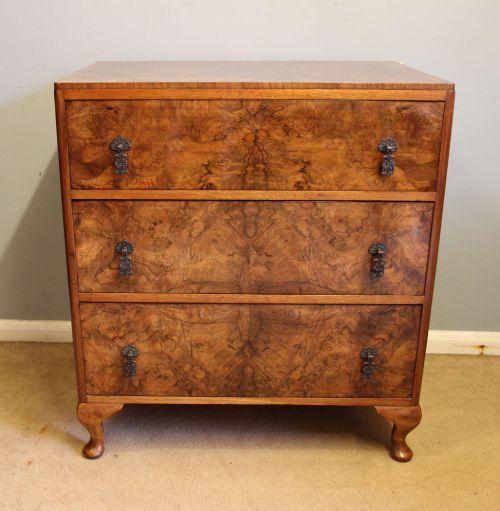
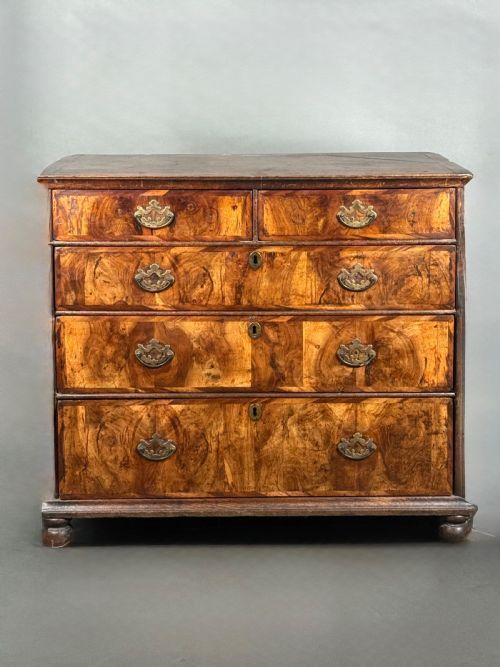
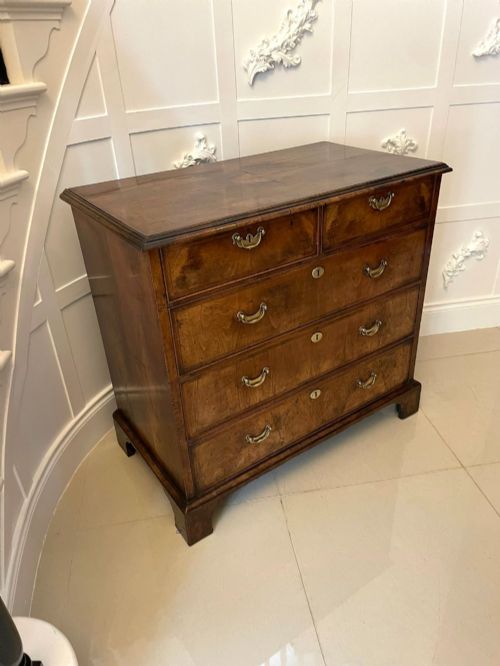
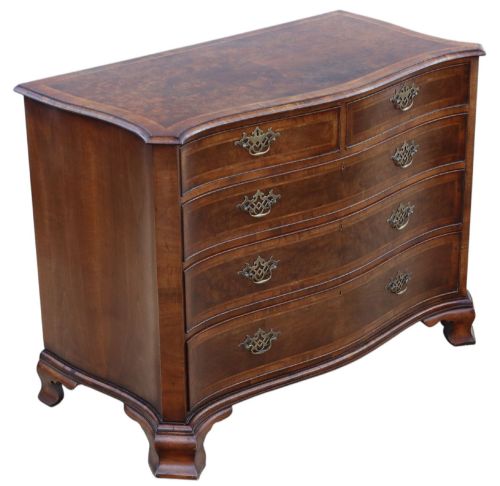


Walnut Storage Commode
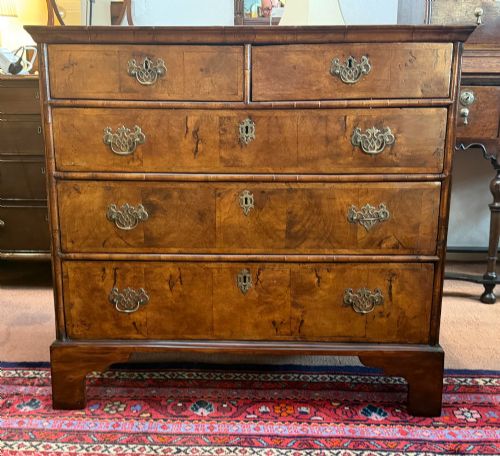
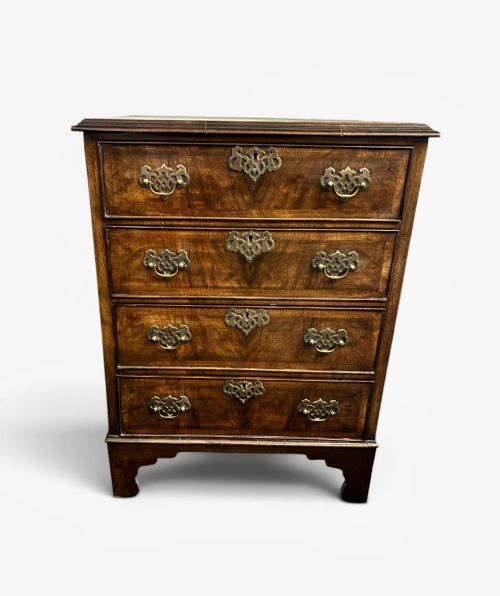
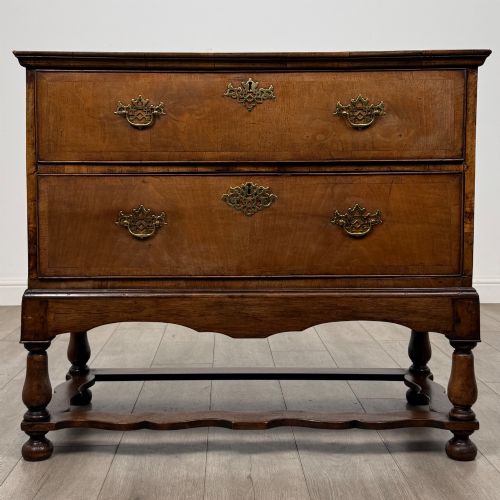
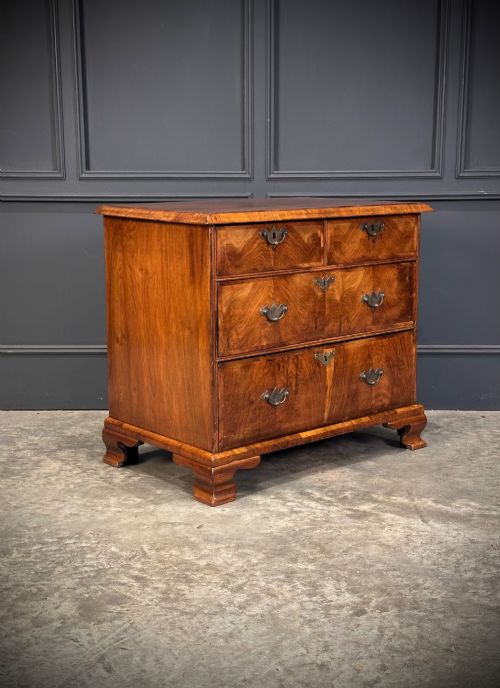
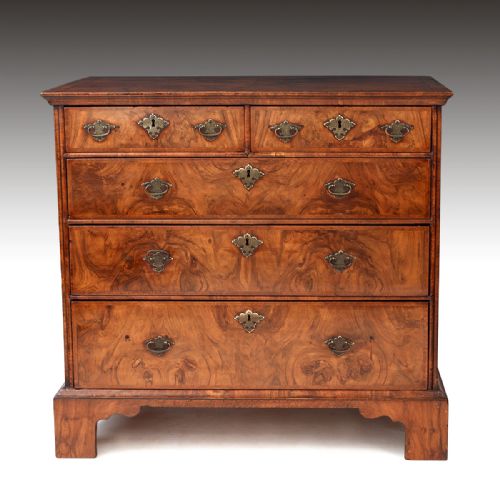
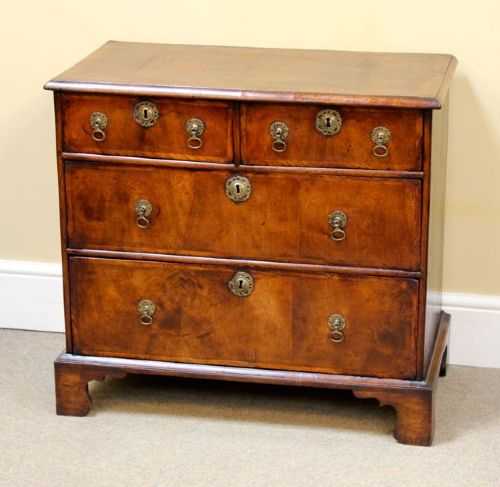
A walnut storage commode provides generous domestic capacity while bringing rich timber grain and period character directly into a room.

Walnut Storage Commode
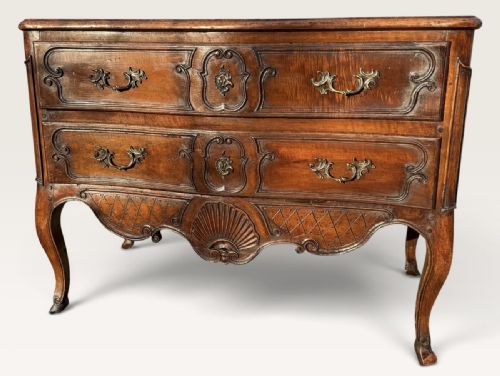
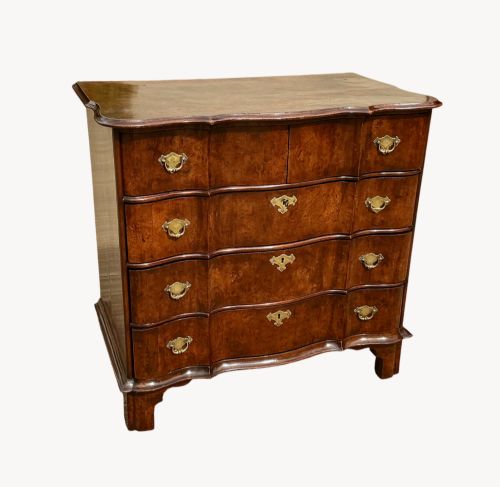
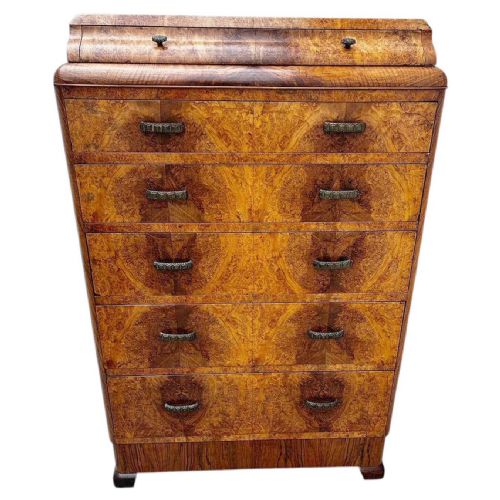
A walnut storage commode encompasses practical drawer chests and bedside cabinets designed for containment and display. The selection here spans early eighteenth century Georgian pieces to later revivals and twentieth century interpretations.
Buyers will encounter formal case furniture from the seventeenth and eighteenth centuries alongside French commodes topped with grey or rouge marble. These items serve primarily as bedroom or hallway storage solutions built with substantial internal depth.
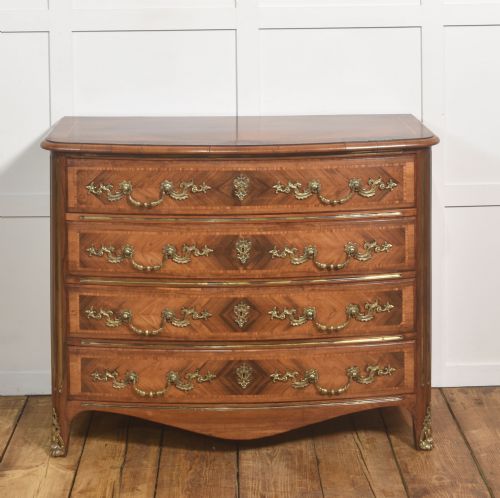
The form frequently adopts serpentine, bow front or straight profiles constructed in varied proportions. Pieces range from tall standing drawer sets down to compact bedside units.
How they were made
Cabinet makers utilised solid walnut, burr walnut and figured walnut veneers applied over secondary timbers such as oak. Crossbanding, herringbone banding and marquetry panels decorated drawer fronts and top surfaces.
Surface ornamentation often involved contrasting veneers arranged to highlight natural grain patterns, sometimes complemented by brass handles and escutcheons. French regional examples frequently incorporated heavy marble slabs fitted to the upper surface.
Early cabinet makers occasionally used oyster veneer, slicing small round branches like carrots to pave tabletops with woodland polka dots.
What varies in quality
The sophistication of the timber selection dictates much of the visual weight, with tightly swirled burr and figured walnut commanding greater presence than plain stock. Crisp execution of crossbanding and inlay work further separates standard production from finer cabinet work.
Proportion and structural harmony define the visual success of each piece, particularly where serpentine or bowed fronts demand precise joinery. The survival of original brass hardware and stable, unwarped drawer linings contributes to the integrity of older examples.
The Walnut Storage Commode Glossary
- Burr walnut
- Timber harvested from walnut tree growths that produces highly figured, swirling grain patterns. This material was prized for decorative drawer fronts on formal case furniture.
- Serpentine
- A front profile curving outward in the centre and inward at the sides. This shape requires skilled carpentry to execute across multiple opening drawers.
- Crossbanding
- A border technique where thin strips of veneer are laid perpendicular to the main grain. It frames panels and drawer fronts on eighteenth and twentieth century chests.
- Parquetry
- Geometric wood inlay patterns arranged to form decorative surfaces on commodes. It appears frequently on continental pieces from the eighteenth century onward.
- Ormolu
- Gilded bronze mounts applied as decorative feet, handles or corner details. These mounts characterise formal French commodes from various periods.
Walnut Storage Commode: Frequently Asked Questions
How do I clean a walnut commode?
Dust regularly with a soft, dry cloth to prevent particulate accumulation on the polished veneer surfaces. Avoid silicone sprays or harsh chemical cleaners that can degrade historic finishes over time.
Apply a traditional beeswax sparingly if the timber appears dry, buffing gently to maintain a natural lustre without building up excessive residue.
Can I use a commode in a hallway?
These chests function well in hallways and landings to provide surface space for lamps and concealed storage for everyday items. Their varied widths accommodate narrow passageways as well as grander entrance spaces.
Consider the projection of any curved or serpentine front when measuring available floor space to ensure smooth passage.
What is the difference between a chest and a commode?
English terminology typically favours chest of drawers for domestic case furniture, while commode often denotes continental European styles, particularly those featuring marble tops.
Both terms describe low storage cabinets designed with multiple horizontal drawers for holding clothing or household goods.
How do I date a walnut chest?
Examine the construction methods visible within the drawer sides and backboards, noting hand-cut dovetails or modern machine cuts. Secondary timbers like oak often indicate earlier British periods, while specific veneer cuts point toward revival eras.
Cross-reference the overall style, such as Queen Anne pad feet or George I herringbone banding, with known cabinet-making timelines.