
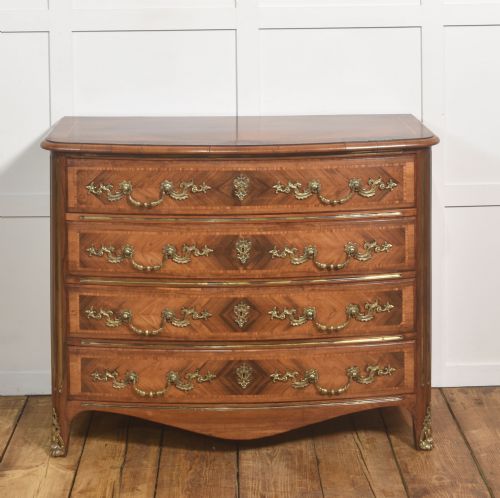
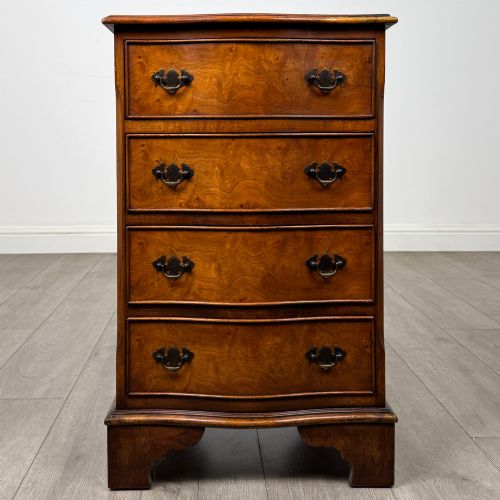
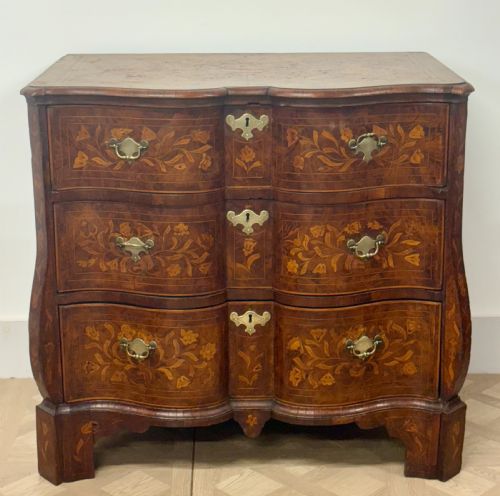
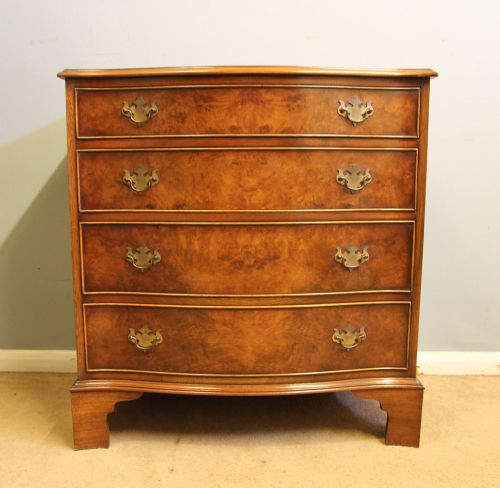
Walnut Serpentine Commode
A walnut serpentine commode brings sweeping continental curves and rich timber grain into a room, offering generous drawer storage with undeniable presence.
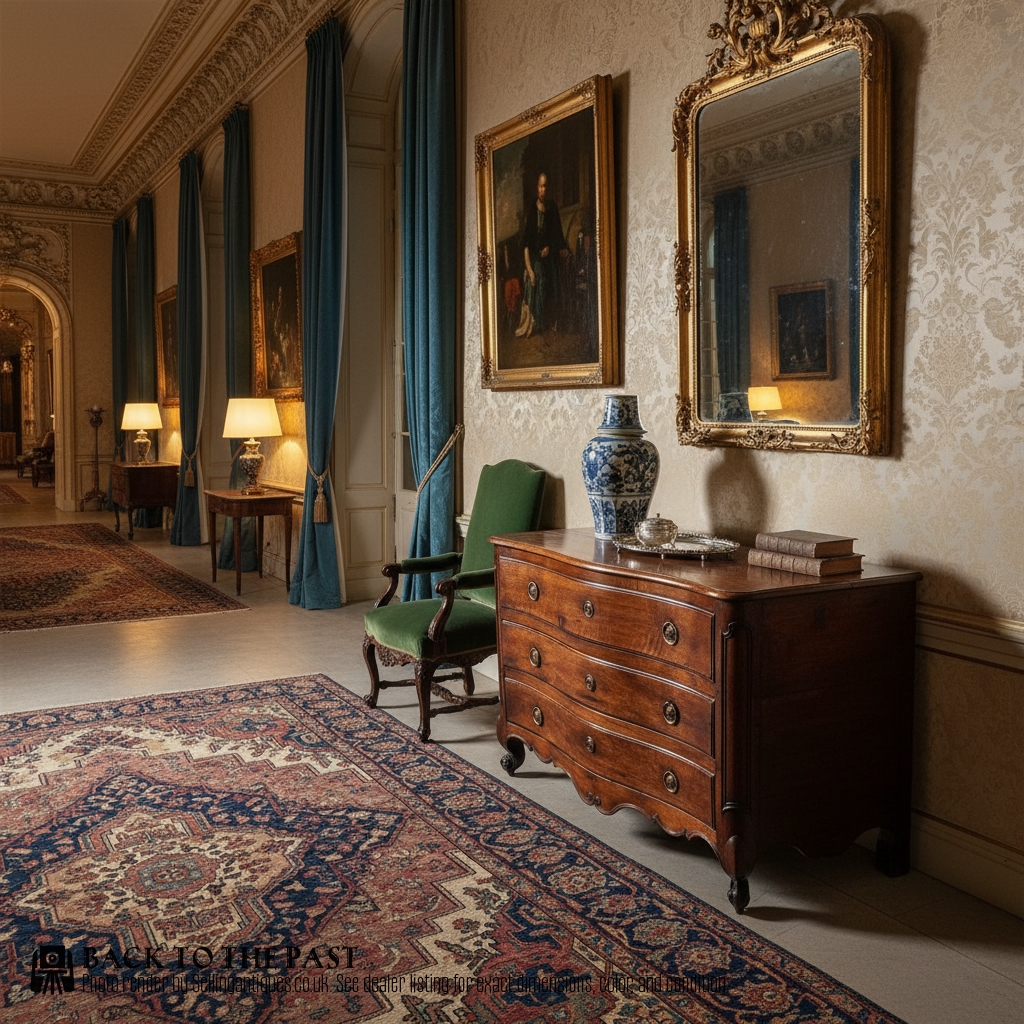
What these pieces are
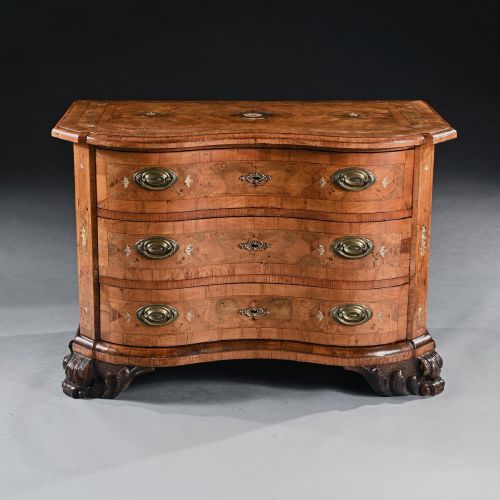
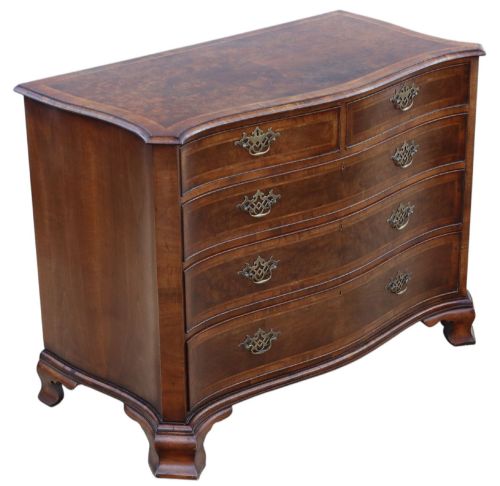
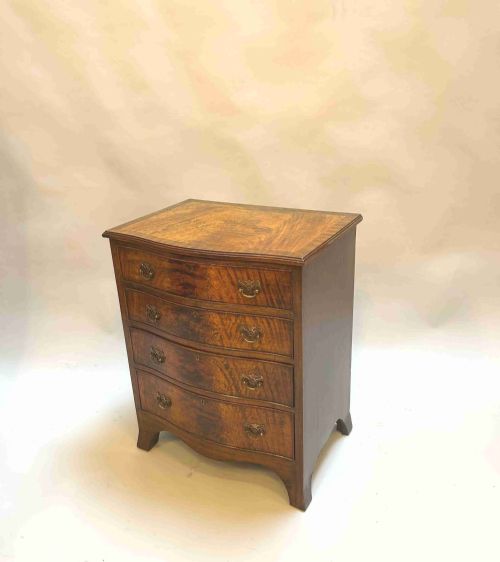
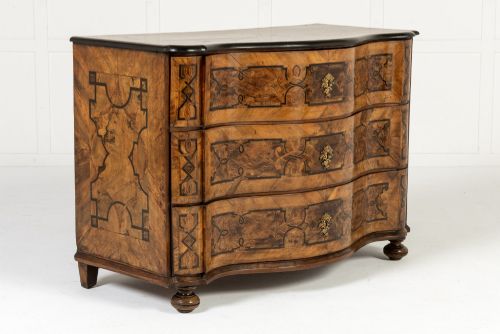
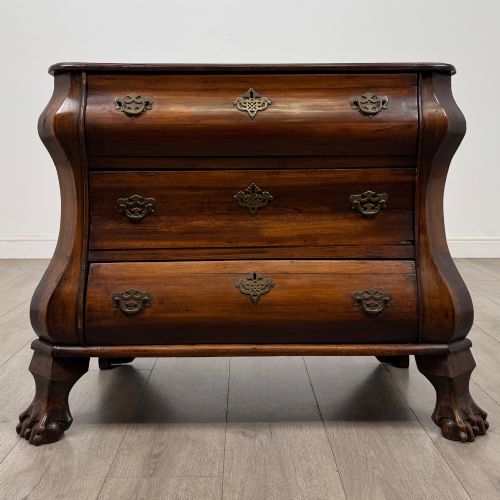
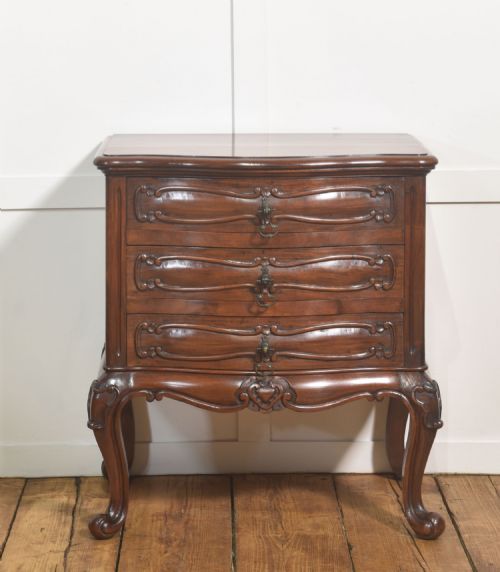
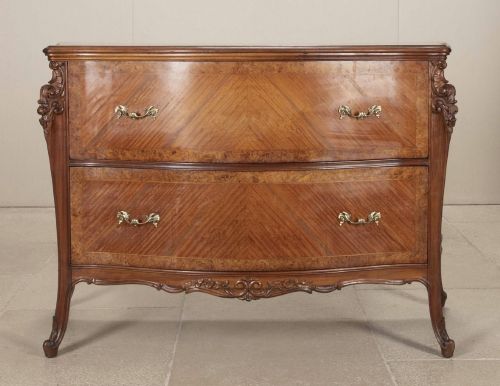
A walnut serpentine commode is a distinct form of chest of drawers defined by its undulating, curved front and the rich figuring of walnut timber. These pieces bridge the gap between robust storage and refined cabinet-making, originating from continental workshops and later periods of revival.
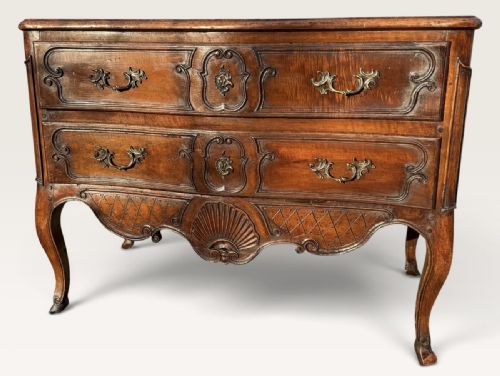
On this page, the pieces you encounter span from the 18th century through to the 20th century, drawing on French Louis styles, Dutch Baroque, and Italian craftsmanship. Forms range from standard chests of drawers to lift-top commodes and provincial interpretations.
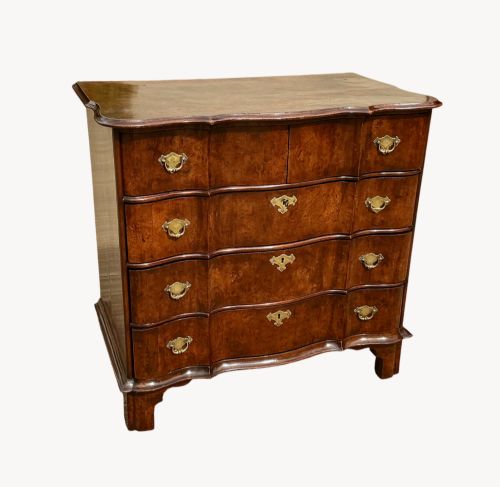
The aesthetic leans heavily on serpentine shaping, where the front curves inward and outward in a continuous line. This silhouette demands precise carpentry to ensure drawers operate smoothly within a non-linear frame.
How they were made
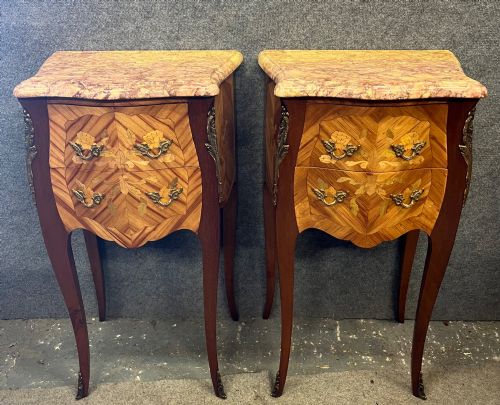
Cabinet-makers built these carcasses primarily using oak or fruitwood as a stable secondary timber, then applied veneers of walnut, burr walnut, and kingwood. Marquetry inlay appears on select examples, creating floral or geometric patterns across the curved drawer fronts and top surfaces.
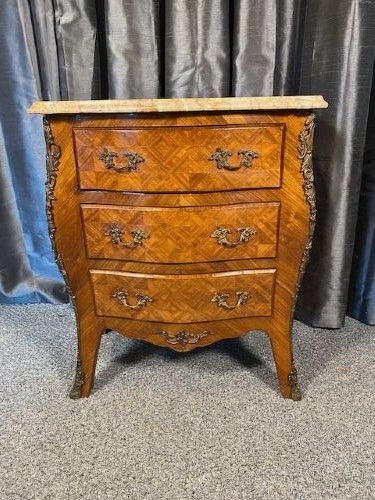
Surfaces were frequently embellished with cast brass or ormolu mounts, highlighting the corners, apron, and key escutcheons. The complex curved shape of a serpentine commode required seasoned timber cut and planed to follow the sweeping contours without warping.
Retail Price Guide 2026
Typical UK retail prices for walnut serpentine commode, calculated from the Sellingantiques database of over a million retail prices indexed since 2003. This retail price guide relies exclusively on Sellingantiques data; no external sources or auction records are used, so the figures do not describe the wider market.
Listings feature walnut, burr walnut, oak, kingwood, ormolu, and marquetry inlay across 18th-century, 19th-century, and 1920s periods.
What varies in quality
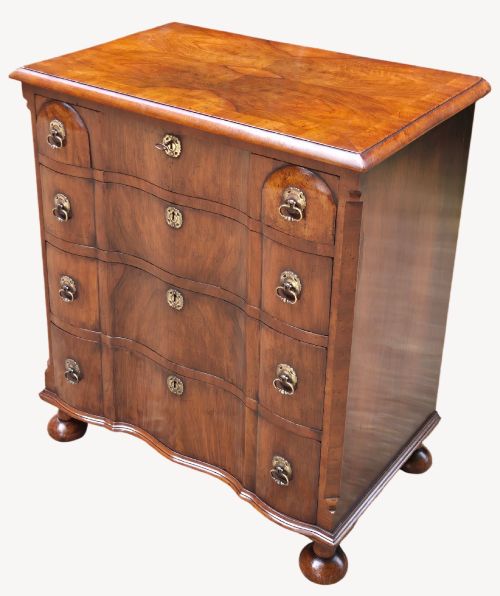
The distinction between tiers of quality rests heavily on the selection of the timber veneers and the fluency of the serpentine sweep. Finer examples display symmetrical burr walnut figuring that wraps continuously across the drawer fronts, matched with crisp, heavy brass or ormolu mounts.
Structural integrity also separates the output of master workshops from provincial production. Superior pieces maintain tight drawer tolerances and seamless joints despite the seasonal movement inherent in shaped walnut and oak carcasses.
The Walnut Serpentine Commode Glossary
- Serpentine
- A furniture front characterised by a double-curved line, curving outward in the centre and inward at the sides. This contour creates a fluid, organic appearance that requires advanced woodworking skill.
- Commode
- A low chest of drawers originating in France, used primarily in domestic bedchambers and reception rooms. The term distinguishes these decorative low storage pieces from taller upright chests.
- Burr Walnut
- Timber taken from a tree growth or burl, yielding swirling, knotty grain patterns prized for decorative veneer work. It brings intense visual texture to the flat and curved surfaces of a commode.
- Marquetry
- The art of applying pieces of veneer to a structure to form decorative designs and pictures. Artisans utilised contrasting woods like fruitwood and kingwood to achieve tonal depth.
- Ormolu
- Gilded bronze mounts and decorative hardware applied to cabinetry. These elements accentuate the structural lines and add metallic contrast to the dark walnut tones.
Frequently Asked Questions
How do I spot an 18th-century piece?
Examine the interior construction, secondary timbers like oak, and hand-cut dovetails on the drawer sides. Eighteenth-century examples show tool marks and timber shrinkage consistent with age.
Surface patination also offers clues, developing a soft, warm wax finish over generations of handling that modern reproductions struggle to replicate.
Where should I place a commode?
These pieces suit living rooms, hallways, or bedrooms where the curved silhouette can be appreciated from multiple angles. Their generous proportions provide substantial surface space for lamps or decorative objects.
Keep them away from direct heat sources and strong sunlight to protect the walnut veneers and prevent the timber from drying out.
What is the difference between French and Dutch styles?
French commodes often feature pronounced cabriole legs, delicate ormolu mounts, and elaborate marquetry floral inlays. They emphasise lightness and decorative flair.
Dutch interpretations tend to be bolder, utilising heavier burr walnut veneers, robust proportions, and architectural drawer arrangements rooted in Baroque traditions.
How do I care for walnut veneer?
Dust regularly with a soft, dry cloth and apply a quality beeswax periodically to nourish the wood. Avoid silicone-based polishes which can damage the historic finish.
Maintain a stable room humidity to prevent the underlying oak and walnut from expanding or contracting, which can cause the veneer to lift.