



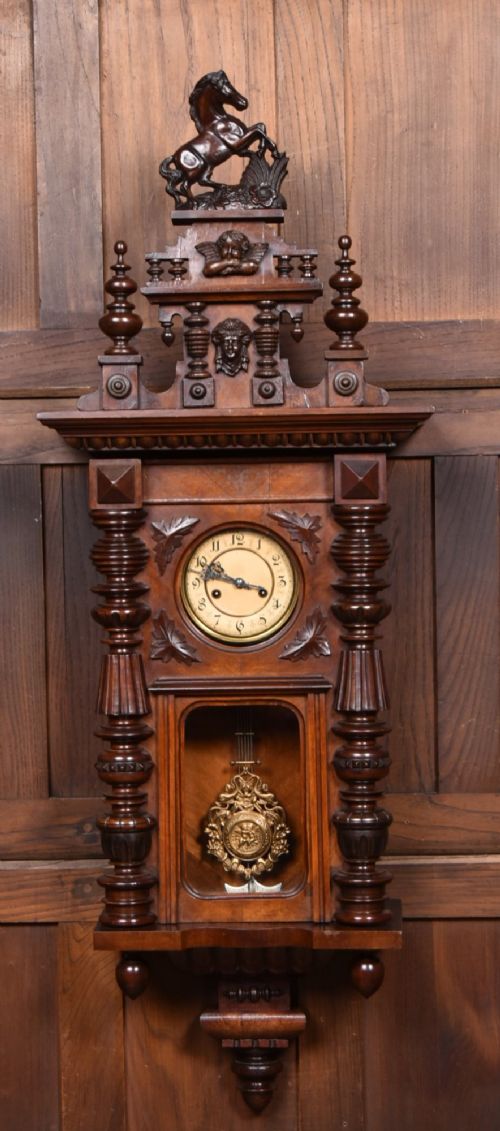


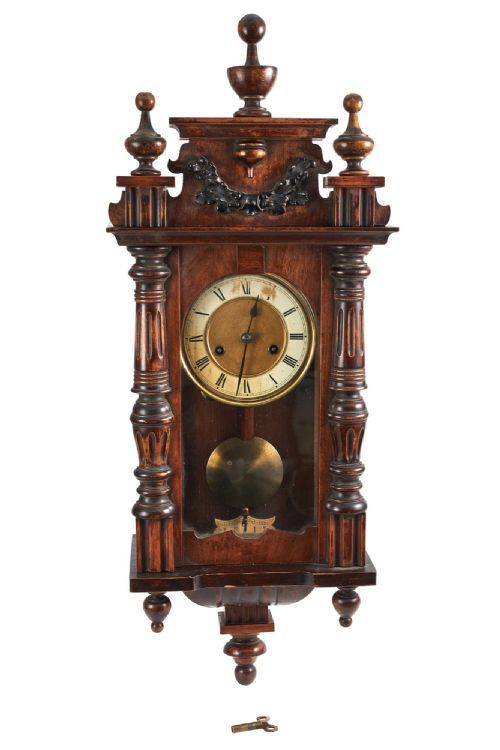


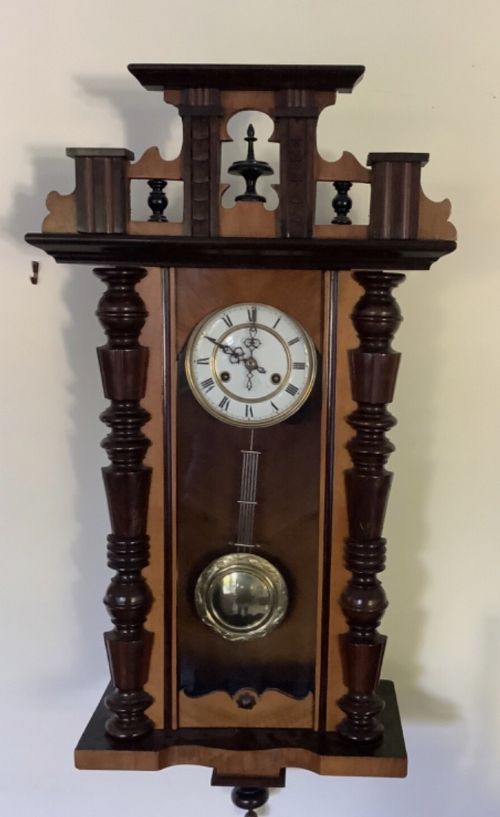

Walnut Pendulum Wall Clock
A walnut pendulum wall clock brings steady mechanical movement and rich timber tones into a room, spanning styles from Victorian Vienna regulators to Art Deco carillons.
Walnut Pendulum Wall Clock
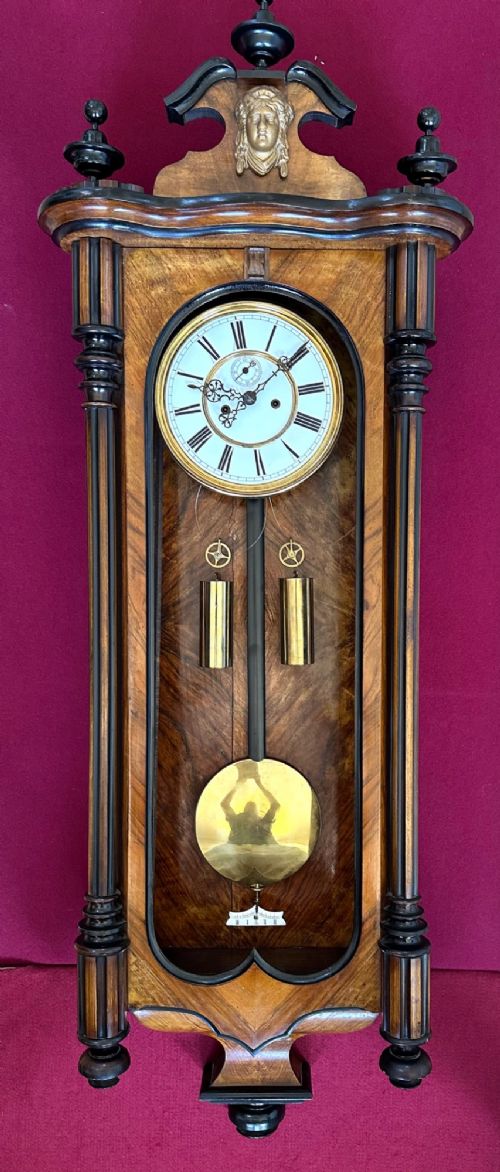
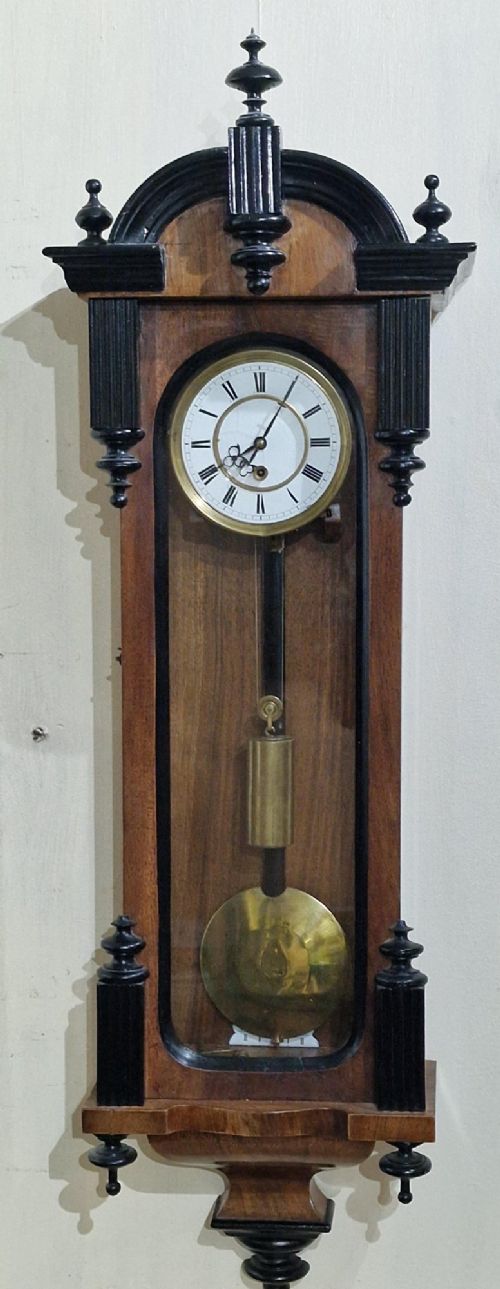
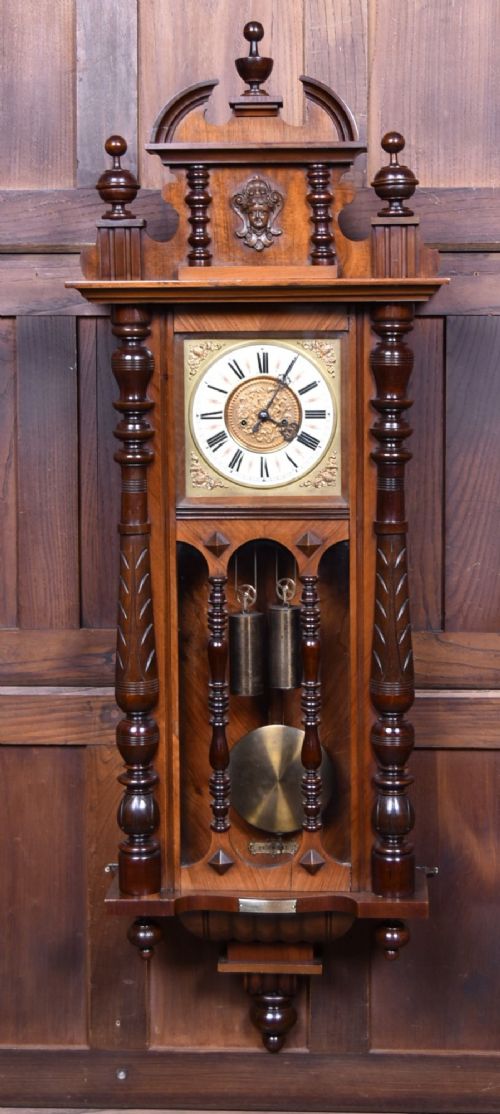
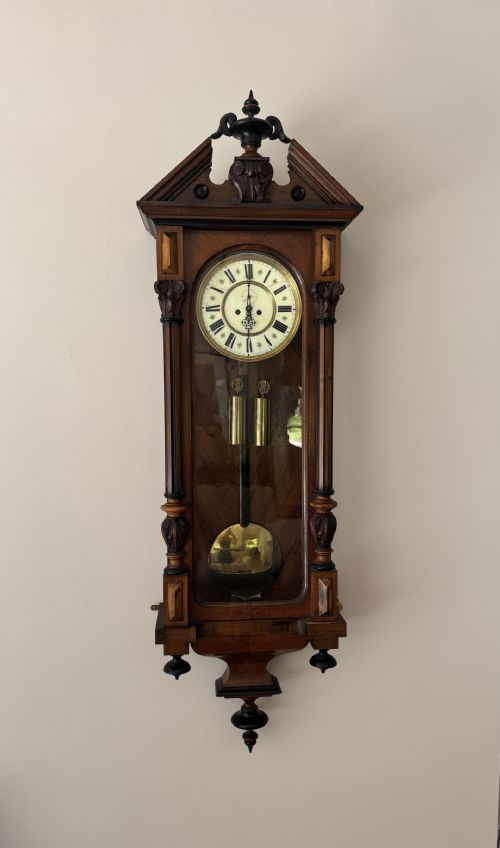
A walnut pendulum wall clock is a timekeeping instrument designed to hang on a partition, combining a wooden housing with a visible or enclosed swinging bob. These pieces appear primarily in Victorian and nineteenth-century formats, alongside mid-century French and German examples.
The most common variety encountered here is the Vienna regulator style, often driven by brass weights or spring movements. Other forms include Black Forest cuckoo clocks, drop dial dial clocks, and Art Deco carillon wall clocks.
Origins stretch across Austria, Germany, France, and England, reflecting different regional cabinetry and horological traditions. Buyers find everything from large double-weight regulators to compact miniature striking models.
How they were made
Cabinets utilise solid walnut, burr walnut, and ebonised wood, often shaped with carved details or clean geometric lines. Glass panels protect the dial and pendulum chamber, while brass components form the weights, bezels, and internal gear trains.
Movements incorporate cast iron and brass, paired with enamel or metal dials that display Roman or Arabic numerals. Carved walnut variants showcase manual woodworking, particularly in Black Forest and late Victorian iterations.
Some models feature automaton figures that animate while the clock strikes the hour.
What varies in quality
The sophistication of the movement dictates much of the standard, distinguishing a simple eight-day timepiece from complex double or triple-weight grande sonnerie striking systems. Maker attribution, such as signed Gustav Becker or Lenzkirch mechanisms, adds significant distinction.
Cabinet construction separates ordinary production from superior examples, seen in the selection of figured burr walnut veneers, crisp hand-carving, and well-balanced proportions. The integration of matching brass hardware and intact enamel dials completes the higher tier.
Gustav Becker·Lenzkirch·Johann Baptist Beha·Payne of Tunbridge Wells·Vedette·Girod·Henry Deykin
The Walnut Pendulum Wall Clock Glossary
- Vienna Regulator
- A precise weight-driven wall clock developed in Austria during the nineteenth century, known for long wooden cases and visible pendulums.
- Grande Sonnerie
- A striking mechanism that chimes the hours and quarters automatically on every quarter hour.
- Carillon
- A set of bells or gongs configured to play a musical chime sequence, frequently found in mid-century French models.
- Drop Dial
- A wall clock featuring a circular dial face above an extended wooden box that houses the pendulum.
- Ebonised Wood
- Timber treated to imitate ebony, providing a deep black finish that contrasts with lighter walnut grain.
Walnut Pendulum Wall Clock: Frequently Asked Questions
How do I wind a wall clock?
Winding involves using a matching key to turn the arbors on the dial face until resistance is felt. Care must be taken not to over-wind the spring or pull weights too quickly.
Most eight-day movements require weekly attention, while month duration models need less frequent winding to maintain their rhythm.
Where should I hang a pendulum clock?
Mounting requires a sturdy wall and a solid screw fixed directly into masonry or a wall stud. The clock must hang completely plumb so the pendulum swings evenly.
Listening to the beat helps determine correct alignment; an uneven tick indicates the case needs minor adjustment on the wall.
How do I identify a Vienna regulator?
Vienna regulators feature long glazed door cases designed to display the pendulum bob and hanging weights. The dials are typically porcelain or enamel with fine hands.
Many bear maker signatures on the movement backplate or dial face, pointing to nineteenth-century Austrian or German workshops.
What is the difference between a timekeeper and a striking clock?
A timekeeper focuses solely on recording hours and minutes without sounding any chimes. These pieces usually feature a single winding hole on the dial.
Striking clocks include additional gear trains and hammers to ring bells or gongs on the hour and sometimes the fractions.