


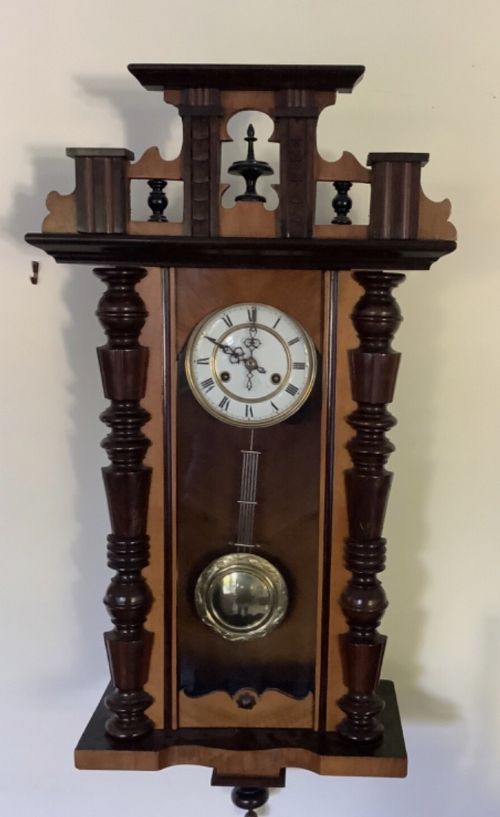


Carved Wooden Regulator Clock
A carved wooden regulator clock brings precise timekeeping and striking woodwork together on the wall, offering both mechanical interest and period presence.
Carved Wooden Regulator Clock
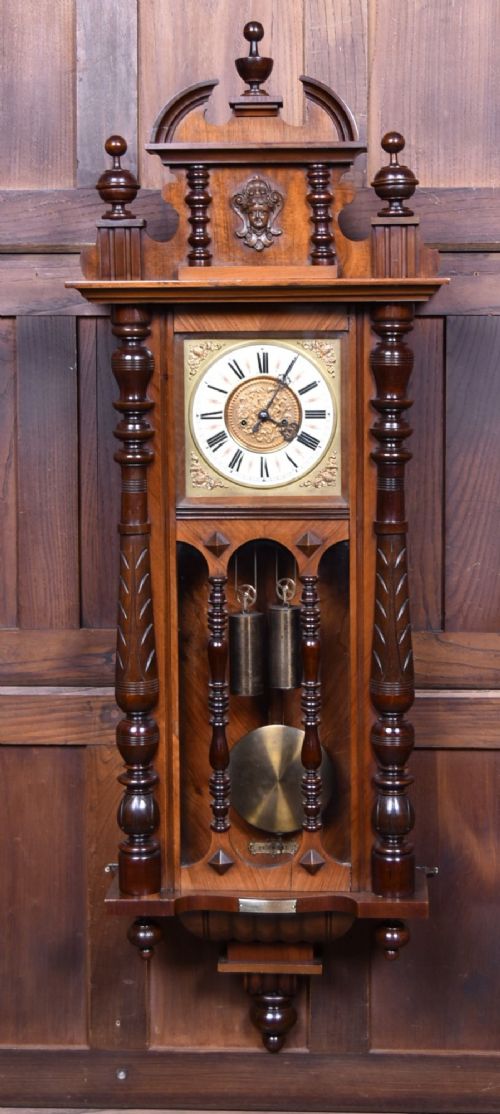
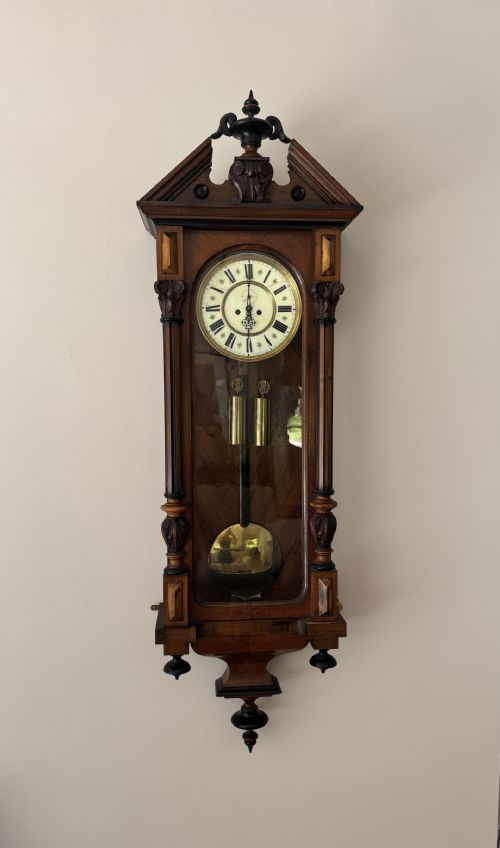
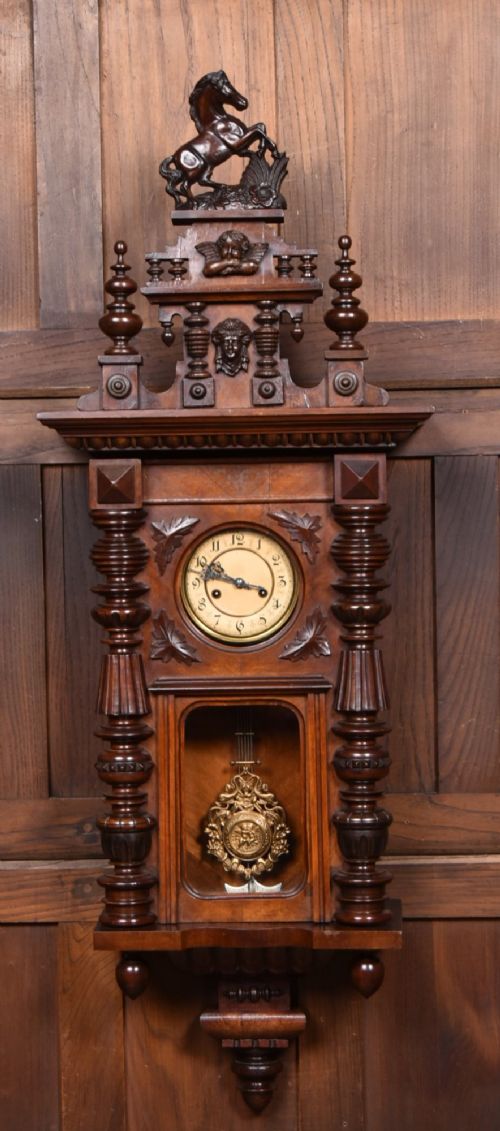
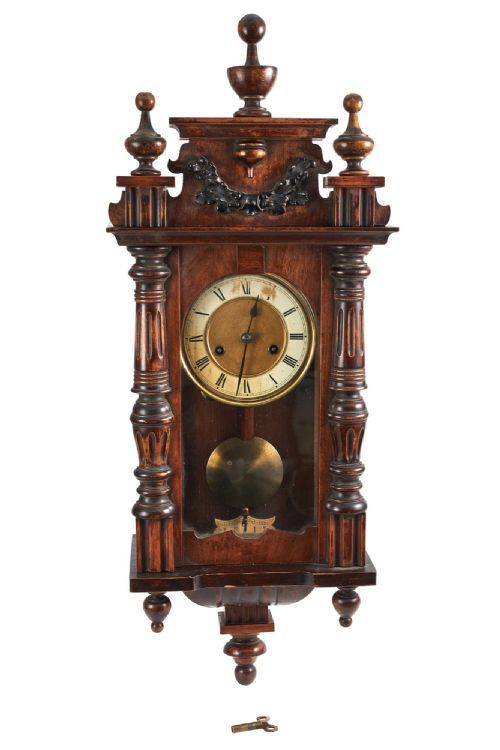
When you search for a carved wooden regulator clock, you find wall-hung timepieces originating mainly from the nineteenth century, including Victorian examples and Vienna-style designs. These pieces often take the form of Vienna wall clocks housed in polished timber cases with glass panels that display the swinging pendulum.
The selection ranges from mid-nineteenth-century walnut models to later twentieth-century interpretations in oak and mahogany, taking in styles such as Victorian and Art Deco. Many incorporate architectural carving and detailed cases designed to command attention in a hallway or principal room.
Most examples function as weight-driven or spring-driven wall clocks, frequently featuring striking trains or pendulum control. The cases combine practical glass and metal dial components with rich wooden housings.
How they were made
The cabinetmakers and clockmakers of the period relied primarily on walnut, oak, and mahogany for the cases, often adding ebonised wood details to create contrast. Timber was selected for stability and grain pattern, then shaped and carved by hand to form architectural pediments and decorative pillars.
Movements were constructed from brass and metal components, paired with enamel or metal dials to ensure clear readability. Glass doors and side panels were fitted into the wooden frames to protect the internal pendulum and weights while allowing a view of the mechanism in operation.
Periods represented span from the Regency era through Victorian times up to mid-century Art Deco pieces.
What varies in quality
The standard of a carved wooden regulator clock depends largely on the crispness of the timber carving and the architectural proportion of the case. Richly figured walnut and deeply articulated relief work indicate a higher grade of manufacture than plain, unadorned boxes.
Movement complexity also sets pieces apart, with multi-weight setups and specialised striking mechanisms reflecting finer workshop output. The integration of high-grade brass dials and clean enamel work further distinguishes the top tier of production.
Johann Baptist Beha·Gustav Becker
The Carved Wooden Regulator Clock Glossary
- Regulator
- A precision pendulum clock designed for high accuracy and typically mounted to a wall. These clocks served as time standards in households and businesses.
- Vienna regulator
- A high-grade wall clock style originating in Austria during the nineteenth century, known for long glass door panels and weight-driven movements.
- Double fusee
- A mechanical movement using fusee cones and chains or cords to maintain equal tension on the gear train as the mainspring unwinds.
- Drop dial
- A wall clock design featuring a circular dial mounted above a shorter or longer wooden case body, common in British timepieces.
Carved Wooden Regulator Clock: Frequently Asked Questions
How do I wind a wall clock?
Winding involves using a matching key to turn the arbors on the dial face until resistance is felt.
Care must be taken not to overwind the springs or weights to prevent damage to the internal gearing.
Where should I hang a regulator clock?
Choose a stable interior wall away from direct sunlight, drafts, and heavy vibrations.
Mounting the case securely to solid brick or studwork ensures the pendulum swings evenly.
How do I set the correct time?
Gently move the minute hand forward to the correct hour, allowing the strike train to finish its sequence at each interval.
Avoid turning the hands backward, particularly on models with striking or chiming mechanisms.
What wood types were used?
Walnut is the most frequent timber found in these Vienna-style wall clock cases, often exhibiting rich figuring.
Oak, mahogany, and ebonised wood also appear across different periods and regional workshops.