







Carved Walnut Pendulum Clock
A carved walnut pendulum clock brings mechanical precision and rich timber grain together, spanning eras from the seventeenth century through to the twentieth.
Carved Walnut Pendulum Clock
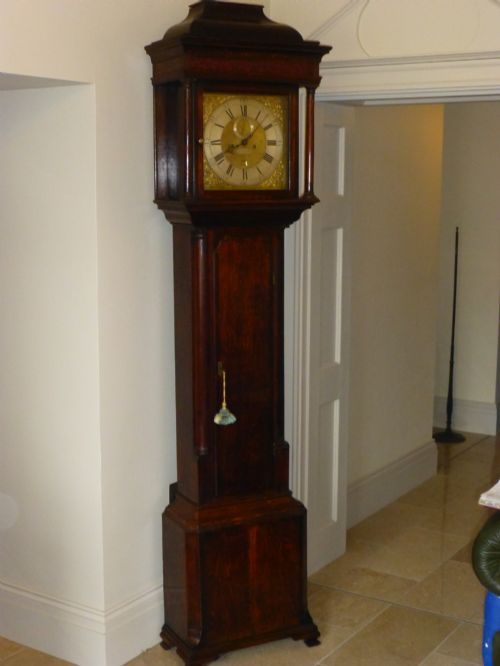
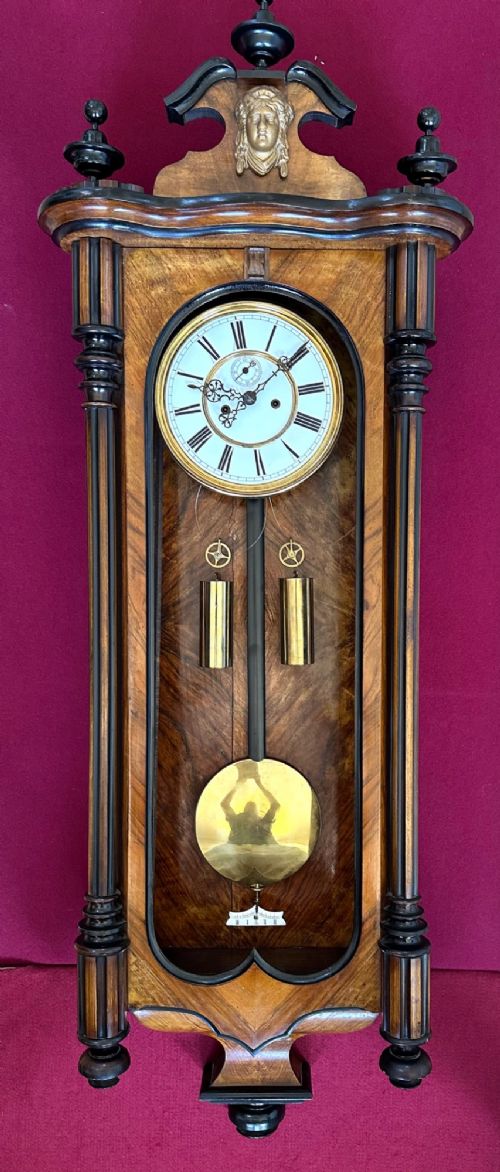
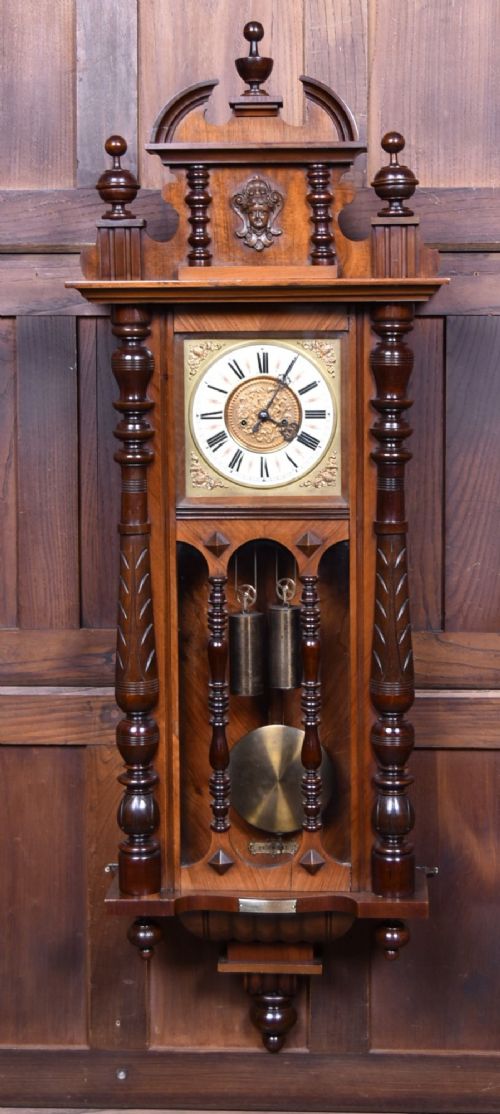
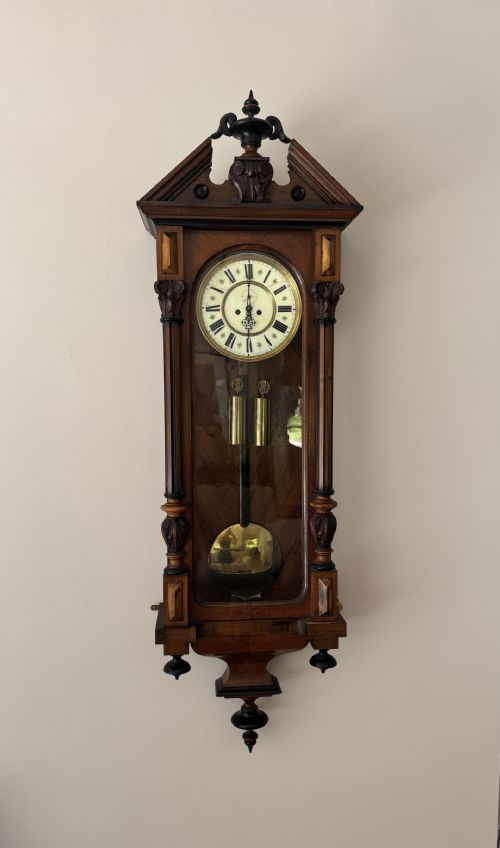
A carved walnut pendulum clock encompasses several distinct formats, predominantly wall-hung Vienna regulators, tall longcase floor pieces, and occasional mantel designs. These horological items trace their origins through the Victorian era, the nineteenth century generally, and earlier periods including the eighteenth and seventeenth centuries.
The most frequent encounter on this page is the nineteenth-century Vienna wall clock, often featuring double or triple weights and elaborate walnut cases. Alongside these wall regulators, buyers find substantial longcase grandfather clocks and compact mantel clocks finished in burr walnut or ebonised wood.
Materials and construction
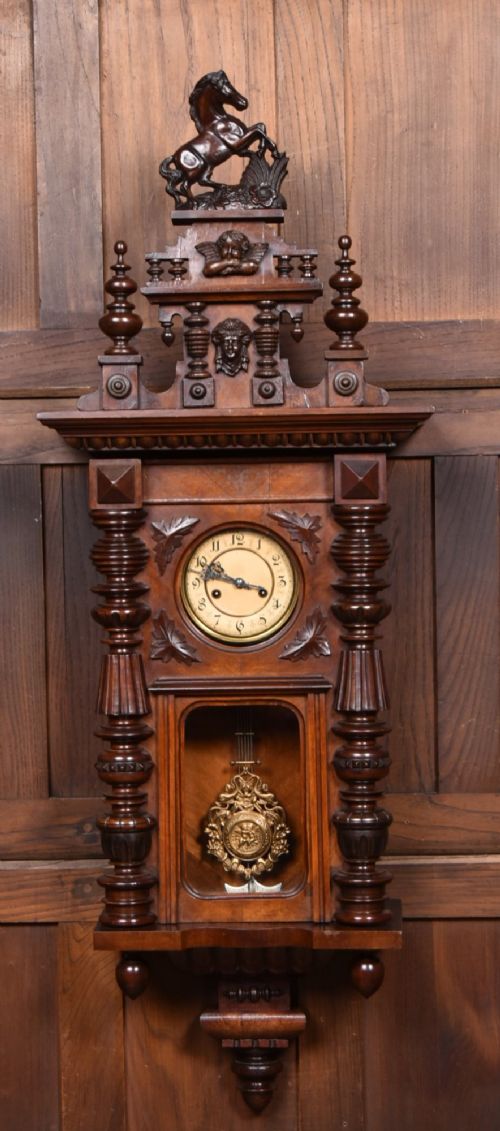
Makers utilised solid walnut and decorative burr walnut veneers applied over secondary timbers such as oak, sometimes incorporating ebonised wood details. Cases frequently display deep carving, particularly visible in Black Forest or Victorian styles.
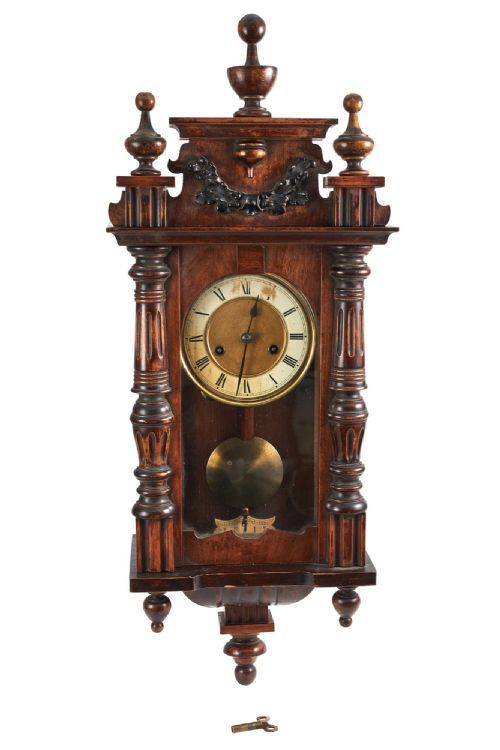
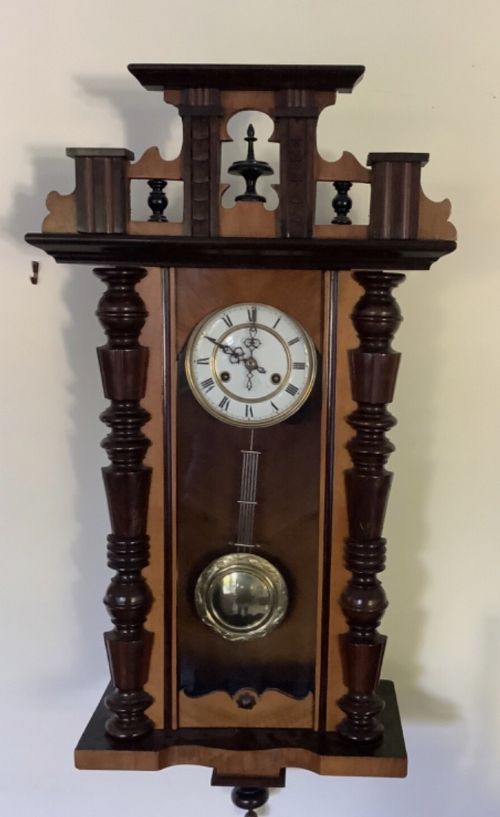
Movement assembly relied heavily on brass for gears, plates, and dials, paired with contrasting enamel chapters or brass chapters. Glass panels protected the swinging pendulum and dial face, allowing visibility of the mechanical action.
Listings span four centuries, featuring seventeenth-century longcases alongside Victorian wall regulators.
Distinctions in quality
The standard of carving and the selection of walnut timber dictate much of the initial visual appeal, distinguishing plain casework from richly figured burr walnut panels and detailed sculptural reliefs. Movement complexity also plays a role, separating standard striking mechanisms from intricate triple-weight grande sonnerie systems.
Execution of the dial work, whether brass, enamel, or a combination, reflects the workshop standard. The crispness of the movement engraving and the overall coherence of the case proportions complete the assessment of grade.
Richard Corless of Stockport·Edin Burgis of London·Edward East·Samuel Young·John Harrington·Joseph Windmills·Gustav Becker·Johann Baptist Beha
The Carved Walnut Pendulum Clock Glossary
- Vienna Regulator
- A high-precision wall clock developed in Austria during the nineteenth century, known for its refined movement and glass-fronted case.
- Longcase Clock
- A tall floor-standing timepiece housed in a wooden case, commonly referred to as a grandfather clock.
- Pendulum
- The suspended weight that swings to regulate the speed of the clock movement.
- Striking
- A mechanical function that chimes the hours or fractions thereof using a gong or bell.
- Fusee
- A conical pulley used in spring-driven clocks to maintain equal driving force as the mainspring unwinds.
Carved Walnut Pendulum Clock: Frequently Asked Questions
How do I wind a pendulum clock?
Winding requires using the appropriate key to raise the weights or tension the springs inside the case. Care must be taken not to overwind the mechanism.
Ensuring the pendulum remains undisturbed during the winding process helps maintain accurate timekeeping afterwards.
Where should I hang a wall clock?
Select an interior wall free from dampness and major temperature fluctuations that could affect the wood and metal components. A sturdy fixing into solid masonry or a secure stud is essential.
Levelling the case ensures the pendulum swings evenly and the escapement ticks with a regular rhythm.
How do I tell a Vienna regulator apart from other wall clocks?
Vienna regulators typically display a prominent glazed door through which the long pendulum and matching weights are clearly visible. Their movements are built for higher precision than standard wall models.
The cases often incorporate architectural pediments and finely turned wooden finials reflecting nineteenth-century design.
What maintenance does walnut woodwork need?
Walnut benefits from occasional light dusting with a soft, dry cloth to prevent the accumulation of grit in carved recesses. Avoiding direct sunlight preserves the rich tone of the timber.
Applying a traditional wax polish sparingly helps nourish the grain without building up heavy residues.