





Walnut Needlework Box
A walnut needlework box is a timber container designed for sewing implements and threads, prized for rich grain patterns.
Walnut Needlework Box
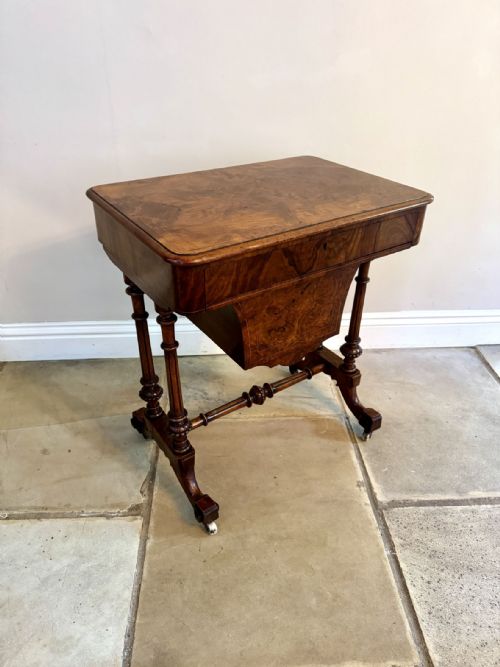
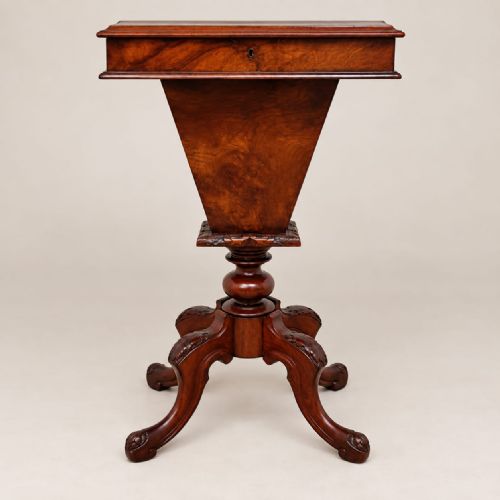
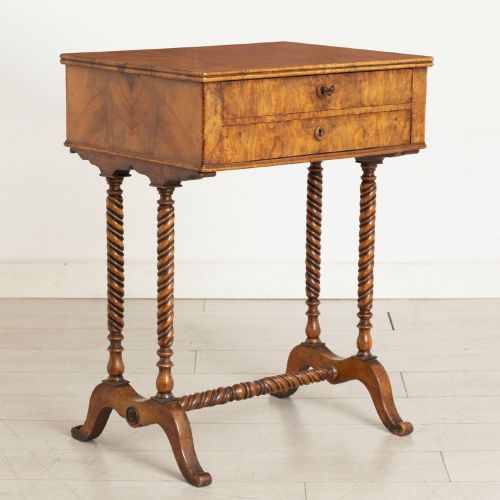
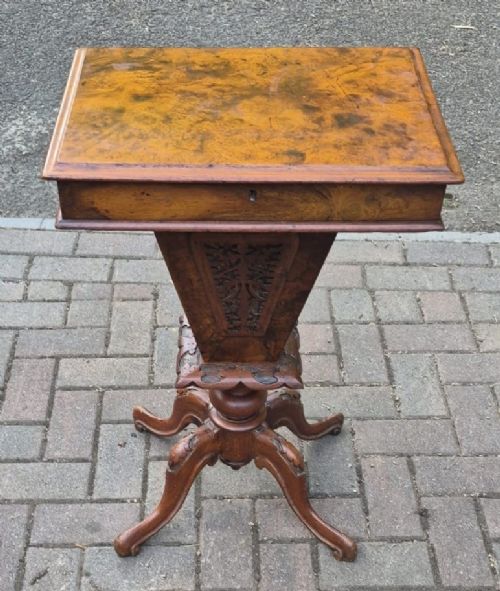
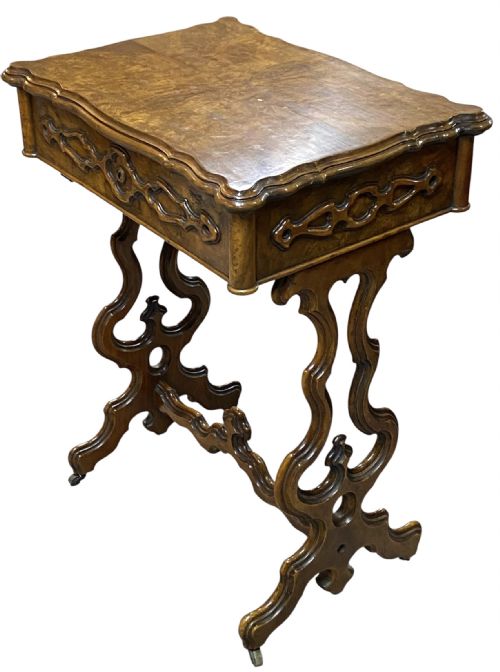
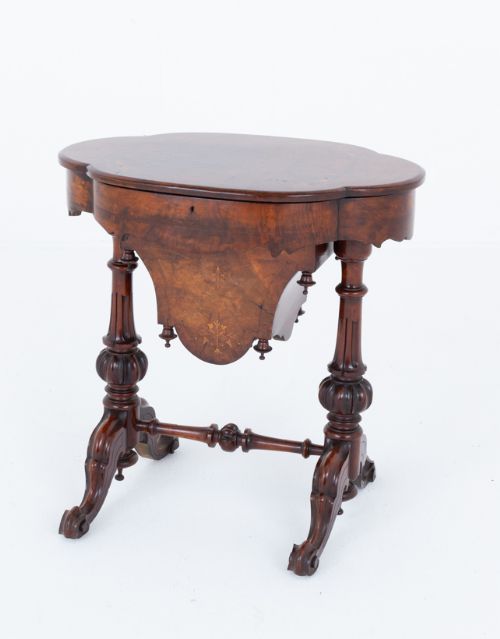
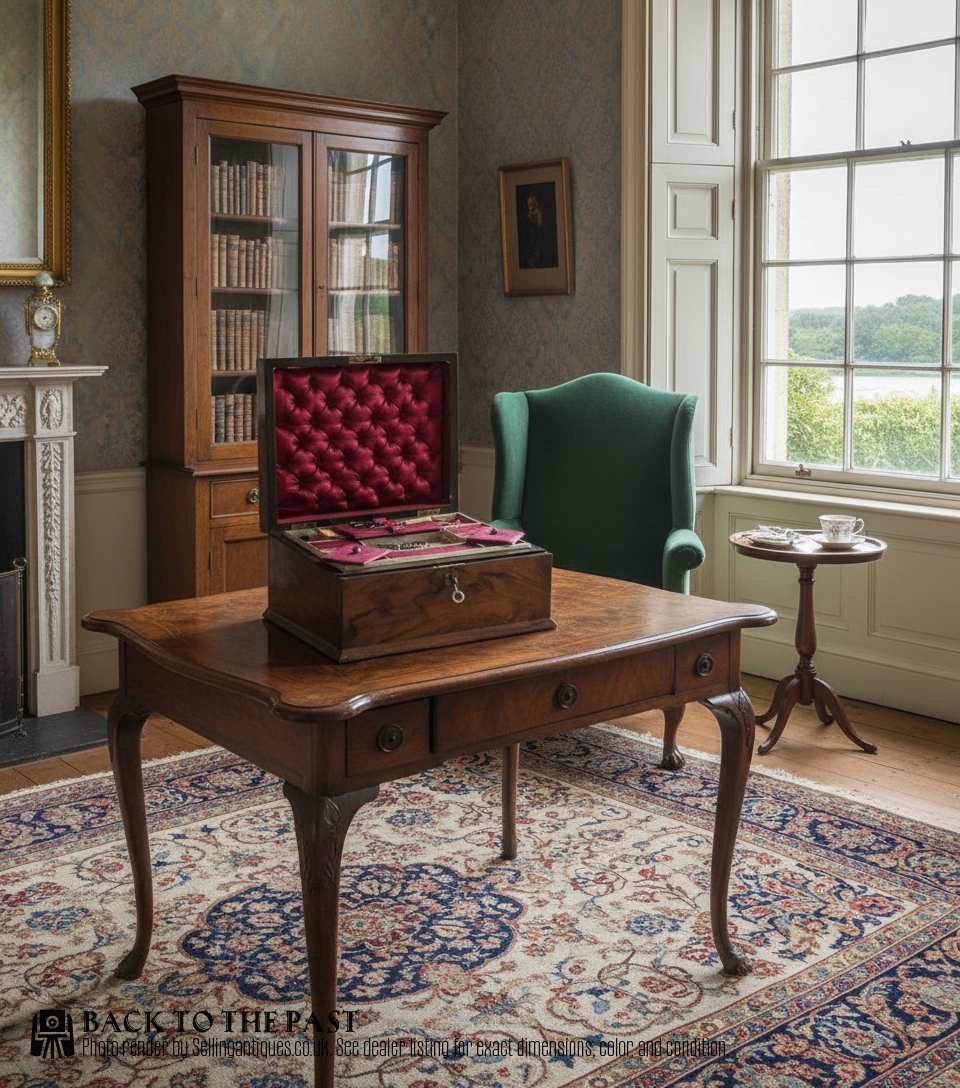
A walnut needlework box encompasses both tabletop containers and freestanding sewing tables designed to store threads, needles and domestic textile tools. These pieces appear frequently in Victorian and Edwardian periods, taking forms from small portable caskets to trumpet-shaped tables and pedestal sewing cabinets.
Buyers encountering this selection will predominantly find Victorian burr walnut examples alongside occasional Edwardian and mid-nineteenth-century pieces. The assortment ranges from simple lidded boxes to complex multi-tier tables equipped with fitted internal compartments and games boards.
Materials and Construction
Cabinetmakers utilised solid walnut and decorative burr or figured walnut veneers applied over secondary timbers to achieve rich, swirling surface patterns. Finer examples integrate contrasting boxwood and brass inlay, marquetry motifs, or mother-of-pearl and silver wire details.
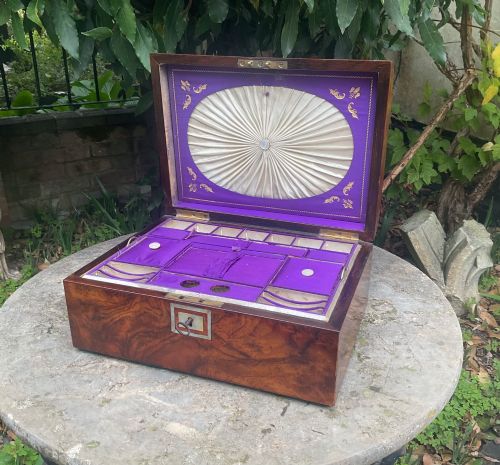
Structural elements rely on carved and turned supports, cradle bases, and pedestal columns, frequently housing fitted internal compartments lined with fabric for organised textile storage.
The listings span the Victorian, Edwardian, and Art Deco periods, utilising walnut, burr walnut, and satinwood.
Distinguishing Quality
The standard of a walnut needlework box depends on the selection and matching of the veneer grain, particularly where burr or figured walnut is applied to the lid and surfaces. Finer craftsmanship shows in crisp marquetry, precise boxwood inlay, and intact, well-fitted internal trays rather than plain or poorly matched timber.
Structural integrity also separates the upper tier from simpler pieces, evidenced by stable turned supports, original hardware, and functional locking mechanisms on the fitted interiors.
Waring & Gillow
The Walnut Needlework Box Glossary
- Burr Walnut
- Timber taken from a tree growth or burl, yielding dense, swirling grain patterns highly valued for decorative veneering on Victorian furniture.
- Marquetry
- The art of applying decorative pieces of veneer to a structure to form intricate patterns or pictures, commonly seen on nineteenth-century work table lids.
- Trumpet Work Table
- A freestanding sewing table featuring an octagonal or rounded body that flares outward toward the base, resembling the bell of a musical instrument.
- Fitted Interior
- An organised compartment tray beneath the lid, divided into small sections for storing spools, thimbles, and needles.
Walnut Needlework Box: Frequently Asked Questions
What is a walnut needlework box used for?
These boxes served to house sewing tools, threads, and unfinished needlework in an organised domestic container.
Many examples doubled as games tables or small writing desks, incorporating compartments for everyday parlour pastimes.
How do I date a walnut needlework box?
Dating relies on stylistic markers, such as the heavy carving and burr veneers typical of Victorian pieces versus the lighter satin walnut of the Edwardian era.
Construction methods and internal fabric linings also offer clues to the specific decade of manufacture.
Where should I place a sewing table?
Freestanding trumpet tables and work desks suit reception rooms or studies as lamp tables or decorative accent pieces.
Smaller lidded boxes sit well on sideboards, chests of drawers, or occasional tables.
What is burr walnut?
Burr walnut comes from a tree excrescence that produces highly figured, swirling grain patterns when sliced into veneer.
Cabinetmakers prized this material for creating decorative surfaces on high-end Victorian furniture.