
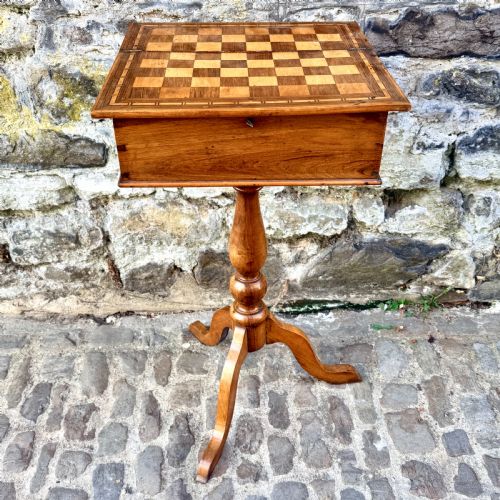
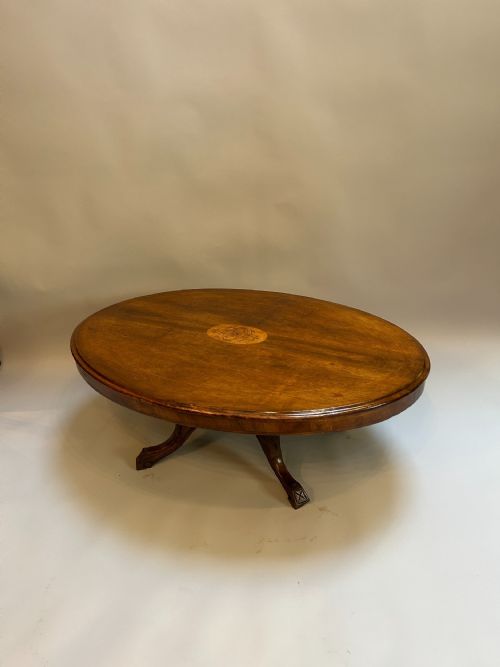


Walnut Marquetry Tripod Table
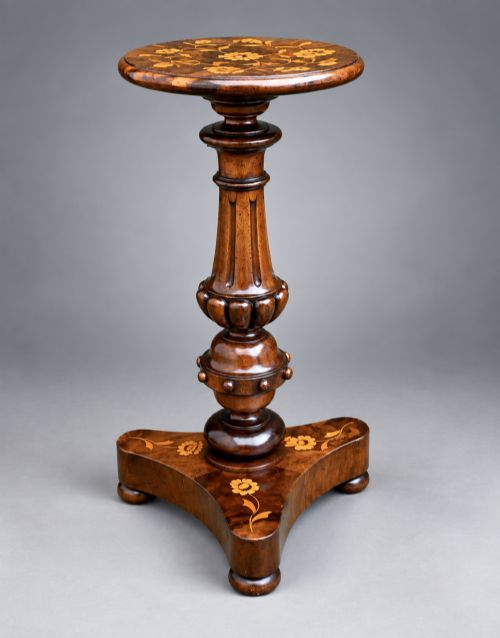
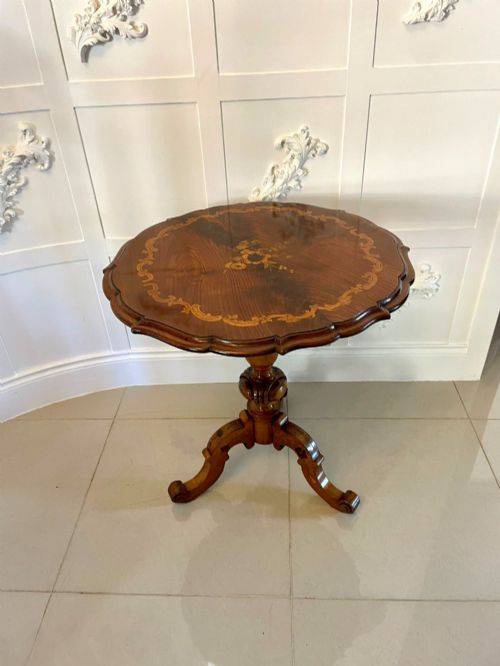
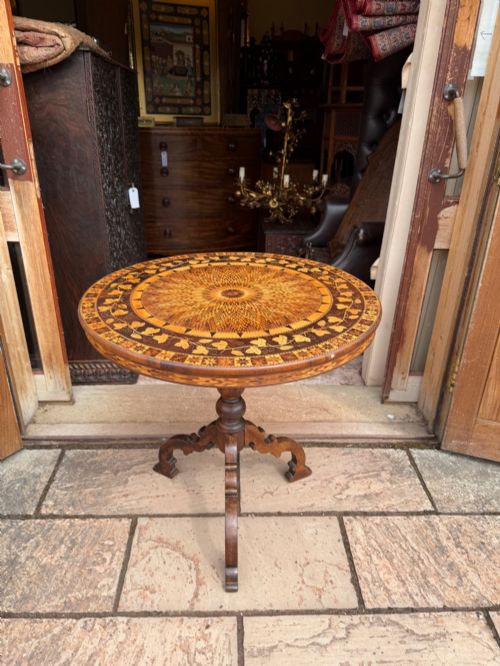
These walnut marquetry tripod tables combine rich figured timber with intricate decorative inlay, offering a compact surface suited to any room.
Walnut Marquetry Tripod Table
A walnut marquetry tripod table brings together a turned pedestal base supported by three legs and a circular or oval top decorated with patterned wood veneers. When you search for this phrase, you encounter examples predominantly from the Victorian era and the nineteenth century, alongside occasional Georgian pieces.
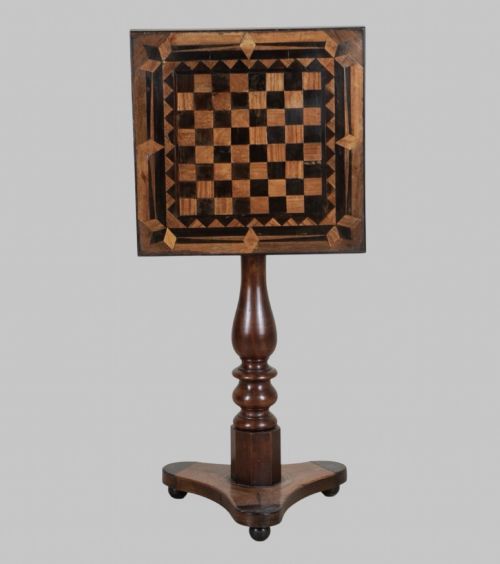
The forms vary widely across the selection, encompassing occasional tables, wine tables, games tables, and pedestal candle stands. Many pieces originate from continental workshops, particularly in Italy and the Sorrento region, while others reflect English and French provincial cabinet making.
The tops frequently display elaborate floral, geometric, or figural imagery created through contrasting timber veneers. Buyers select these tables to serve as focal points in reception rooms or as functional side surfaces next to seating.
Materials and construction
Cabinet makers built the primary carcass and pedestal from walnut, frequently employing burr walnut for the top to exploit its dense, swirling grain patterns. Secondary timbers such as fruitwood, mahogany, and various specimen woods provided the contrasting colours required for detailed inlay work.
The decorative surface relies on marquetry and parquetry techniques, where thin slices of dyed and natural woods are cut and fitted together into paper designs before being glued to the solid wood substrate. Turned columns and carved tripod legs complete the framework, often joined to the top with tilt mechanisms or fixed blocks.
Some nineteenth-century tables incorporated hidden musical boxes inside their pedestals, turning a quiet evening of card games into an unexpected concert.
Judging the standard of execution
The distinction between ordinary and superior pieces rests on the precision of the veneer work and the choice of timbers. Finer examples display meticulous control in the marquetry cutting, where individual pieces fit tightly without visible filler, creating crisp lines in complex floral or architectural motifs.
Timber selection similarly dictates the standing of a piece, with richly figured burr walnut and diverse contrasting specimen woods marking out the more ambitious workshops. The stability of the tripod base, the crispness of the turning on the central pedestal, and the integration of the top reveal the underlying competence of the maker.
Almerico Gargiulo
The Walnut Marquetry Tripod Table Glossary
- Marquetry
- A decorative technique applying pieces of veneer to a structure to form intricate pictures or patterns. It differs from parquetry through its pictorial rather than geometric focus.
- Burr walnut
- Timber taken from a growth or burl on a walnut tree, producing highly prized swirling grain patterns. Cabinet makers selected it for prominent surfaces like tabletop centres.
- Sorrento ware
- Woodwork decorated with micro-mosaic inlay originating from the Italian town of Sorrento during the nineteenth century. These items frequently depict local scenes, birds, or floral arrangements.
- Tripod base
- A supporting structure consisting of three legs radiating from a central vertical pillar. This design ensures stability on uneven floors.
- Tilt top
- A tabletop mounted on a catch mechanism that allows the surface to pivot to a vertical position when not in use. This arrangement saved space in period interiors.
Walnut Marquetry Tripod Table: Frequently Asked Questions
What is a tilt top table used for?
Makers designed tilt top tables so the surface could pivot vertically against the pedestal when not in use. This allowed the furniture to be pushed against a wall to save floor space in smaller rooms.
In modern homes, the feature remains practical for cleaning or repositioning the table, though many owners simply leave the surface fixed horizontally for daily display.
Where should I place a tripod table?
The compact footprint of a tripod table makes it well-suited as a bedside surface, a lamp stand, or an accent piece beside an armchair. The three-legged design allows it to fit into corners where four-legged furniture might struggle.
Positioning the table away from direct heat sources and strong sunlight protects the walnut veneer and polished finish over time.
How do I care for walnut veneer?
Walnut veneer requires simple dusting with a soft, dry cloth to maintain its finish. Avoid using silicone-based polishes or harsh chemical sprays, which can penetrate hairline cracks and degrade the old glues.
Applying a light coat of quality beeswax periodically helps nourish the timber and preserves the natural lustre of the grain.