





Parquetry Tilt Top Table
A parquetry tilt top table combines geometric timber work with a folding mechanism designed to save space when not in use.
Parquetry Tilt Top Table
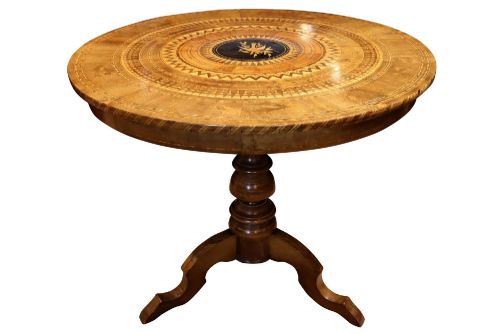
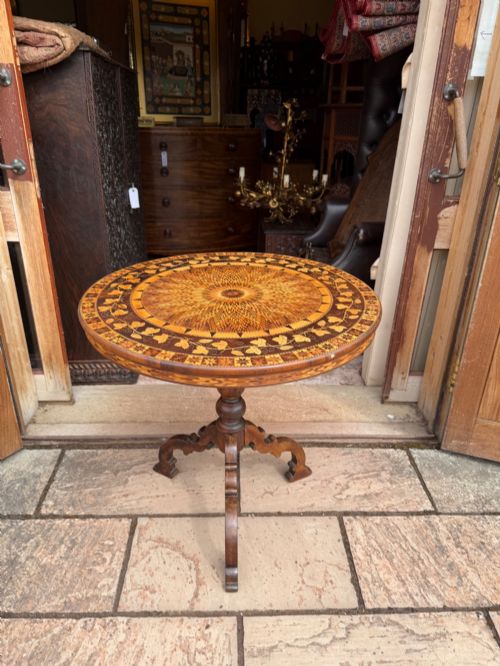
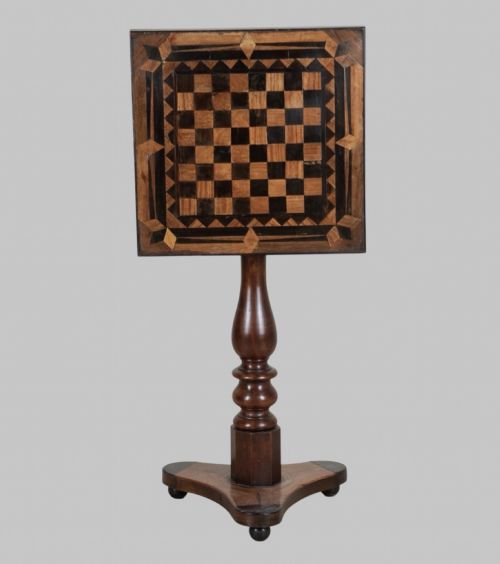
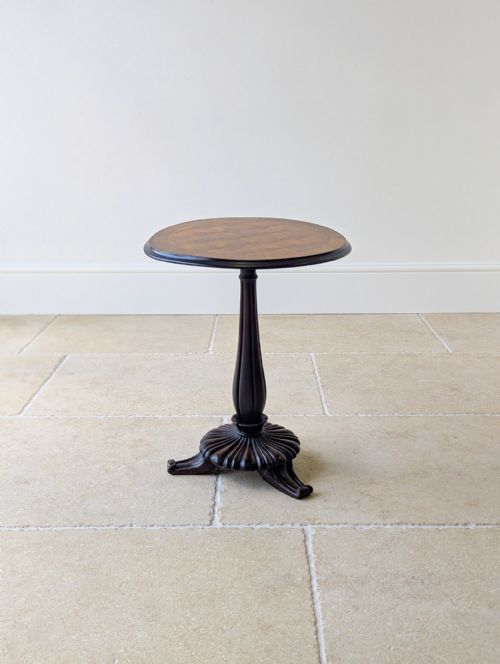
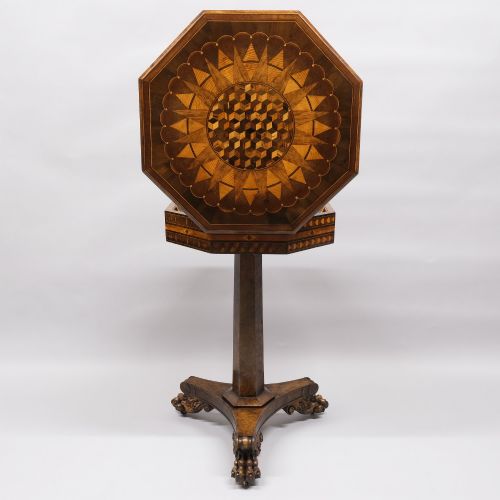
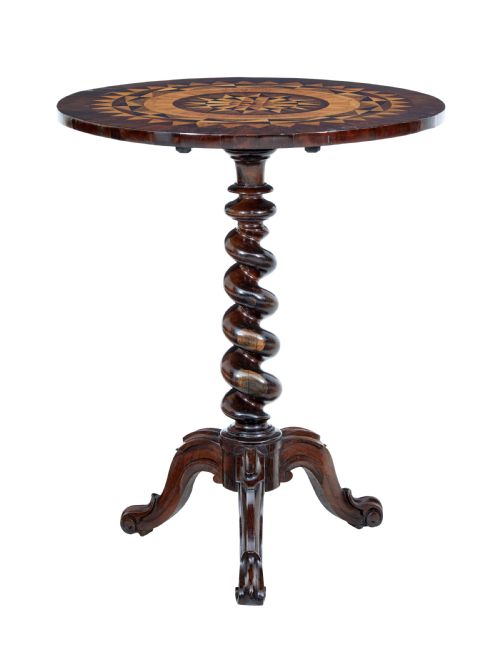
A parquetry tilt top table serves as a flexible surface across various rooms, functioning as an occasional, wine, or games table. These pieces emerge primarily from the nineteenth century, including Georgian, Victorian, William IV, and Regency periods, alongside regional workshops.
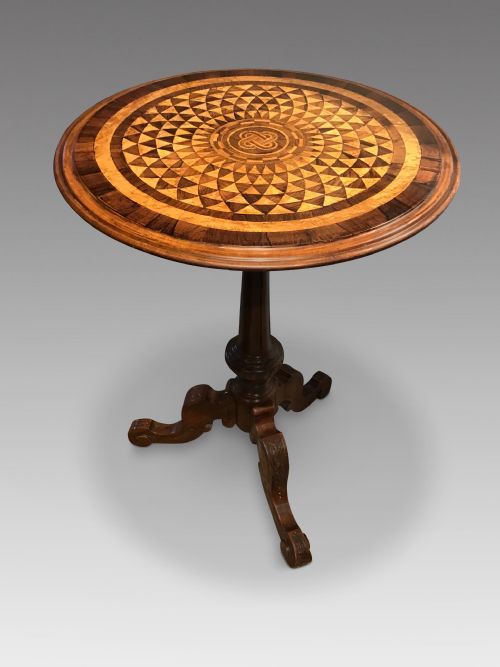
The format usually involves a circular or multi-sided top supported by a central pedestal and tripod base. Many feature a catch mechanism allowing the top to tilt vertically against the pedestal when stored.
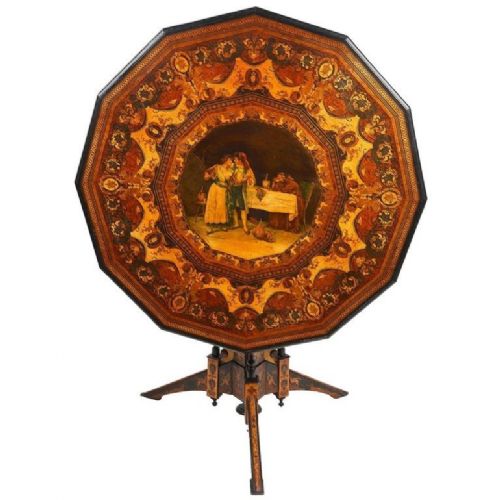
Examples on this page range from Italian Sorrento and French occasional tables to British walnut and mahogany designs. Regional variations include Jamaican work tables and Ceylonese ebony and specimen wood centre tables.
What Varies in Quality
The precision of the timber matching and the complexity of the geometric parquetry separate standard examples from exceptional ones. Finer pieces incorporate diverse specimen woods, intricate sunburst motifs, or pictorial Sorrento inlay executed by known workshops.
Construction integrity in the pedestal and the tilt mechanism dictates daily utility. Superior examples maintain a rigid, level surface when locked horizontal and a smooth, secure action when pivoted vertical.
Parquetry Tilt Top Table Retail Price Guide 2026
Typical asking prices for parquetry tilt top table among the pieces listed under this phrase on Sellingantiques today, from the lower quarter to the upper quarter. They describe what is for sale here now, not the wider market.
Some nineteenth-century makers concealed secret compartments within the pedestals of work tables to hold sewing threads.
Ralph Turnbull·Almerico Gargiulo
The Parquetry Tilt Top Table Glossary
- Parquetry
- A geometric mosaic of wood pieces used for decorative surfaces. It creates patterned tops using contrasting timbers.
- Tilt top
- A table top hinged to the pedestal so it can pivot vertically. This allows the piece to stand flat against a wall when not in use.
- Specimen wood
- Furniture constructed from or inlaid with a variety of different ornamental timbers. Makers often showcased exotic or native woods in a single surface.
- Pedestal table
- A table supported by a single central column rather than four corner legs. This column typically rests on a tripod base.
- Inlay
- Contrasting material fitted into depressions carved in the wood surface to form a design. It distinguishes decorative tables from plain ones.
Parquetry Tilt Top Table: Frequently Asked Questions
How do I operate the tilt mechanism?
Most tables use a brass catch or wooden wedge beneath the top to lock it in the horizontal position. Release this catch carefully while supporting the top to pivot it downward.
Ensure the mechanism engages fully when returning the table to horizontal to prevent movement during use.
Where were these tables placed originally?
These pieces sat in parlours, drawing rooms, and libraries as versatile surfaces for tea, reading, or games. Because the top tilted upright, servants could move them out of the way to clear floor space.
Today they function effectively as lamp tables or display surfaces in smaller reception rooms.
How do I identify a Sorrento table?
Sorrento tables originate from Italy and feature distinctive pictorial or geometric micro-mosaic inlay. They often incorporate local olive and lemon woods depicting architectural views or floral motifs.
Signatures or stamps from makers like Almerico Gargiulo occasionally appear on the underside or within the marquetry.
What is the difference between parquetry and marquetry?
Parquetry uses geometric polygons like squares, triangles, and diamonds to form repeating patterns. It relies on the grain and natural colour of the timber.
Marquetry creates pictorial or curvilinear designs, such as flowers or scrolls, using varied veneers to form an illustration.