

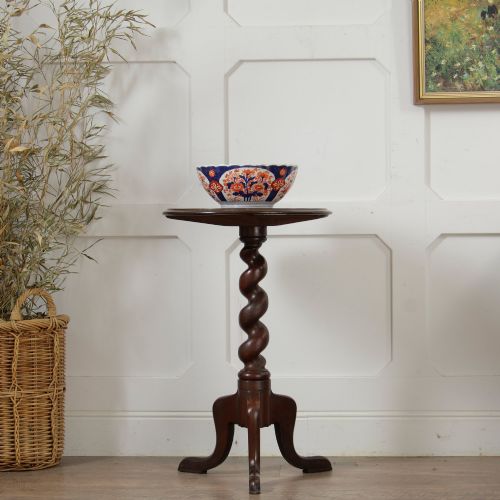
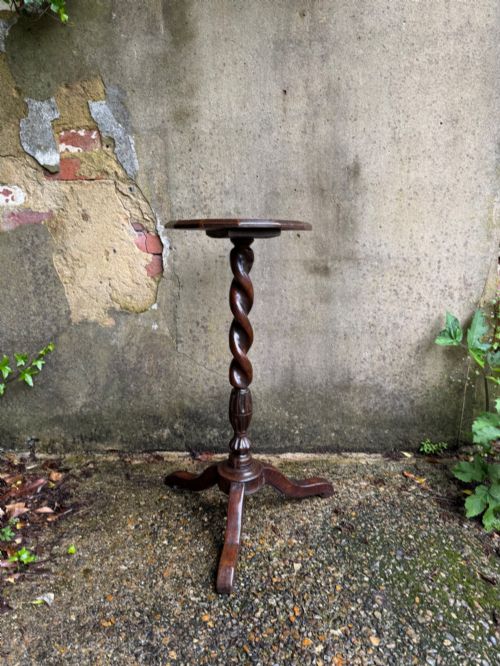
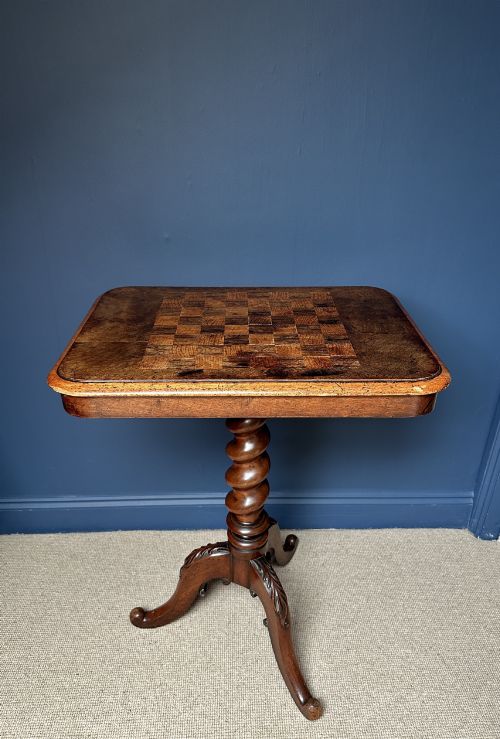


Barley Twist Tripod Table
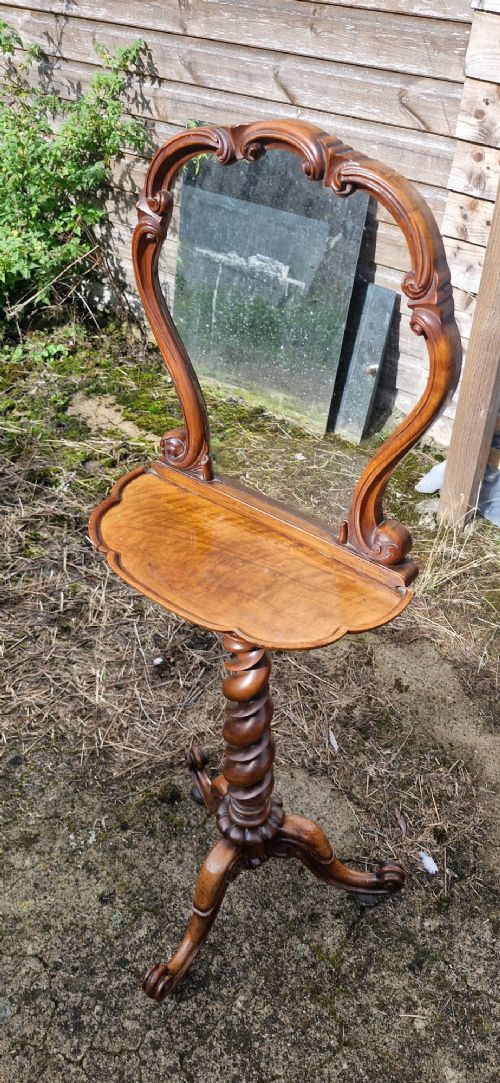
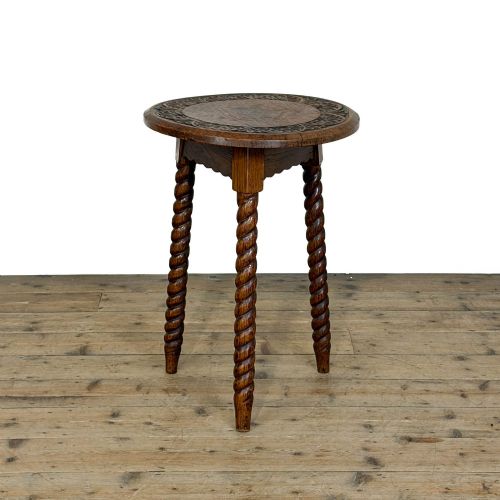
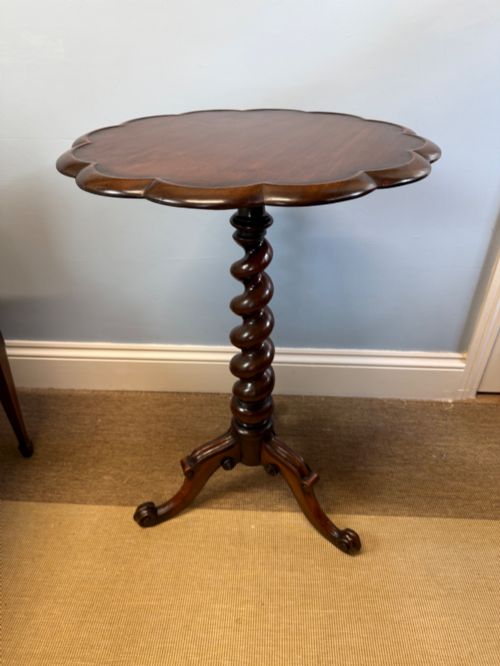
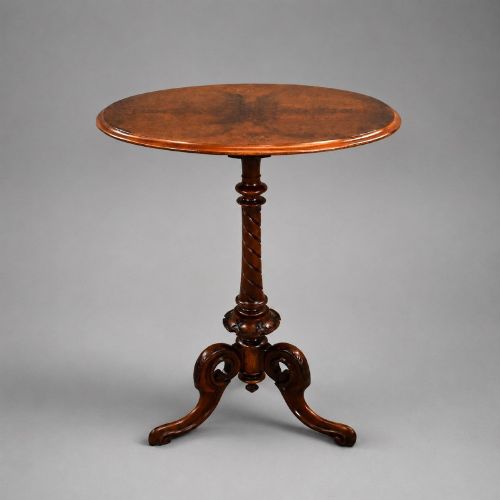
A barley twist tripod table combines sturdy three-legged support with the character of spiral-turned woodwork, making a practical surface for a lamp or drink.
Barley Twist Tripod Table
Victorian examples in walnut or mahogany dominate the selection, often carrying circular or octagonal tops designed for practical use in domestic rooms. Earlier styles also appear in oak and elm, alongside revival pieces that draw on seventeenth-century turning techniques.
Materials and construction methods
Cabinet makers utilised dense hardwoods such as mahogany, walnut and oak to ensure stability in the central shaft and slender legs. Burr veneers and intricate wood inlay frequently decorate the table tops, adding visual depth to the surface.
The characteristic spiral column was shaped by hand or lathe-turning, requiring precise skill to maintain an even twist along the timber. Tripod bases were typically jointed securely to the central pedestal to support the weight of the top without wobble.
Barley Twist Tripod Table Retail Price Guide 2026
Typical asking prices for barley twist tripod table among the pieces listed under this phrase on Sellingantiques today, from the lower quarter to the upper quarter. They describe what is for sale here now, not the wider market.
Listings feature walnut, mahogany, burr walnut, oak, rosewood and burr elm across nineteenth-century and seventeenth-century periods.
Assessing quality in turning and timber
The crispness and symmetry of the spiral turning distinguish finer examples from plain or heavily sanded work. Sharp definition along the ridges of the barley twist shows the hand of a skilled artisan.
Timber selection separates standard production from superior pieces, with rich flame grain mahogany, figured burr walnut or detailed marquetry inlay indicating higher status. The integrity of the tripod joint and the stability of the central column also determine the durability and execution of the piece.
Holland & Son
The Barley Twist Tripod Table Glossary
- Barley twist
- A decorative turning style resembling a spiralling rope or the stalk of barley. It became popular during the seventeenth century and saw a major revival in Victorian furniture.
- Tripod base
- A furniture support consisting of three legs radiating from a central pillar. This design prevents rocking on uneven historical floors.
- Tilt top
- A tabletop hinged to the pedestal so it can tilt vertically when not in use. This mechanism allowed tables to be stored flat against a wall.
- Teapoy
- A small container or table originally designed to hold tea canisters. Many surviving nineteenth-century examples function as versatile occasional tables.
- Marquetry
- The art of applying decorative veneer pieces in wood, ivory or shell to form geometric or pictorial patterns. It creates an ornate surface on table tops.
Barley Twist Tripod Table: Frequently Asked Questions
What is a barley twist tripod table used for?
These pieces serve primarily as small occasional tables for holding lamps, drinks or decorative items beside seating. Their compact footprint suits corners and narrow spaces where larger furniture does not fit.
Historically, specific variations such as wine tables, candle stands and teapoys fulfilled particular domestic tasks in nineteenth-century drawing rooms and parlours.
How can I date a barley twist tripod table?
Dating relies on examining the timber species, construction joints and secondary woods used beneath the surface. Walnut and mahogany were favoured during the Victorian era, while oak and elm appear in earlier or revival pieces.
Secondary clues include the method of fixing the top to the pedestal and the presence of tilt mechanisms or inlaid decoration characteristic of specific decades.
Where should I place a tripod table at home?
A tripod table fits easily beside a sofa, armchair or in an empty hallway because the three-legged base tucks into tight corners. They work well as surfaces for reading lamps or small plants.
Avoid placing antique wooden tables in direct sunlight or beside active heat sources to protect the polished timber and delicate veneers from drying out.
Are tilt top tables stable?
A well-made tilt top table remains stable when the brass catch or wooden peg secures the top horizontally to the pedestal. Over time, the locking mechanism can wear, so checking this joint is important for daily use.
When locked correctly, the table functions securely for normal surface items like cups and books without unexpected movement.